Fraction visualization Extra Challenge Worksheets for Ages 3-7
3 filtered results
-
From - To
Unlock the world of fractions with our "Fraction Visualization Extra Challenge Worksheets" designed specifically for ages 3 to 7! These engaging worksheets encourage young learners to explore fractions through colorful visuals and hands-on activities. Students will develop essential skills in recognizing parts of a whole, comparing fractions, and understanding quantities in a fun and interactive way. Ideal for parents and educators seeking to challenge and enhance children's mathematical foundations, these worksheets promote critical thinking and problem-solving abilities. Dive into our comprehensive collection today and make learning about fractions an exciting adventure for your little ones!
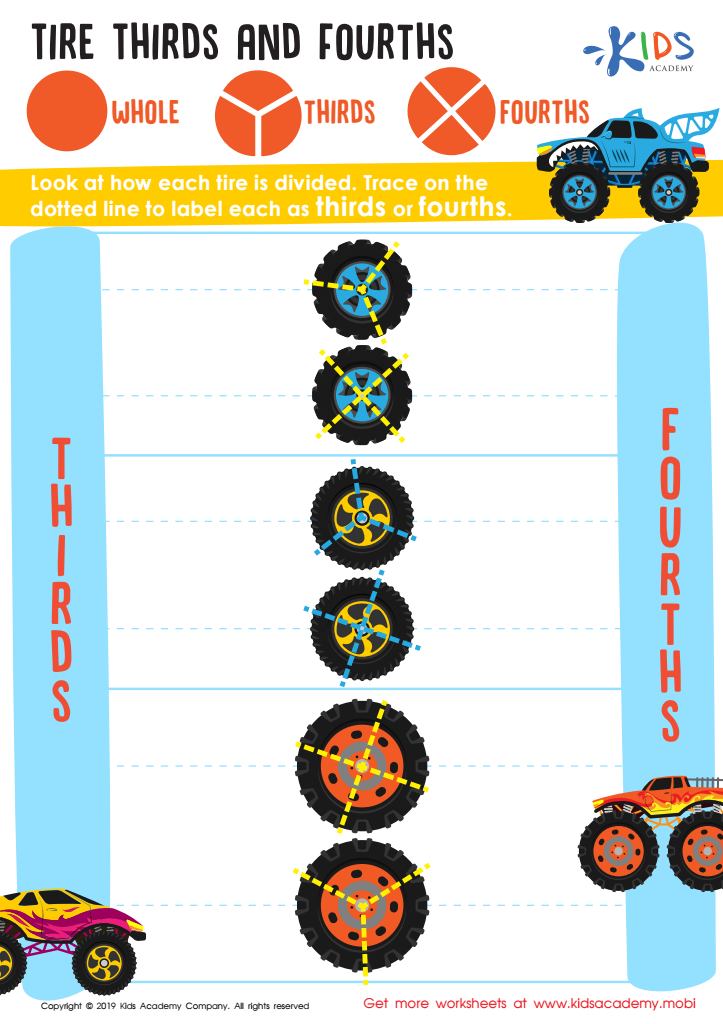
Tire Thirds and Fourths Worksheet
 Assign to My Students
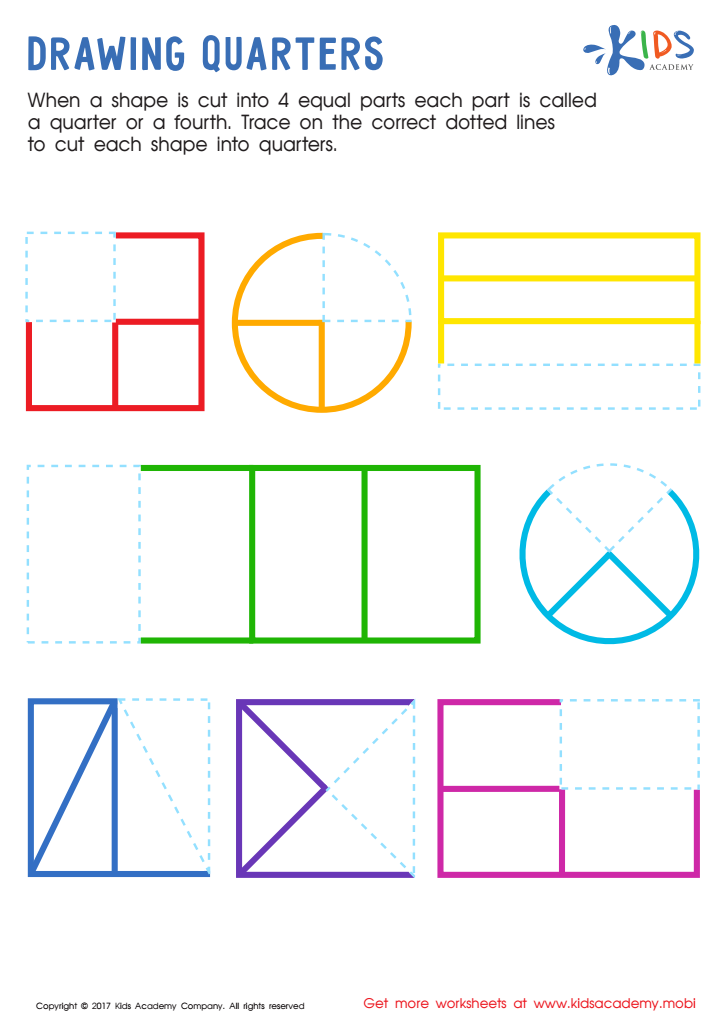
Drawing Quarters Worksheet
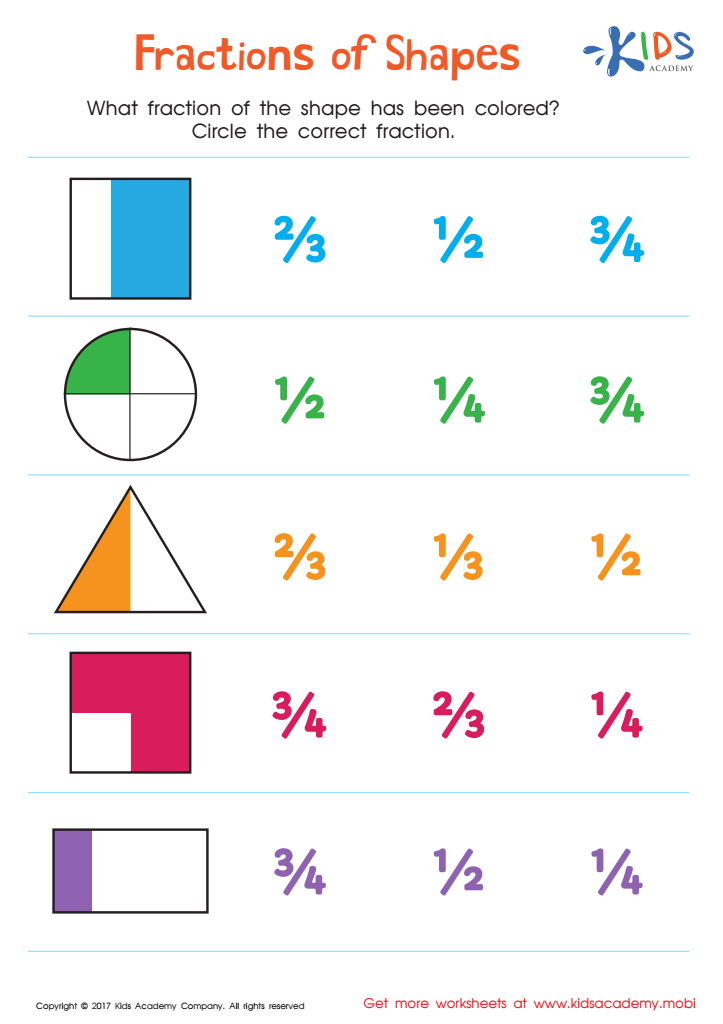
Fractions of Shapes: Math Concept Worksheet



.jpg)



Fraction visualization is a fundamental skill for young learners aged 3-7, and both parents and teachers should prioritize its importance for several reasons. First, understanding fractions involves comprehending parts of a whole, which is essential for early mathematical development. By visualizing fractions through engaging activities—such as using pie charts, fraction strips, and shaped foods—children can better grasp concepts that are abstract when explained verbally.
Additionally, fraction visualization encourages critical thinking and problem-solving skills. By manipulating visual representations, children learn to compare, add, and subtract fractions in a hands-on way, laying a foundation for more complex mathematical concepts. This interactive learning also caters to various learning styles, making math more accessible to all students.
Moreover, early exposure to fractions can improve comprehension in other academic areas, fostering confidence and an eagerness to learn. Developing a strong numerical sense at a young age not only benefits children academically but also supports their overall cognitive development.
Lastly, parents and teachers should recognize that fraction visualization can be a fun and collaborative activity. By participating together, they strengthen family bonds and create a positive learning environment, making mathematics an enjoyable subject rather than a daunting task.








