Mathematical thinking Extra Challenge Worksheets for Ages 3-7
4 filtered results
-
From - To
Discover our Mathematical Thinking Extra Challenge Worksheets for ages 3-7, designed to nurture young minds and spark a love for numbers. These expertly crafted worksheets provide fun, engaging activities that go beyond basic counting and shapes. Each sheet challenges young learners to engage in problem-solving, pattern recognition, and logical thinking, setting the stage for future math success. Perfect for preschool through early elementary grades, these worksheets support cognitive development while making learning enjoyable. Explore our wide range of age-appropriate, skill-building exercises and help your child develop a strong foundation in math through play and exploration.
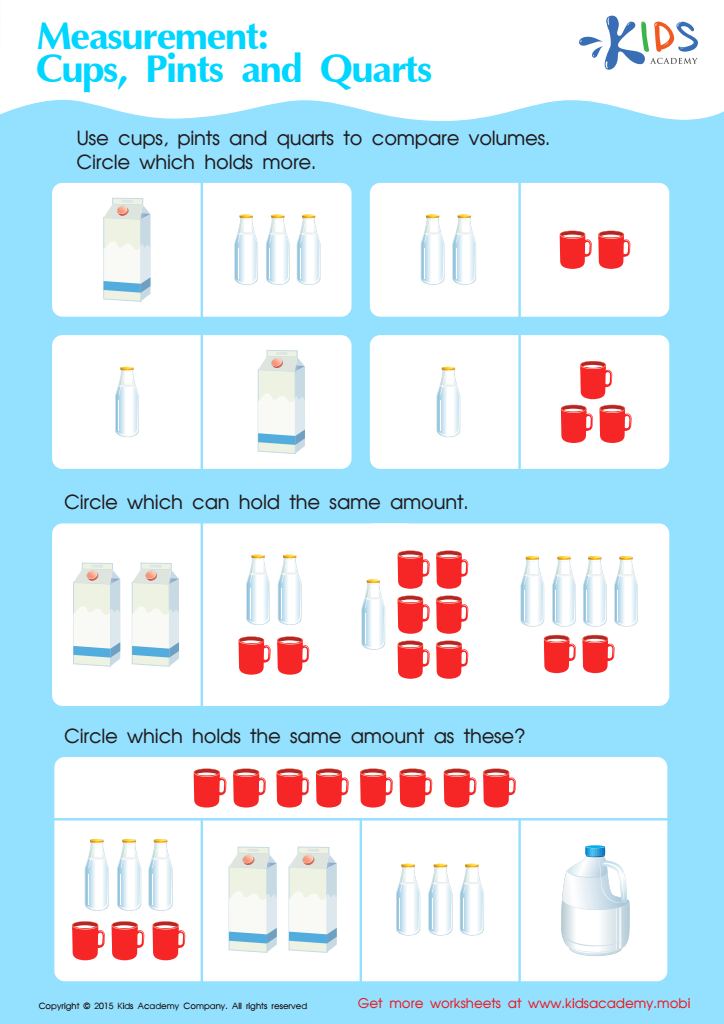
Measurement: Compare Volumes Worksheet
 Assign to My Students
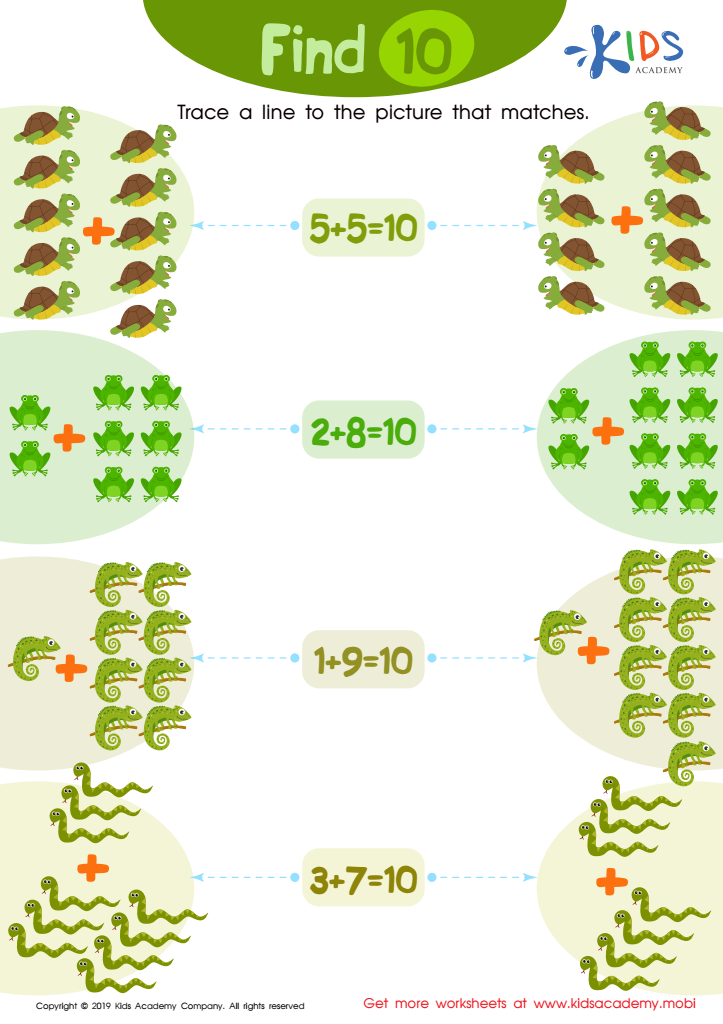
Find 10 Worksheet
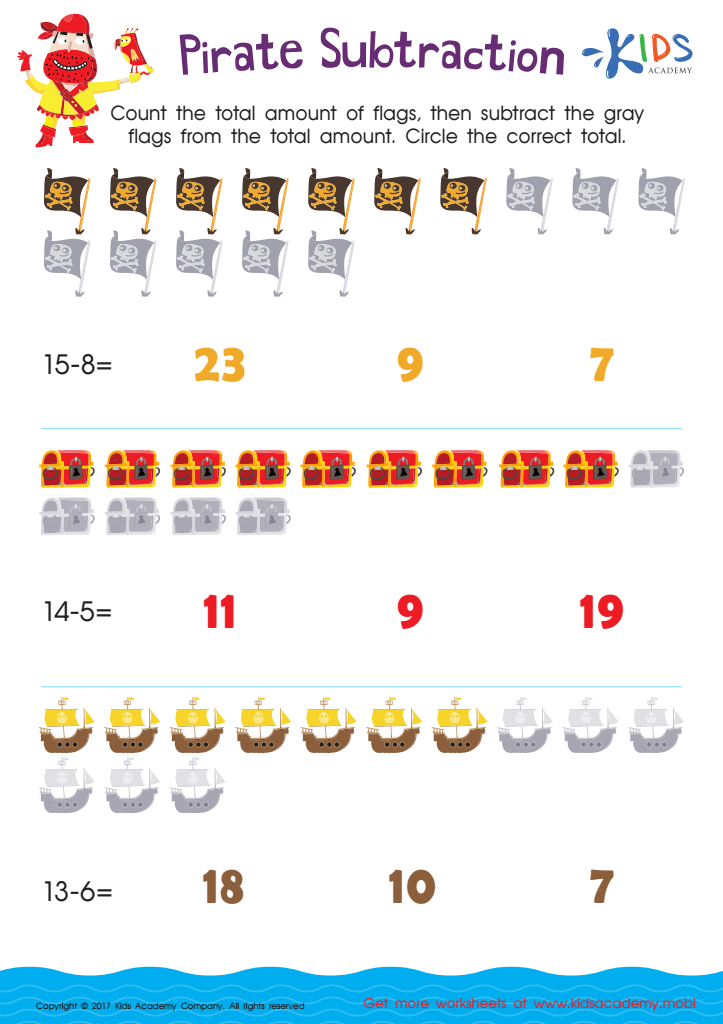
Pirate Subtraction Substraction Worksheet
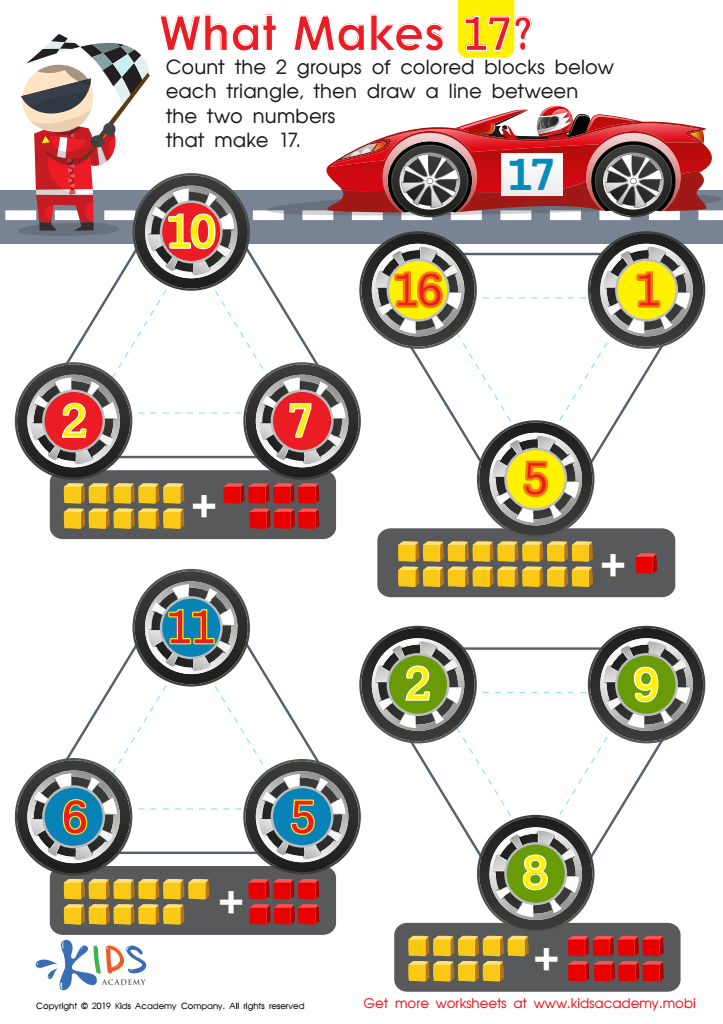
What Makes 17 Worksheet







Fostering mathematical thinking in children aged 3-7 is crucial as it lays the foundation for various cognitive skills that extend beyond arithmetic. Early engagement with "extra challenge" mathematical tasks not only enhances young learners' number sense but also promotes critical thinking, problem-solving, and logical reasoning. These are essential life skills that aid in decision-making and creativity.
When children tackle challenging mathematical problems, they learn persistence and the value of effort in overcoming obstacles. This growth mindset translates to other areas of learning, fostering resilience and a positive attitude towards academic challenges. Additionally, early introduction to mathematical concepts helps children develop spatial awareness and fine motor skills through activities that require manipulating objects and recognizing patterns.
Parents and teachers play a pivotal role in this developmental phase by creating a supportive environment that encourages exploration and curiosity in math. By instilling a love and confidence for math at an early age, parents and teachers can help prevent the onset of math anxiety, which is common in later years.
Moreover, mathematical thinking nurtures children's communication skills, as they learn to express their thought processes and reasoning. Ultimately, these benefits contribute to a well-rounded intellectual growth, equipping children with a strong foundation for future academic success across various subjects.








