Strategic thinking development Extra Challenge Worksheets for Ages 3-7
3 filtered results
-
From - To
Unlock your child's potential with our Strategic Thinking Development Extra Challenge Worksheets, designed specifically for ages 3-7. These engaging and thoughtfully created worksheets foster critical thinking, problem-solving, and decision-making skills, laying the groundwork for academic success. With fun themes and diverse activities, children will enjoy challenges that stimulate their minds while building essential strategies for tackling future obstacles. Perfect for home or classroom use, these worksheets not only boost cognitive development but also promote creativity and resilience. Empower your young learner today with our unique collection and set them on a path of lifelong learning and curiosity!
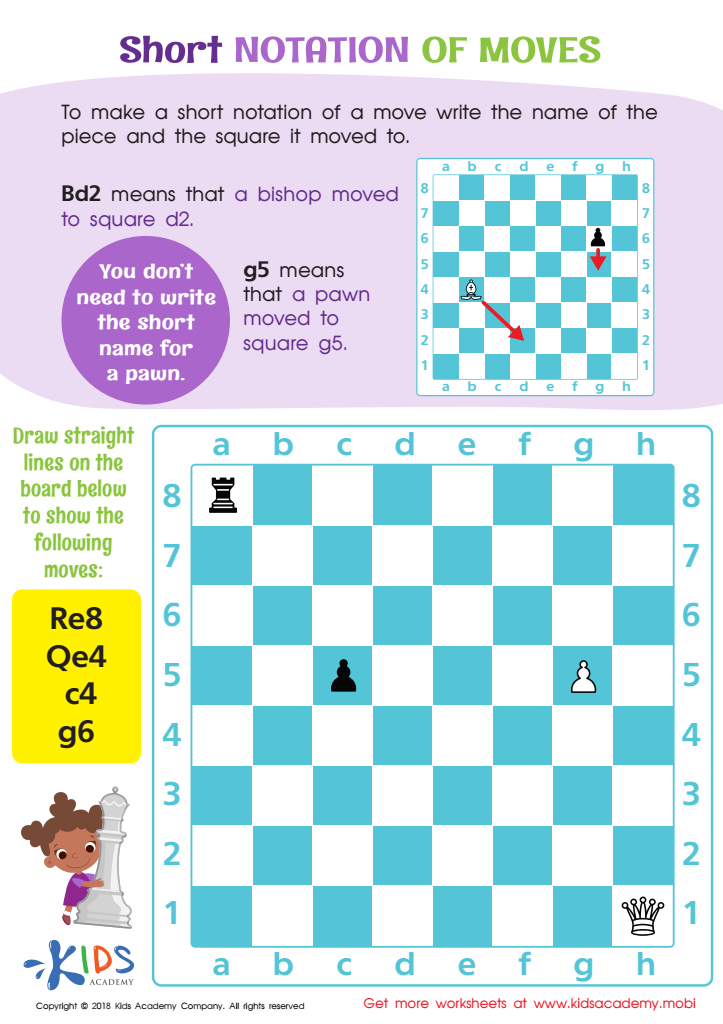
Short Notation of Moves Worksheet
 Assign to My Students
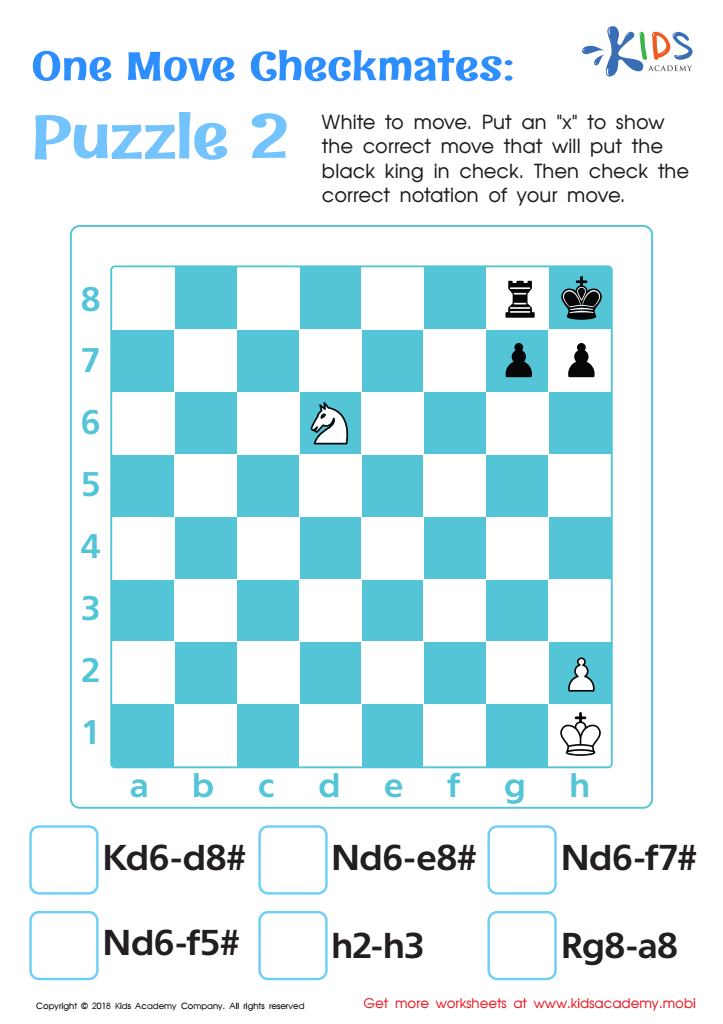
One Move Checkmates: Puzzle 2 Worksheet
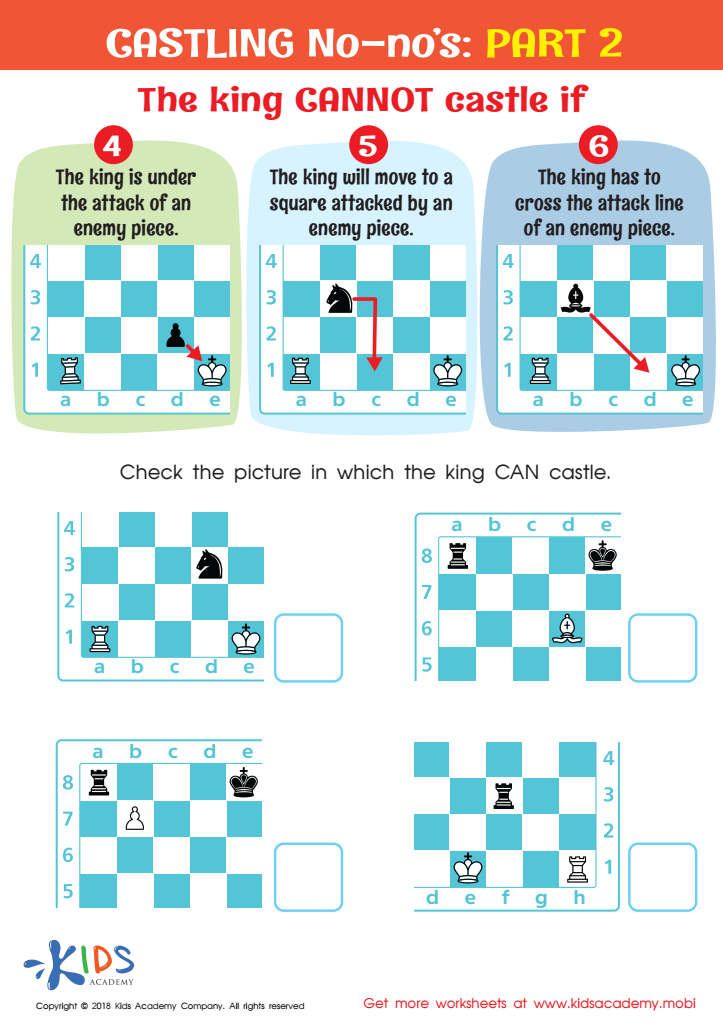
Castling No - no's: Part 2 Worksheet






Parents and teachers should prioritize strategic thinking development for children aged 3-7 because it fosters essential cognitive skills that will serve as a foundation for lifelong learning. At this early age, children are naturally curious and keen to explore problem-solving opportunities. By introducing strategic thinking activities, adults can nurture abilities such as reasoning, decision-making, and planning, which are critical both in academic settings and everyday life situations.
Strategic thinking encourages children to analyze various scenarios, weigh pros and cons, and foresee potential outcomes. Engaging in such cognitive exercises not only enhances creativity but also boosts resilience, as children learn to navigate through challenges and adapt their strategies.
Moreover, with the rapidly changing world driven by technology and innovation, developing these skills is essential for preparing young learners for future challenges. Holistic development, all the way from understanding cause-and-effect relationships to mastering emotional intelligence, provides them with tools to collaborate, communicate, and innovate effectively within social contexts.
In summary, fostering strategic thinking in young children equips them with critical life skills and prepares them for academic success, ultimately shaping them into thoughtful, adaptable individuals in an ever-evolving world.








