Understanding plurals Extra Challenge Worksheets for Ages 3-7
5 filtered results
-
From - To
Discover the fun and educational "Understanding Plurals Extra Challenge Worksheets for Ages 3-7"! Tailored for young learners, these engaging worksheets from Kids Academy provide an extra challenge for children grasping the concept of plurals. Through interactive activities and vibrant visuals, kids enhance their grammar skills, learning to identify and form plural nouns with ease. Perfect for both classroom and at-home learning, these worksheets cater to different skill levels, guaranteeing progressive learning and confidence building. Help your child master plurals while having fun exploring these exciting educational resources. Visit Kids Academy for more!
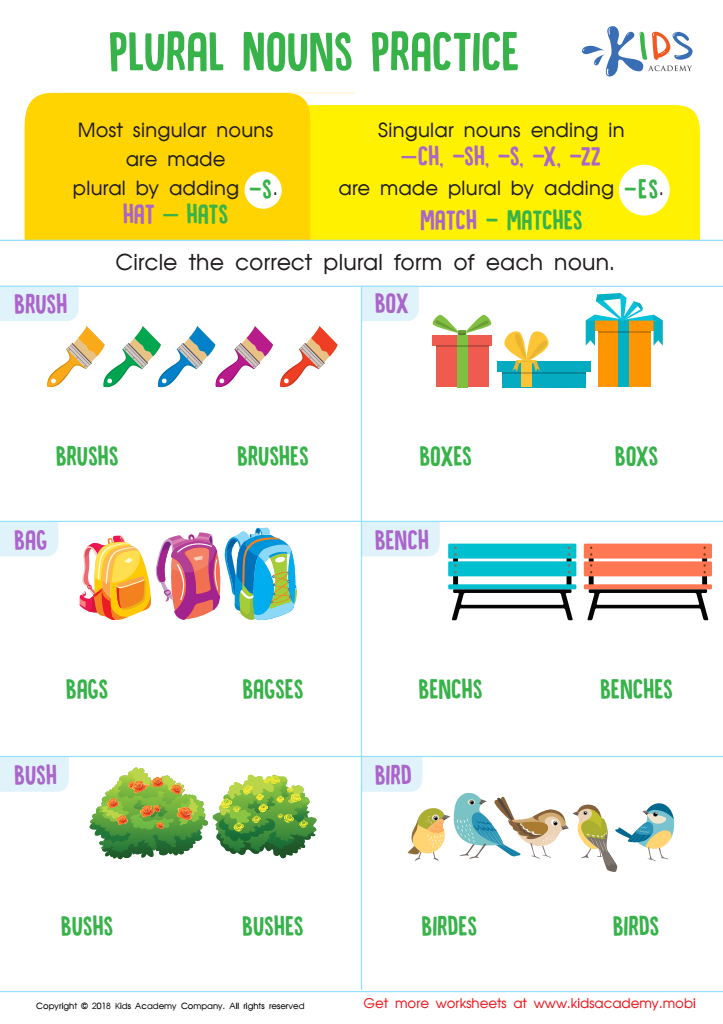
Plural Nouns Practice Worksheet
 Assign to My Students
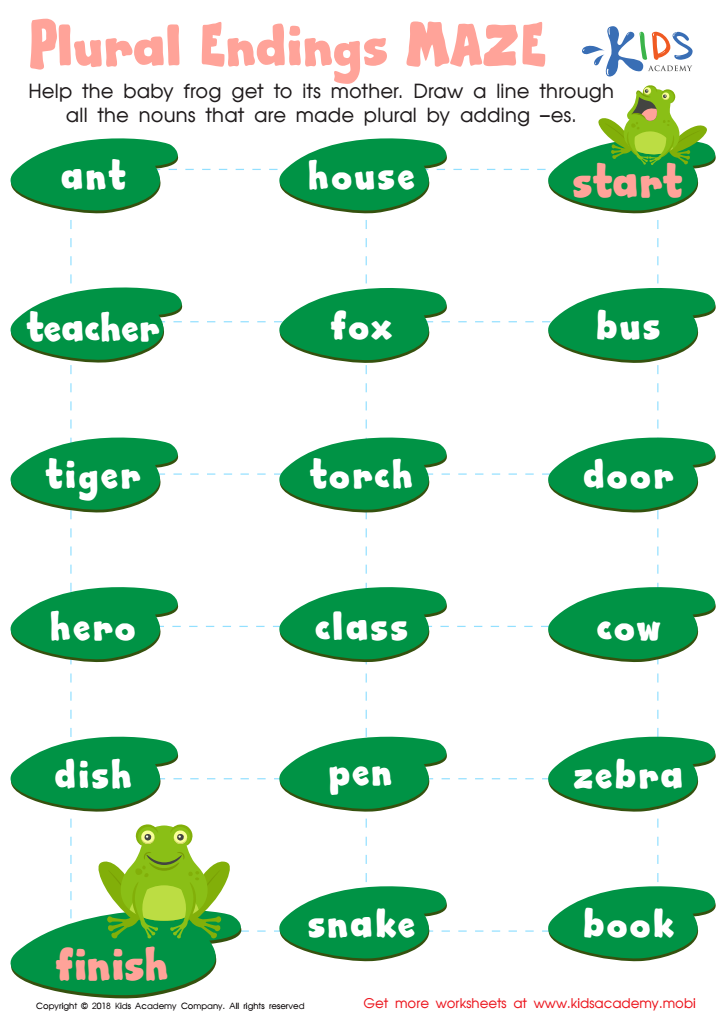
Plural Endings Maze Worksheet
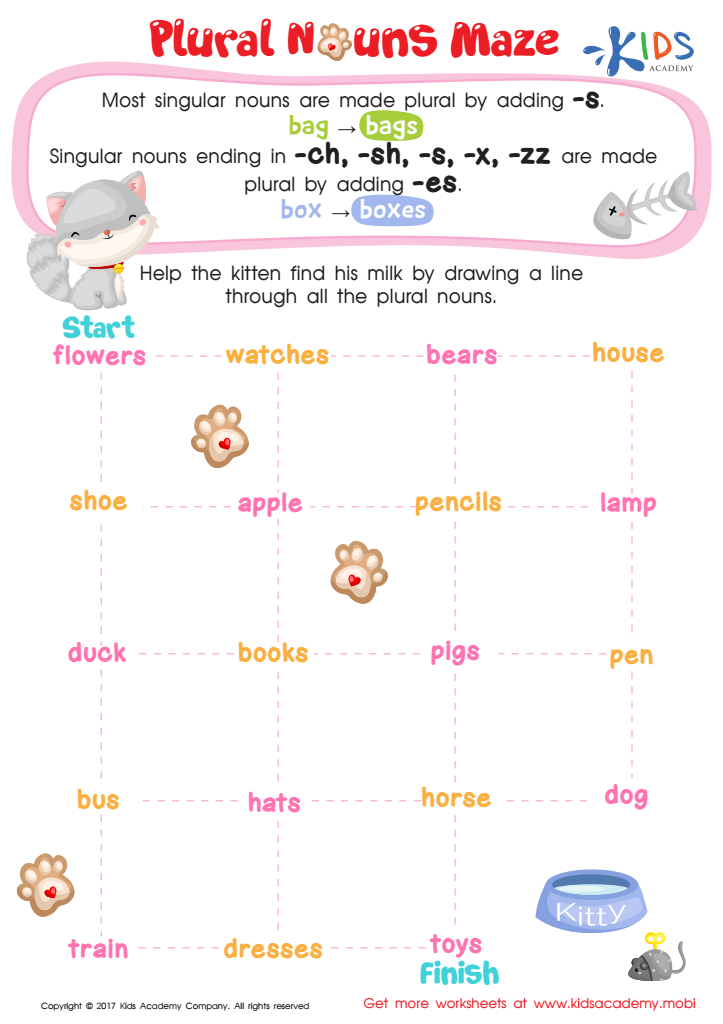
Plural Nouns Maze Worksheet
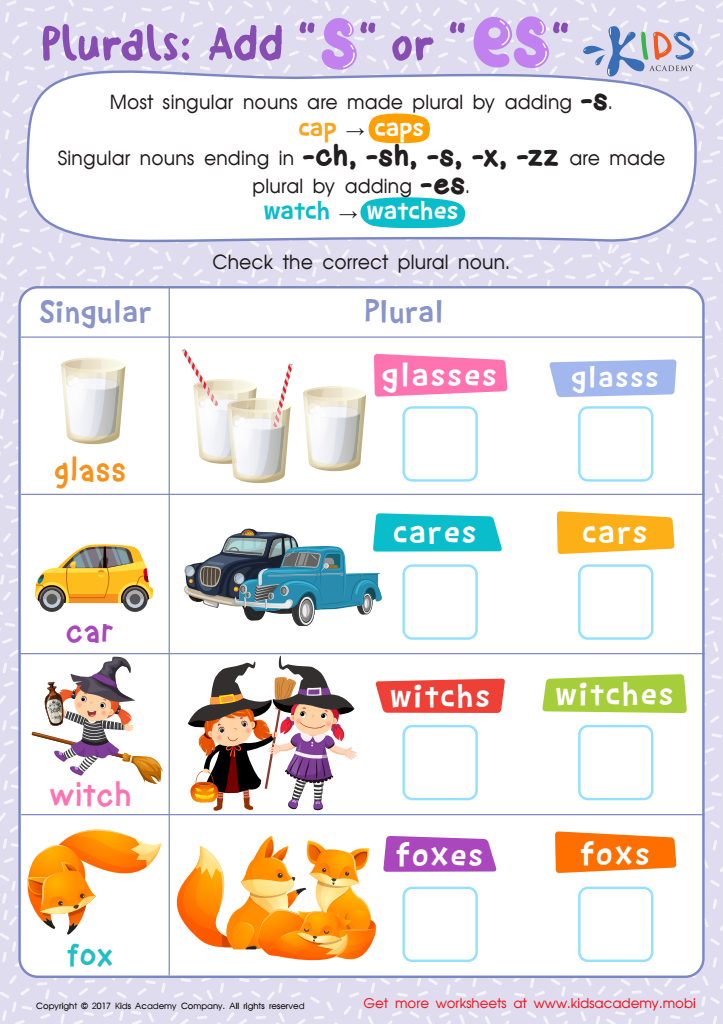
Plurals: "–es" or "–es"? Worksheet
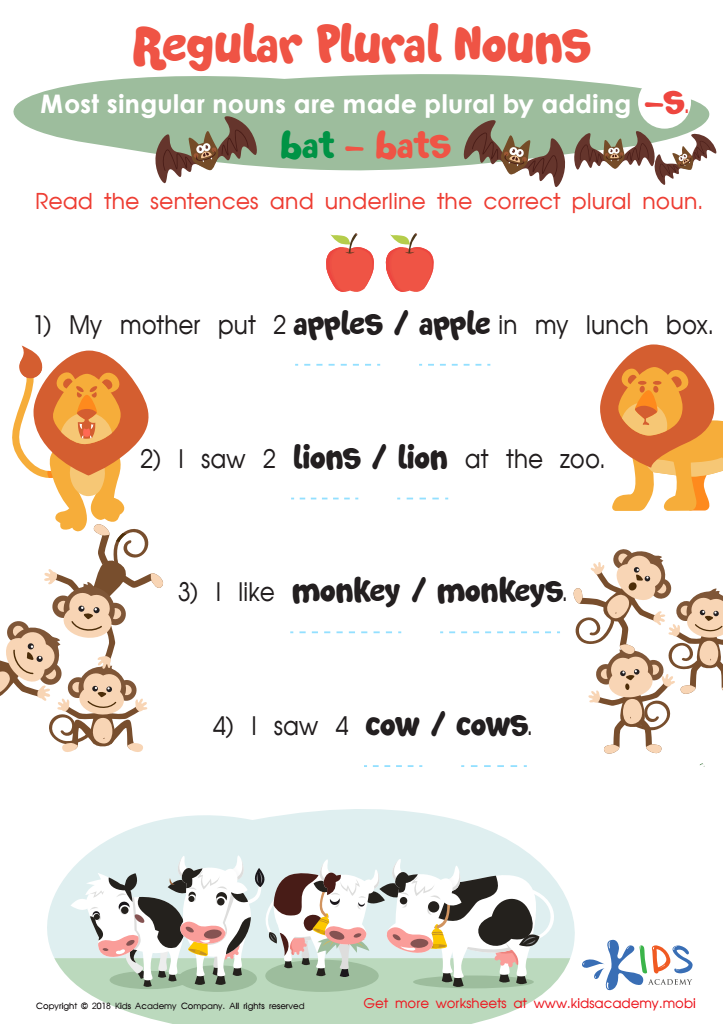
Regular Plural Nouns Worksheet








Understanding plurals is a cornerstone of language development and literacy, impacting children aged 3-7 in foundational ways. Around this age, kids rapidly develop their vocabulary and grammar, elements essential for fluent communication. Grasping how to correctly form plurals teaches children to observe patterns in language, boosting their cognitive skills and enhancing their ability to learn new words efficiently.
Moreover, early proficiency with plurals aids reading comprehension, spelling, and writing. It helps children understand that nouns can change form depending on whether we're talking about one or more than one item, grounding their sense of scale and quantity. This is also vital in mathematical contexts where recognizing singular and plural can aid in comprehending problems and instructions accurately.
Another key aspect is socialization. Proper use of plurals empowers children to express their thoughts and ideas more precisely, facilitating better interaction with peers and adults. When kids speak clearly and correctly, it boosts their confidence, improving their willingness to participate in classroom discussions and activities.
Incorporating activities for understanding plurals isn't just about following a curriculum; it's about equipping children with essential tools for effective communication and lifelong learning. Whether you are a parent or a teacher, nurturing this understanding in young children sets them on a path towards academic success and enhanced interpersonal skills.








