Shape Recognition Extra Challenge 2D Shapes Worksheets for Ages 3-7
6 filtered results
-
From - To
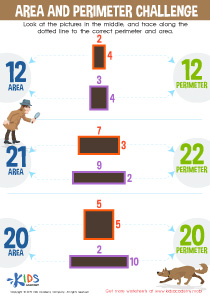
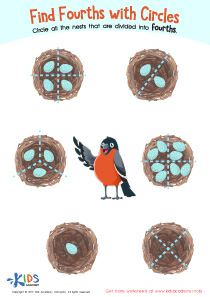
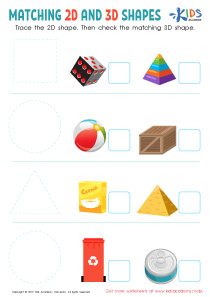
Enhance your youngsters' geometry skills with Shape Recognition Extra Challenge 2D Shapes Worksheets for Ages 3-7! These engaging activities from Kids Academy are designed to help children identify, trace, and color various 2D shapes, such as circles, squares, triangles, and more. Perfect for young learners, these worksheets foster shape recognition, fine motor skills, and critical thinking through fun, interactive tasks. Suitable for home or classroom use, they are an excellent resource for teachers and parents aiming to provide an additional challenge beyond standard shape learning practices. Discover the joy of learning with these educational and entertaining worksheets!
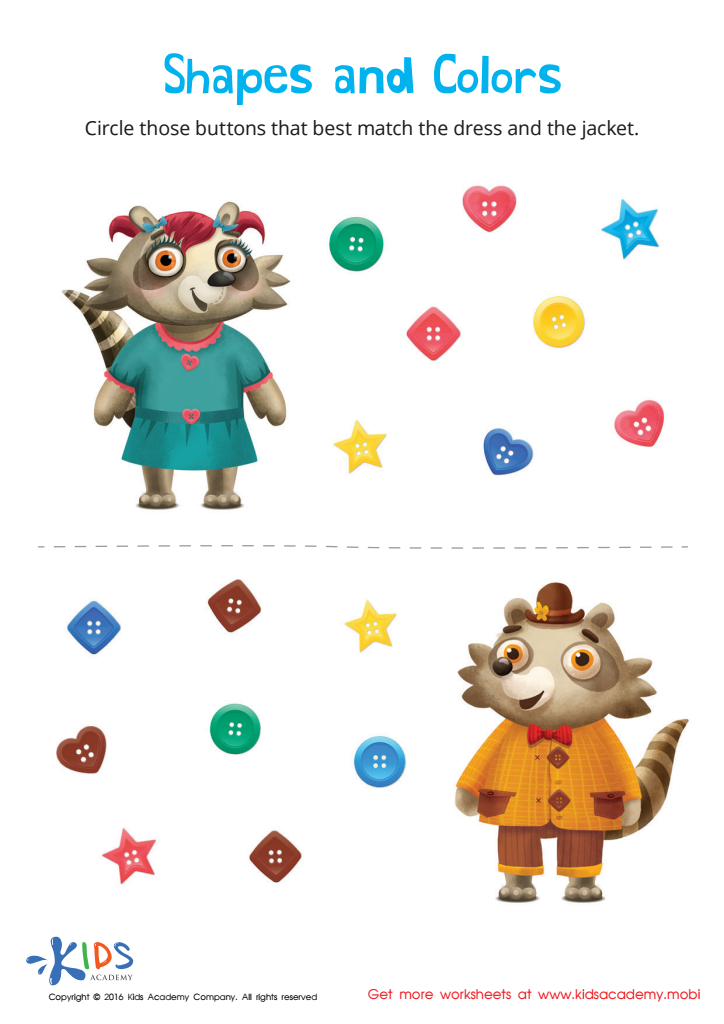
Matching: Shapes and Colors Worksheet
 Assign to My Students

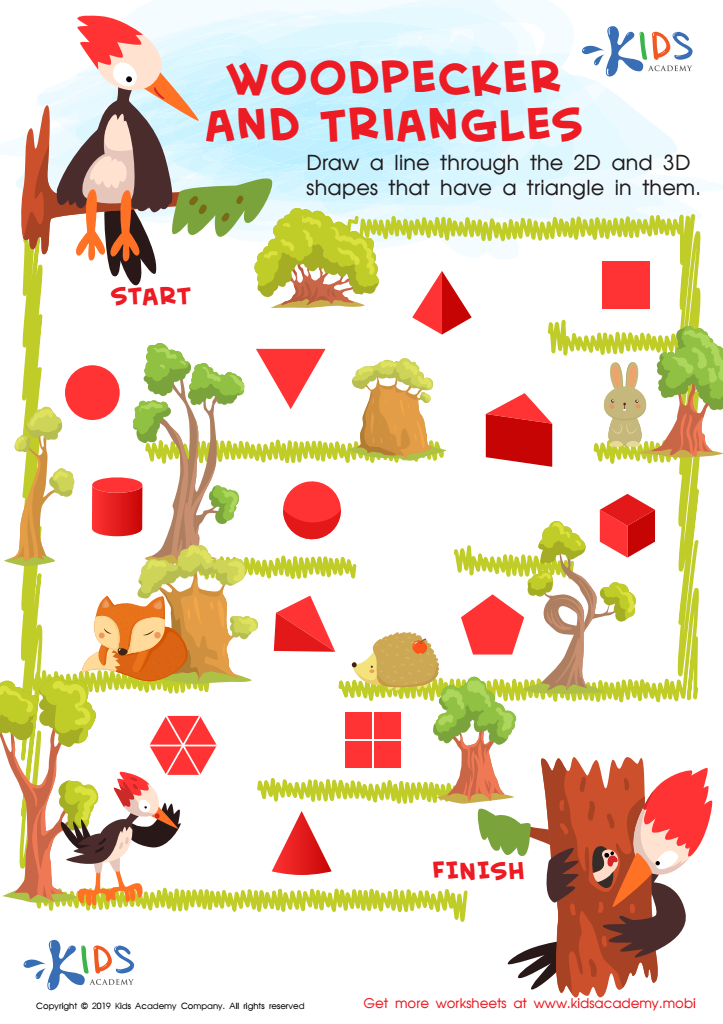
Woodpecker and Triangles Worksheet
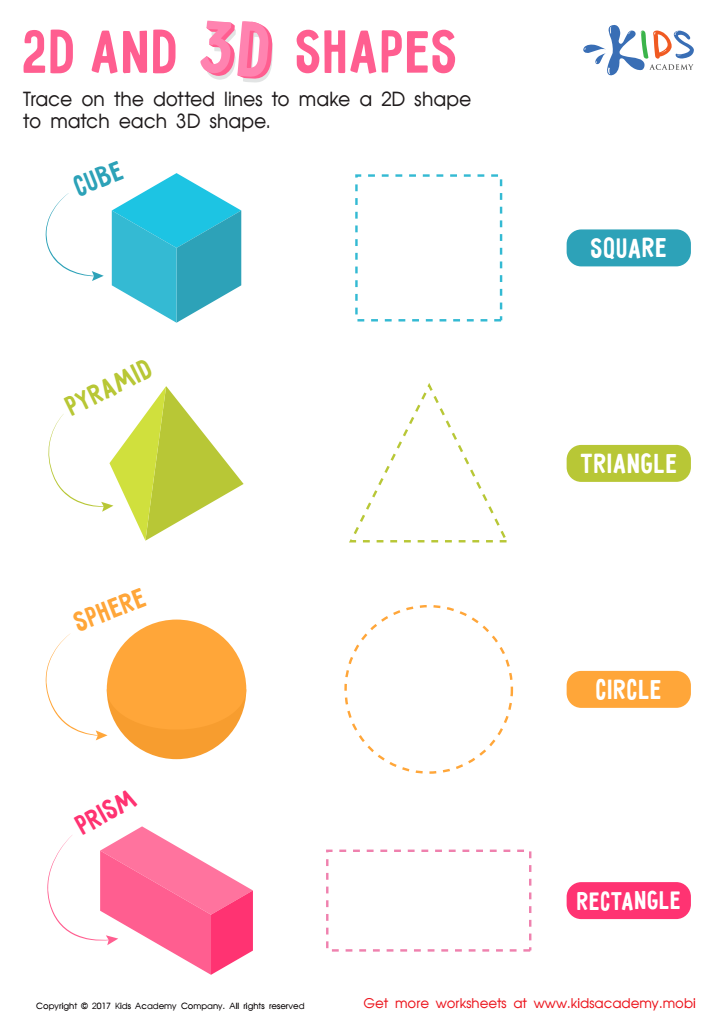
2D and 3D Shapes Worksheet
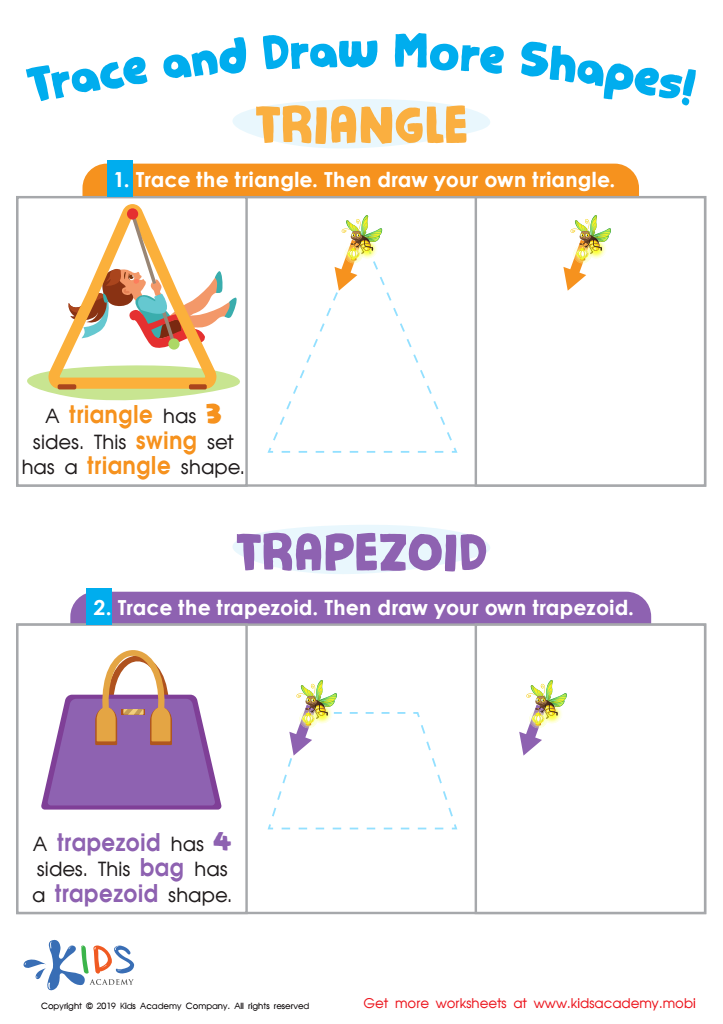
Trace and Draw More Shapes Worksheet
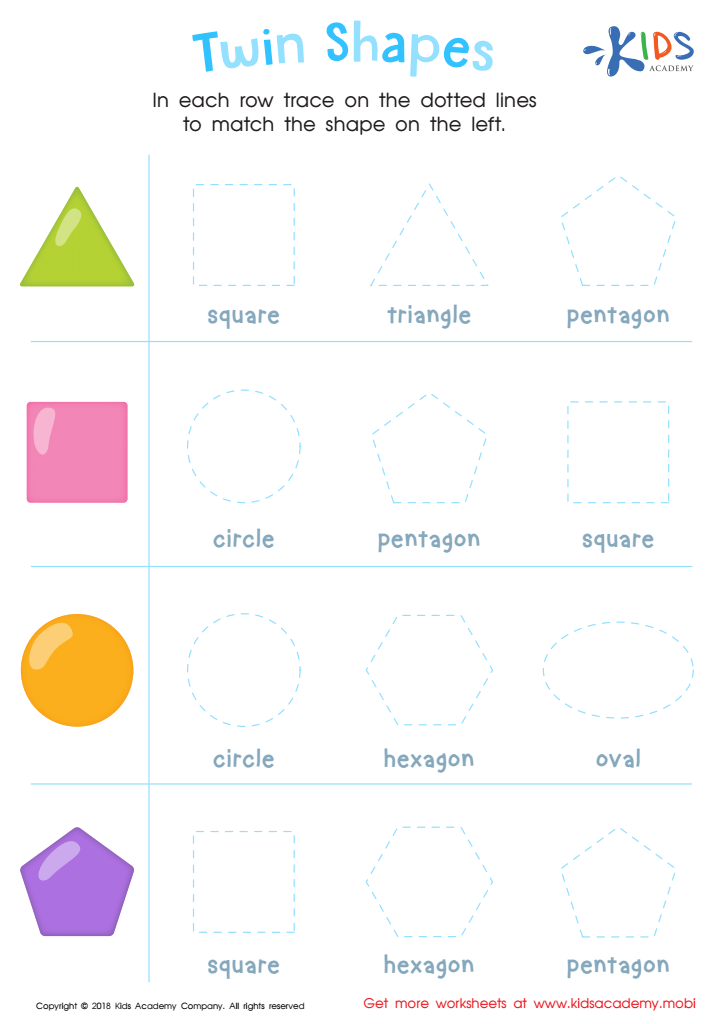
Twin Shapes Dot-to-Dot Worksheet
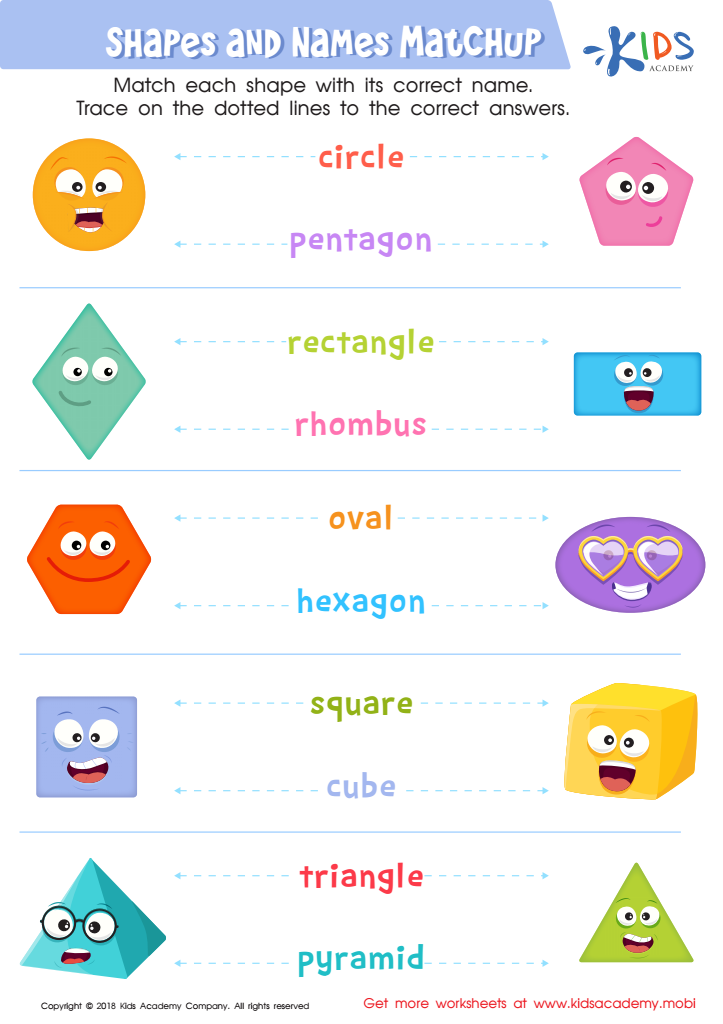
Shapes and Names Matchup Worksheet








Shape recognition is a foundational skill that sets the stage for a host of educational and developmental milestones in young children. Parents and teachers should prioritize Shape Recognition Extra Challenge 2D Shapes for ages 3-7 for several compelling reasons.
Firstly, recognizing different shapes aids cognitive development by enhancing children's ability to categorize and differentiate objects. This skill forms the bedrock for more complex mathematical concepts, such as geometry, necessary for later academic success. By familiarizing kids with 2D shapes, we lay the groundwork for understanding similitudes and differences, fostering critical thinking and problem-solving abilities.
Secondly, shape recognition plays a pivotal role in everyday life. From understanding traffic signs to organizing objects efficiently, recognizing shapes helps children navigate their environment with greater independence.
Additionally, shape-focused activities bolster fine motor skills and eye-hand coordination. Tracing or drawing shapes engages the muscles in the hands and fingers, preparing kids for writing tasks later on. The fine-tuning of these motor skills is crucial for various practical tasks, like tying shoelaces or using utensils.
Emotionally and socially, tackling these shape challenges builds confidence and a sense of achievement. When children succeed in recognizing and naming shapes, their self-esteem is bolstered, encouraging a lifelong love for learning.
In essence, investing time and resources into shape recognition challenges is a vital step toward ensuring balanced intellectual and personal growth for children.