Basic Math Skills Extra Challenge Measurement Worksheets for Ages 3-7
5 filtered results
-
From - To
Enhance your child's understanding of measurement with our Basic Math Skills Extra Challenge Measurement Worksheets for ages 3-7. These engaging and thoughtfully-crafted worksheets make learning fun and rewarding for young learners. Designed to boost basic math skills, they feature exciting activities that challenge kids to measure, compare, and solve practical problems. Our vibrant, age-appropriate tasks foster critical thinking and develop essential skills such as size comparison, length estimation, and understanding units of measurement. Perfect for preschoolers and early elementary students, these worksheets offer invaluable practice for confident and successful future mathematicians.
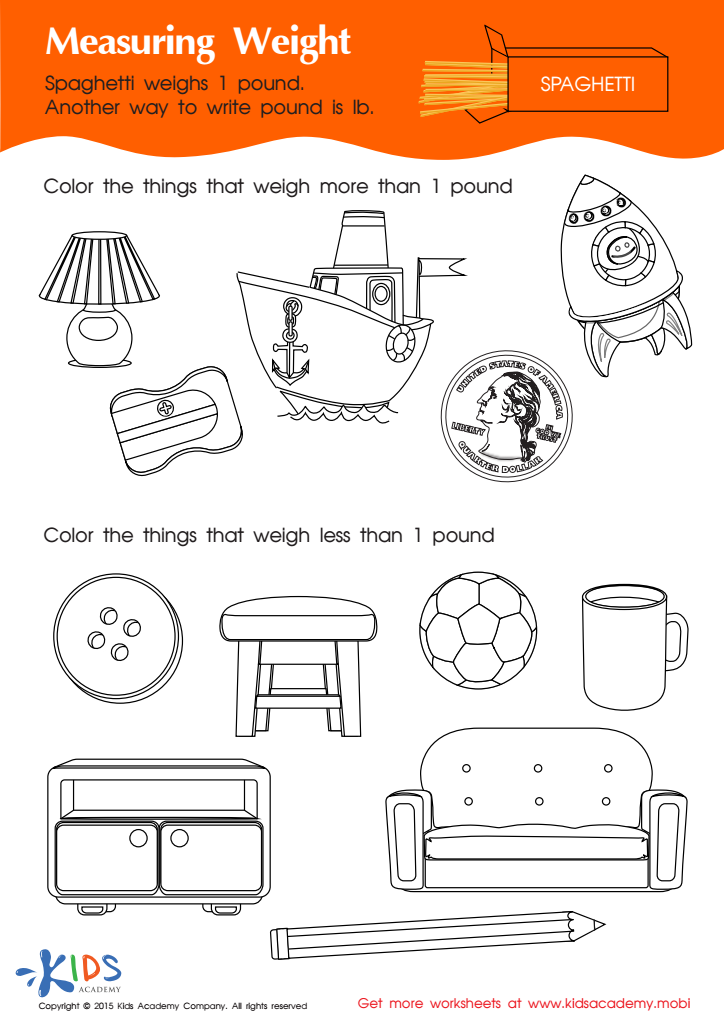
 Assign to My Students
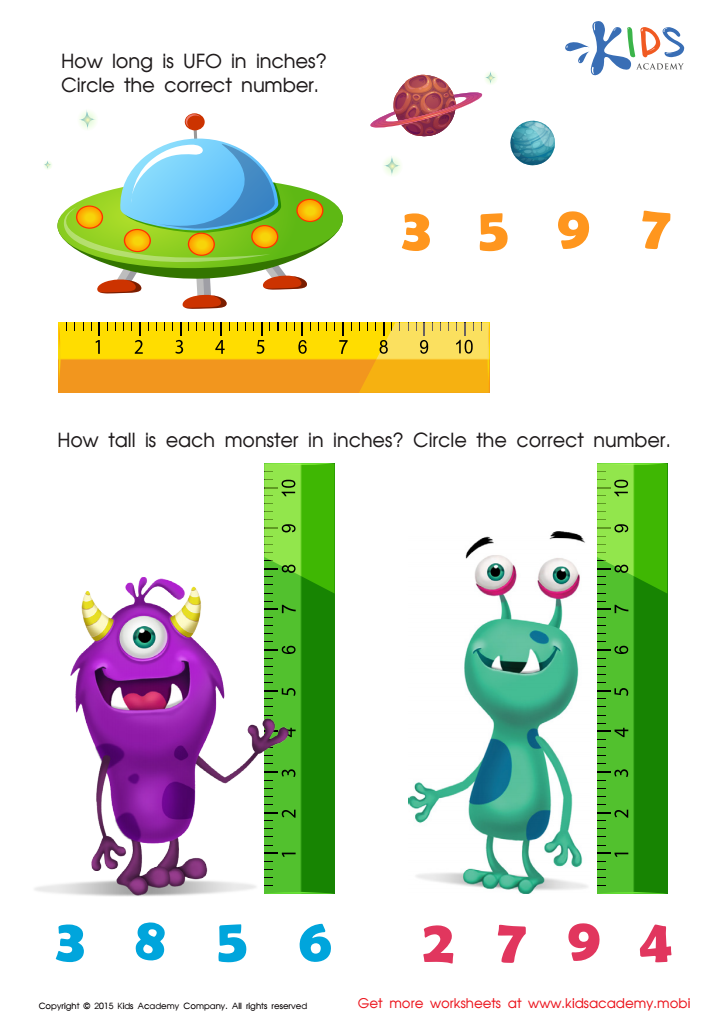
Measuring in Inches Worksheet
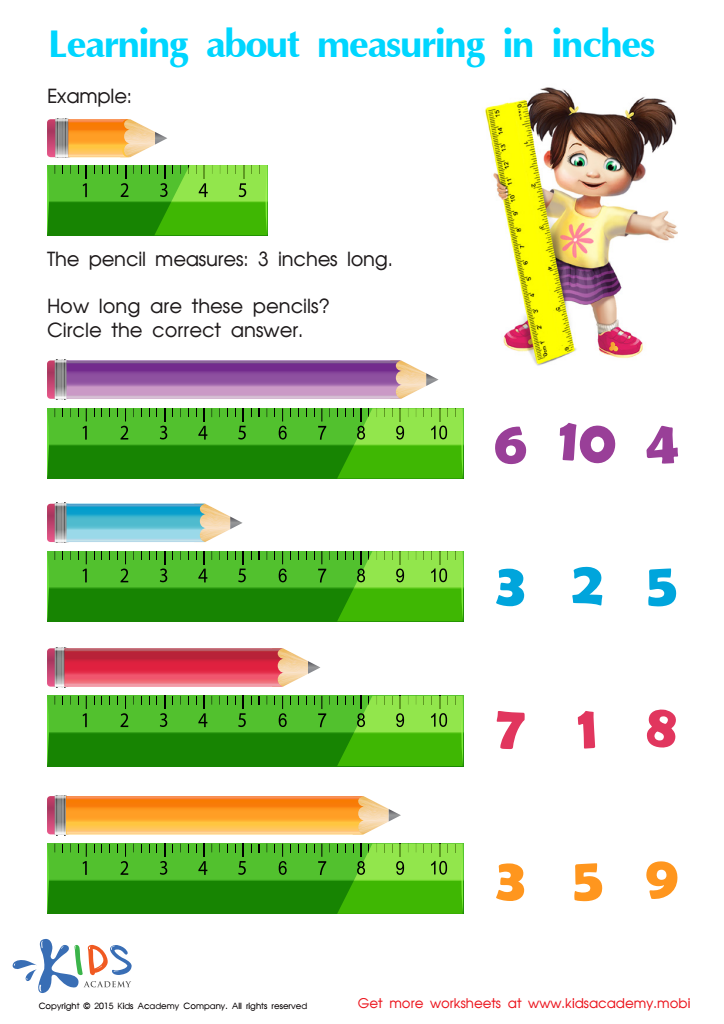
Learning About Measuring In Inches Printable
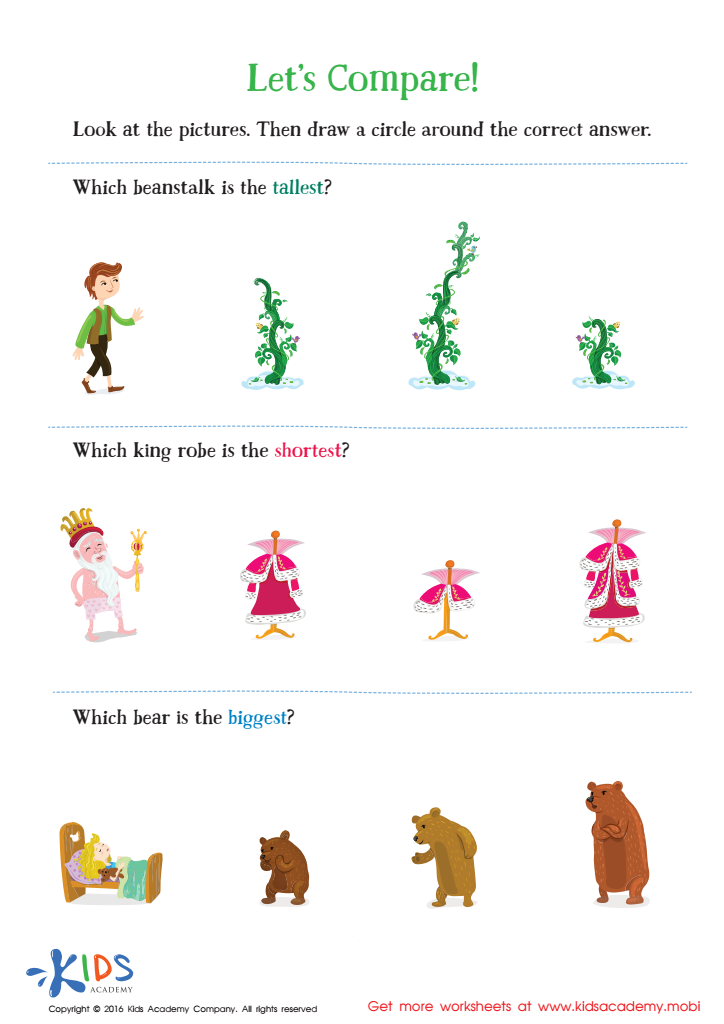
Fairy Tale Worksheet: Let's Compare
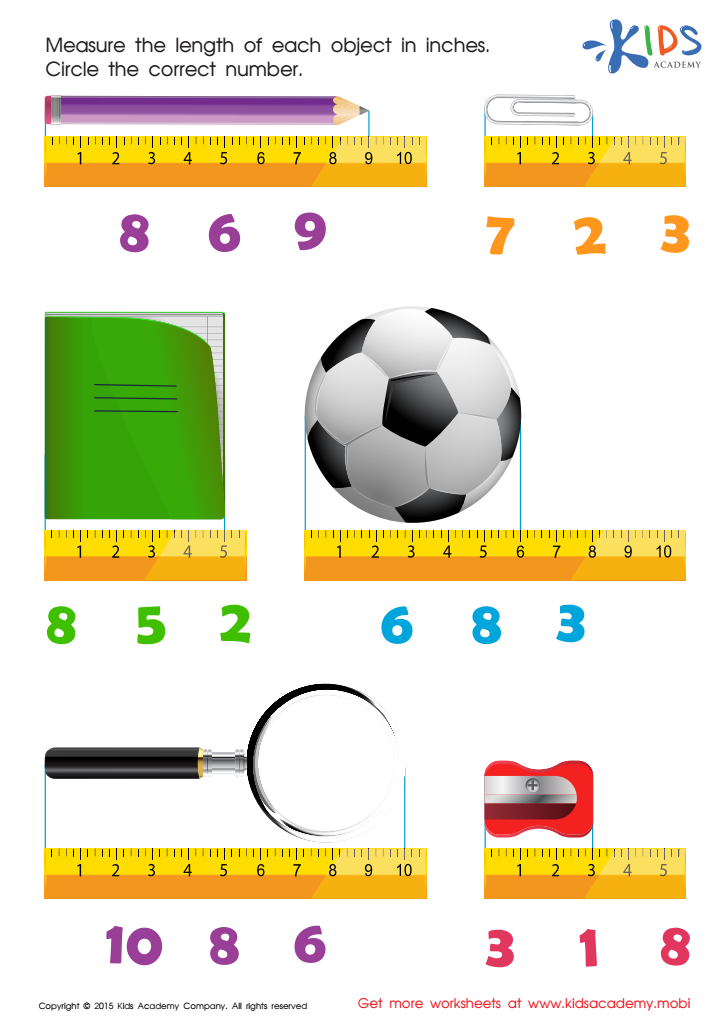
Learning measuring objects in inches Worksheet








Basic math skills form the foundation for more complex mathematical concepts that children will encounter as they grow older. Parents and teachers should place a special emphasis on the extra challenge of measurement for children aged 3-7 for several key reasons.
First, measurement activities help children to develop critical thinking and problem-solving skills. When children measure objects, compare lengths, widths, or volumes with different units, they learn to evaluate data and make informed decisions.
Second, these activities enhance spatial awareness. Children begin to understand concepts such as bigger, smaller, longer, and shorter, which directly impacts their ability to navigate and understand the world around them.
Third, engagement through measurement can be incredibly fun and interactive. Young children often learn best through play, and activities that involve measuring objects or distances encourage hands-on learning. This makes abstract concepts more tangible and relatable.
Lastly, these early experiences with measurement lay the groundwork for future learning in science, technology, engineering, and mathematics (STEM). Skills developed at this stage support later educational success and even career readiness.
By fostering these essential measurement skills in children, parents and teachers equip them with the tools and confidence needed to tackle more complex mathematical concepts in the future.