Basic counting skills Extra Challenge Worksheets for Ages 3-8
4 filtered results
-
From - To
Enhance your child's numerical prowess with our "Basic Counting Skills Extra Challenge Worksheets for Ages 3-8". These engaging worksheets are designed to give children extra practice in counting and number recognition. Perfect for young learners, they feature a variety of fun, interactive activities that encourage critical thinking while reinforcing foundational math skills. Your child will explore counting through lively illustrations and challenging tasks that make learning enjoyable. Each worksheet aligns with educational standards, ensuring that kids gain confidence and mastery in counting from early ages. Inspire a love for math and build strong counting skills with our thoughtfully crafted worksheets!
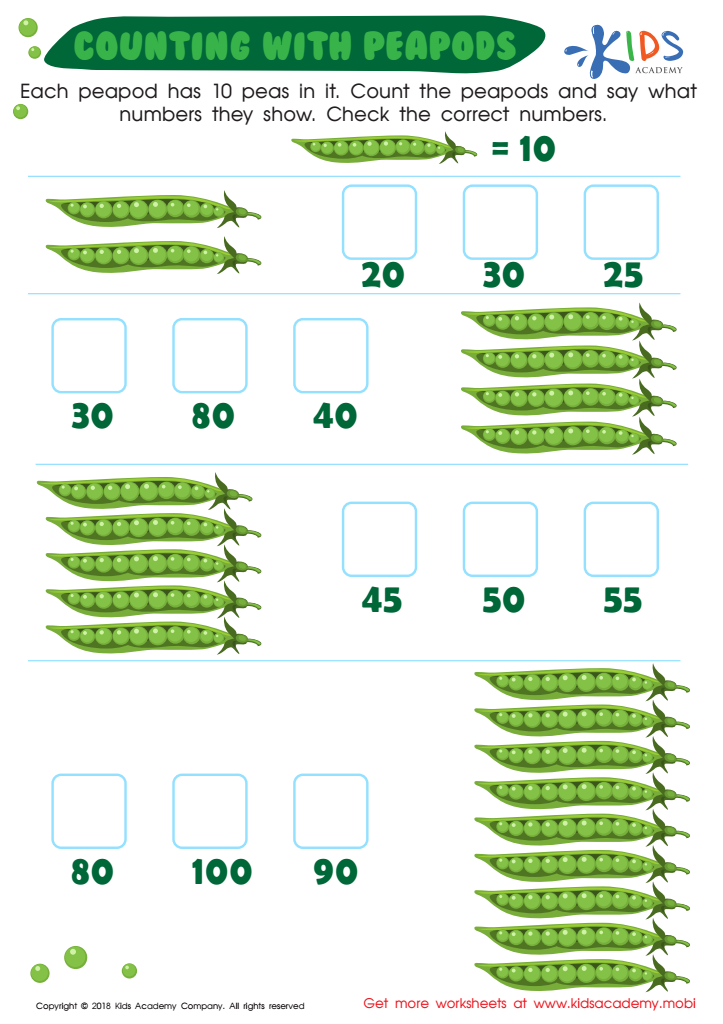
Number Worksheet: Counting With Peapods
 Assign to My Students
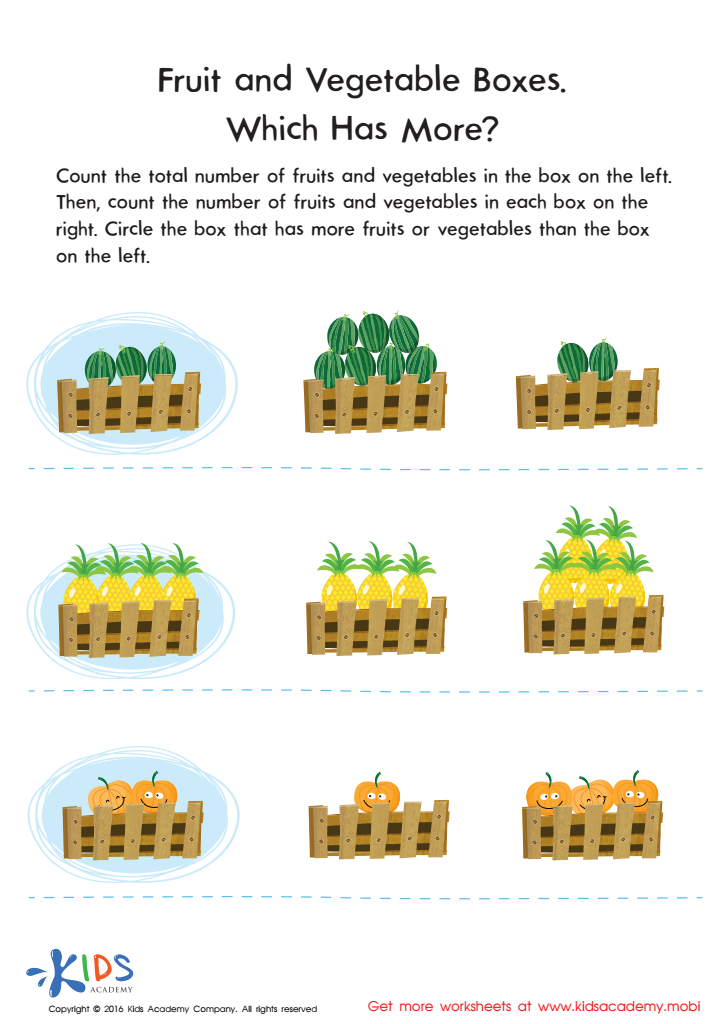
Which Has More? Size Worksheet
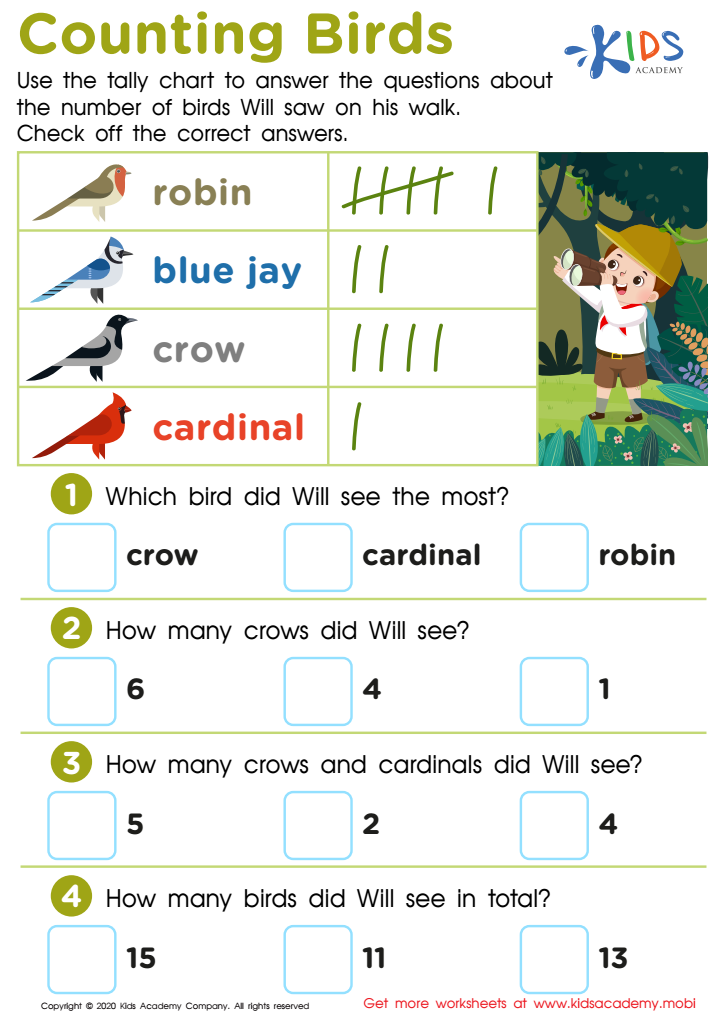
Counting Birds Worksheet
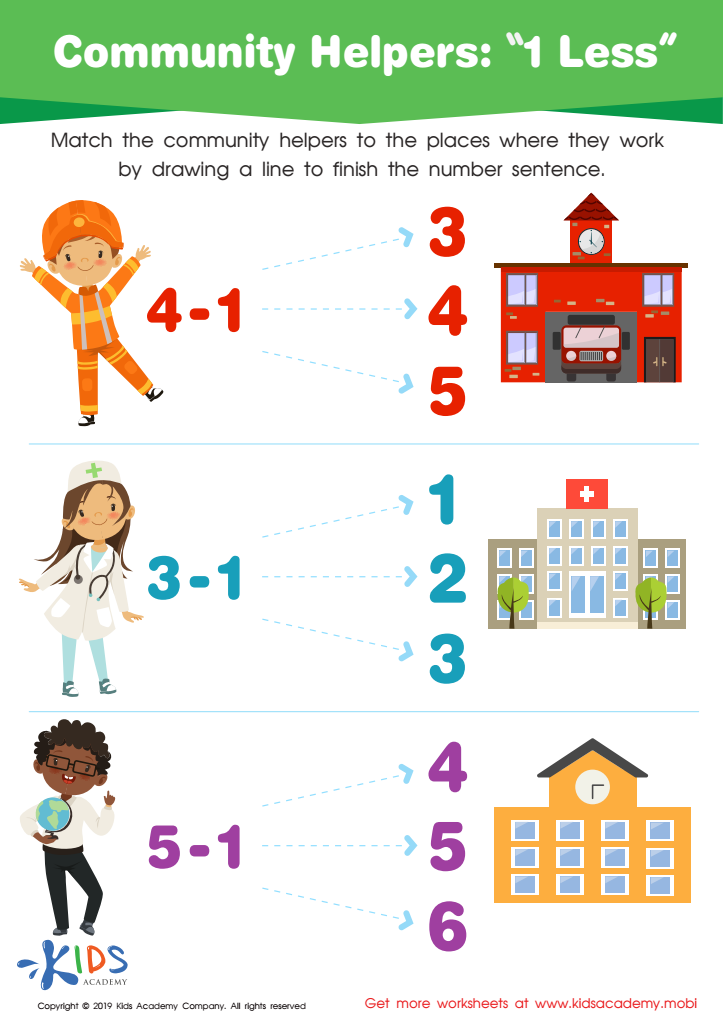
Community Helpers: 1 less Worksheet








Basic counting skills are fundamental for children aged 3-8 as they lay the groundwork for essential mathematical concepts. Parents and teachers should prioritize these skills because they foster cognitive development, enhance reasoning abilities, and build confidence in young learners.
Understanding numbers helps children make sense of the world around them. Familiarity with counting allows them to grasp concepts such as quantity, measurement, and comparatives. For instance, when children count objects, they develop one-to-one correspondence, a critical foundational skill for addition and subtraction.
Moreover, mastering basic counting can lead to improved problem-solving abilities. As children engage in counting activities, they refine their analytical skills and learn to approach challenges methodically. This is particularly beneficial when they encounter more complex math concepts in later grades.
Additionally, strong counting skills can bolster a child's self-esteem. Mastery of this skill enables them to participate in group activities and share in classroom discussions confidently. It also allows parents and educators to introduce more advanced mathematical concepts progressively, ensuring a strong educational foundation.
In essence, by supporting the development of basic counting skills, parents and teachers are equipping children for success in mathematics and overall academic achievement as they grow.








