Comparing lengths Extra Challenge Worksheets for Ages 3-8
6 filtered results
-
From - To
Discover our "Comparing Lengths Extra Challenge Worksheets for Ages 3-8," designed to enhance young learners' measurement skills! These engaging printables are perfect for kids ready to tackle more challenging tasks involving length comparison. Ideal for preschoolers to second graders, each worksheet features fun, interactive activities that stimulate critical thinking and visual discrimination. With vibrant illustrations and varied exercises, children will enjoy learning to compare objects, reinforcing their understanding of size and measurement. Boost their confidence and curiosity in math with these expertly crafted worksheets. Download now to support your child's educational journey!
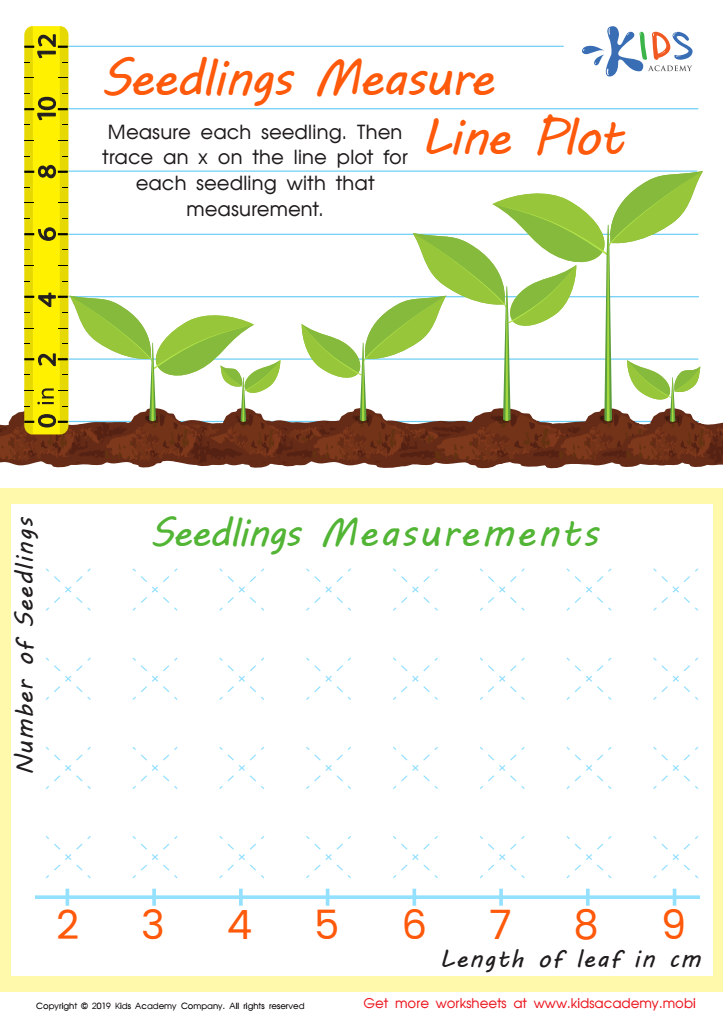
Seedling Measure Line Plot Worksheet
 Assign to My Students
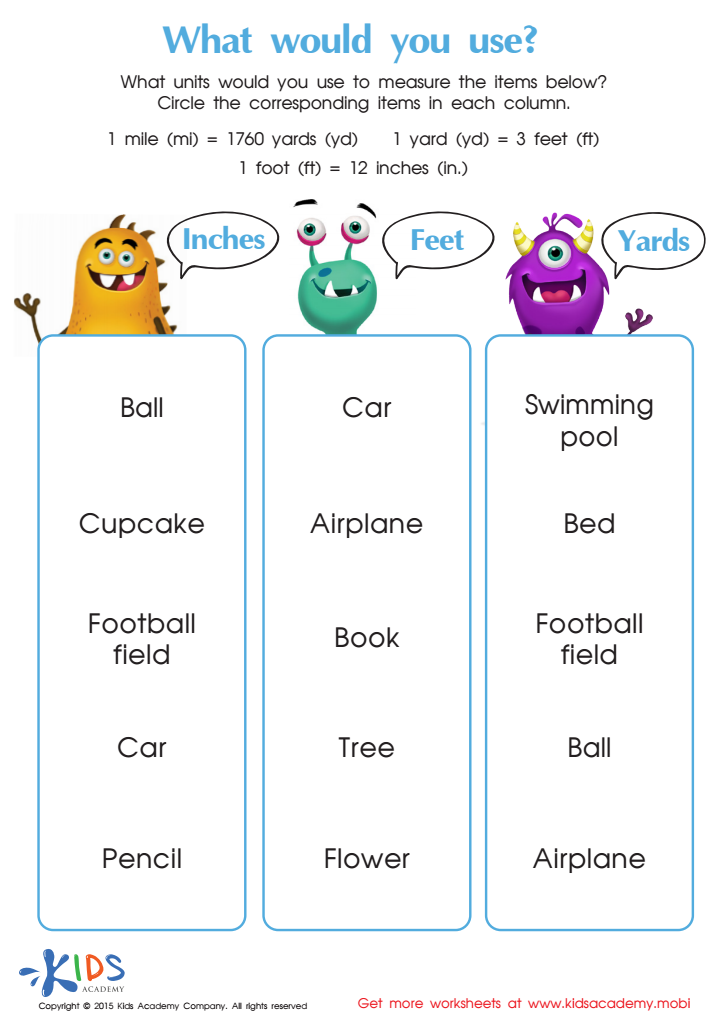
Learning about measuring objects in inches, feet and yards Worksheet
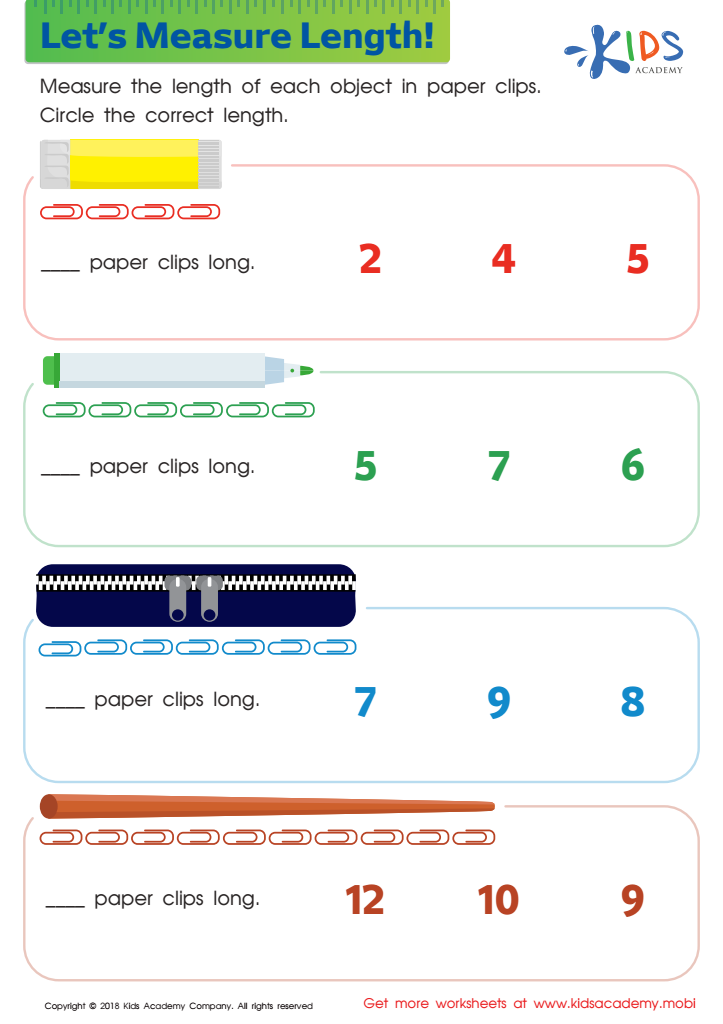
Lets Measure Length Worksheet
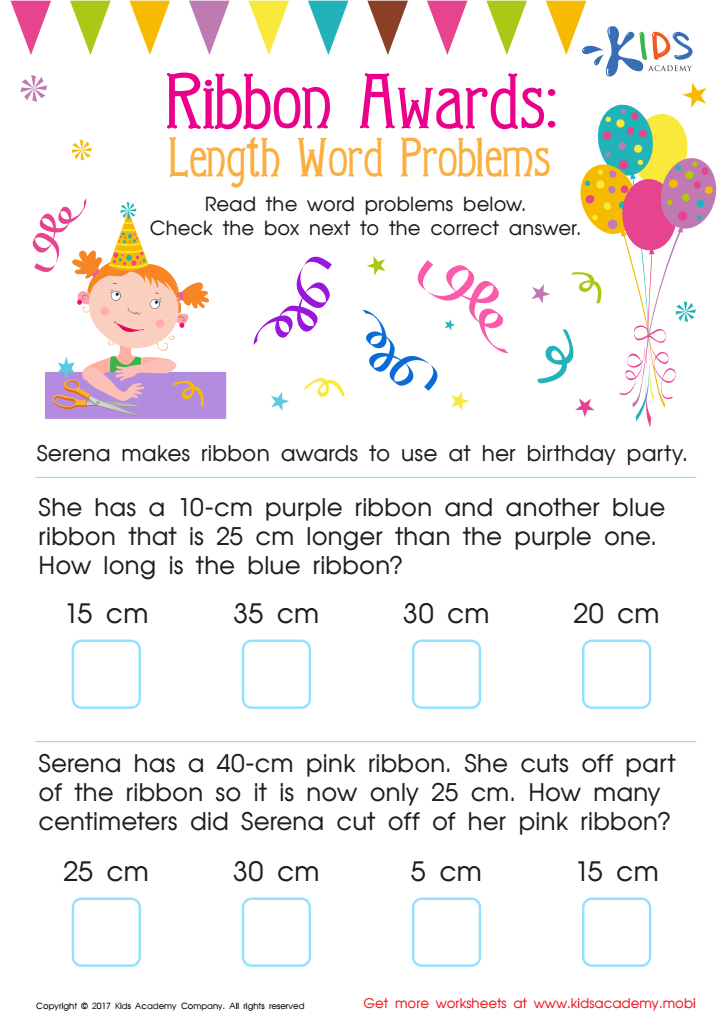
Length Word Problems Worksheet
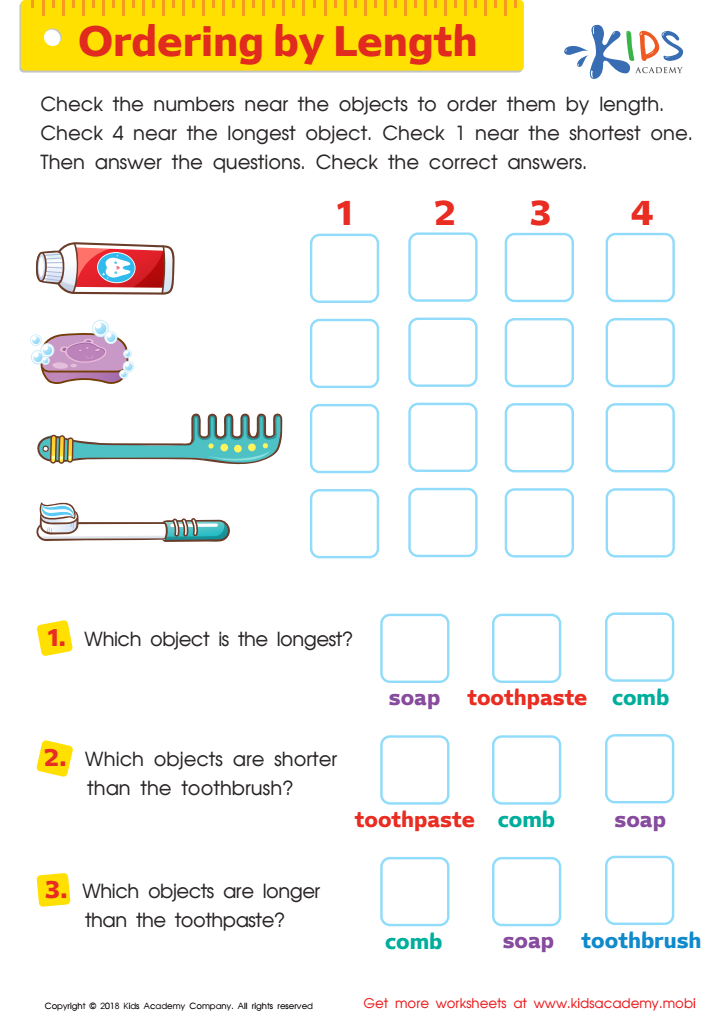
Ordering by Length Worksheet
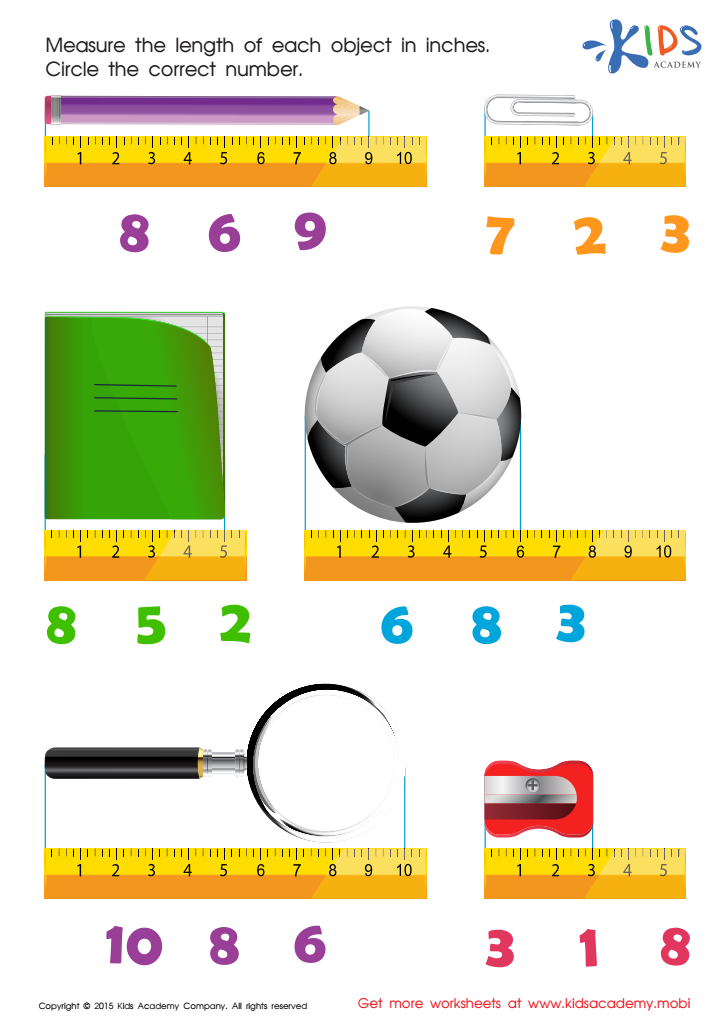
Learning measuring objects in inches Worksheet







Introducing the concept of comparing lengths to children ages 3-8 has profound benefits on their cognitive and analytical development. First, it lays the foundation for essential mathematical skills. Through comparing lengths, young children begin to develop an understanding of measurement and spatial awareness. These are crucial, as they become the stepping stones for more advanced topics such as geometry, algebra, and physics. Additionally, comparing lengths helps refine fine motor skills and eye-hand coordination when handling measurement tools or objects.
Beyond academics, this activity enhances critical thinking and problem-solving abilities. By asking questions such as "Which is longer?" or "By how much?", children learn to make observations, formulate questions, and derive conclusions. This fosters a sense of curiosity and analytical thinking that transcends beyond mathematics.
Moreover, engaging in these activities encourages communication and language development. Children have the opportunity to express their observations clearly and accurately, boosting their vocabulary and verbal skills.
For parents and teachers, comparing lengths opens avenues for integrated learning. It combines mathematical precision with creative play, making learning both fun and educational. This not only builds a strong educational foundation but also helps in establishing an engaging learning environment, nurturing well-rounded, inquisitive young minds.








