
Critical thinking skills Extra Challenge Worksheets for Ages 3-8
5 filtered results
Difficulty Level
Grade
Age
-
From - To
Subject
Activity
Standards
Enhance your child's critical thinking abilities with our Extra Challenge Worksheets designed specifically for ages 3-8! These engaging activities help young learners develop essential skills such as problem-solving, reasoning, and analytical thinking in a fun and interactive way. Our worksheets include a variety of exercises that challenge children to think creatively and logically, fostering a love for learning. Perfect for homeschooling or supplemental learning, these resources encourage independent exploration and cognitive development. With colorful illustrations and age-appropriate tasks, these worksheets make critical thinking an exciting adventure. Start nurturing your child's intellect today and watch their confidence soar!
Favorites
With answer key
Interactive
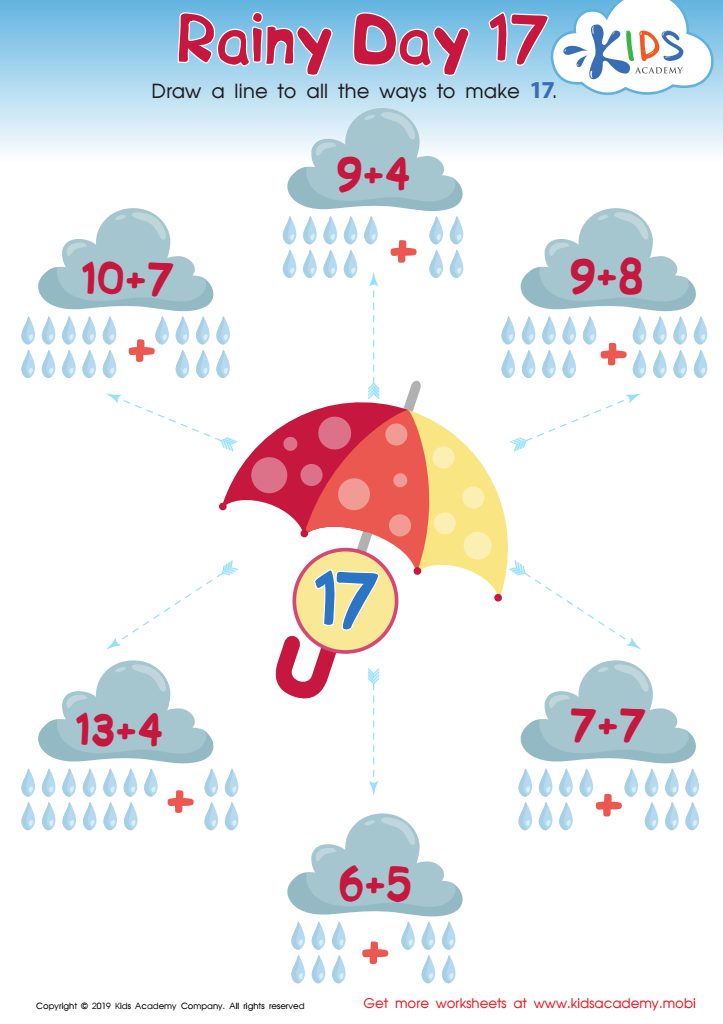
Rainy Day 17 Worksheet
Assist your kids with the 6 equations given. Each cloud displays the sum of two numbers, some of which make 17. Guide them to figure out the total of both numbers when added and draw a line to the umbrella in the center to illustrate the different ways to make 17. This activity will sharpen their addition skills.
 Assign to My Students
Rainy Day 17 Worksheet
Worksheet
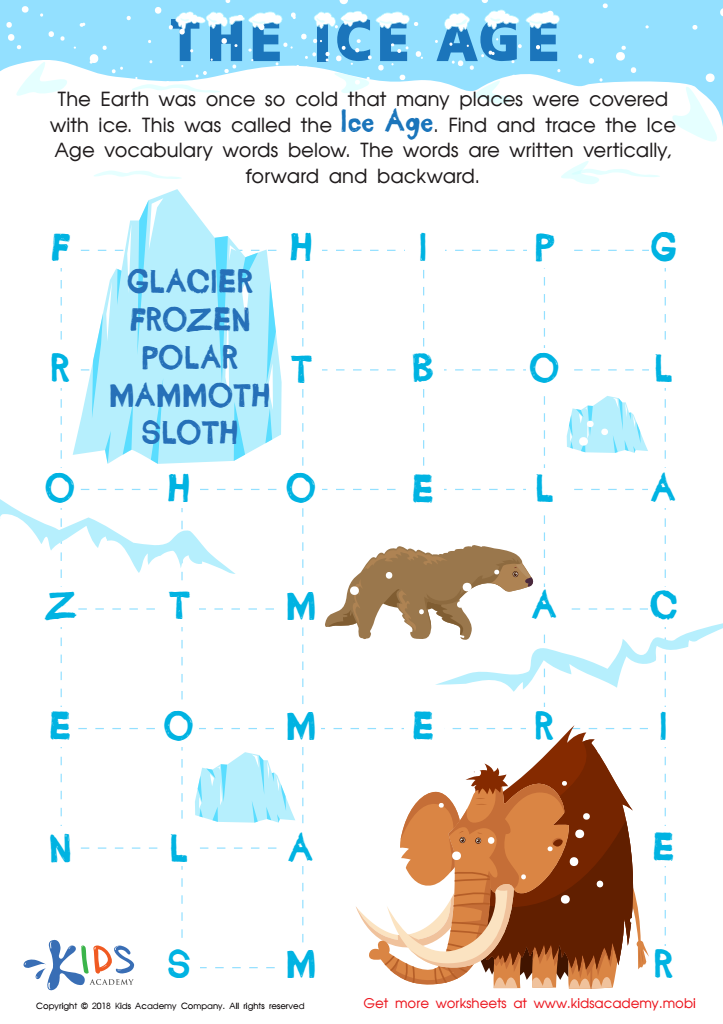
The Ice Age Worksheet
Let your child explore the Ice Age with this fun word search from Kids Academy! They can find words like glacier, frozen, polar, mammoth, and sloth. After finding each, discuss the meaning to help them build a better vocabulary and understanding of ancient history.
The Ice Age Worksheet
Worksheet
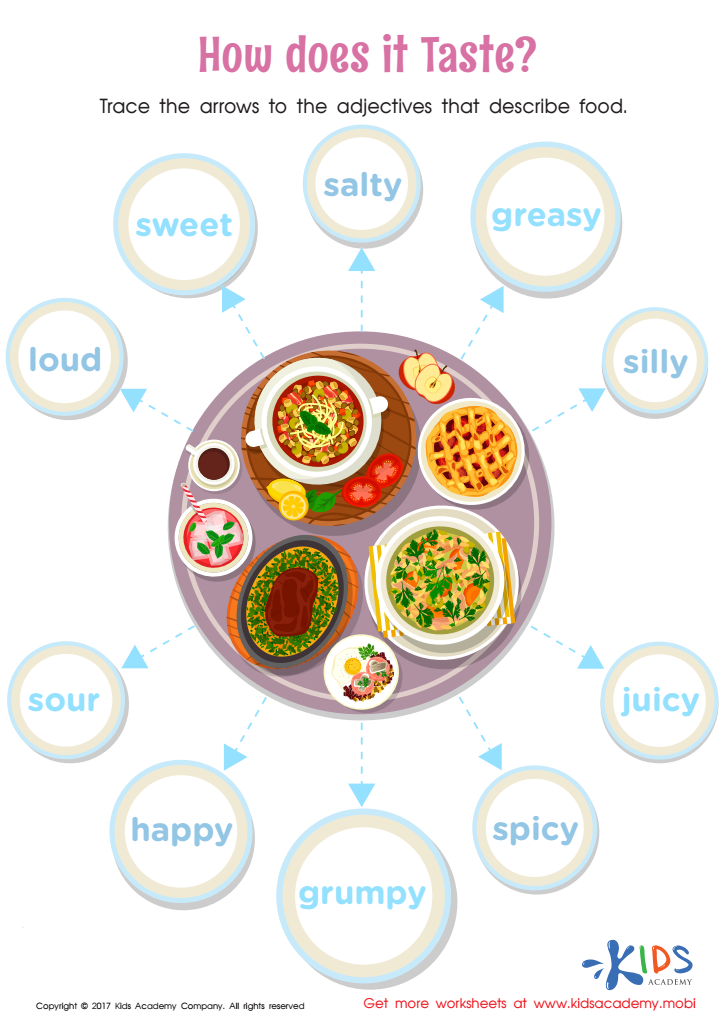
Food Adjectives Worksheet
Here’s a fun PDF worksheet to get your child’s taste buds tingling and help build descriptive language skills!
Food Adjectives Worksheet
Worksheet
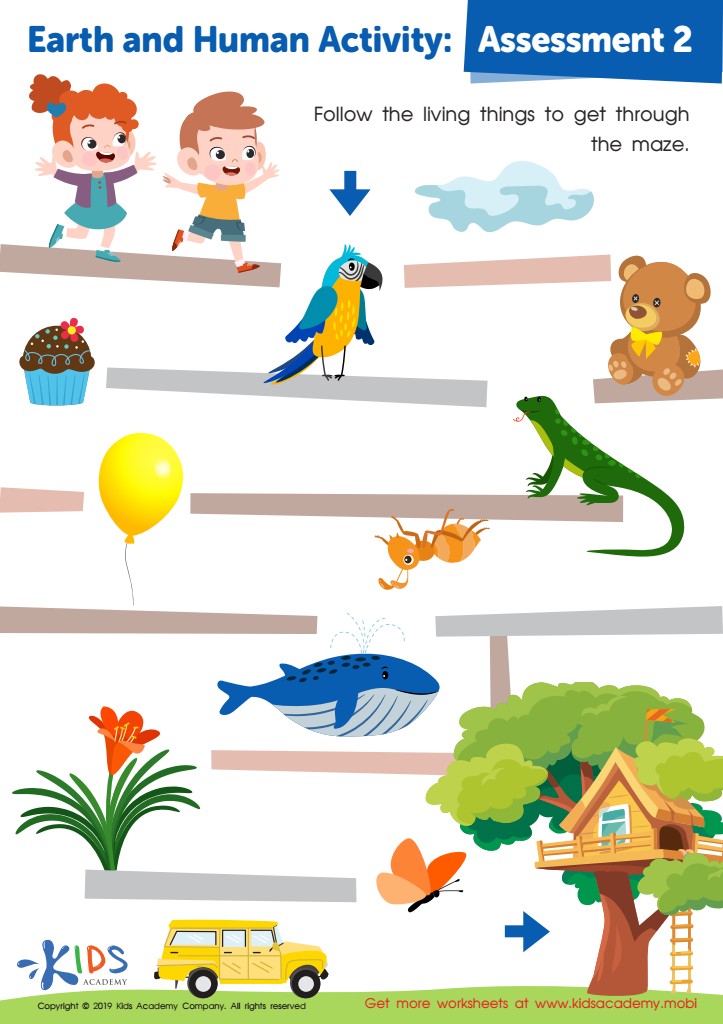
Earth and Human Activity: Assessment 2 Worksheet
Earth is alive with birds, trees, insects, and animals. Explain to your kids that the environment on Earth supports life. Ask for examples, then use the worksheet pictures to help them identify living things and complete the maze.
Earth and Human Activity: Assessment 2 Worksheet
Worksheet
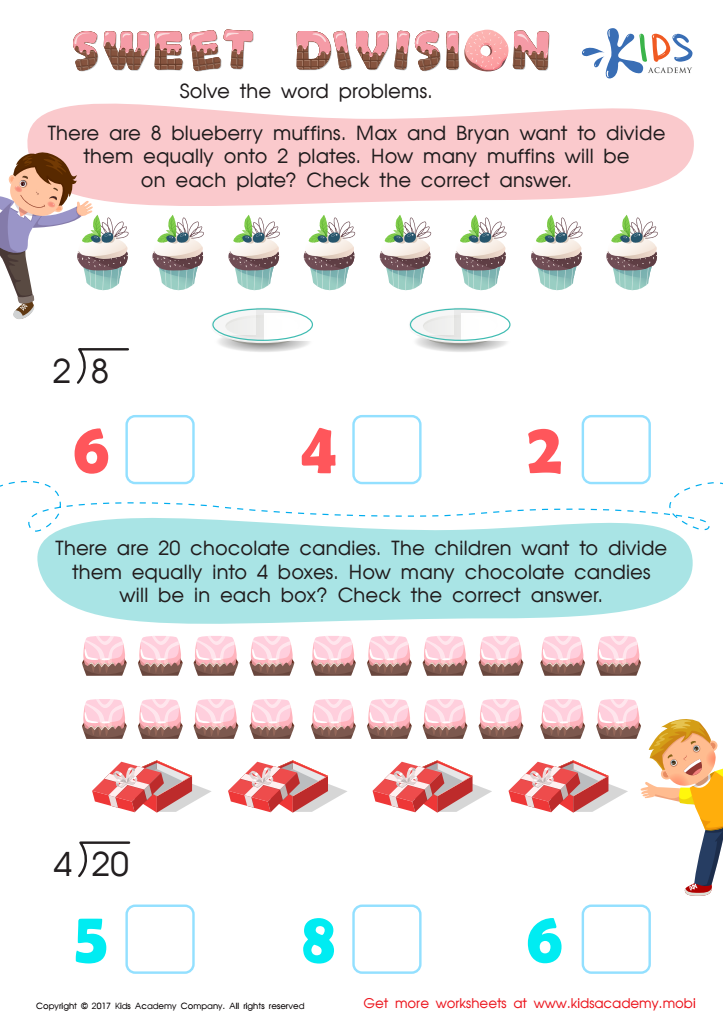
Division Word Problems Worksheet
This division worksheet helps kids understand how long division problems appear as word problems. Perfect for 3rd graders, it'll boost their confidence in solving division problems.
Division Word Problems Worksheet
Worksheet
Join Kids Academy for Free
Who is primarily going to use this learning content?








Critical thinking skills are essential for children aged 3-8 as they serve as the foundation for lifelong learning and problem-solving abilities. Parents and teachers should care about these skills for several reasons.
Firstly, critical thinking fosters curiosity and encourages children to ask questions. When children learn to think critically, they develop the ability to analyze information, make connections, and draw conclusions on their own, which nourishes their desire to learn.
Secondly, with the ability to evaluate situations and consider multiple perspectives, childrenAre better prepared to navigate social interactions and academic challenges. This can lead to improved conflict resolution skills and stronger interpersonal relationships as they learn empathy and understanding.
Additionally, early development of critical thinking helps children become more resilient and adaptable in an ever-changing world. As global citizens, they will encounter complex problems requiring innovative solutions; a solid foundation in critical thinking will equip them to handle such challenges effectively.
Finally, incorporating critical thinking skills into early education can enhance overall cognitive development. Activities that promote these skills, such as open-ended questions, problem-solving games, and explorative play, make learning engaging and impactful. In summary, fostering critical thinking during these early years sets the stage for a successful academic journey and well-rounded development.








