Matching numbers Extra Challenge Worksheets for Ages 3-8
5 filtered results
-
From - To
Unlock the potential of young minds with our Matching Numbers Extra Challenge Worksheets for ages 3-8. Crafted to make learning fun and engaging, these worksheets boost numerical skills by presenting delightful challenges that captivate kids' attention. Ideal for improving number recognition, counting abilities, and fine motor skills, each page offers an exciting mix of vibrant illustrations and interactive tasks. Designed by educators, these resources cater to various learning styles, ensuring every child progresses confidently. Perfect for homeschooling families and classroom teachers alike, our worksheets provide a solid foundation in math while fostering a love for learning. Start the adventure today!
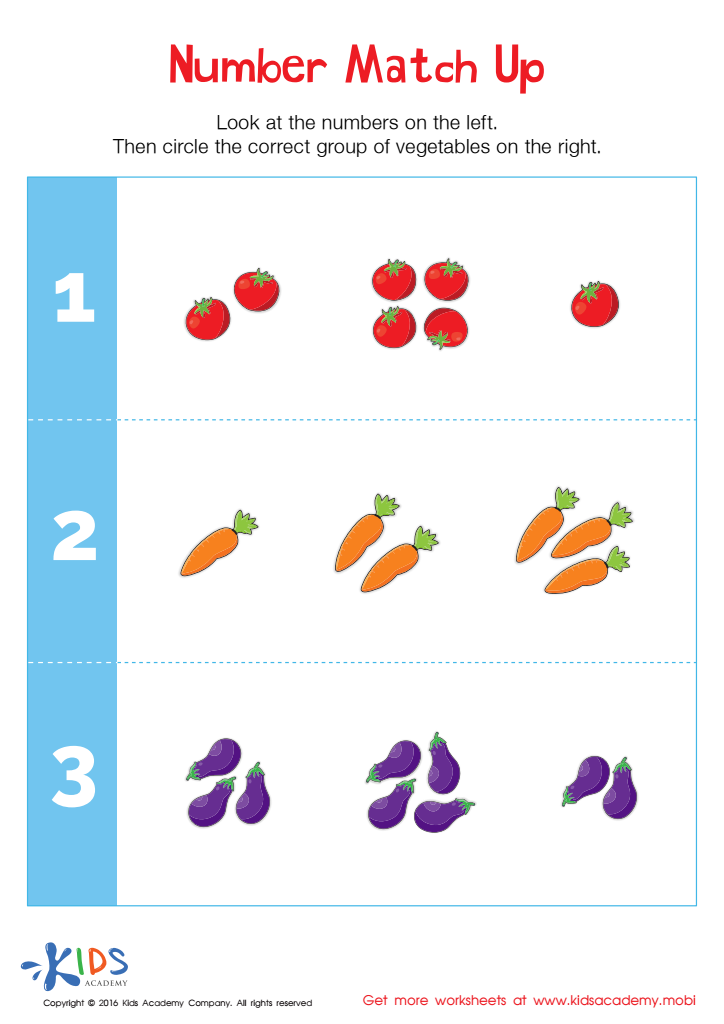
Number Match Up Worksheet
 Assign to My Students

Count and Match Vegetables 1 – 7 Math Worksheet
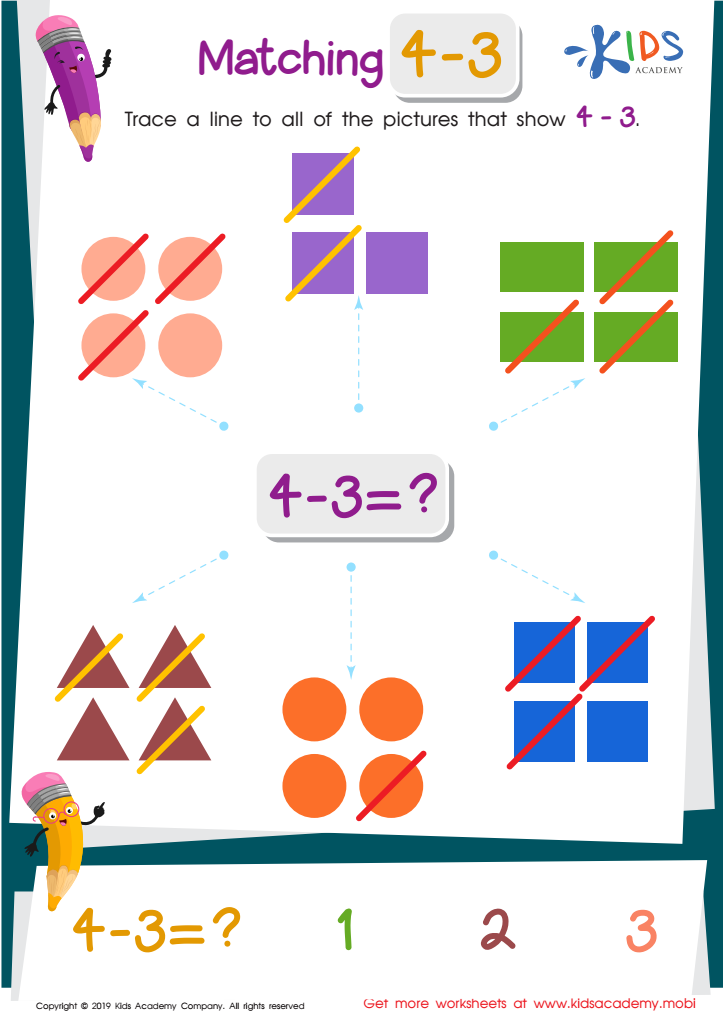
Matching 4 – 3 Worksheet
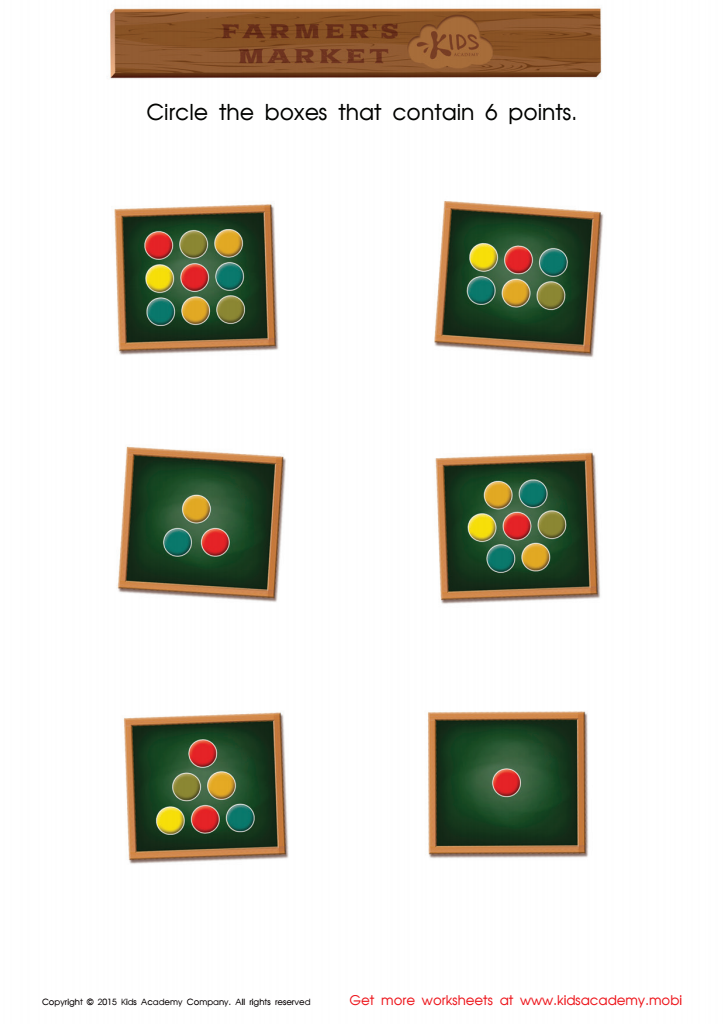
Count and Match Points 6 Math Worksheet
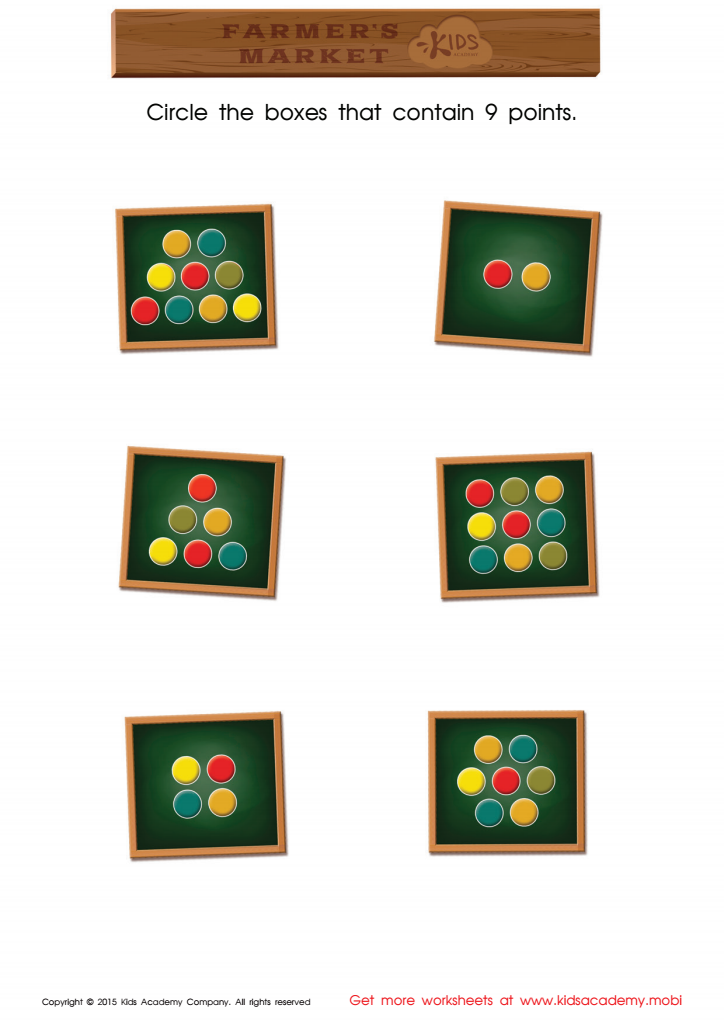
Count and Match Points 9 Math Worksheet







.jpg)
Early exposure to foundational math skills like number matching can significantly impact a child’s cognitive development. For ages 3-8, engaging in a Matching Numbers Extra Challenge offers several essential benefits critical to parents and teachers.
First, it reinforces number recognition, making children more comfortable with identifying and distinguishing numbers, a vital skill for advanced math learning. Second, matching activities enhance memory by requiring children to recall number locations and make connections, which boosts brain functions associated with critical thinking.
Additionally, these challenges often require kids to follow rules and instructions, cultivating better attention to detail and improving focus—a crucial skill for academic success in all areas. The engaging nature of games and challenges also adds a layer of fun, sparking a genuine interest in math and reducing any math-related anxiety.
Socially, cooperative play or gentle competition during number matching challenges fosters essential social skills such as taking turns, patience, and teamwork. Emotionally, the sense of accomplishment when completing tasks successfully can significantly build a child's confidence and motivation to tackle more complex problems.
By integrating these challenges, parents and teachers create a stimulating environment that nurtures holistic growth—strengthening mathematical prowess, cognitive abilities, social interactions, and emotional resilience.








