Math fluency development Extra Challenge Worksheets for Ages 3-8
3 filtered results
-
From - To
Enhance your child's math skills with our "Math Fluency Development Extra Challenge Worksheets" designed for ages 3-8. These engaging worksheets provide targeted practice to help young learners excel in addition, subtraction, and number recognition. Each worksheet is carefully crafted to challenge children at varying levels, making math fun and interactive. Our resources encourage independent problem-solving and promote confidence in math abilities, laying a strong foundation for future learning. Whether in the classroom or at home, these extra challenge worksheets are perfect for reinforcing math fluency. Download and watch your child's math skills soar with our interactive and enjoyable activities!
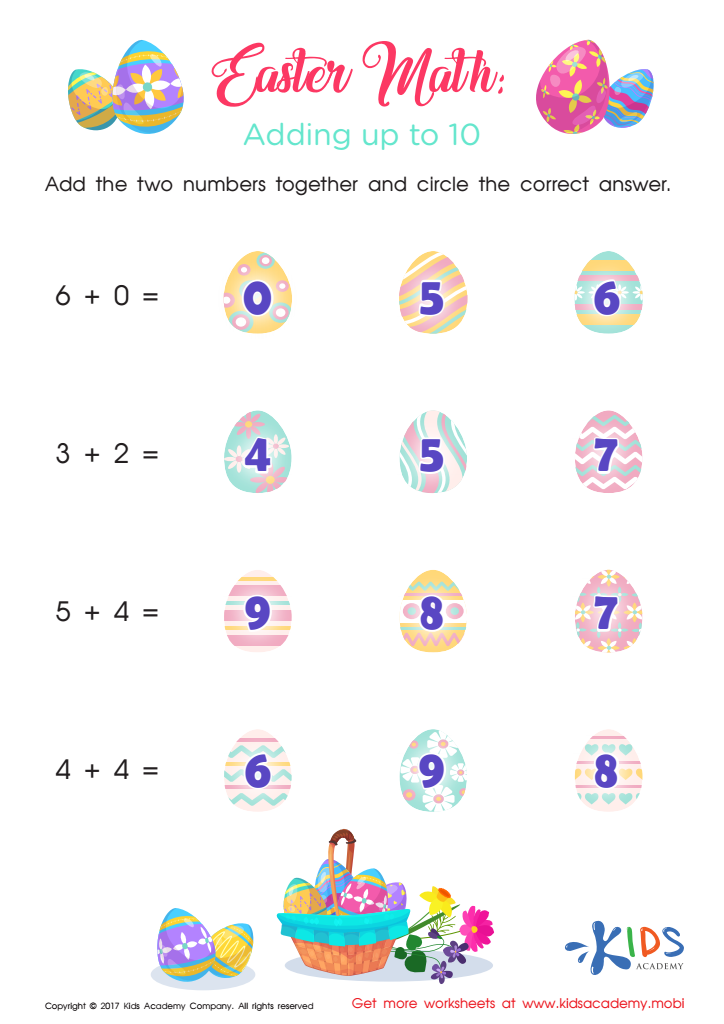
Addition Up To 10 Worksheet
 Assign to My Students
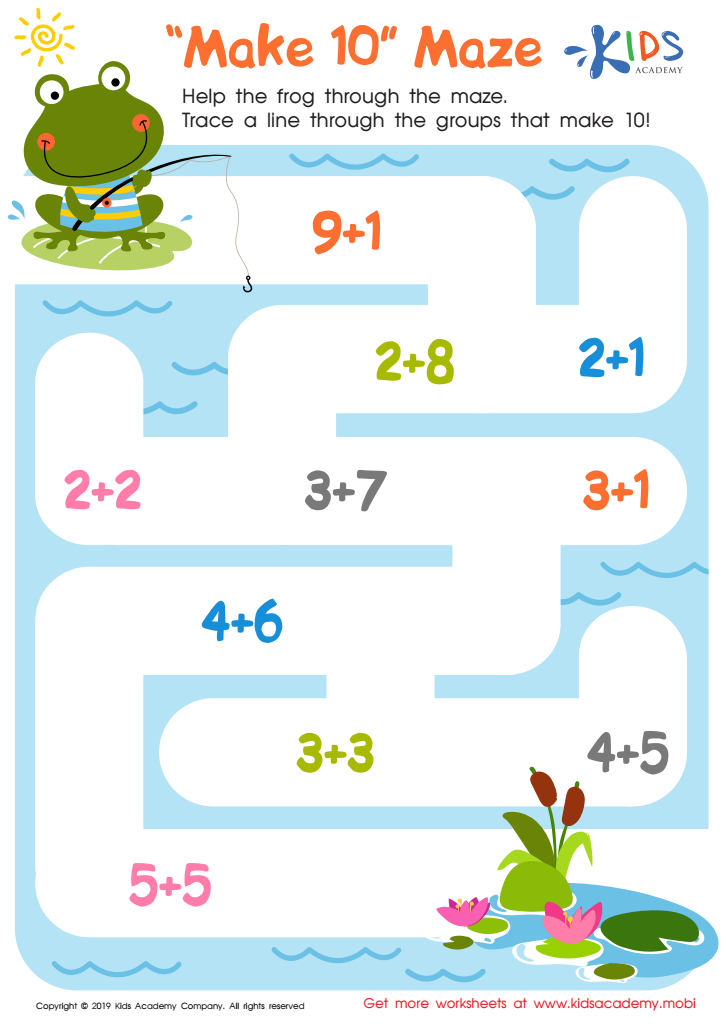
Make 10 Maze Worksheet
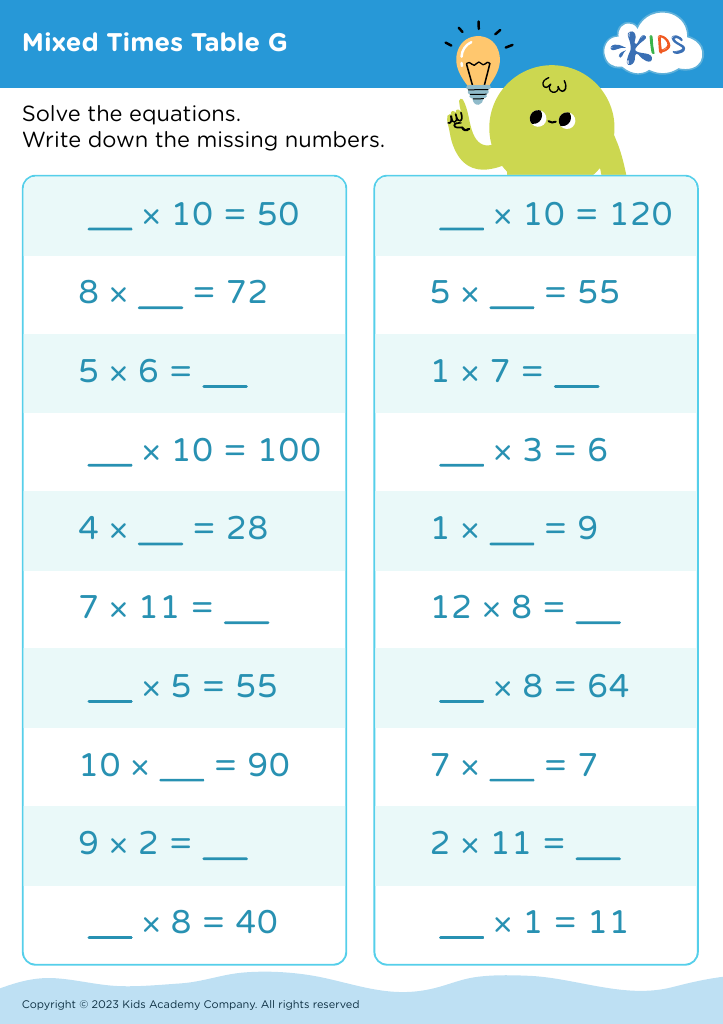


.jpg)





Math fluency development is crucial for children aged 3-8 as it lays the foundation for their future learning and academic success. During these formative years, children's cognitive abilities are rapidly developing, making it an ideal time for them to engage with mathematical concepts. Fluency in math fosters confidence, enabling young learners to tackle more complex problems as they progress.
When parents and teachers prioritize math fluency, they help children understand patterns, relationships, and problem-solving strategies. This understanding is essential not only in math but in everyday life, enhancing critical thinking skills. Engaging children through games, manipulatives, and interactive activities keeps learning fun and reduces math anxiety, ensuring that students see math as an enjoyable subject rather than a daunting task.
Moreover, developing math fluency at an early age supports overall learning across other subjects. For instance, strong math skills can enhance literacy, as kids learn to comprehend word problems and convey mathematical ideas effectively. By fostering math fluency, parents and teachers equip children with the tools they will need to succeed in school and beyond, reinforcing the value of continuous learning and empowering children to become confident, capable individuals in a world heavily influenced by mathematics.








