Noun identification Extra Challenge Worksheets for Ages 3-8
4 filtered results
-
From - To
Give young learners an extra boost in mastering language arts with our Noun Identification Extra Challenge Worksheets, designed for ages 3-8! Perfect for early grade students, these engaging and educational exercises make learning grammar fun and interactive. Each worksheet is thoughtfully crafted to enhance your child's ability to recognize and categorize nouns, including people, places, and objects. Ideal for in-class activities or home practice, our resource helps build a solid foundation in reading and writing skills. Make noun identification exciting and intuitive with worksheets that inspire confidence and promote essential literacy development. Download now and watch your child’s language skills flourish!
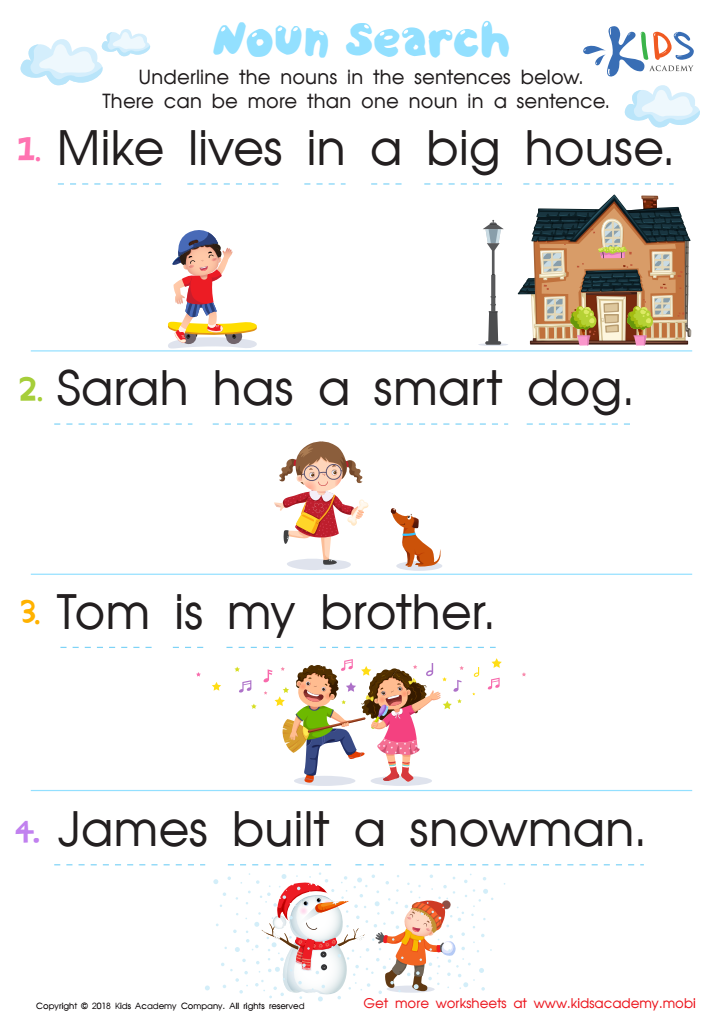
Noun Search Worksheet
 Assign to My Students
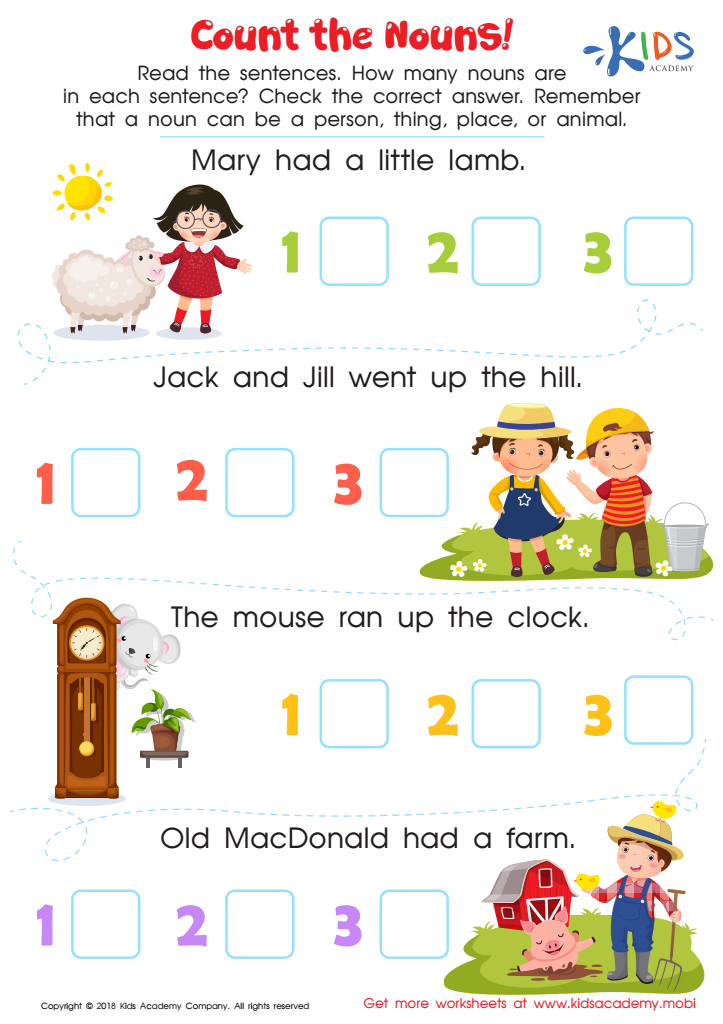
Count the Nouns Worksheet
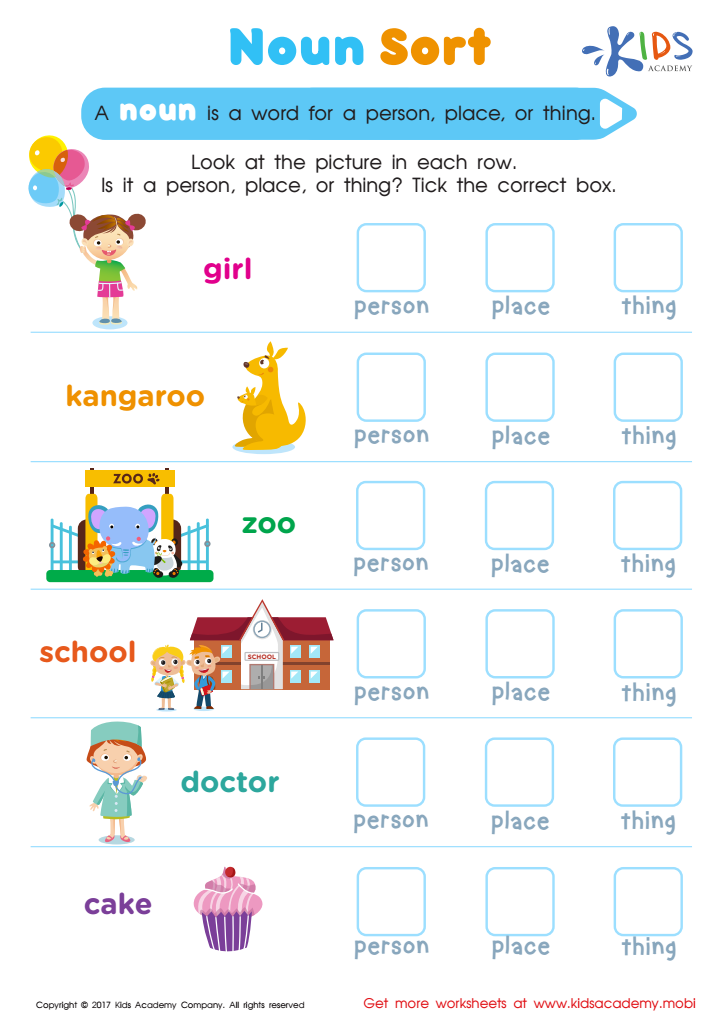
Noun Sort Printable
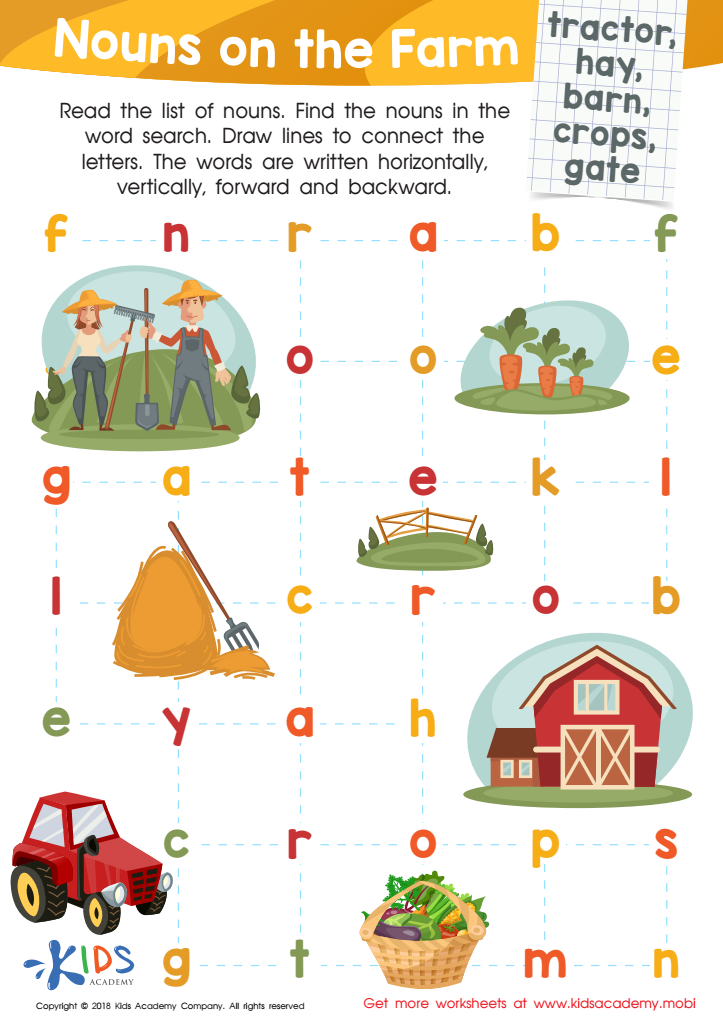
Nouns on the Farm Worksheet








Identifying nouns is a foundational linguistic skill and an essential building block for early childhood literacy. For children aged 3-8, mastering noun identification through an extra challenge is crucial as it helps them recognize and understand the world around them. Nouns—from "dog" to "apple"—are the names of people, places, and things that children encounter daily. When children grasp what nouns are, they can start constructing sentences more meaningfully.
Parents and teachers should care about this extra challenge because it aids in vocabulary expansion. A robust vocabulary allows children to express their thoughts and ideas more clearly, enhancing both their verbal and written communication. Moreover, strong noun identification skills can predict future reading and writing success. Activities that challenge young learners stimulate cognitive development and encourage critical thinking, pattern recognition, and memory retention.
Additionally, recognizing nouns is the gateway to learning other parts of speech, such as verbs and adjectives, which are essential for structuring more complex sentences. This comprehensive understanding can lead to improved academic performance across various subjects.
Incorporating noun-based games and activities keeps learning engaging and fun, thus instilling a lifelong love for learning in children. By prioritizing noun identification, parents and teachers set the stage for academic success and effective communication skills.








