Understanding adjectives Extra Challenge Worksheets for Ages 3-8
3 filtered results
-
From - To
Unlock the world of adjectives with our Extra Challenge Worksheets designed for ages 3-8! These engaging printables aim to enhance children's vocabulary and comprehension skills through fun and interactive activities. Young learners will explore adjectives by identifying and describing objects, animals, and situations, fostering creativity and critical thinking. Each worksheet offers a unique challenge, encouraging kids to expand their expressive abilities while having fun. Perfect for parents, teachers, and caregivers, these resources support early literacy development and make learning about adjectives exciting. Help your child build a strong foundation in language with our comprehensive worksheets today!
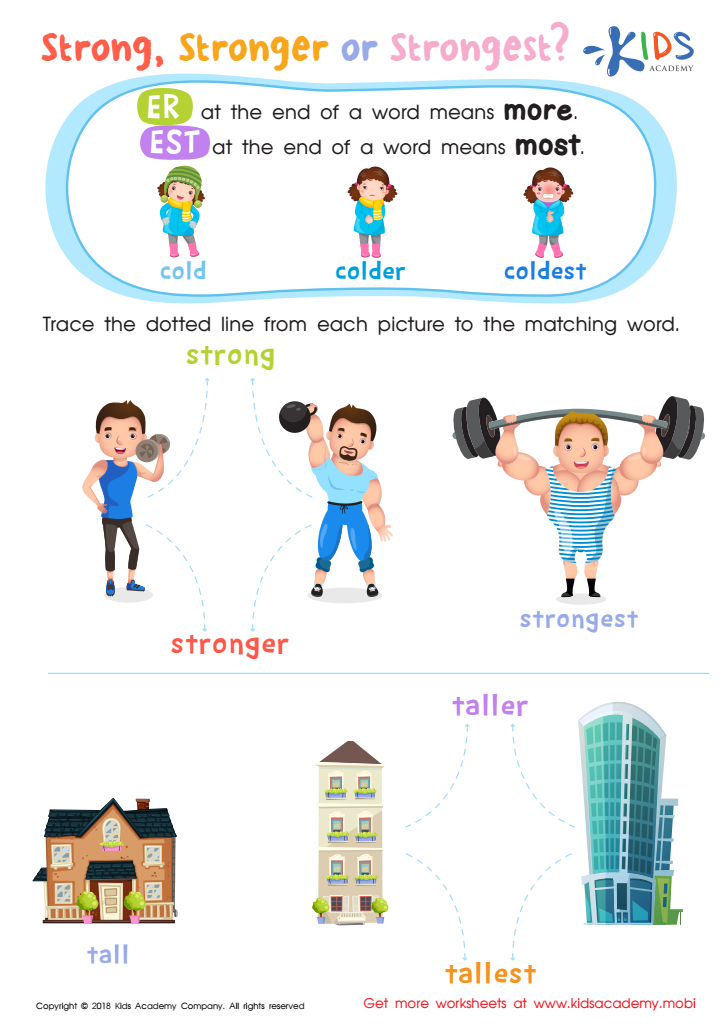
Strong or Stronger? Worksheet
 Assign to My Students
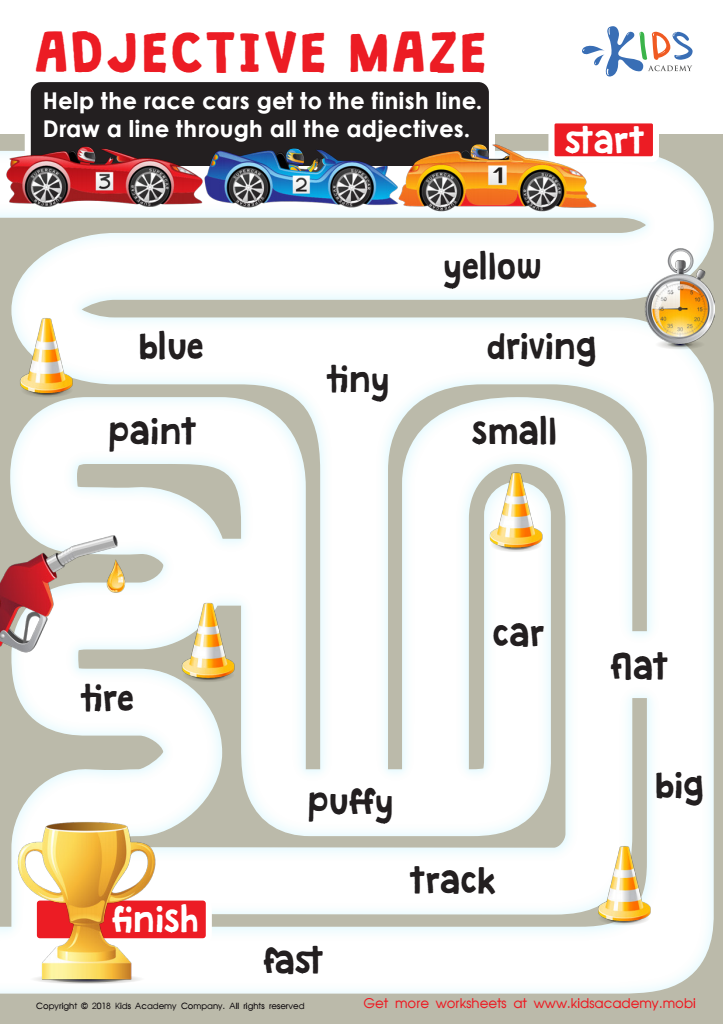
Adjective Maze Worksheet
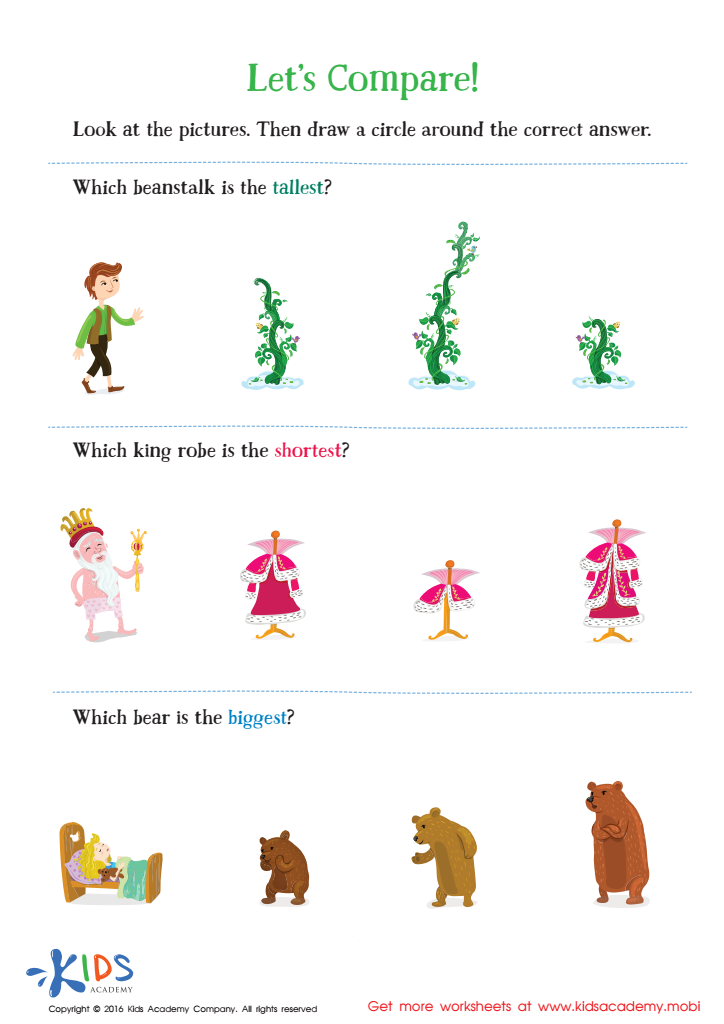
Fairy Tale Worksheet: Let's Compare


.jpg)


.jpg)
Understanding adjectives is crucial for the language development of children aged 3-8. Adjectives are descriptive words that enhance vocabulary, allowing children to express their thoughts, feelings, and observations more vividly. For parents and teachers, fostering an understanding of adjectives can significantly enhance children's communication skills, making their speech and writing more engaging and precise.
As children begin to identify and use adjectives, they develop a more nuanced understanding of the world around them. Describing objects, experiences, and emotions helps them articulate their thoughts clearly, boosting their confidence in both verbal and written expressions. Furthermore, adjectives play a vital role in reading comprehension; when children grasp descriptive language, they can better understand texts, visualize scenes, and connect with characters.
Incorporating adjectives into everyday activities—such as during storytelling, playtime, or specific learning games—makes learning engaging and fun. Encouraging a curiosity about words enriches children’s literary experiences and stimulates their imagination, thereby laying a strong foundation for lifelong learning. Ultimately, nurturing an understanding of adjectives supports broader literacy development, making it essential for educators and parents to prioritize this aspect of linguistic growth.








