Fine Motor Skills Extra Challenge 2D Shapes Worksheets for Ages 3-8
3 filtered results
-
From - To
Fine Motor Skills Extra Challenge 2D Shapes Worksheets for Ages 3-8 offer an engaging way for children to enhance their fine motor skills. These expertly designed worksheets feature a variety of 2D shape activities that not only help young learners recognize and differentiate shapes but also develop their hand-eye coordination, pencil control, and cutting skills. Perfectly suited for kids aged 3 to 8, these activities provide an extra challenge to keep learning fun and effective. Whether used in the classroom or at home, these worksheets are an excellent resource for fostering essential early childhood development skills.
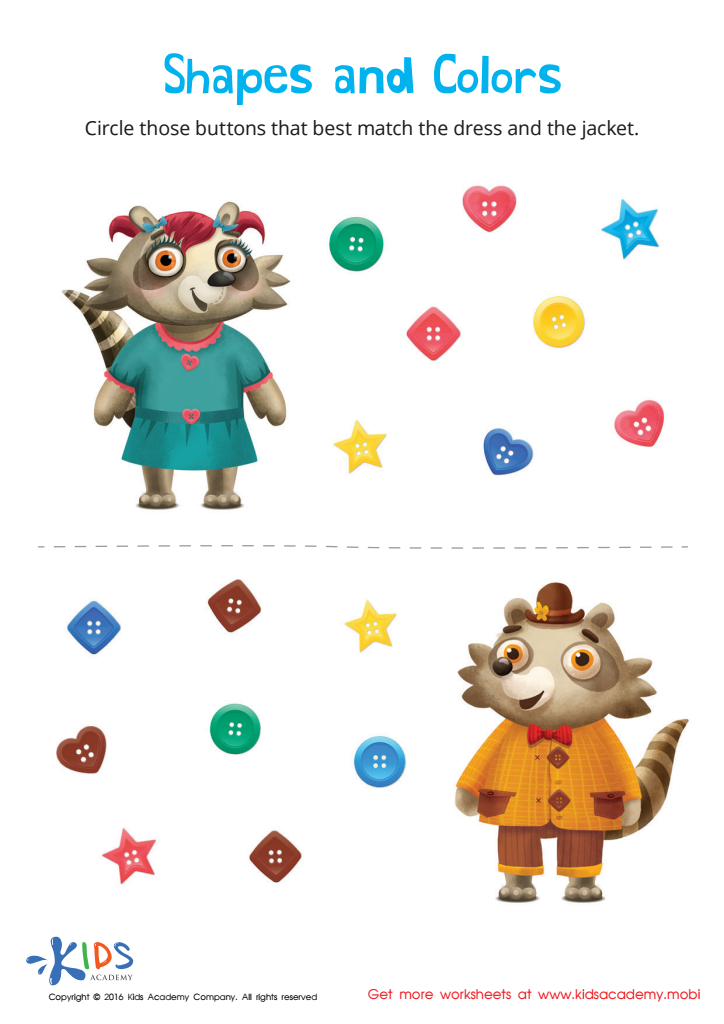
Matching: Shapes and Colors Worksheet
 Assign to My Students











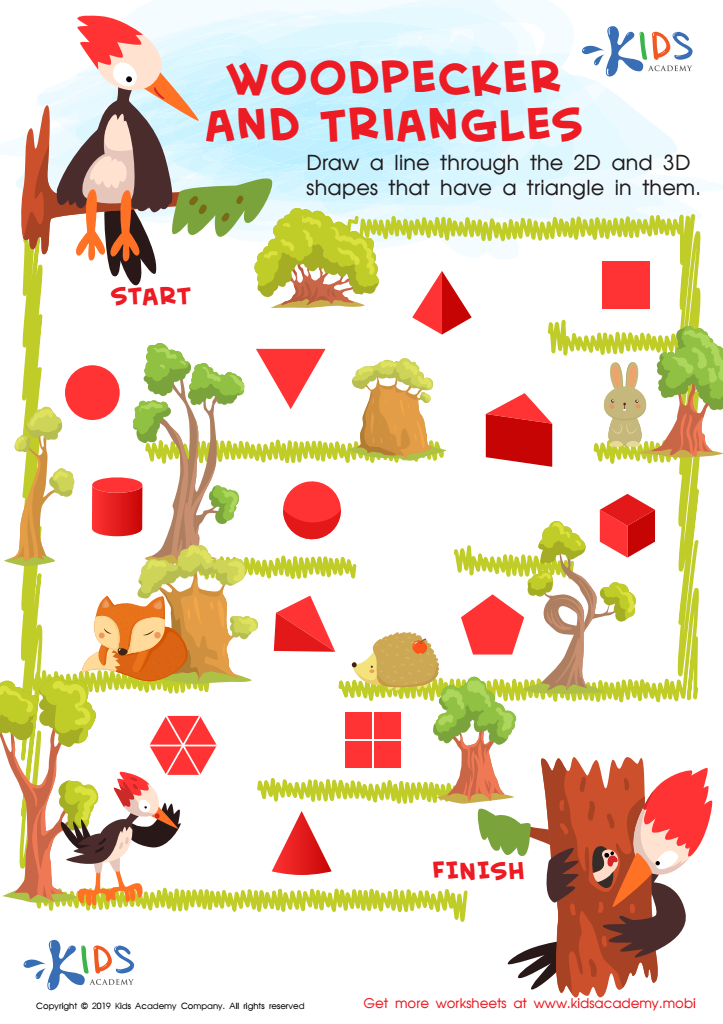
Woodpecker and Triangles Worksheet
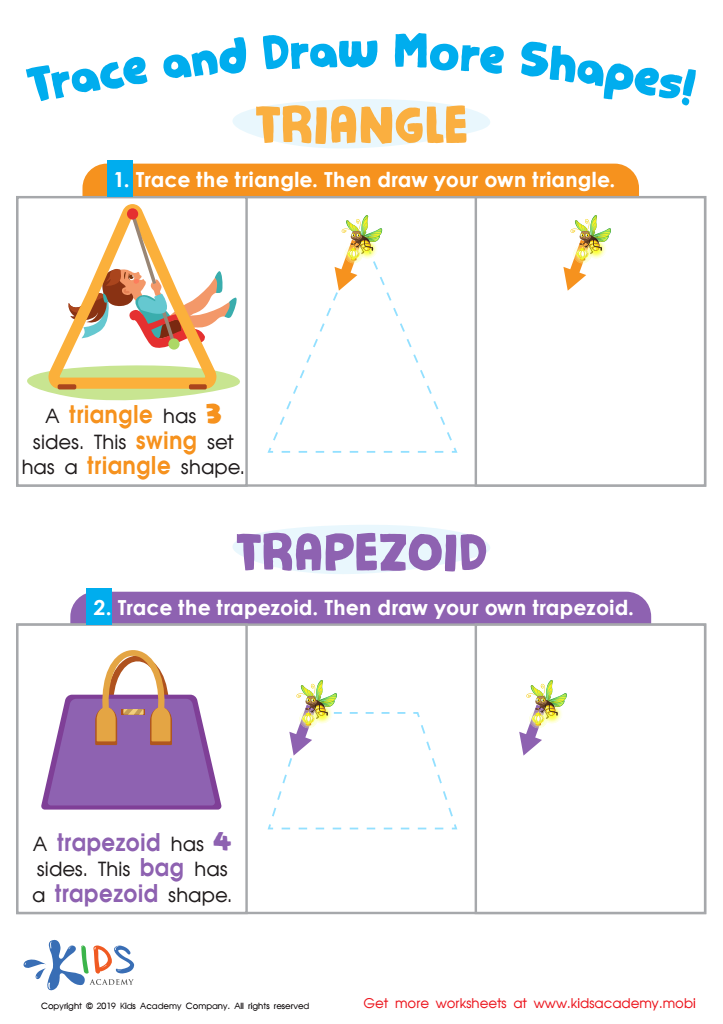
Trace and Draw More Shapes Worksheet








Parents and teachers should pay attention to Fine Motor Skills Extra Challenges, particularly involving 2D shapes, for children aged 3-8 because these activities play a crucial role in a child’s early development. Fine motor skills involve the coordination of small muscles, particularly those in the hands and fingers, with the eyes (known as hand-eye coordination). These skills are essential for everyday tasks like writing, buttoning clothes, using utensils, and more.
Engaging with 2D shapes during these activities helps children develop spatial awareness and cognitive abilities. Recognizing and manipulating shapes contributes to a child's ability to understand concepts of geometry, and it lays the groundwork for more complex math skills later on. Furthermore, as children learn to trace, cut, and assemble shapes, they also improve their precision and control, enhancing their readiness for handwriting.
Another key benefit is fostering critical thinking and problem-solving skills. When children participate in activities that challenge them to sort, match, or assemble shapes, they learn to think creatively and logically. These experiences can boost their confidence and aptitude in a range of academic areas, making it easier for them to learn and succeed in future educational endeavors. Therefore, these activities are fundamental for holistic, well-rounded development.