Money recognition Extra Challenge Money Worksheets for Ages 3-8
4 filtered results
-
From - To
Introducing our "Money Recognition Extra Challenge Worksheets" for ages 3-8! Designed to enhance young learners' understanding of money, these worksheets provide engaging exercises on identifying coins and bills, counting money, and making change. Perfect for advanced students ready for an extra challenge, our worksheets combine fun activities with essential life skills. Each sheet is crafted to support cognitive development and boost financial literacy from an early age. Printable and easily accessible, these resources are ideal for both classroom and home use, helping your child become confident in managing money. Unlock their financial mastery today!
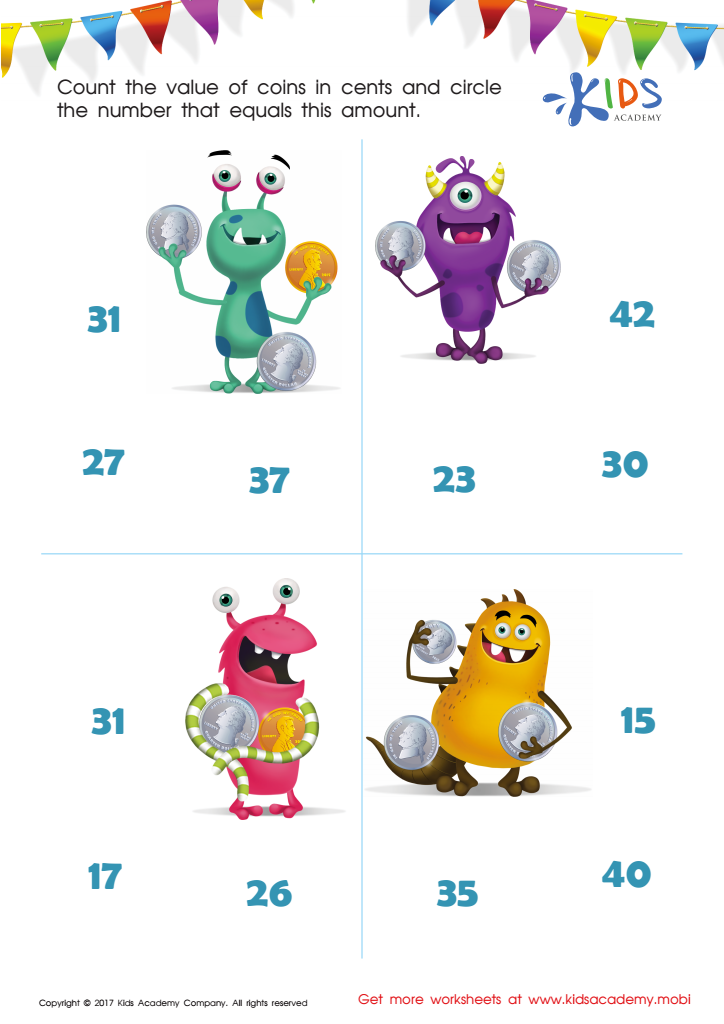
How Many Coins Money Worksheet
 Assign to My Students
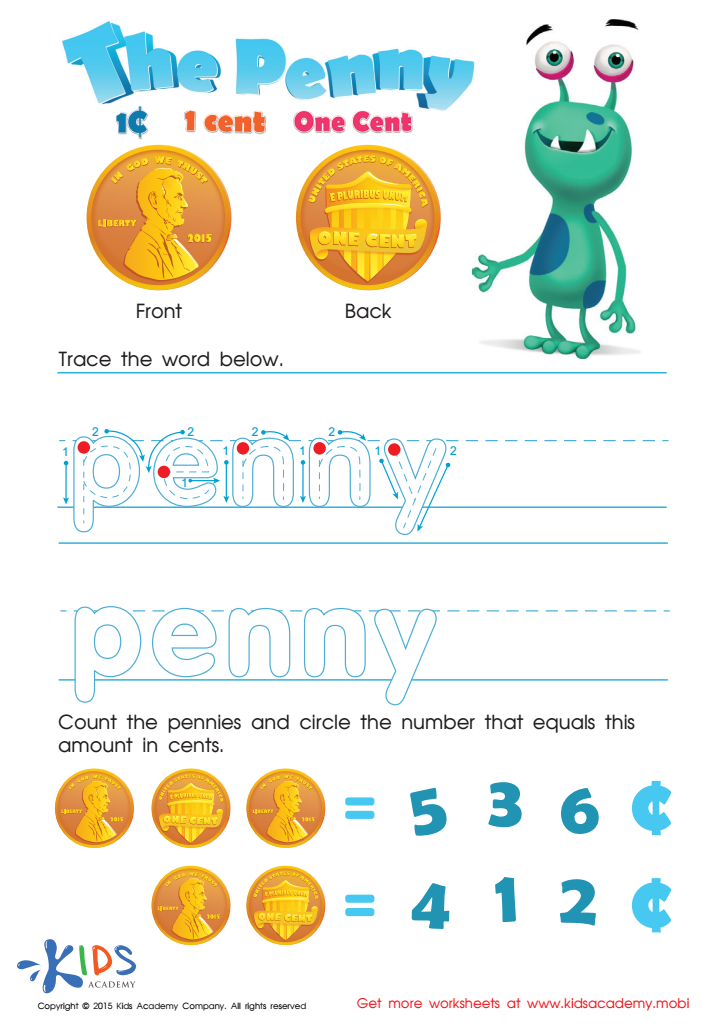
One Cent or the Penny Money Worksheet
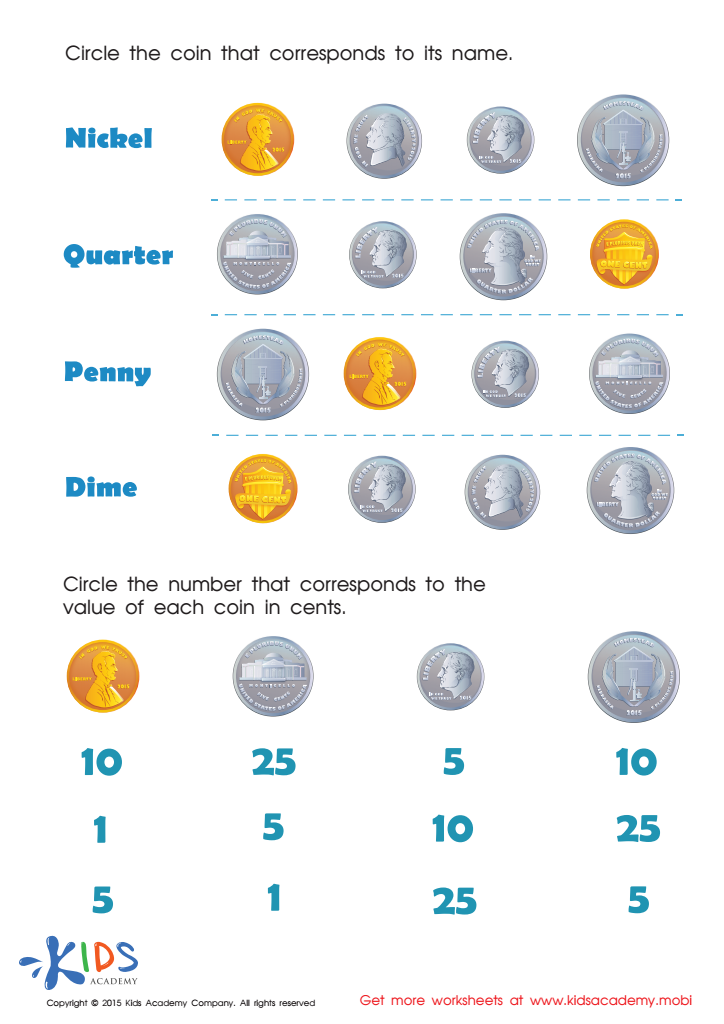
Coin Names and Values Money Worksheet
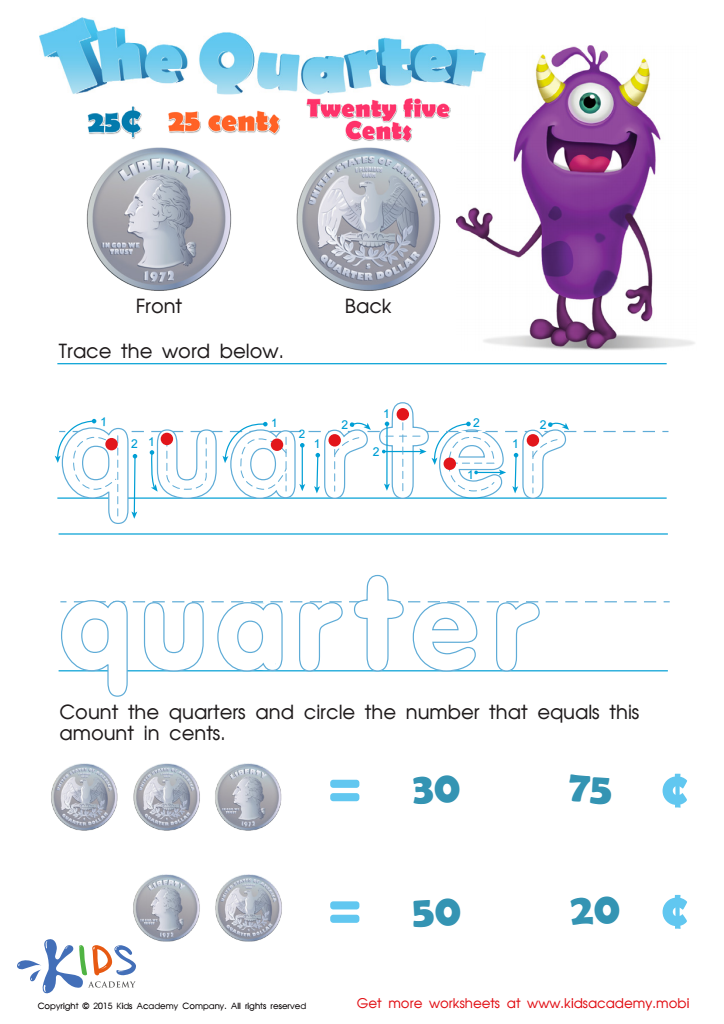
Twenty Five Cents or the Quarter Money Worksheet








Early childhood is a critical period for cognitive and social development, and understanding the basics of money plays a crucial role in building foundational life skills. Parents and teachers should prioritize money recognition activities for children ages 3-8 because these skills foster early numeracy and financial literacy, essential for effective decision-making in later life. Engaging with money through games and activities helps children learn to identify coins and bills, compare values, and perform simple addition and subtraction, reinforcing math skills in practical, enjoyable ways.
Furthermore, early exposure to the principles of money management, such as saving, spending, and sharing, plants the seeds for responsible financial behavior. Children who practice these skills are more likely to develop disciplined financial habits, understanding the consequences of financial decisions before they become significant challenges. Additionally, recognizing money early enhances problem-solving abilities and critical thinking, encouraging a hands-on learning approach.
In terms of social development, money recognition activities can foster cooperation and communication among peers as children participate in group tasks, learn to wait their turn, and understand equality and fairness through trading and sharing activities. In conclusion, money recognition challenges can significantly benefit young children by intertwining cognitive growth, practical math application, and essential life skills in an engaging, developmentally appropriate manner.