Basic counting skills Extra Challenge Math Worksheets for Ages 3-8
4 filtered results
Difficulty Level
Grade
Age
-
From - To
Subject
Activity
Standards
Unlock your child's mathematical potential with our "Basic Counting Skills Extra Challenge Math Worksheets" designed for ages 3-8! These engaging worksheets provide a fun and interactive way for young learners to develop foundational counting skills, essential for future math success. Each activity is crafted to challenge and inspire, helping children learn to count objects, recognize numbers, and improve their numerical fluency. From colorful illustrations to stimulating exercises, our worksheets encourage critical thinking and problem-solving. Ideal for both at-home practice and classroom use, these extra challenges make learning math enjoyable and effective. Start your child's journey to math mastery today!
Favorites
With answer key
Interactive
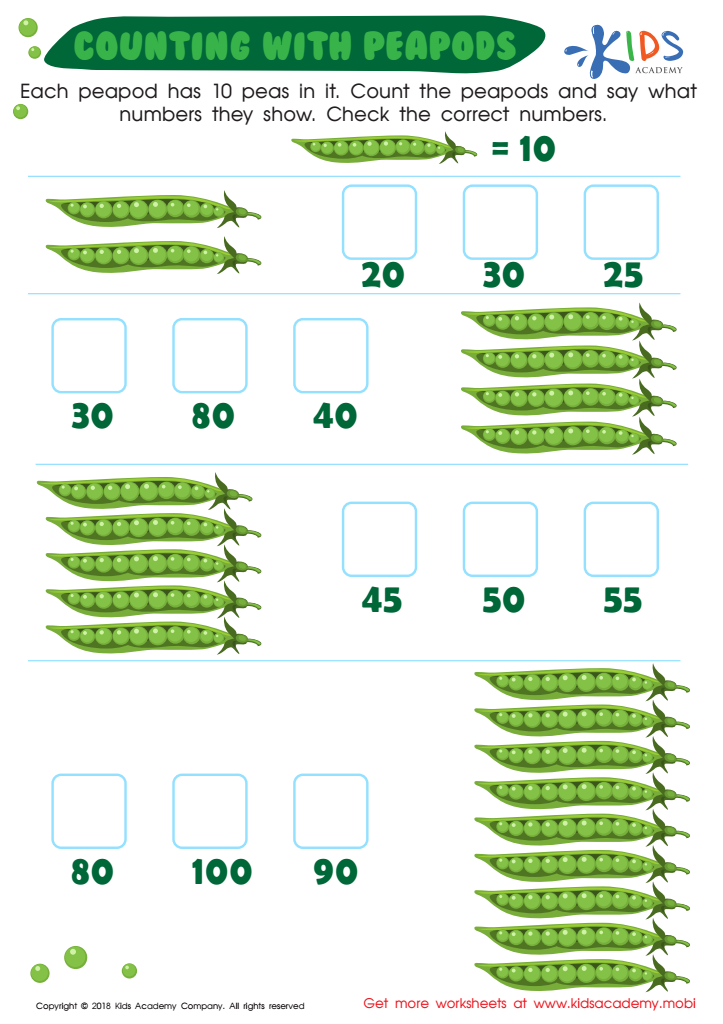
Number Worksheet: Counting With Peapods
Help your child learn multiplication and develop their place value skills in a fun way with this number worksheet: Counting with Peapods! Each pod has 10 peas, and kids can simply count each one and add a zero to the ones place to get the answer. It's a great, colorful way to learn!
 Assign to My Students
Number Worksheet: Counting With Peapods
Worksheet
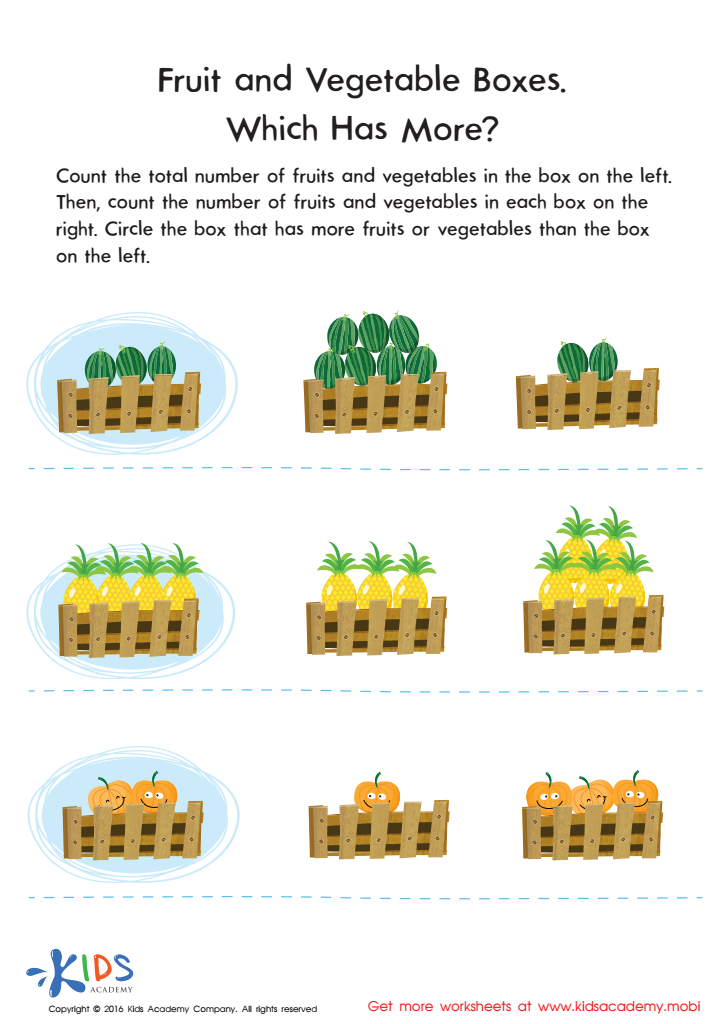
Which Has More? Size Worksheet
This worksheet is perfect for your child to practice critical thinking and logical reasoning. Your child will count and compare the fruits and veggies in the crates to decide which one has more. They will use complex cognitive skills and practice following precise rules. Guide them through the directions and help keep their focus, while enjoying the images.
Which Has More? Size Worksheet
Worksheet
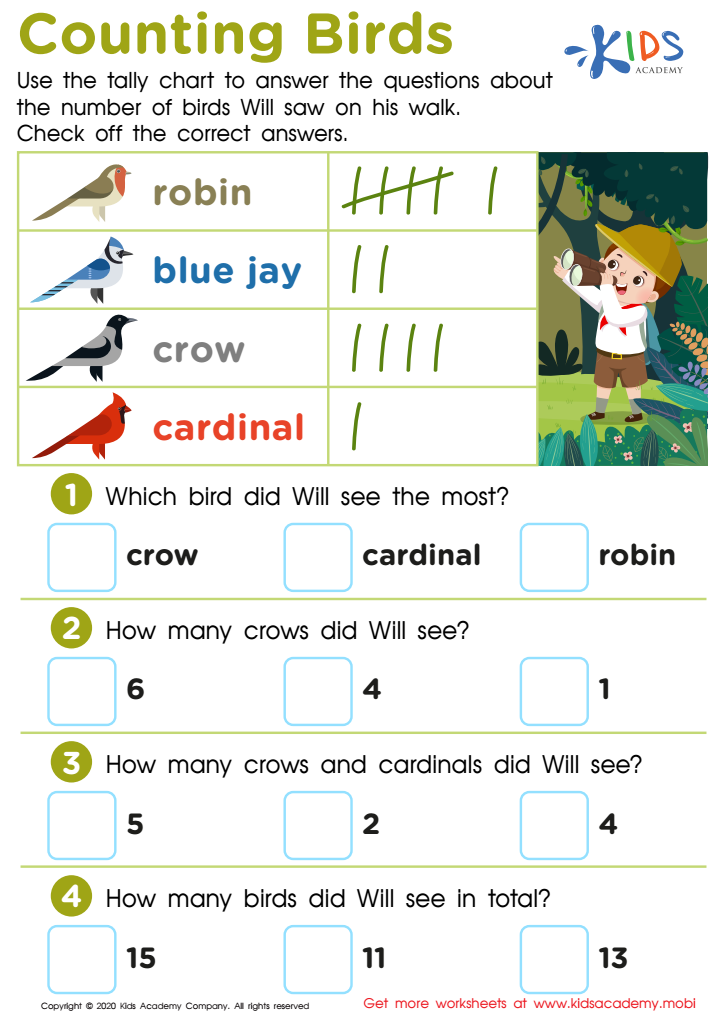
Counting Birds Worksheet
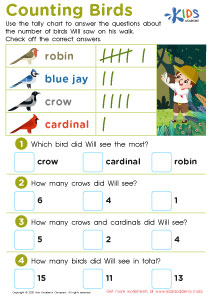
Introduce your child to the exciting activity of bird watching! This PDF worksheet features a tally chart of the different types of birds Will saw on his walk. Have your kid use the tally chart to organize information and use it to answer the questions that follow, thus boosting early science and math skills.
Counting Birds Worksheet
Worksheet
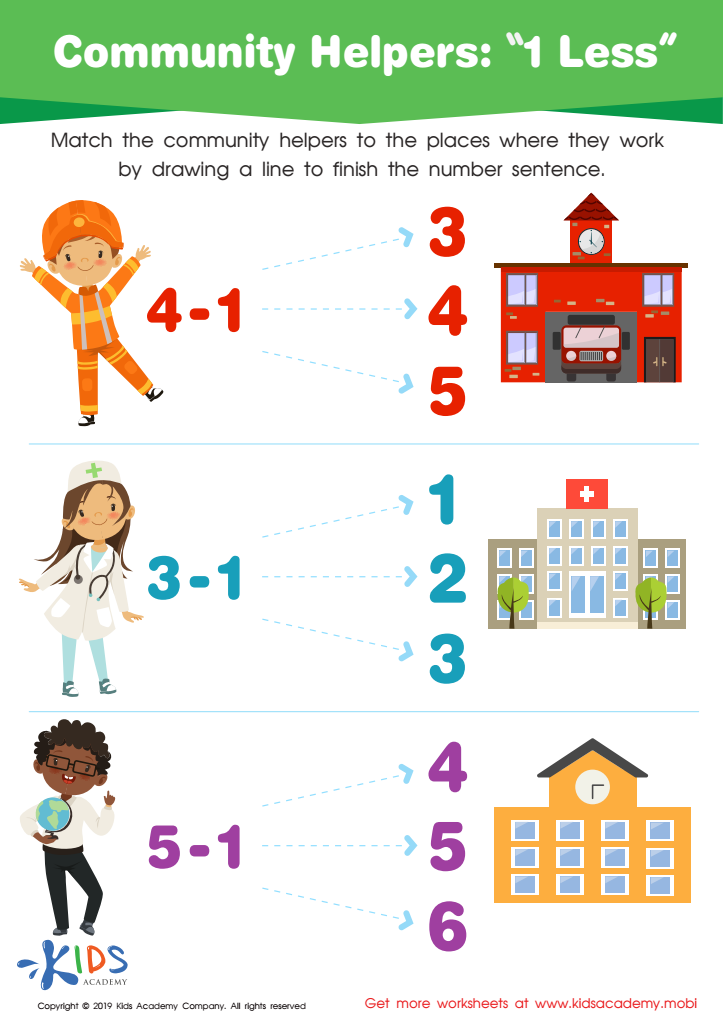
Community Helpers: 1 less Worksheet
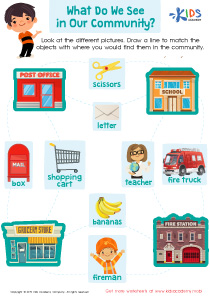
Look at this worksheet with your child and ask them to identify the different community helpers. Match them to the places where they work by drawing a line to finish the number sentence. This helps them identify the people that help keep the community organized and running smoothly. Examples of community helpers include doctors, police officers, firefighters, teachers, etc.
Community Helpers: 1 less Worksheet
Worksheet
Join Kids Academy for Free
Who is primarily going to use this learning content?








Basic counting skills form the foundation for a child’s future math competence and overall cognitive development. For ages 3-8, mastering these skills is crucial because they are not only vital for academic success but also for everyday life. Early learners develop their ability to recognize numbers, understand quantity, and perform simple addition and subtraction, laying the groundwork for problem-solving skills.
Parents and teachers should prioritize nurturing these skills because they influence a child’s confidence in math-related tasks. Engaging in activities, like Extra Challenge Math, provides children with fun, interactive experiences to practice counting in diverse contexts, enhancing their learning retention.
Moreover, early influx of mathematical skills promotes analytical thinking and encourages a love for learning. As children gain fluency in counting, they become more adept at grasping advanced concepts as they progress through school. Support in developing these foundational skills can reduce math anxiety, fostering a positive attitude towards math as they grow.
Investing time in support for basic counting skills not only prepares children for future success in math but also fuels their curiosity and cognitive growth, making it essential for parents and educators to actively engage in these developmental milestones.