Color recognition Extra Challenge Math Worksheets for Ages 3-8
5 filtered results
-
From - To
Enhance your child's learning experience with our engaging Color Recognition Extra Challenge Math Worksheets, suitable for ages 3-8! These specially designed worksheets help young learners develop their color identification skills while integrating essential math concepts. Each activity is thoughtfully crafted to be both fun and educational, encouraging creativity and critical thinking. From matching colors to solving basic addition and subtraction problems, your child will enjoy cosmic adventures along with vibrant illustrations. Perfect for pre-K and early grade classrooms or at-home learning, these worksheets make mastering color recognition a playful experience that fosters a love for learning. Discover the joy of learning today!
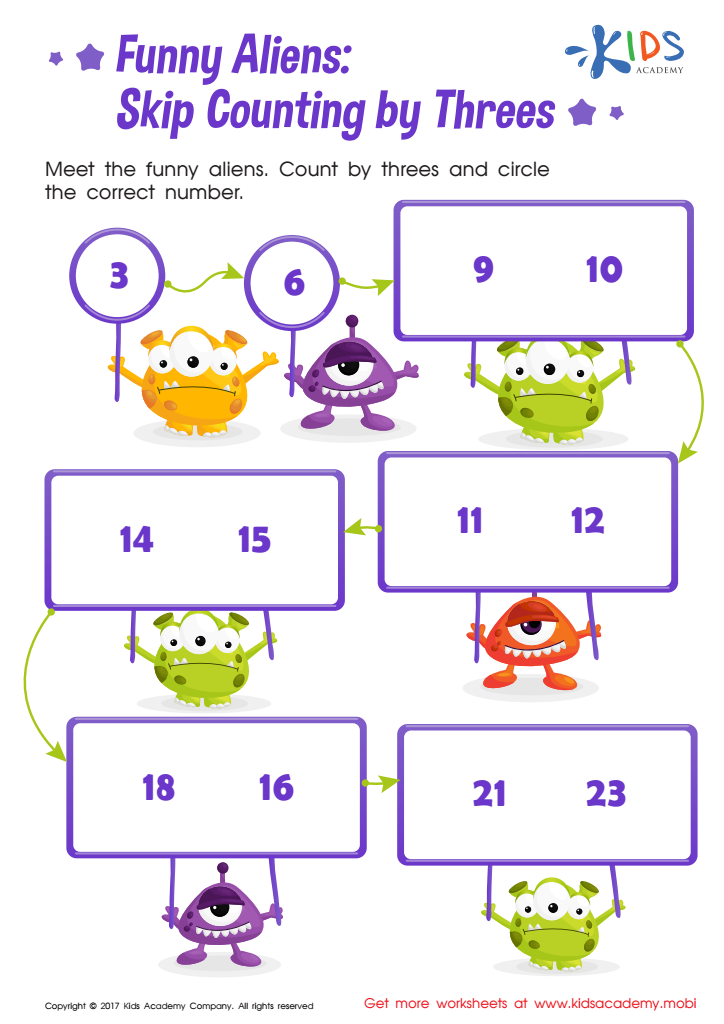
Skip Counting by 3s: Funny Aliens Printable
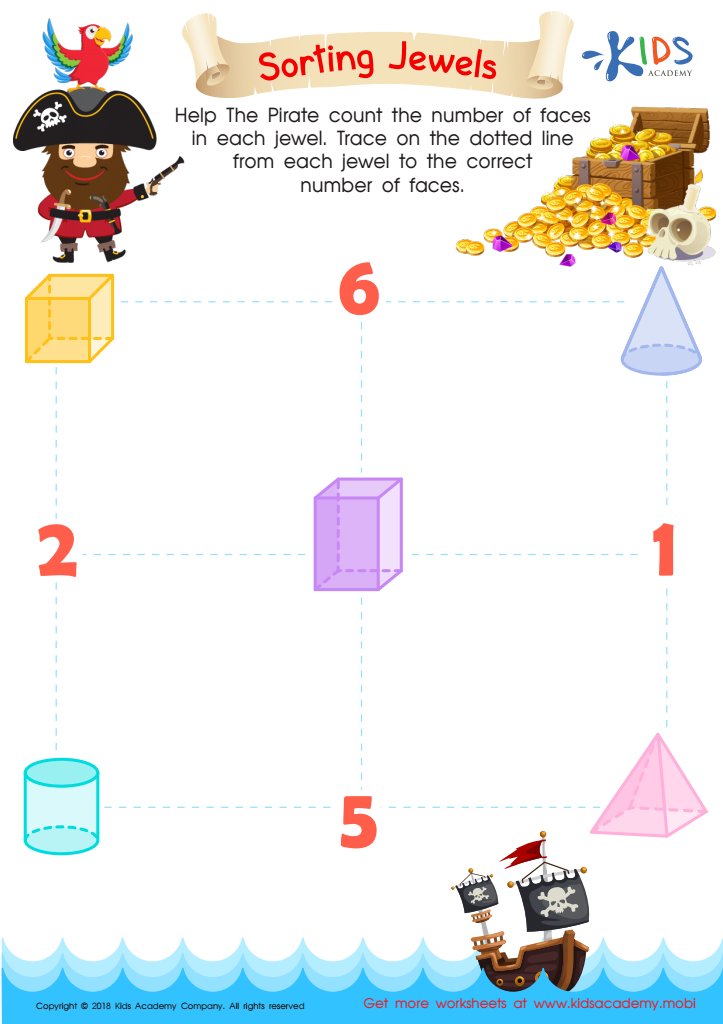
Sorting Jewels Worksheet
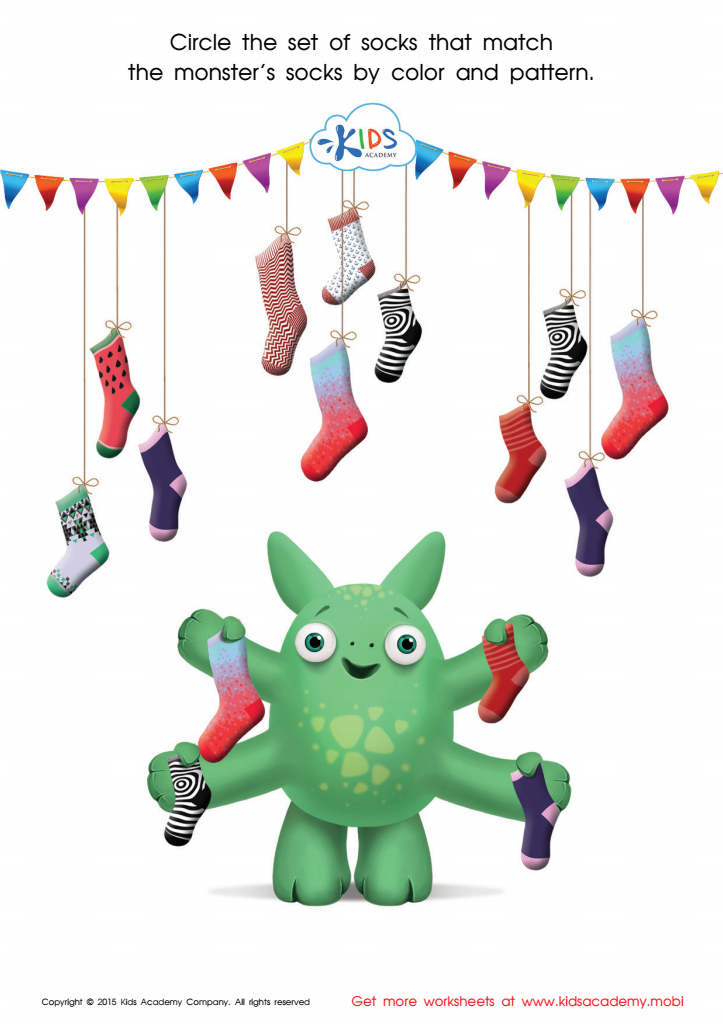
Sort the Monster's Socks Worksheet
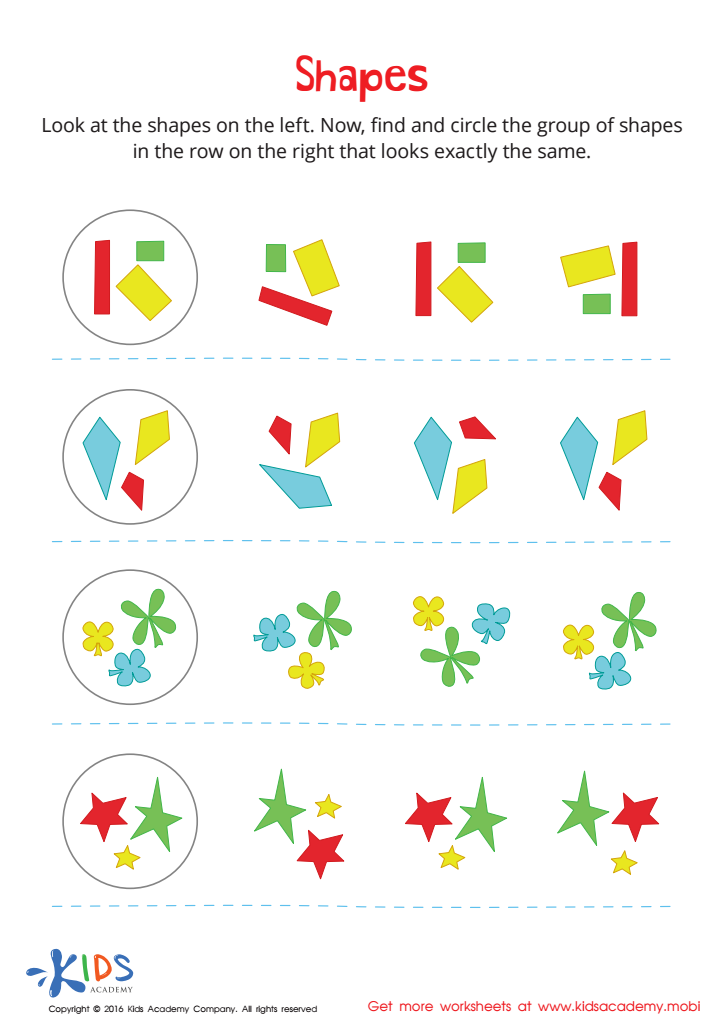
Shapes Worksheet
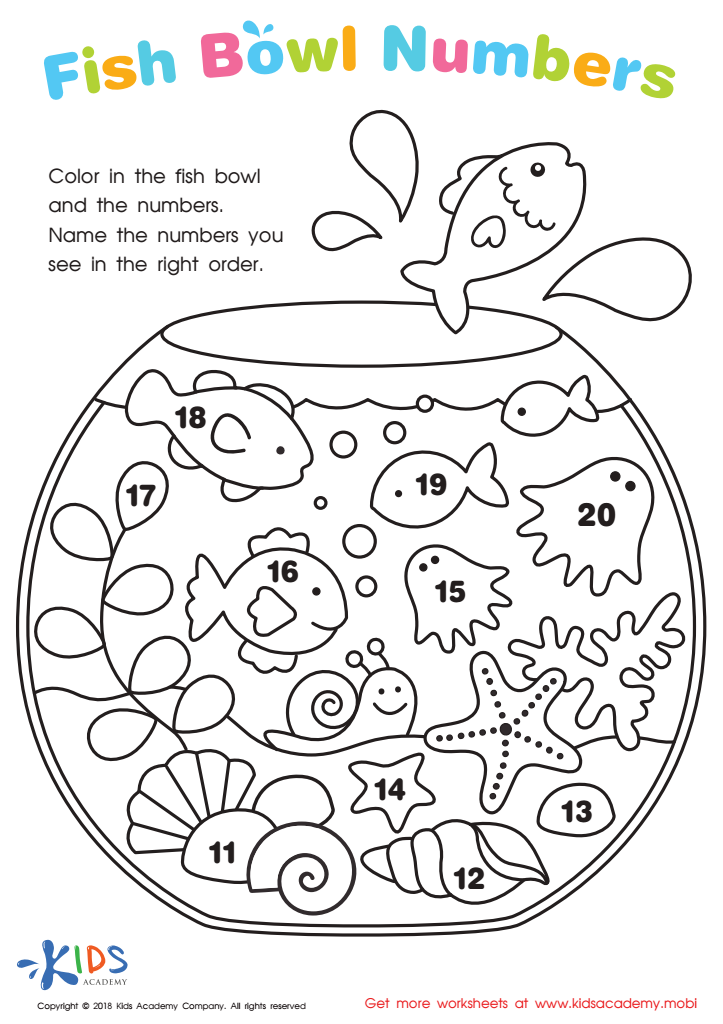
Fish Bowl Numbers Worksheet
 Assign to My Students







Color recognition is a foundational skill that plays a critical role in early childhood development, contributing to cognitive, language, and social-emotional growth. For parents and teachers, incorporating Extra Challenge Math activities for ages 3-8 creates a dual-purpose learning experience.
Firstly, color recognition secures a child's ability to categorize and make distinctions between objects, which lays the groundwork for mathematics. Understanding different colors while engaging in math activities enhances their problem-solving abilities and critical thinking skills. It encourages children to express their mathematical reasoning verbally, leading to improved vocabulary and communication skills.
Additionally, these activities often involve hands-on, interactive learning, which keeps children engaged. This age group learns best through play, and incorporating color recognition within math fosters a fun learning environment that promotes creativity and imagination.
Moreover, recognizing colors often translates into a greater understanding of patterns and sorting, vital elements of early math literacy. By connecting color recognition with math, teachers and parents not only support cognitive development but also lay a strong foundation for the child’s academic success as they progress through the educational system. Ultimately, color recognition through math presents an opportunity to enhance a child's learning experience in a meaningful and enjoyable way.








