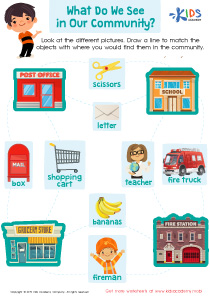
Data interpretation Extra Challenge Math Worksheets for Ages 3-8
3 filtered results
Difficulty Level
Grade
Age
-
From - To
Subject
Activity
Standards
Enhance your child’s math skills with our Data Interpretation Extra Challenge Math Worksheets designed specifically for ages 3-8! These engaging worksheets encourage young learners to explore data in a fun and interactive way. Children will practice interpreting graphs, charts, and pictograms, fostering critical thinking and analytical skills. Each worksheet is tailored to challenge students at different learning levels, making it perfect for classrooms or at-home practice. With colorful visuals and age-appropriate exercises, your child will develop a strong foundation in math while building confidence. Discover the joy of data interpretation and watch your little one excel in math with our thoughtfully designed worksheets!
Favorites
With answer key
Interactive
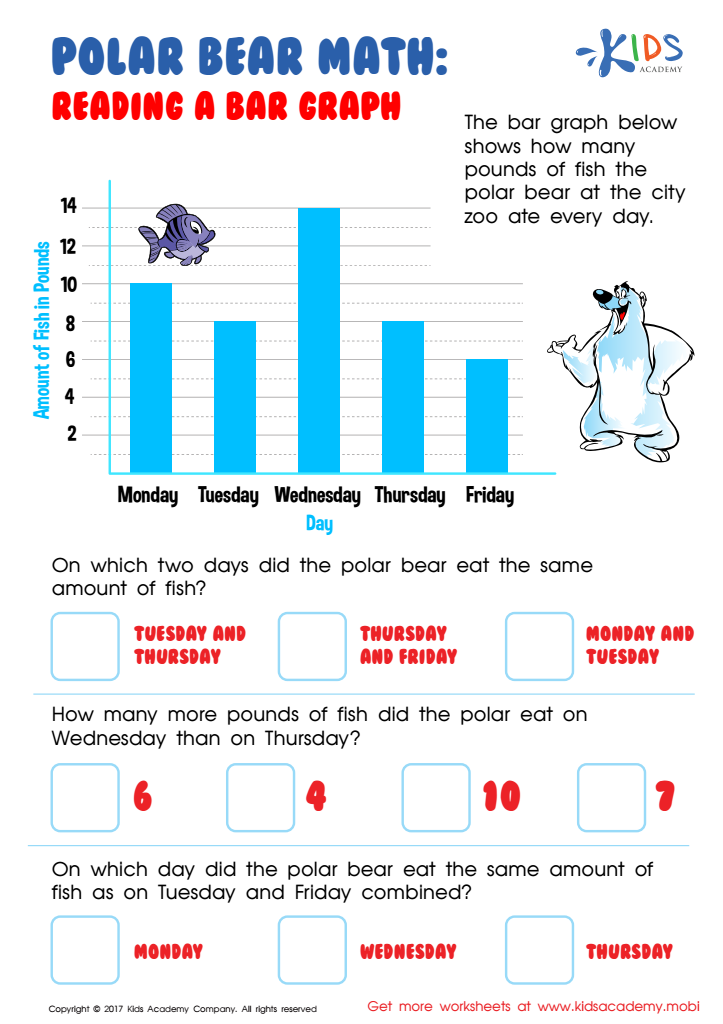
Reading Bar Graph Worksheet
Take your child north to practice data reading with a polar bear friend! This worksheet challenges 3rd graders to interpret data on a graph and solve related math problems.
 Assign to My Students
Reading Bar Graph Worksheet
Worksheet
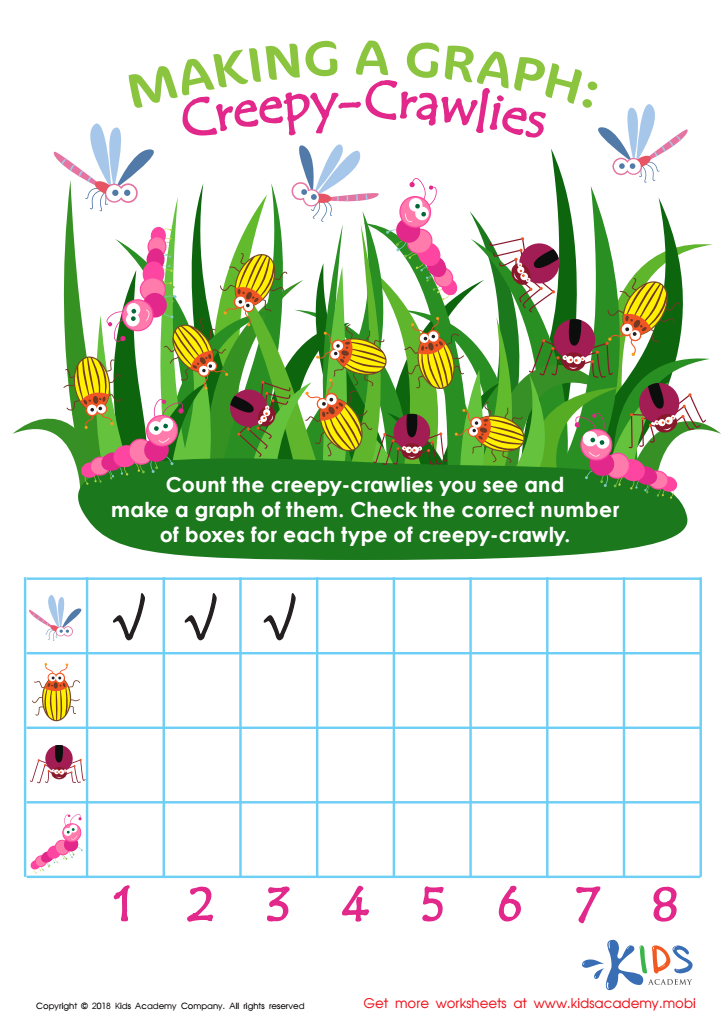
Making a Graph: Creepy Crawlies Worksheet
Let your little math whiz create a graph with this free PDF worksheet. They can count and sort the creepy-crawlies, checking off the correct number of boxes for each type. This engaging activity will help them hone their visual discrimination skills while efficiently organizing data.
Making a Graph: Creepy Crawlies Worksheet
Worksheet
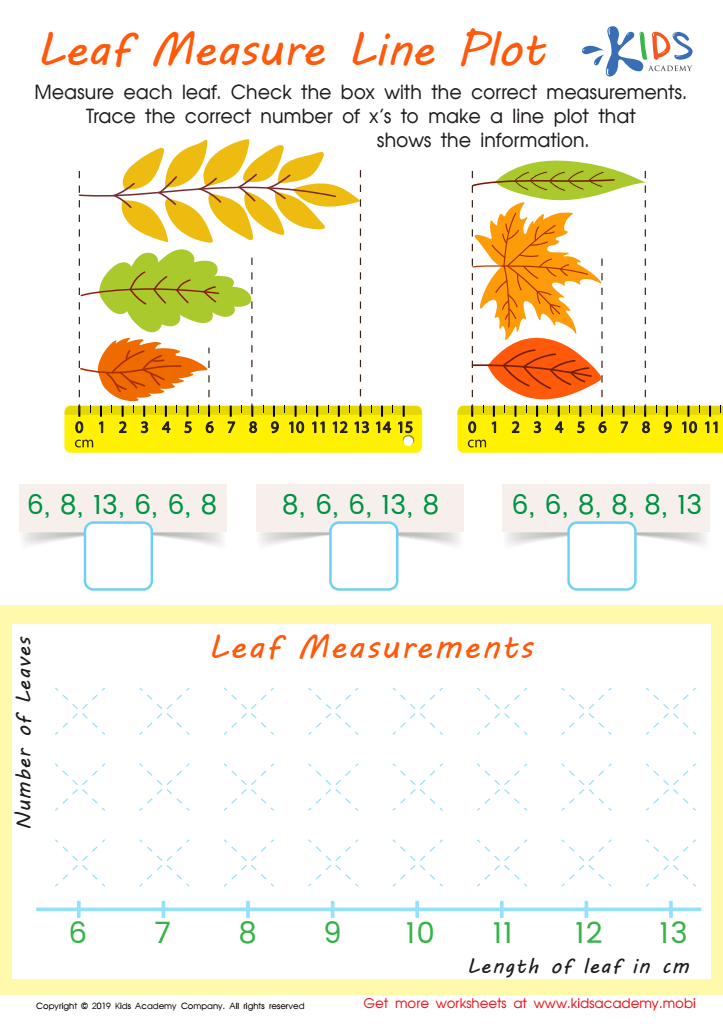
Leaf Measure Line Plot Worksheet
Help your third grader measure each of the four leaves, and check the box with the correct measurements. Then, trace the right number of x's to make a line plot showing the data. This exercise will engage your students and make it easier for them to grasp the concept of line plots.
Leaf Measure Line Plot Worksheet
Worksheet
Join Kids Academy for Free
Who is primarily going to use this learning content?



.jpg)



Data interpretation is a critical skill that supports children's learning and cognitive development, particularly in the early years aged 3-8. For parents and teachers, focusing on Data Interpretation Extra Challenge Math can enhance critical thinking, analytical skills, and problem-solving abilities in young learners. In an increasingly data-driven world, fostering these skills from a young age prepares children for future academic success and informed decision-making.
Engaging children with fun and interactive activities in data interpretation not only builds foundational math skills but also encourages them to observe, question, and understand their environment. This is crucial at an early age, as children can learn to classify information, recognize patterns, and make predictions, nurturing their curiosity and logical reasoning.
Additionally, data interpretation promotes collaboration and communication as children often work in groups, sharing findings and learning from each other. For parents and teachers, supporting children in these challenges helps create a positive attitude toward mathematics and learning in general. Ultimately, investing time in data interpretation activities ensures that children gain not just mathematical proficiency but also the confidence and skills to thrive in more complex subjects in the future.