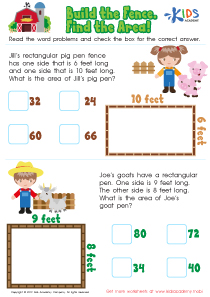
Shape Recognition Extra Challenge Matching Worksheets for Ages 3-8
3 filtered results
-
From - To
Discover our engaging "Shape Recognition Extra Challenge Matching Worksheets" designed for children ages 3-8! These worksheets provide a fun and interactive way for kids to enhance their shape recognition skills while boosting cognitive development. Each sheet features vibrant illustrations and diverse tasks to keep young learners motivated. Perfect for classrooms or home use, these activities promote critical thinking, fine motor skills, and visual discrimination. Tailored for various learning levels, our worksheets ensure that every child can thrive while exploring geometric shapes in an enjoyable environment. Download and watch your child's shape recognition skills soar with our extra challenge worksheets!
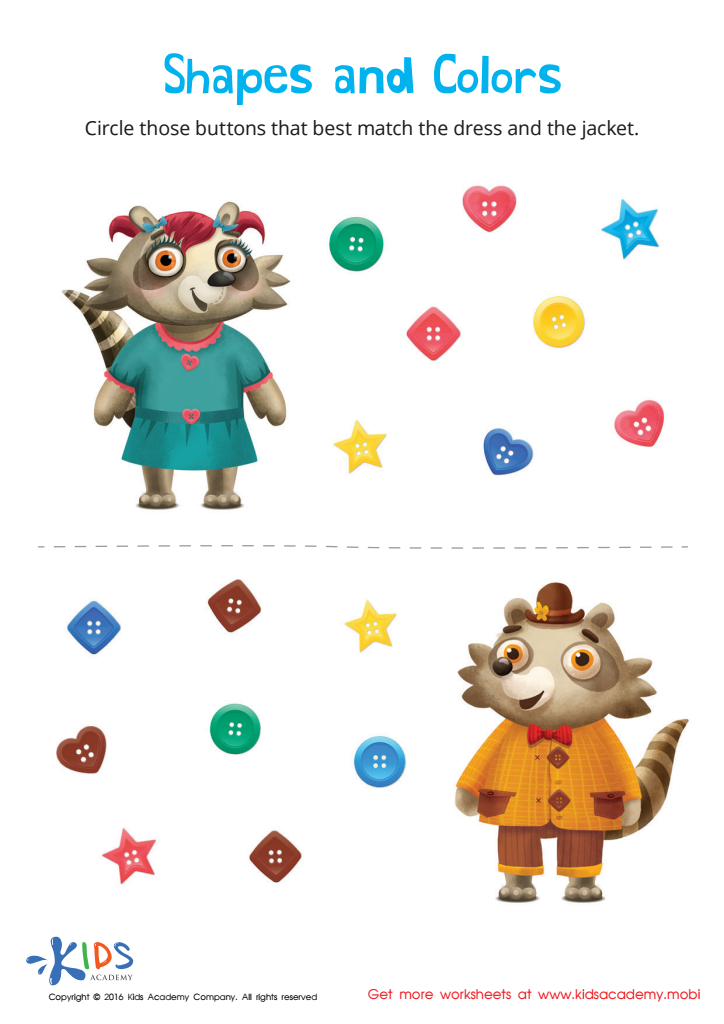
Matching: Shapes and Colors Worksheet
 Assign to My Students
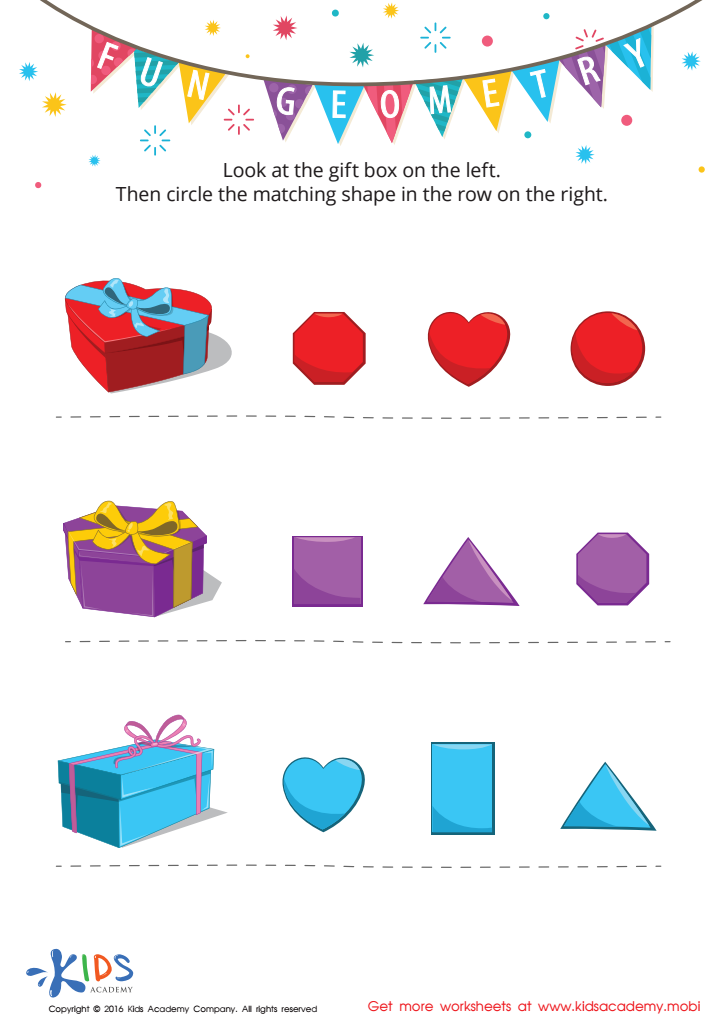
Fun Geometry Worksheet
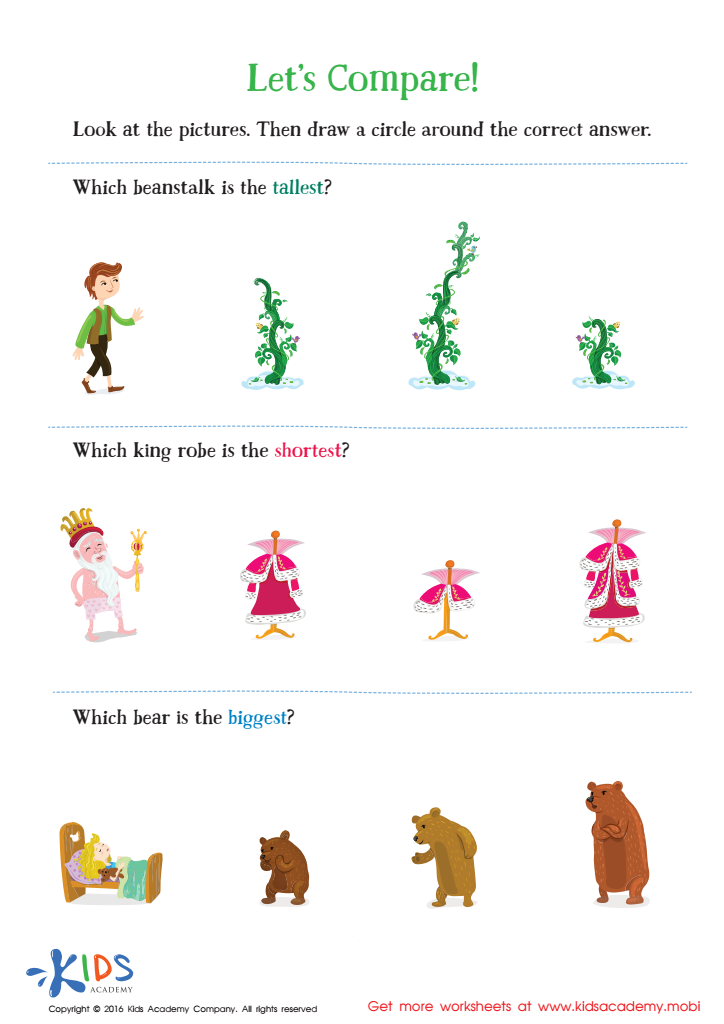
Fairy Tale Worksheet: Let's Compare








Shape recognition is a fundamental skill for children aged 3-8, forming the building blocks of their cognitive development. The Shape Recognition Extra Challenge Matching game enhances learning in a fun and engaging way, capturing children's interests while facilitating essential problem-solving abilities.
Critical thinking is cultivated as children match shapes, reinforcing their understanding of various geometric forms. The game promotes not only visual differentiation but also enhances memory through active engagement and repetition. Through this playful challenge, children learn to associate shapes with real-world objects, which aids in vocabulary expansion and contextual understanding.
Moreover, teachers and parents who prioritize this developmental activity foster an atmosphere of curiosity and exploration. Encouraging participation in challenging tasks helps to build resilience, teaching kids that making mistakes is a part of the learning process. They develop confidence as they master the matching skills over time, resulting in improved self-esteem.
Additionally, shape recognition is closely linked to future skills in math, spatial awareness, and design, laying the groundwork for more advanced concepts in geometry. Thus, incorporating shape recognition games into learning routines holds significant long-term benefits for children's overall educational journeys. Engaging in these challenges promotes a lifelong love for learning, making it essential for both educators and parents.