Comparing sizes Extra Challenge Measurement Worksheets for Ages 3-8
5 filtered results
-
From - To
Discover our "Comparing Sizes Extra Challenge Measurement Worksheets" tailored for ages 3-8! These engaging and fun worksheets are designed to enhance children's understanding of size comparison through hands-on activities. Perfect for early learners, they encourage critical thinking and problem-solving skills while reinforcing important math concepts. Your child will enjoy exploring various everyday objects, making predictions, and comparing lengths and heights. With colorful illustrations and age-appropriate challenges, these worksheets make learning measurements exciting! Download now to help your child build confidence in their measurement skills through interactive practice, making math fun and accessible for young minds. Perfect for home or classroom use!
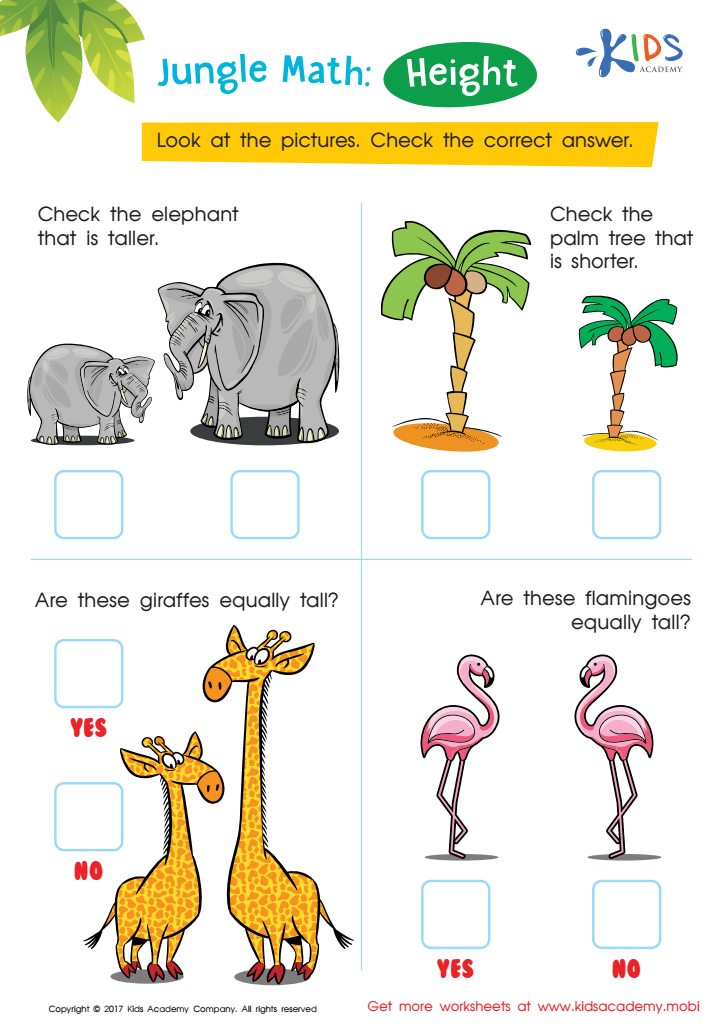
Which Is Taller Worksheet
 Assign to My Students
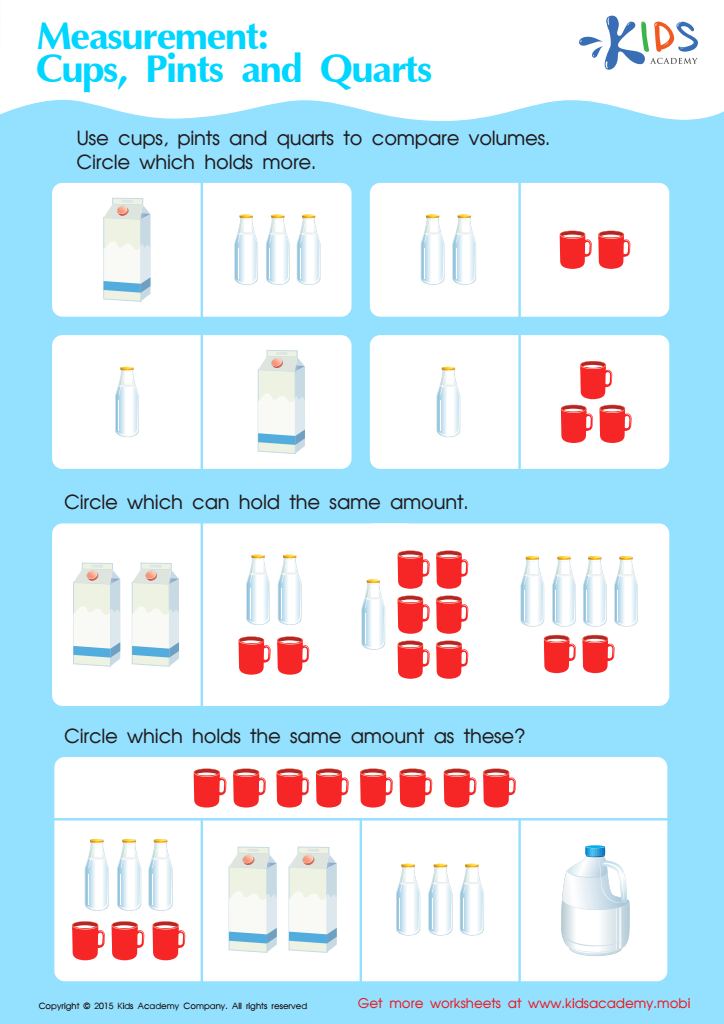
Measurement: Compare Volumes Worksheet
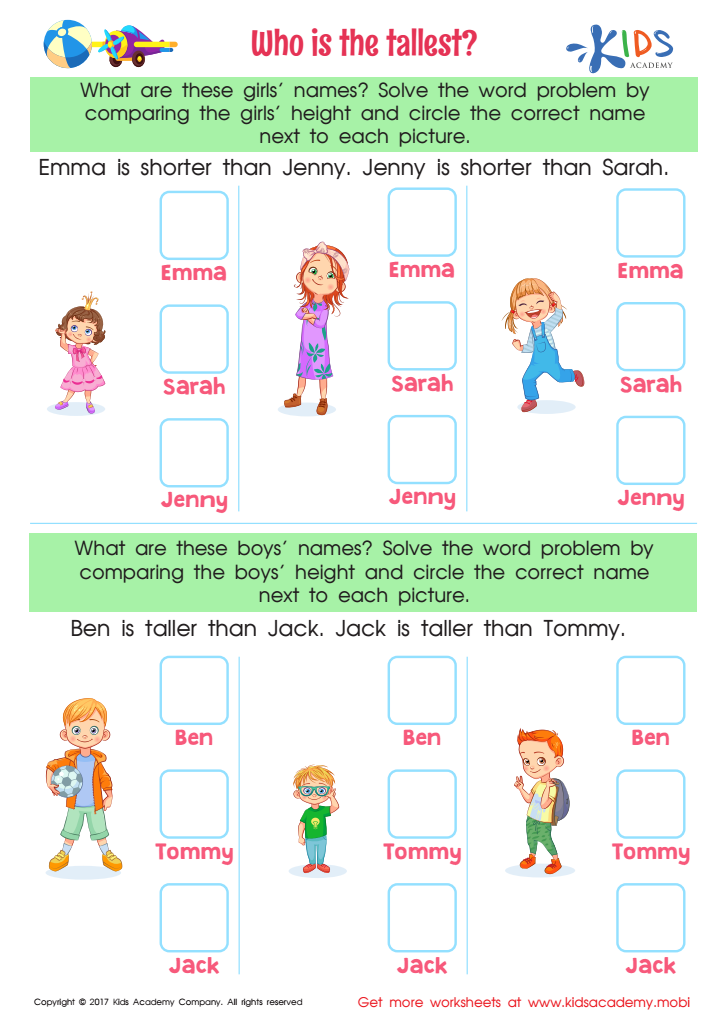
Who Tallest Printable
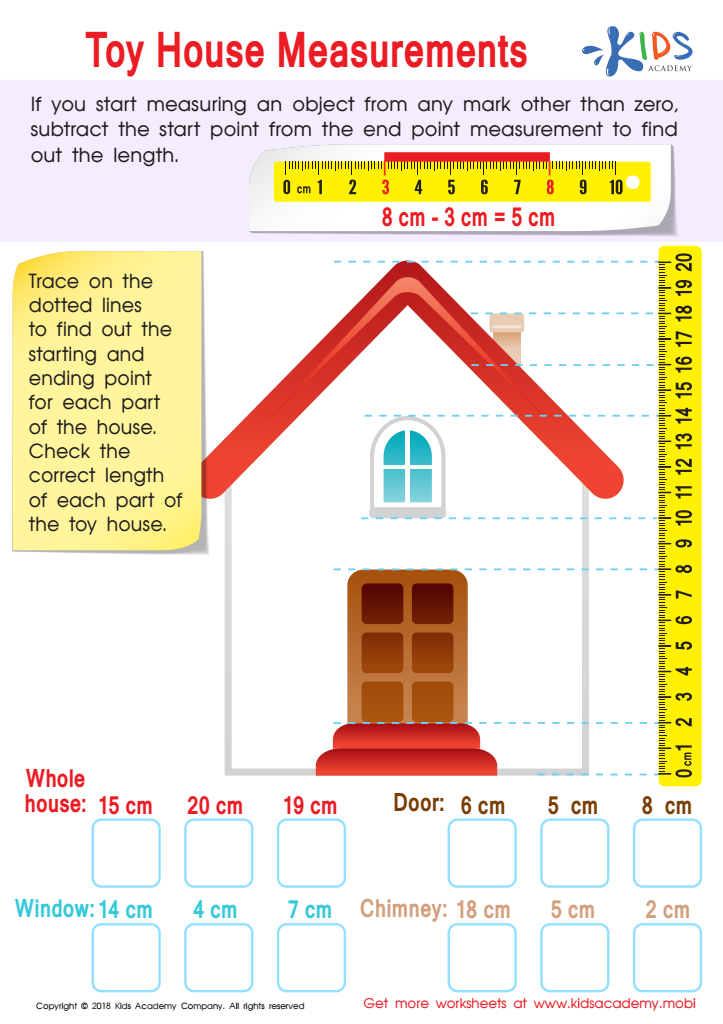
Toy House Measurements Worksheet
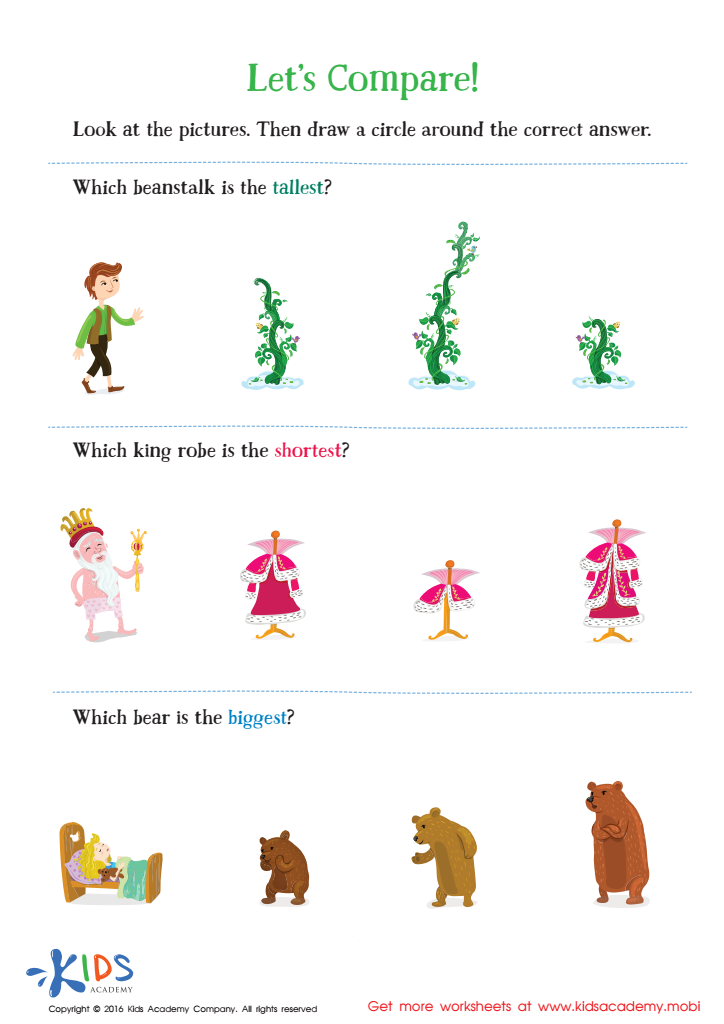
Fairy Tale Worksheet: Let's Compare








Comparing sizes is an essential skill in early education, particularly for children aged 3-8. This foundational concept not only cultivates critical thinking but also enhances comprehension in various subjects such as mathematics and science. By engaging in activities that challenge children to compare sizes, parents and teachers facilitate the development of spatial awareness and observational skills. These skills lay the groundwork for future learning, including understanding volume, area, and even geometry concepts later on.
Moreover, exploring size comparisons encourages language development. As children discuss and describe items in relation to each other—using terms like bigger, smaller, taller, and shorter—they build vocabulary and enhance communication skills. This aspect is crucial for social interaction and expression.
Additionally, integrating size comparison activities fosters problem-solving abilities and promotes perseverance. Children learn to tackle challenges, such as when organizing a set of toys by size, instilling a sense of achievement and confidence.
By prioritizing size comparison activities, parents and teachers not only nurture cognitive and linguistic development but also provide children with meaningful and enjoyable ways to learn about the world around them. Engaging children with these concepts lays the foundation for a lifelong connection with learning.