Understanding measurements Extra Challenge Measurement Worksheets for Ages 3-8
5 filtered results
-
From - To
Explore our "Understanding Measurements Extra Challenge Measurement Worksheets" designed for children aged 3-8. These engaging worksheets offer a fun and interactive way for young learners to enhance their measurement skills. With a variety of activities, kids will practice concepts such as length, weight, and volume through relatable scenarios, all while boosting their critical thinking abilities. Our extra challenges encourage deeper understanding and allow children to tackle measurement problems creatively. Perfect for at-home learning or classroom use, these worksheets promote foundational math skills, fostering confidence and independence in young mathematicians. Let’s embark on a measurement adventure together!
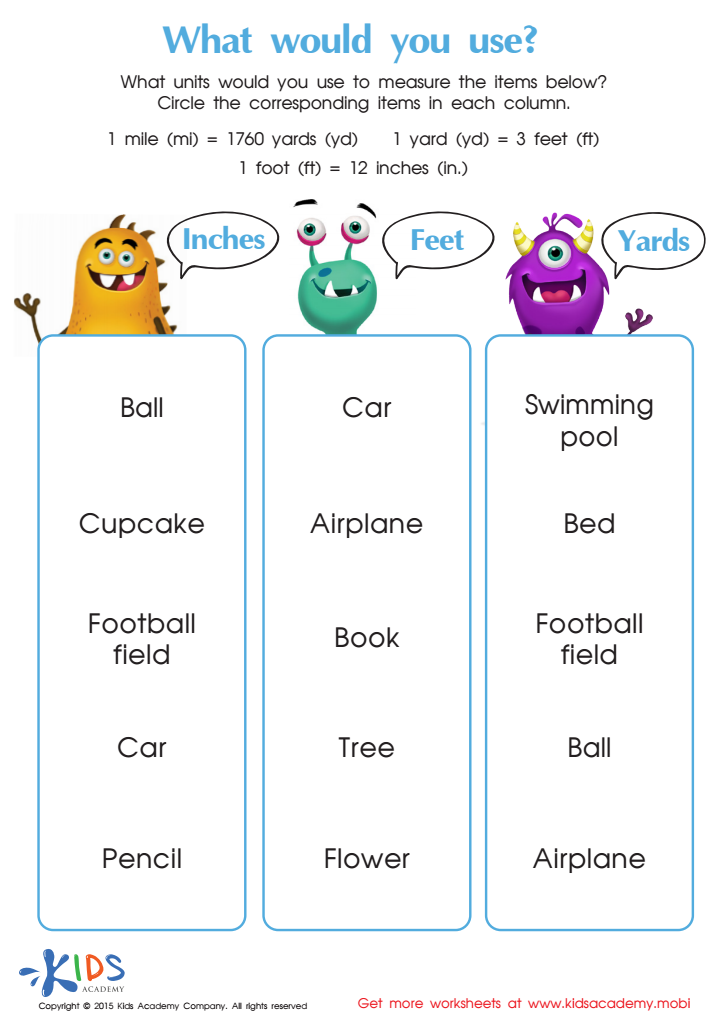
Learning about measuring objects in inches, feet and yards Worksheet
 Assign to My Students
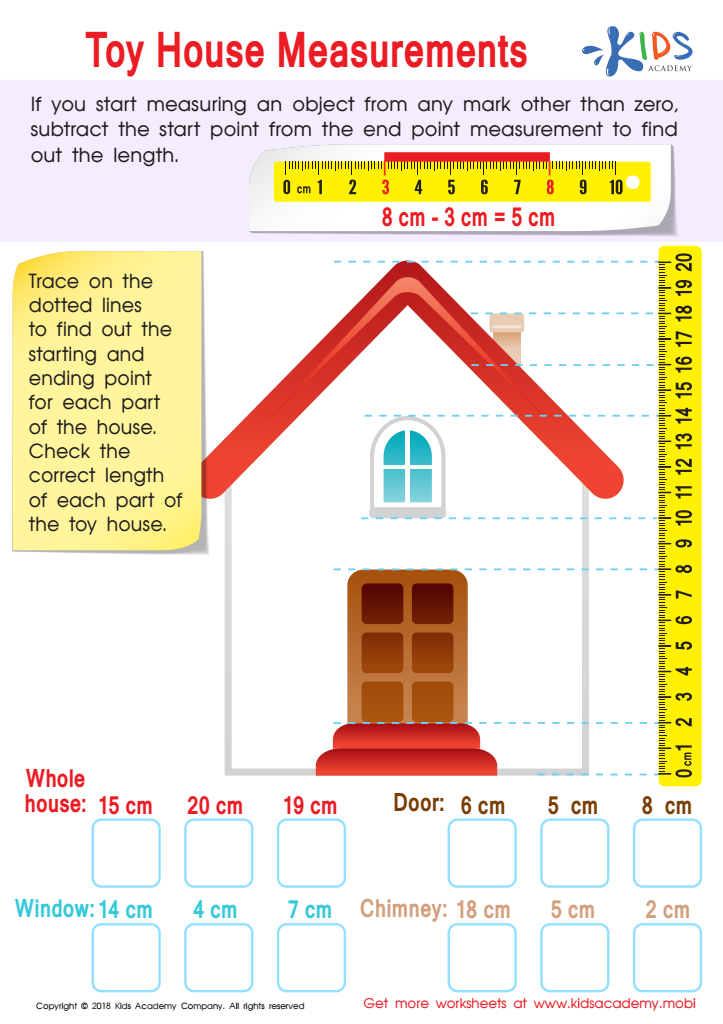
Toy House Measurements Worksheet
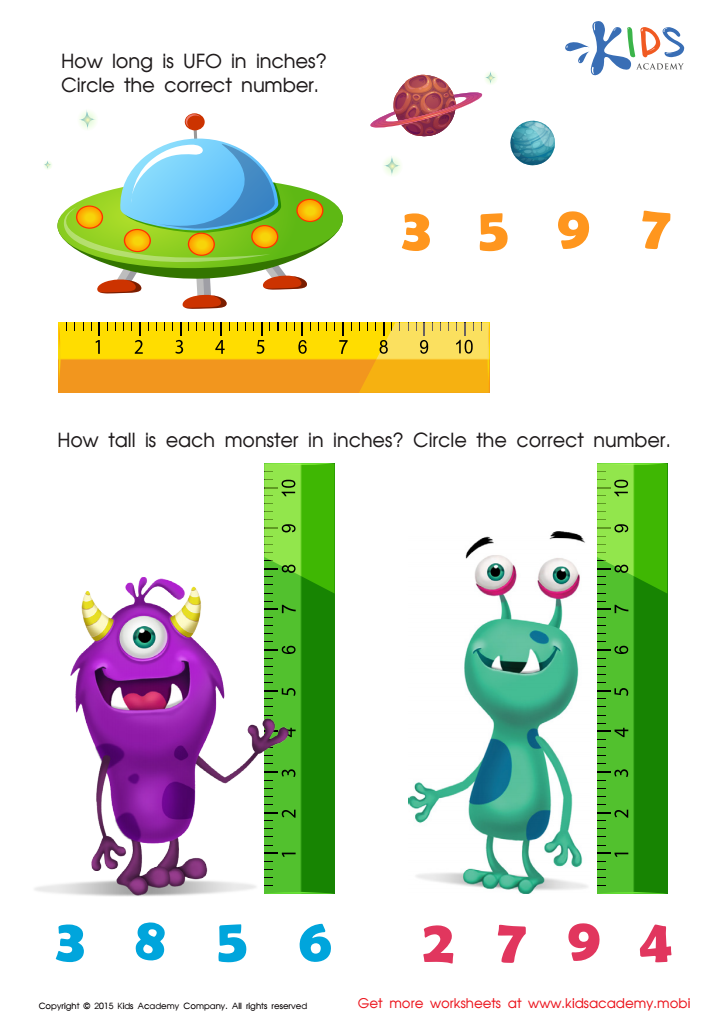
Measuring in Inches Worksheet
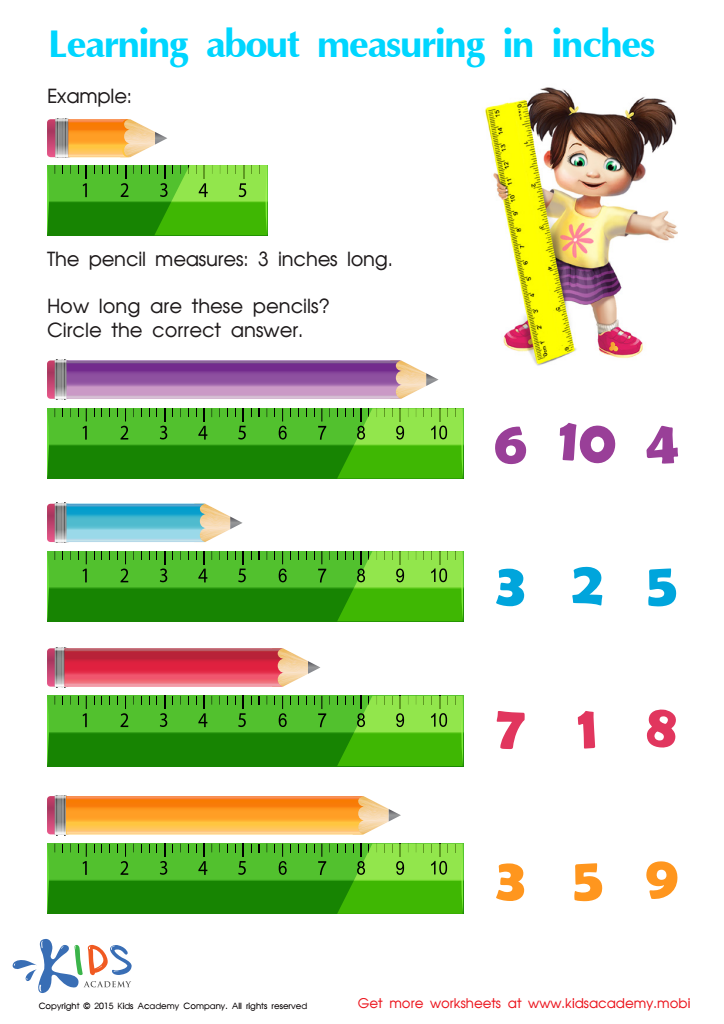
Learning About Measuring In Inches Printable
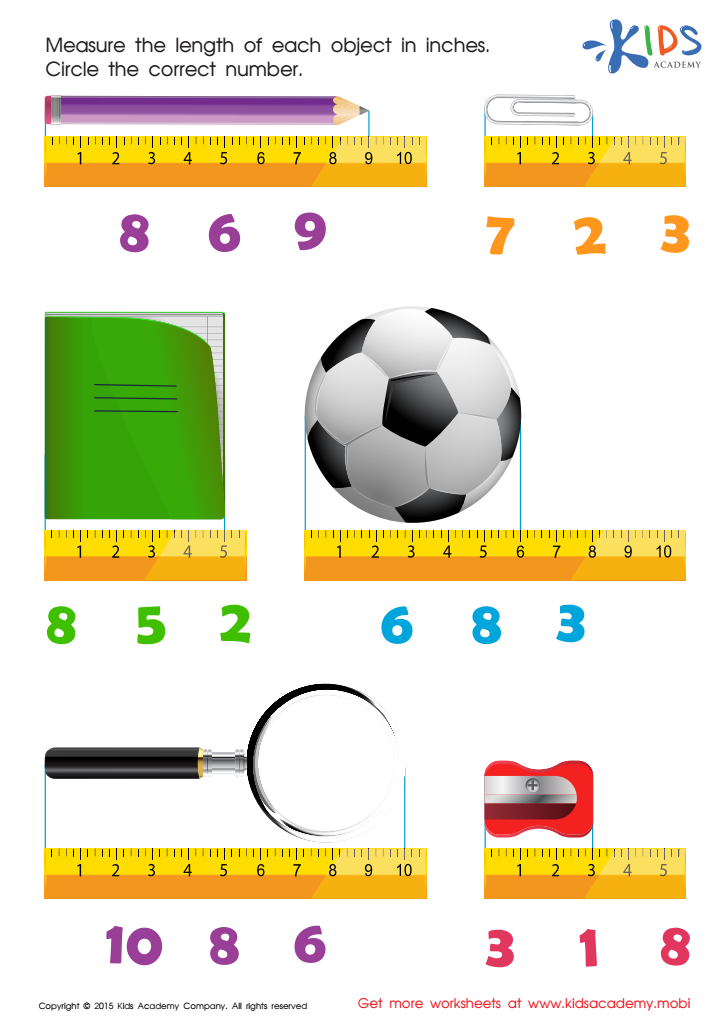
Learning measuring objects in inches Worksheet








Understanding measurements is crucial for children ages 3-8 as it lays the foundation for critical thinking and problem-solving skills. By engaging in measurement activities, children learn not only how to compare lengths, weights, and volumes, but they also develop spatial awareness and mathematical reasoning. For parents and teachers, nurturing these skills prepares children for everyday situations and more advanced concepts in math as they progress in school.
Early exposure to measurement through playful activities—such as comparing the heights of flowers, weighing fruits, or pouring water—makes learning tangible and relatable. This hands-on approach helps solidify abstract concepts in a practical context, fostering a love for learning.
Furthermore, measurement activities encourage children's communication skills as they express their observations and findings. This dialogue enriches their vocabulary and confidence in explaining their reasoning—a key component in effective learning.
Moreover, mastering measurement lays the groundwork for STEM education, which is vital in our increasingly technology-driven world. Therefore, by investing time in understanding measurements, parents and teachers not only aid in academic success but also equip children with essential life skills that will benefit them in various real-world applications. Ultimately, this early engagement in measurement cultivates inquisitive, capable learners.