Cognitive Development Extra Challenge Building Vocabulary Worksheets for Ages 3-8
6 filtered results
-
From - To
Unlock your child's potential with our "Cognitive Development Extra Challenge Building Vocabulary Worksheets" designed for ages 3-8. These engaging worksheets facilitate vocabulary expansion while promoting critical thinking and cognitive skills. Tailored to be fun and educational, they encompass a variety of activities that stimulate young minds, such as matching words to images, sorting vocabulary by categories, and context-based learning exercises. Enhancing language skills at a young age lays a strong foundation for future academic success. Give your child an edge in learning with these thoughtfully crafted worksheets that encourage exploration, creativity, and a love for words while building essential cognitive skills!
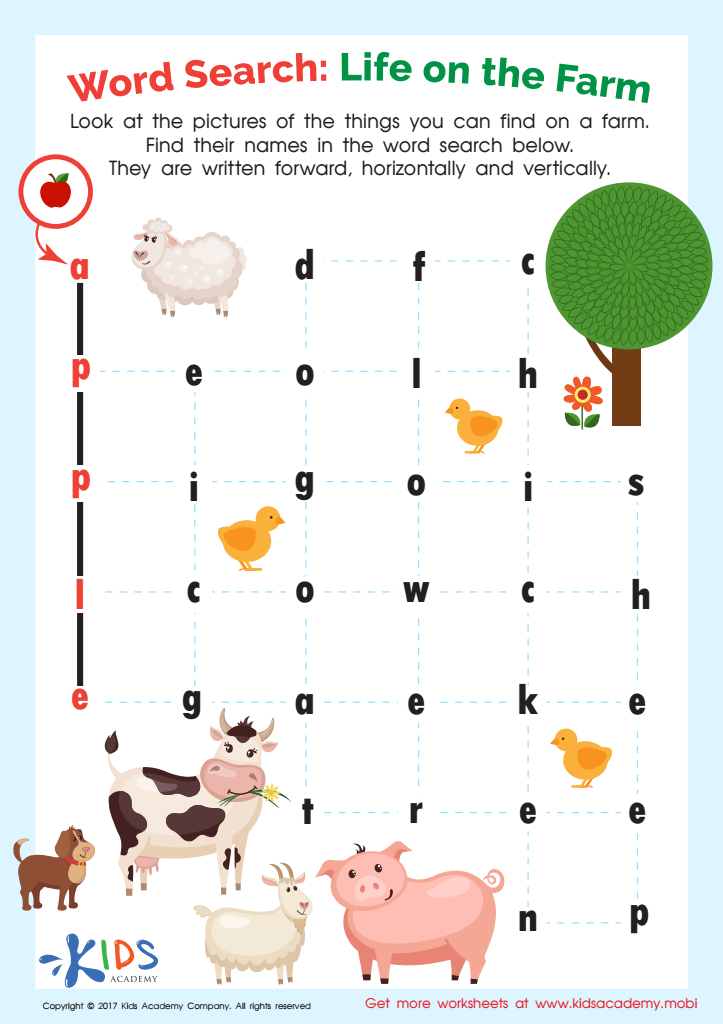
Word Search Puzzles Worksheet
 Assign to My Students











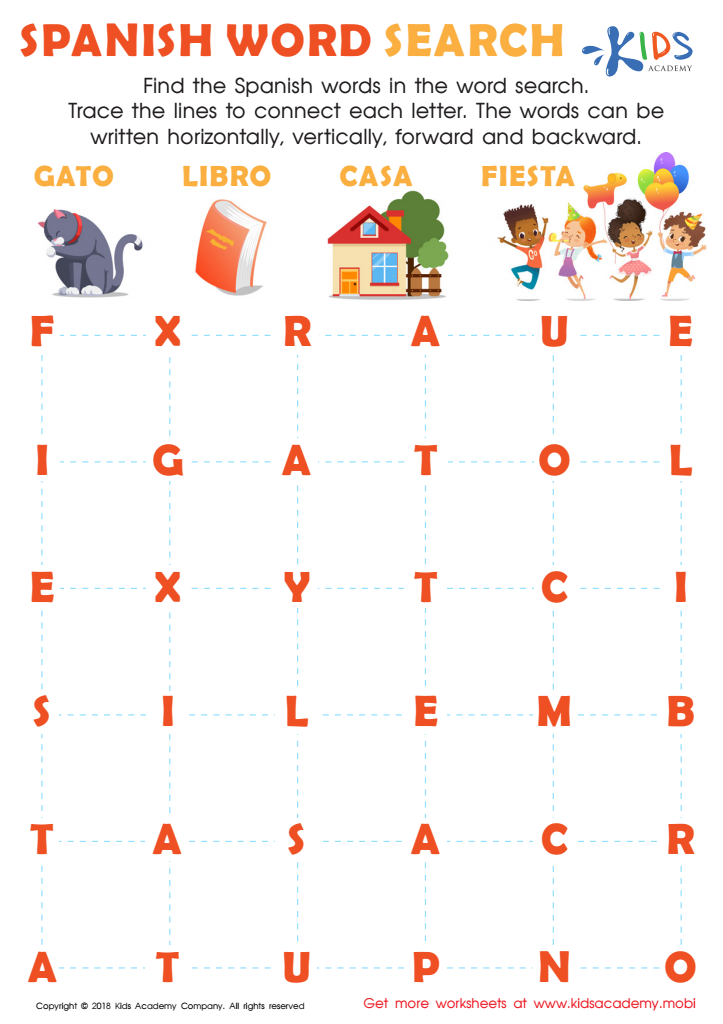
Spanish Word Search Worksheet
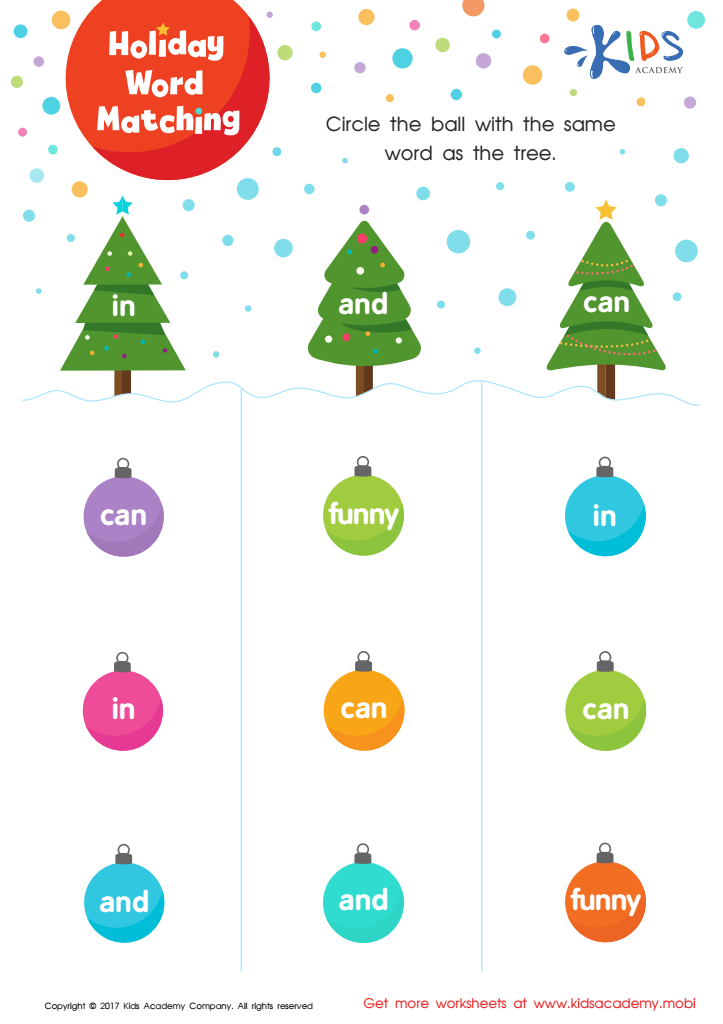
Holiday Word Matching Worksheet
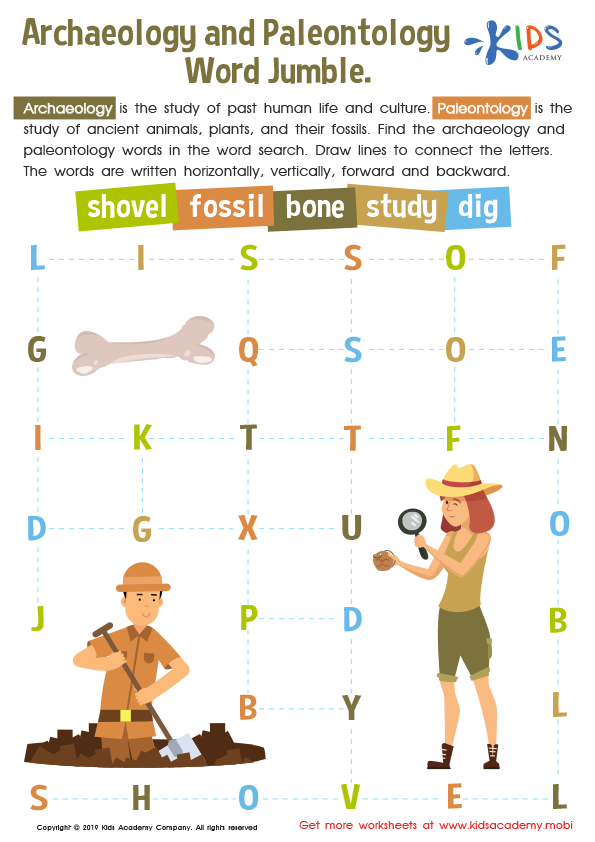
Archaeology and Paleontology Word Jumble Worksheet
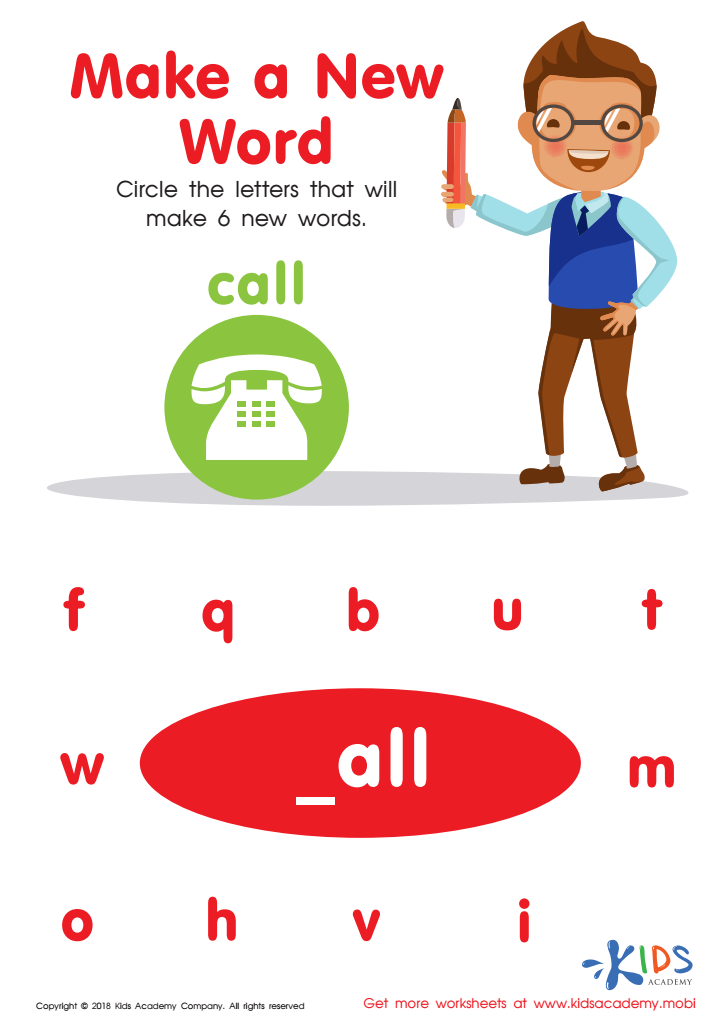
Make a New Word Worksheet
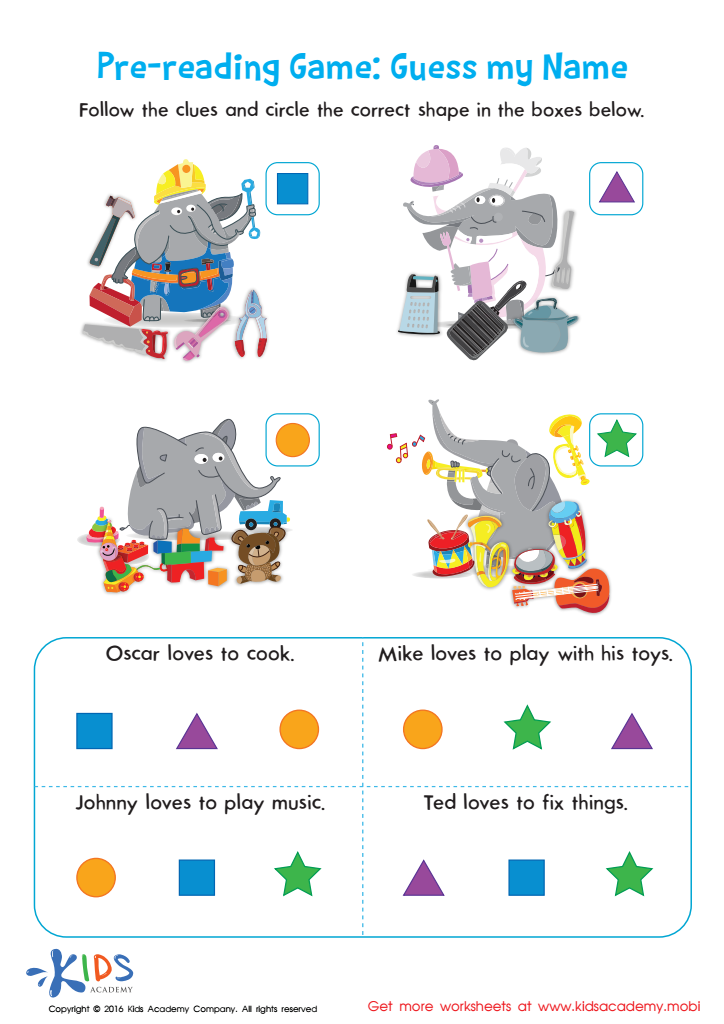
Pre Reading Worksheet Guess My Name




.jpg)



Cognitive development during early childhood is a crucial phase in a child's growth, as it lays the foundation for their future learning abilities and overall success. For children aged 3-8, enhancing vocabulary skills plays a vital role in this cognitive development. A rich vocabulary enables children to articulate their thoughts, express needs, and communicate effectively. When parents and teachers prioritize vocabulary building, they create an environment that fosters critical thinking and problem-solving.
Engaging children in rich conversations, reading diverse books, and introducing new words in playful contexts are effective strategies to enrich their vocabulary. This practice not only enhances language skills but also boosts self-esteem and encourages creativity. Furthermore, a strong vocabulary supports comprehension skills, helping children process, analyze, and synthesize information better.
Investing time and effort into vocabulary challenges also aids in social-emotional development, as children learn to connect with peers through effective communication. Ultimately, a robust vocabulary equips children with tools necessary for academic success and lifelong learning. Parents and teachers should work collaboratively to create engaging experiences, ensuring that children not only learn new words but, more importantly, develop a love for language that will serve them well throughout life.