Problem-Solving Skills Extra Challenge Governance and Civics Worksheets for Ages 3-8
3 filtered results
Difficulty Level
Grade
Age
-
From - To
Subject
Activity
Standards
Our "Problem-Solving Skills Extra Challenge: Governance and Civics Worksheets for Ages 3-8" are thoughtfully designed to enhance critical thinking and decision-making abilities in young learners. Engaging activities and real-world scenarios introduce children to essential concepts of governance and civics while they develop key problem-solving skills. These worksheets encourage logical reasoning, creativity, and collaborative strategies, making learning fun and impactful. Perfect for early grade students, they provide a solid foundation for understanding civic responsibilities and effective decision-making. Ensure your child's growth and an enriching learning experience with our high-quality, educator-approved resources, tailored specifically for young minds.
Favorites
With answer key
Interactive
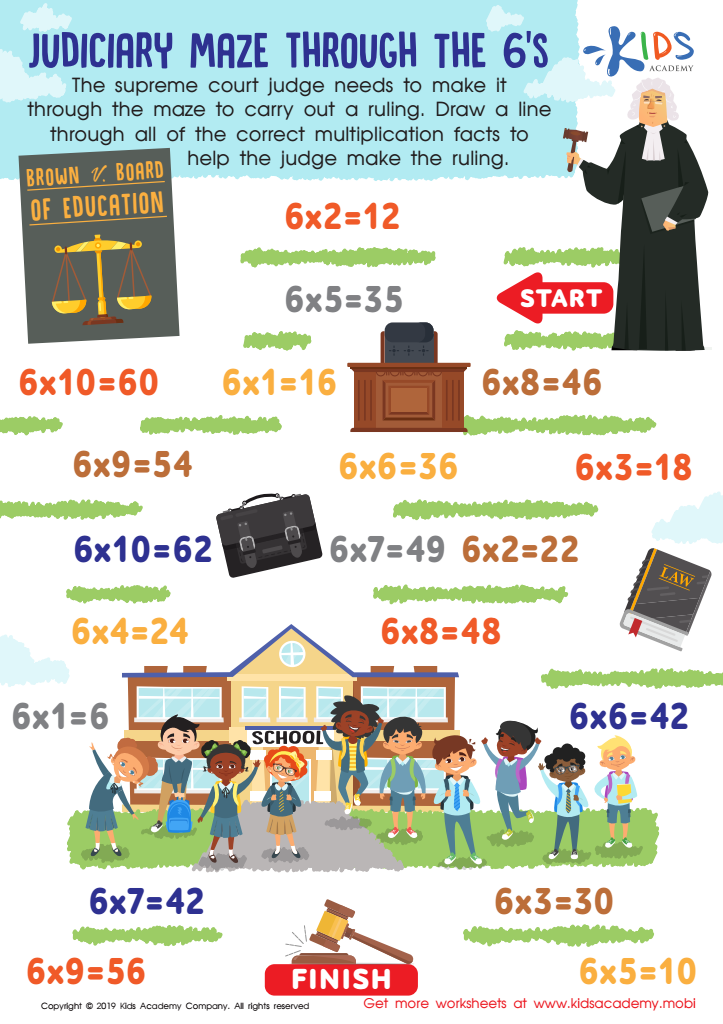
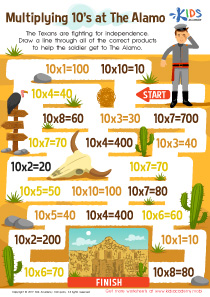
Judiciary Maze Through The 6’s Worksheet
Multiplication can be complicated for kids, with lots of numbers and a seemingly endless multiplication table. Get them interested with a fun worksheet! Have them draw a line through all the correct multiplication facts to help the judge make it through the maze and carry out a ruling.
 Assign to My Students
Judiciary Maze Through The 6’s Worksheet
Worksheet
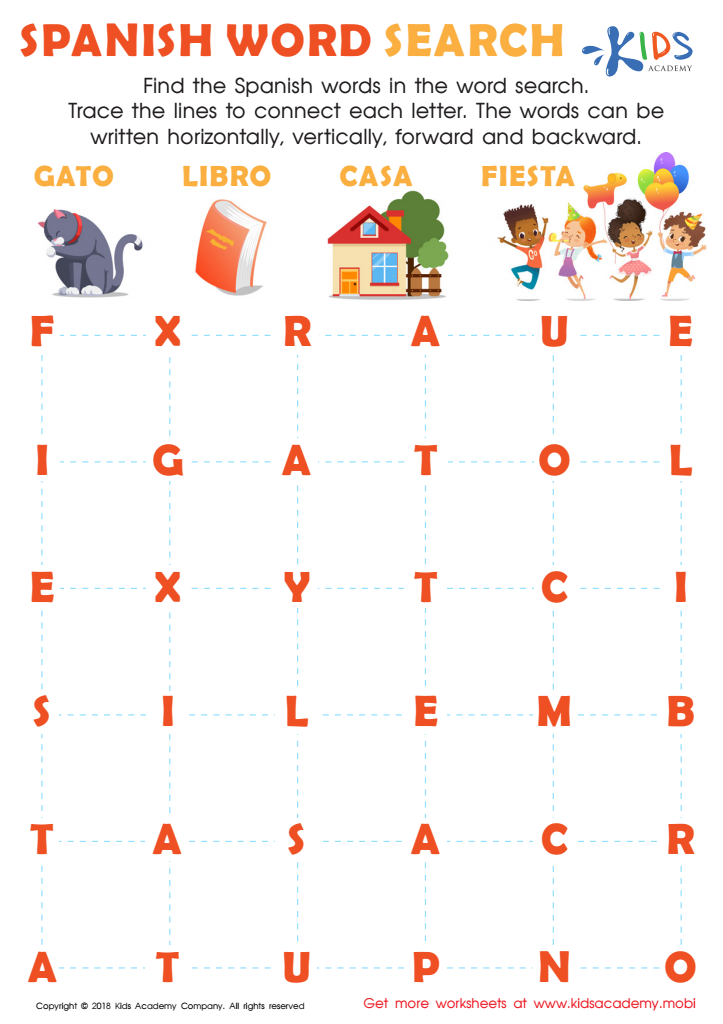
Spanish Word Search Worksheet
This free worksheet encourages students to learn Spanish words while developing visual, fine motor, and hand-eye coordination skills. Through colorful pictures and traceable lines, the task of finding words such as gato, libro, casa, and fiesta is disguised as a fun and engaging way to explore new cultures.
Spanish Word Search Worksheet
Worksheet
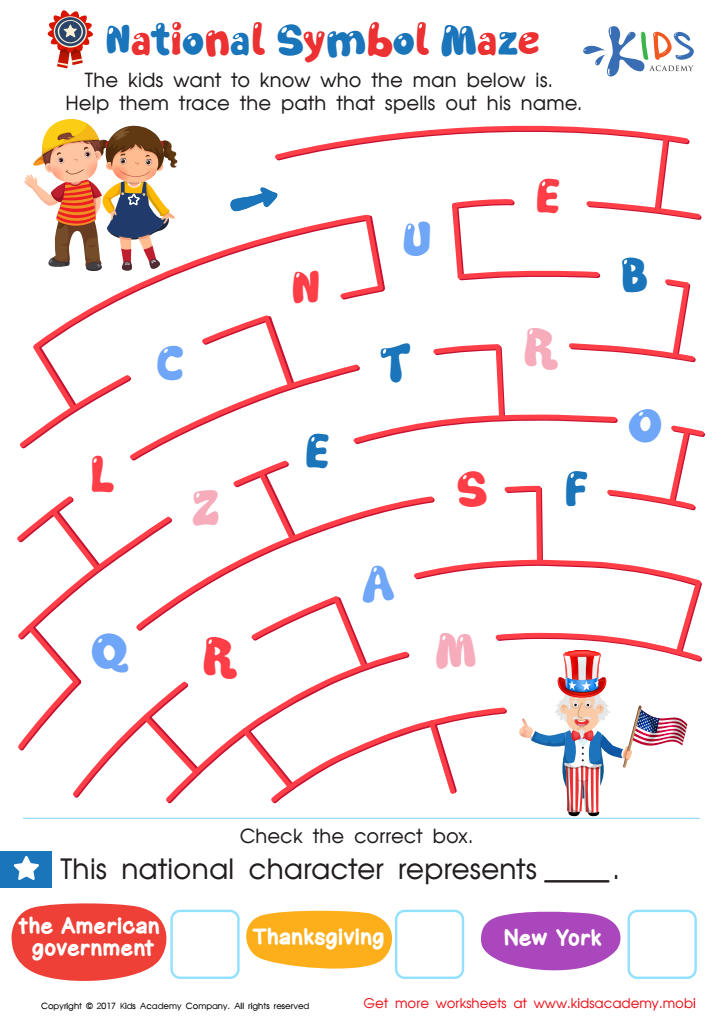
National Symbol Maze Worksheet
Introduce your child to Uncle Sam, a symbol of US history. The national symbols of the USA worksheet will help them learn about our rich culture and history.
National Symbol Maze Worksheet
Worksheet
Join Kids Academy for Free
Who is primarily going to use this learning content?


Parents and teachers should prioritize Problem-Solving Skills, Extra Challenge Governance, and Civics for children aged 3-8 because these foundational years are critical for cognitive, social, and emotional development. Early exposure to problem-solving skills fosters critical thinking, creativity, and persistence. Children learn to approach problems methodically, which lays the groundwork for academic success and everyday life challenges.
Introducing governance and civics in an age-appropriate manner instills a sense of community, fairness, and responsibility. Understanding basic governance concepts helps children recognize the importance of rules and cooperation in creating harmonious environments, whether in the classroom or at home. This early civics education also promotes empathy, as children begin to understand diverse perspectives and the value of contributing positively to their communities.
Moreover, extra challenges tailored to their developmental stage stimulate intellectual curiosity and resilience. When children face and overcome difficulties, they build confidence and a growth mindset, understanding that effort leads to improvement.
Altogether, fostering these skills and knowledge areas ensures that children are not only equipped to succeed academically but also grow into considerate, responsible members of society. This integrated approach supports holistic development, building the foundation for well-rounded, capable individuals.