Noun identification Extra Challenge Writing Worksheets for Ages 3-8
4 filtered results
-
From - To
Introducing our Noun Identification Extra Challenge Writing Worksheets, specially designed for children aged 3-8! These engaging worksheets provide an exciting way for young learners to enhance their understanding of nouns by identifying and categorizing them in a variety of fun contexts. With vibrant illustrations and interactive exercises, kids will enjoy sharpening their writing skills while boosting their vocabulary. Ideal for classroom use or at-home learning, these worksheets encourage creativity and critical thinking. Help your child master noun identification with our thoughtfully crafted activities that will spark their imagination and strengthen their language development. Discover the joy of learning today!
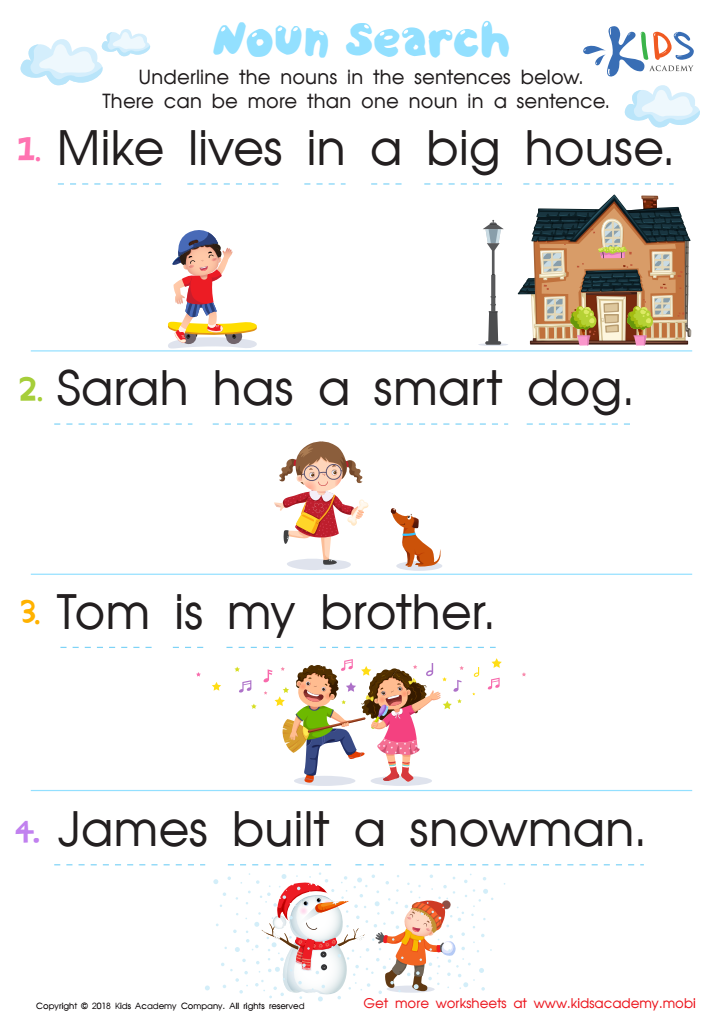
Noun Search Worksheet
 Assign to My Students
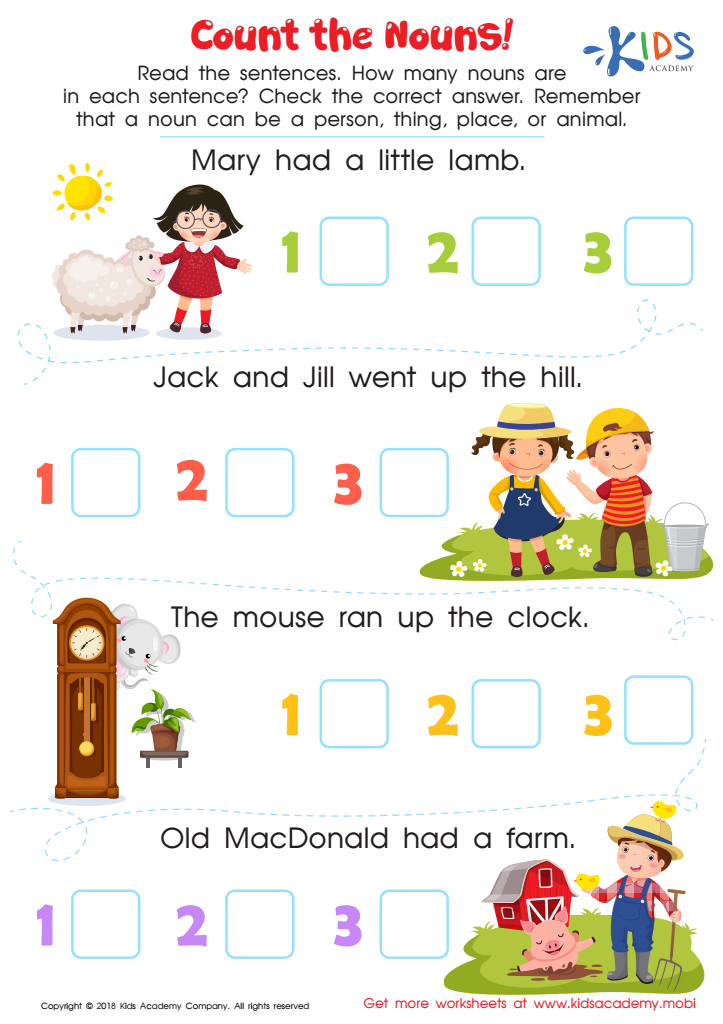
Count the Nouns Worksheet
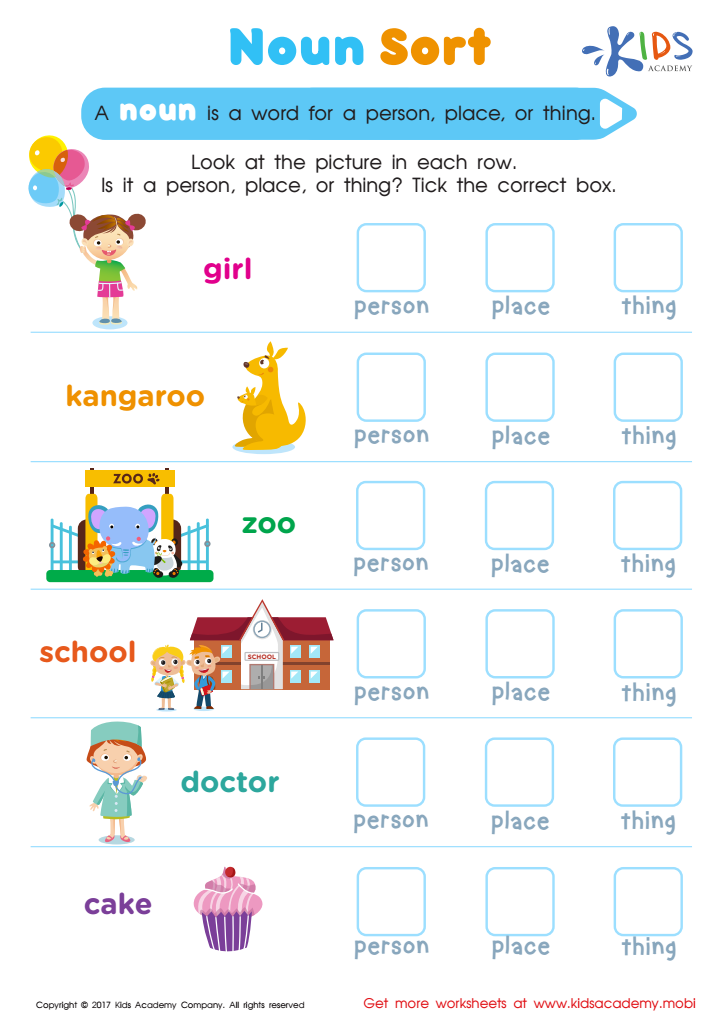
Noun Sort Printable
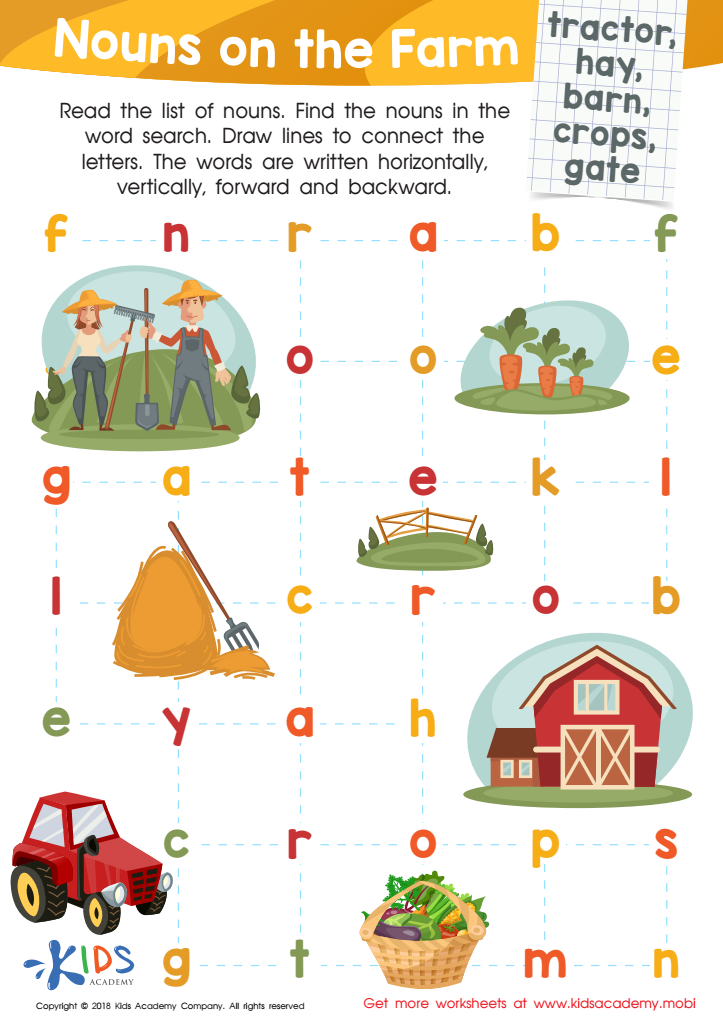
Nouns on the Farm Worksheet








Noun identification is a fundamental linguistic skill that lays the groundwork for language development and literacy in children aged 3-8. Parents and teachers should care about fostering this skill because nouns are key components of language; they encapsulate names, places, animals, and things, all of which children encounter daily. By engaging with noun identification, children enhance their vocabulary, strengthen sentence construction, and develop better comprehension skills. This foundational knowledge is critical for emerging readers and writers, as recognizing nouns allows them to make sense of stories and express their thoughts more clearly.
Moreover, focusing on noun identification through extra challenge writing activities encourages critical thinking and creativity. Children actively categorize and describe nouns, fostering a deeper understanding of language structure and the world around them. These activities promote cognitive development and engagement, enabling children to connect words with their meanings.
Additionally, nurturing noun recognition fosters confident communication skills, which are essential for social interactions and academic success. Parents and teachers, by prioritizing noun identification and creative writing challenges, equip children with essential tools for lifelong learning, promoting a love for language and literacy at an early age. Ultimately, investing in these skills supports their overall cognitive, emotional, and social development.