
Interpreting data Extra Challenge Worksheets for Ages 3-9
3 filtered results
Difficulty Level
Grade
Age
-
From - To
Subject
Activity
Standards
Unlock your child's potential with our "Interpreting Data Extra Challenge Worksheets" tailored for ages 3-9. These worksheets are designed to enhance critical thinking and analytical skills through engaging and age-appropriate activities. Children will explore data interpretation by analyzing simple graphs, charts, and visual representations in a fun and interactive way. Each challenge encourages creativity and problem-solving, making learning enjoyable. Perfect for parents and educators seeking to supplement their curriculum, these worksheets align with educational standards while fostering a love for learning. Help your young learners develop essential skills that will pave the way for academic success!
Favorites
With answer key
Interactive
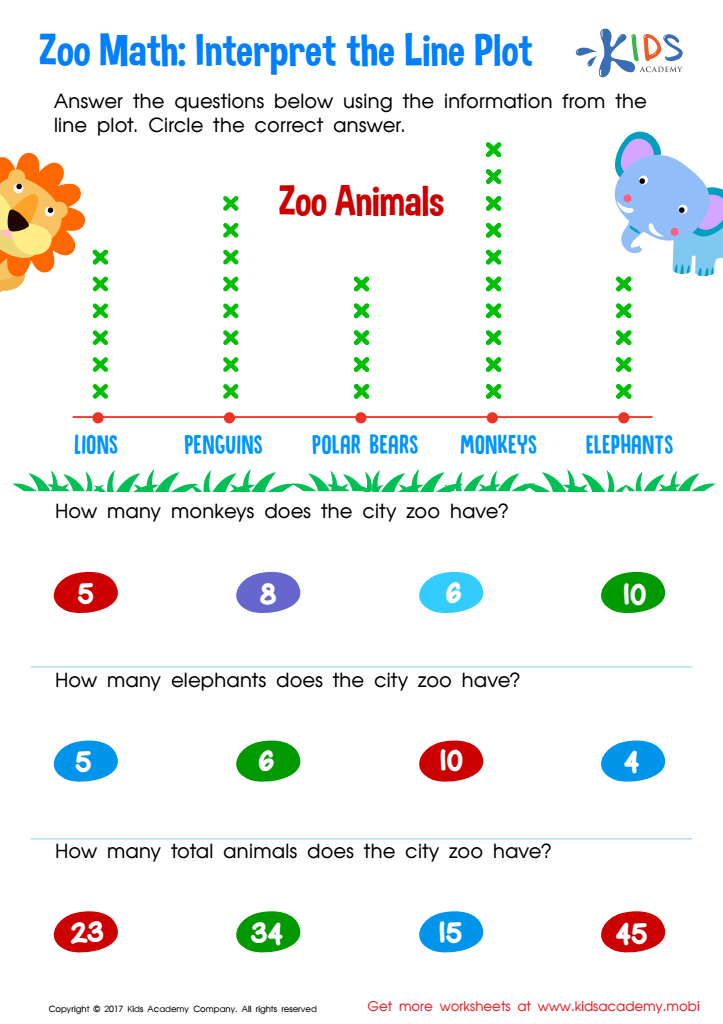
Interpret Line Plot Worksheet
Kids can learn to read graphs and analyze data easily with line plots. A fun zoo animal worksheet motivates kids to answer questions by reading the line plot and finding out how many animals a local zoo has.
 Assign to My Students
Interpret Line Plot Worksheet
Worksheet
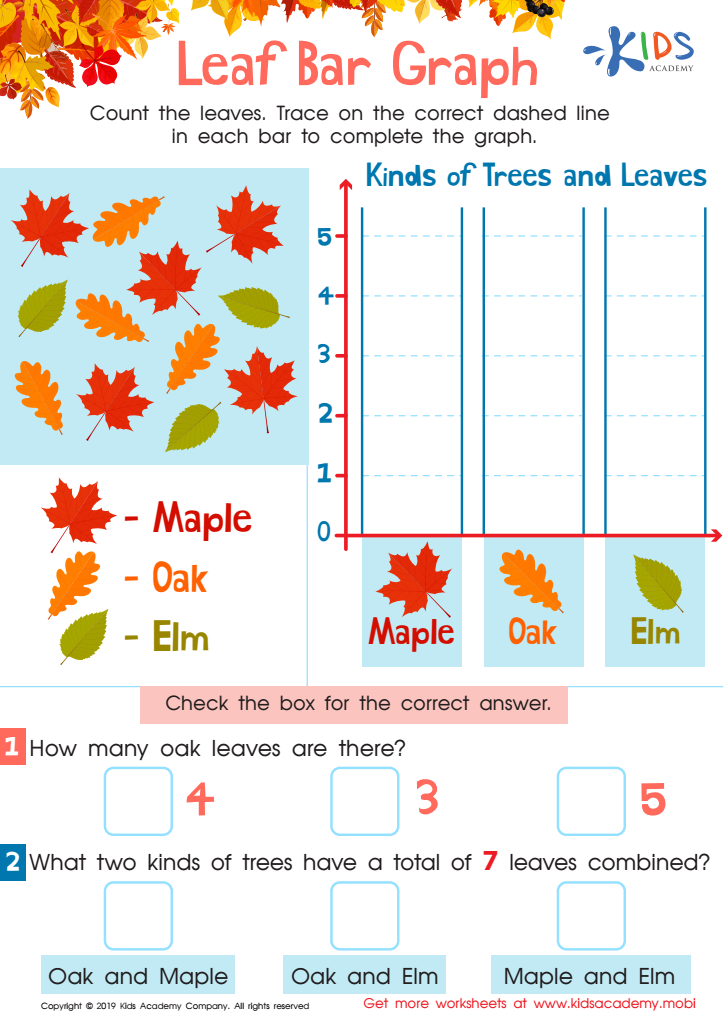
Leaf Bar Graph Worksheet
You can help your kids make learning easier and more enjoyable. While their teachers provide lessons and homework, you can take their education further. This worksheet can assist them in mastering bar charts. Count the leaves, then trace the correct line for each bar to complete the graph.
Leaf Bar Graph Worksheet
Worksheet
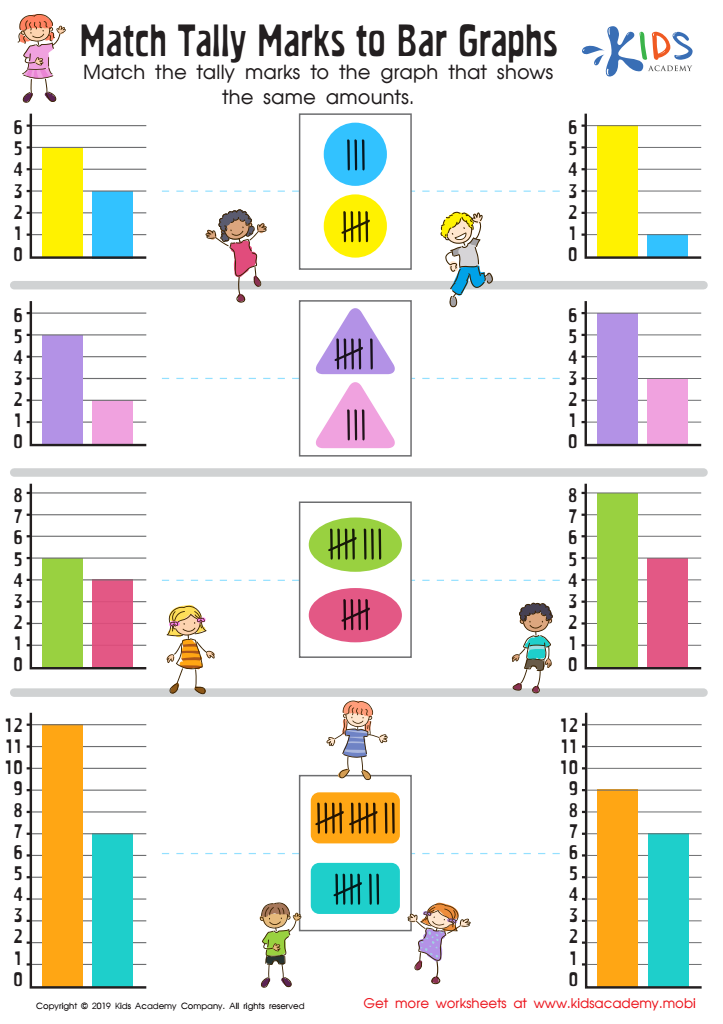
Match Tally Marks to Bar Graphs Worksheet
Learning math can be tough for kids. Rules and formulas can be confusing. Don't worry, this worksheet can help them understand graphs better. Show them how to match the tally marks with the graph that shows the same amount. It will help them grasp the basics and prepare them for more complex equations.
Match Tally Marks to Bar Graphs Worksheet
Worksheet
Join Kids Academy for Free
Who is primarily going to use this learning content?








Interpreting data is vital for parents and teachers of children aged 3-9 as it provides insights into a child's learning and development. Understanding data from assessments can highlight a child's strengths and areas for improvement. This ensures that educational strategies are tailored to meet individual needs, fostering a more effective learning environment.
Moreover, interpreting data allows educators and parents to track progress over time, facilitating conversations about growth milestones. It can guide discussions during parent-teacher meetings, helping all stakeholders align on goals and expectations. When both parties understand the data, they can collaboratively support a child's learning journey.
In an era driven by technology, data literacy becomes increasingly important. Parents and teachers who understand how to read and use data effectively cultivate critical thinking skills in children, preparing them for a data-driven world.
Finally, data interpretation can also inform curriculum choices and the allocation of resources. When educators understand what works best for their students, they can implement strategies that promote inclusivity and engagement, ensuring that all children thrive. By valuing data interpretation, parents and teachers play a crucial role in optimizing educational practices and enhancing the overall learning experience for young children.








