Understanding graphs Extra Challenge Worksheets for Ages 3-9
3 filtered results
-
From - To
Explore our "Understanding Graphs Extra Challenge Worksheets for Ages 3-9," designed to nurture young learners' analytical skills through engaging graph comprehension activities. These worksheets introduce children to various types of graphs, enhancing their ability to interpret data visually. Tailored for early education, the extra challenges promote critical thinking and problem-solving, making math concepts fun and accessible. Suitable for classrooms and home learning, these interactive resources cater to a wide range of abilities. Help your child build a strong foundation in understanding graphs while fostering a love for learning. Dive into a world of colorful graphs and discover the joys of data together!
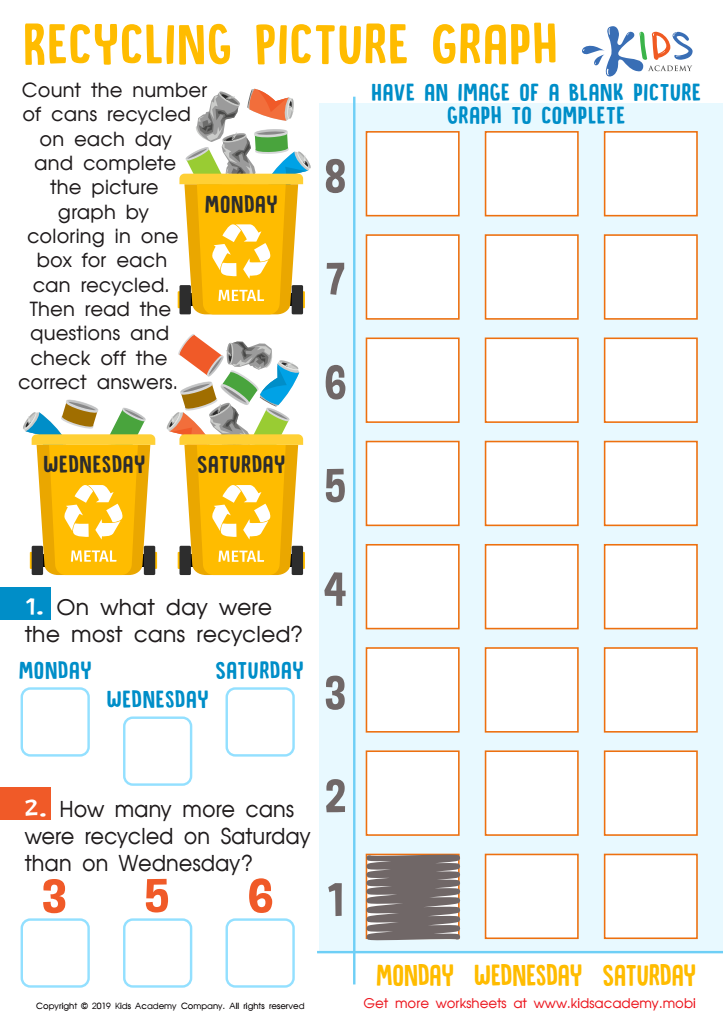
Recycling Picture Graph Worksheet
 Assign to My Students
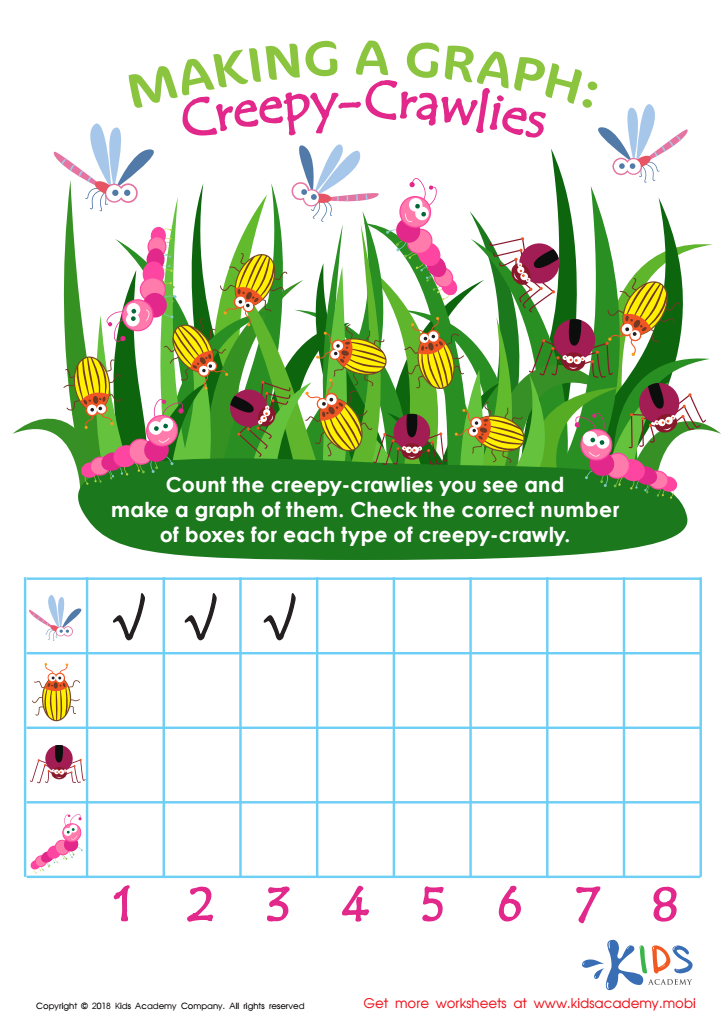
Making a Graph: Creepy Crawlies Worksheet
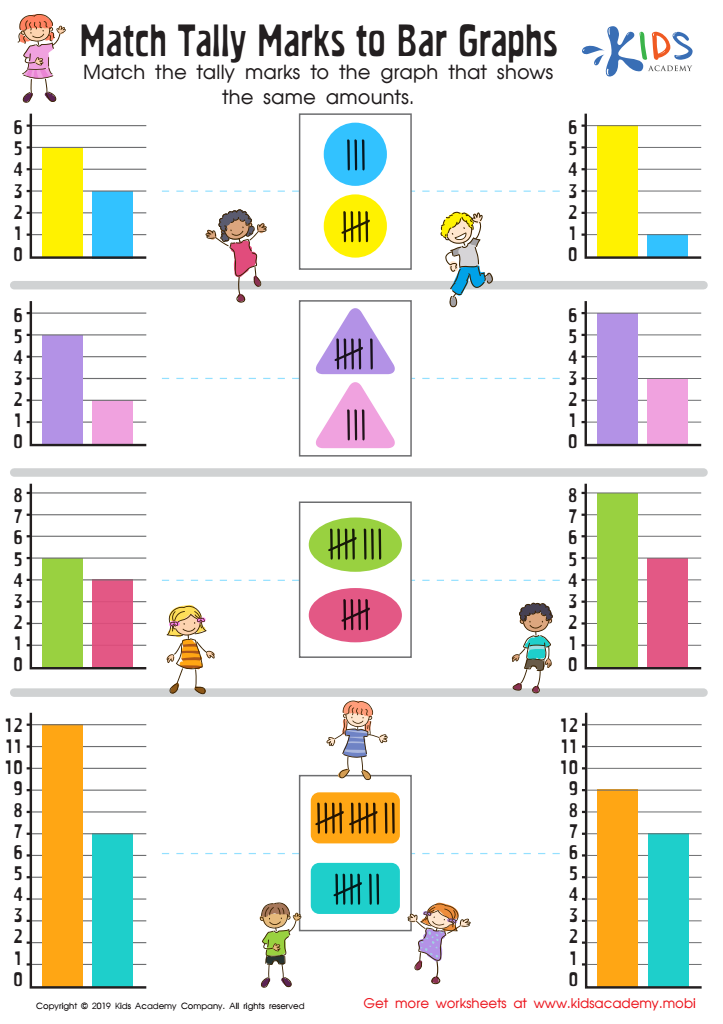
Match Tally Marks to Bar Graphs Worksheet






Understanding graphs is a crucial skill for children aged 3-9, and both parents and teachers play a vital role in nurturing this skill. Graphs are visual representations that help children organize and interpret information, fostering critical thinking and analytical abilities. By introducing concepts of data representation early on, children learn how to recognize patterns, compare quantities, and make predictions, which are foundational skills in mathematics and science.
For parents and teachers, encouraging an understanding of graphs promotes engagement in learning. It's more than just numbers and lines; it's about storytelling with data. Including fun learning activities, such as creating graphs from daily observations, helps children become enthusiastic learners. Graphs also enhance communication skills by allowing children to share their findings with peers.
Moreover, introducing graph literacy at a young age prepares children for more complex data interpretation in their future education and everyday life. In a world increasingly driven by data, these skills empower them to become informed adults. Therefore, parents and teachers should actively include graphing activities in their teaching, transforming learning into an enjoyable and meaningful experience that sets the stage for lifelong learning.








