
Money recognition Extra Challenge Coins Worksheets for Ages 3-9
4 filtered results
Difficulty Level
Grade
Age
-
From - To
Subject
Activity
Standards
Introduce the excitement of recognizing money to your child with our "Money Recognition Extra Challenge Coins Worksheets for Ages 3-9." Perfect for young learners, these engaging worksheets help kids identify different coins, understand their values, and solve simple problems involving money. Designed to enhance early math skills, these activities make learning about money fun and interactive. Kids from ages 3 to 9 will enjoy challenges appropriate for their level, encouraging logical thinking and boosting confidence in everyday financial literacy. Dive into the world of coins and watch your child's math skills flourish with these fantastic worksheets!
Favorites
With answer key
Interactive
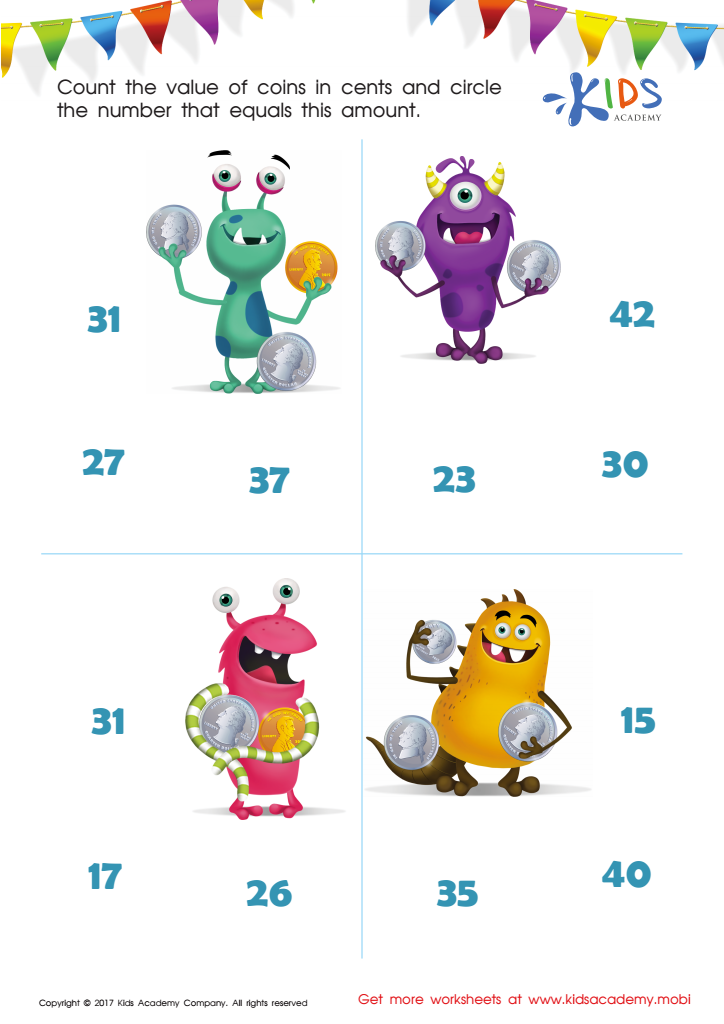
How Many Coins Money Worksheet
Have fun while counting coins: look at the monsters and count the coins in their hands. Challenge your little learners to count and write down the number of coins each one has. Enjoy the time together!
 Assign to My Students
How Many Coins Money Worksheet
Worksheet
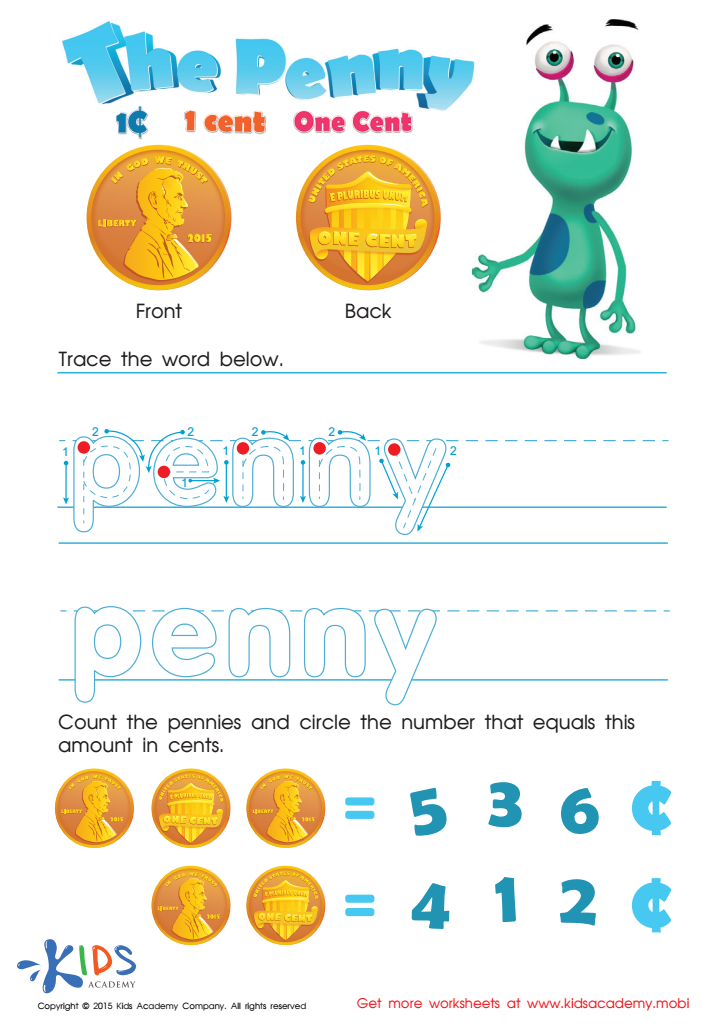
One Cent or the Penny Money Worksheet
Counting money made easy with Kids Academy's new collection of worksheets! Start with the one cent coin, or "Penny": trace it and count the pennies to work out the total. Visit our site for more free, printable money worksheets.
One Cent or the Penny Money Worksheet
Worksheet
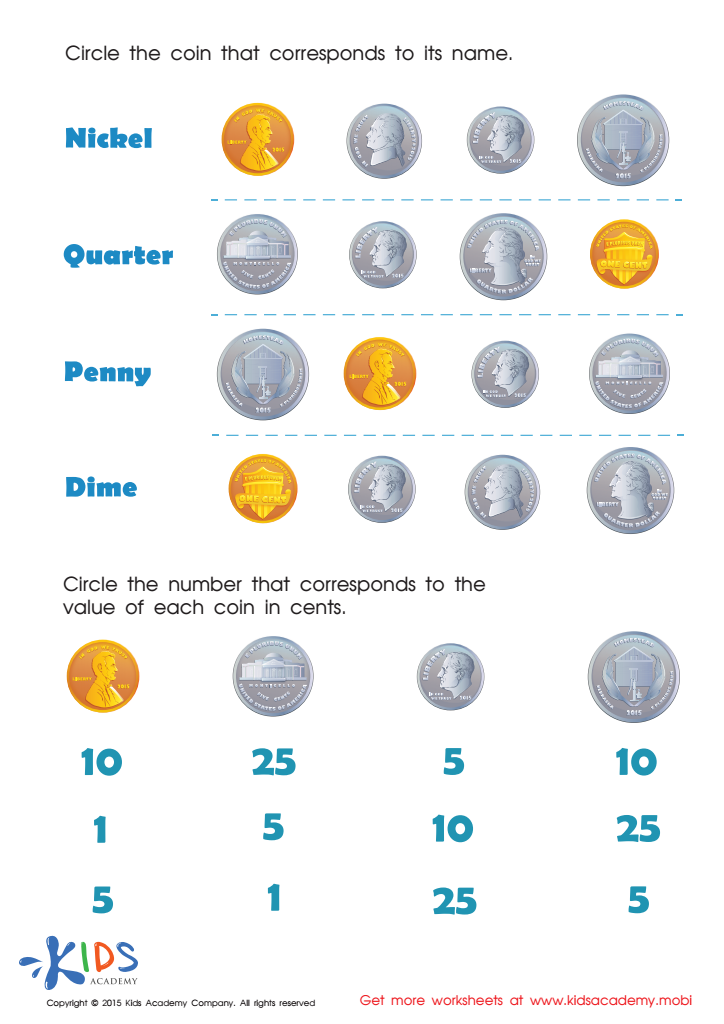
Coin Names and Values Money Worksheet
Learning about money can be easy, interesting and fun! Start by memorizing names and values of coins and then try matching pictures of coins to the right names and values. Find a great selection of counting money worksheets at our web site and keep learning.
Coin Names and Values Money Worksheet
Worksheet
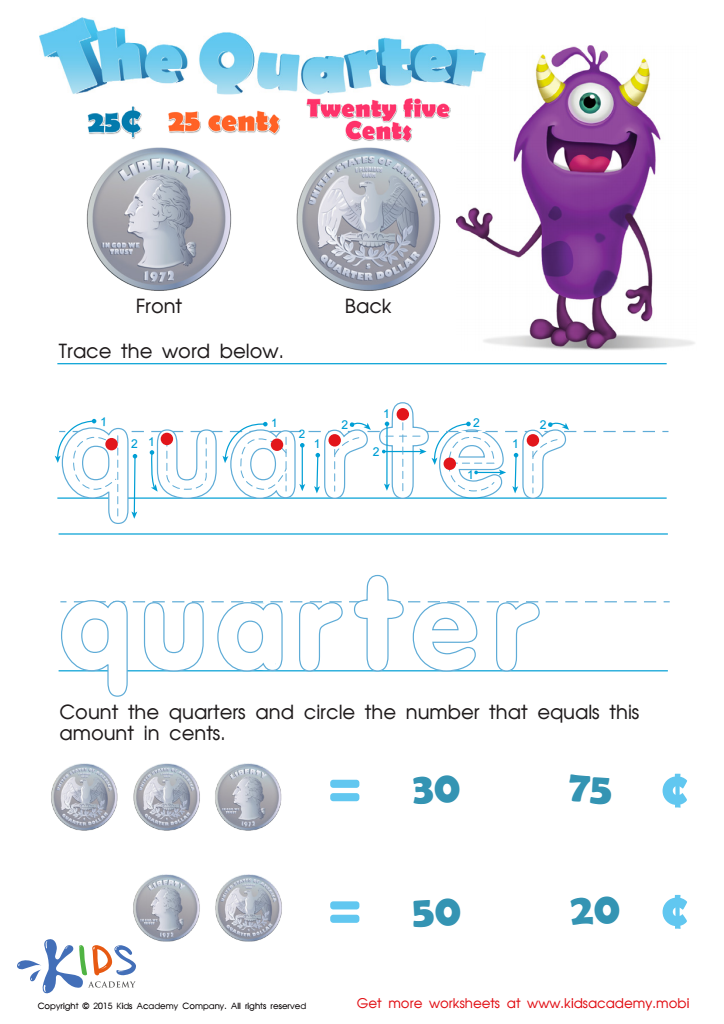
Twenty Five Cents or the Quarter Money Worksheet
Check out our new printable money games - learn to count money easily! With quarters, trace the word, count them and calculate the amount in cents. More worksheets at our website. Give it a try!
Twenty Five Cents or the Quarter Money Worksheet
Worksheet
Join Kids Academy for Free
Who is primarily going to use this learning content?








Money Recognition Extra Challenge Coins is an engaging tool for children between the ages of 3 to 9 that offers an entertaining yet educational approach to essential life skills. These coins assist both parents and teachers in teaching valuable lessons on money identification, counting, and basic mathematics.
Children in this age group learn best through play and hands-on activities. The tactile and visual experience of handling play coins bridges the gap between theoretical knowledge and real-world application. When children recognize different coin denominations early on, they lay a solid foundation for future financial literacy, akin to building blocks for more complex economic understanding as they grow older.
Parents and teachers should care about introducing these tools because the skills acquired extend far beyond just money recognition. They bolster cognitive development, problem-solving skills, and boost confidence in handling daily activities—like making simple purchases. Moreover, children practicing with these coins in classroom settings cultivate collaborative learning and vital social skills as they engage in group activities or friendly competitions.
In an era where digital transactions often overshadow cash handling, fostering familiarity with physical money becomes even more crucial. Money Recognition Extra Challenge Coins thus equip children not only for academic achievement but also for navigating the practical aspects of real-life financial situations, rendering these tools invaluable for early childhood development.








