Comparing objects Extra Challenge Math Worksheets for Ages 3-9
3 filtered results
-
From - To
Unlock your child's mathematical potential with our "Comparing Objects Extra Challenge Math Worksheets" designed for ages 3-9! These engaging worksheets foster critical thinking and enhance understanding of comparisons through fun and interactive activities. Each worksheet challenges young learners to distinguish between objects based on size, quantity, and other attributes, laying the groundwork for advanced math concepts. Perfect for both classroom use and at-home learning, these resources accommodate various learning styles, ensuring every child can thrive. Equip your child with essential skills while making math enjoyable! Explore our collection now to elevate their learning experience and build confidence in their abilities.
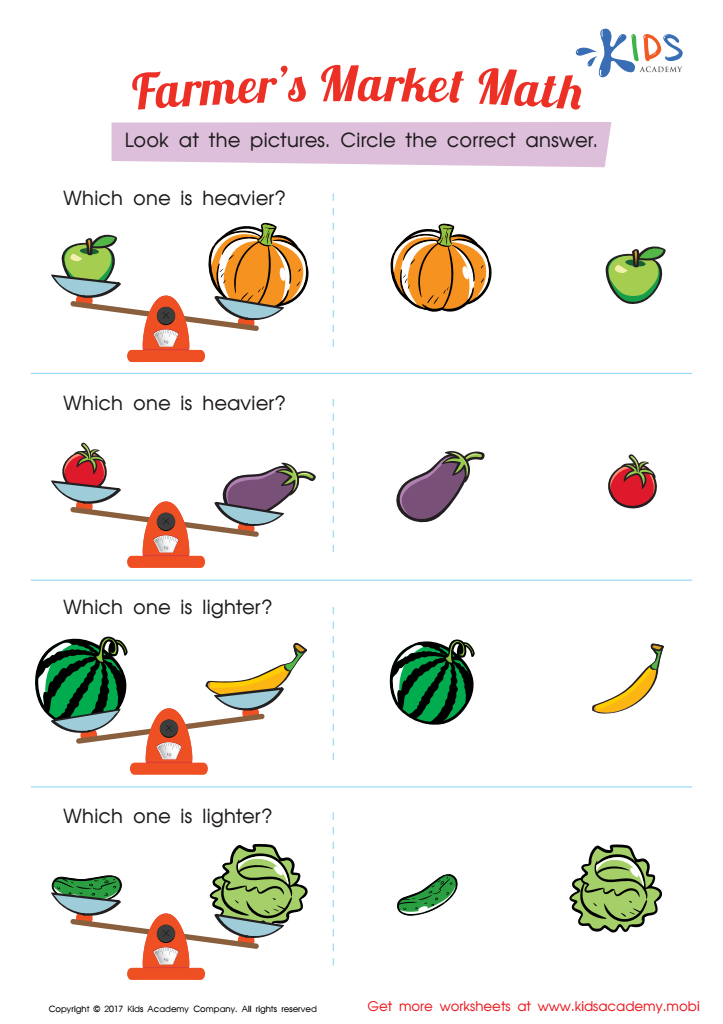
Which One Is Heavier Worksheet
 Assign to My Students
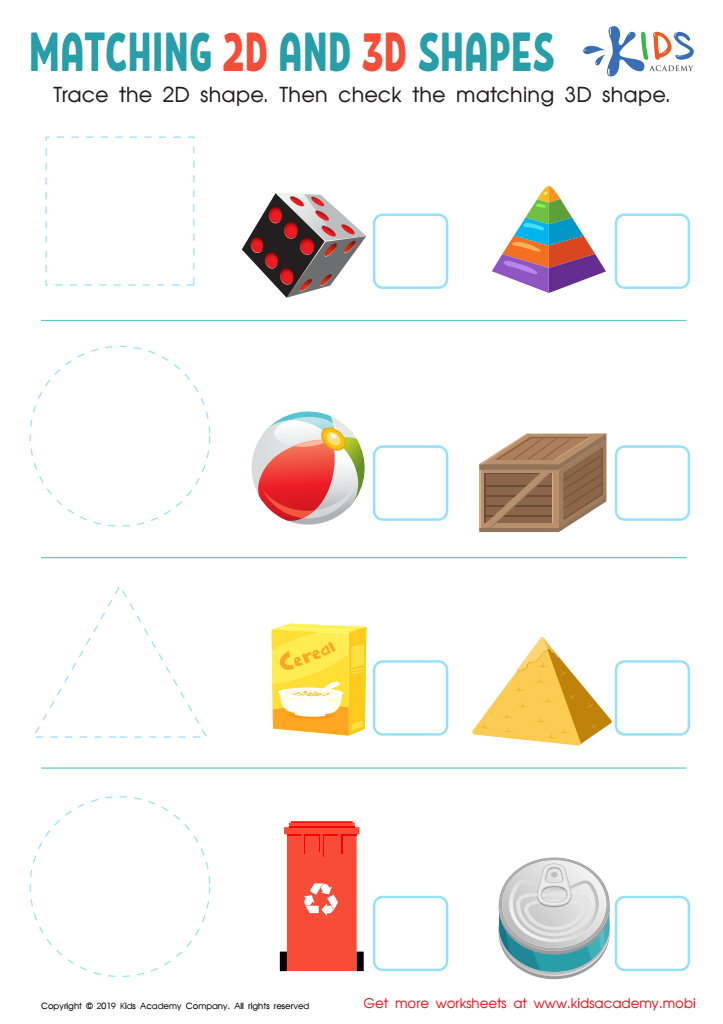
Matching 2D and 3D Shapes Worksheet
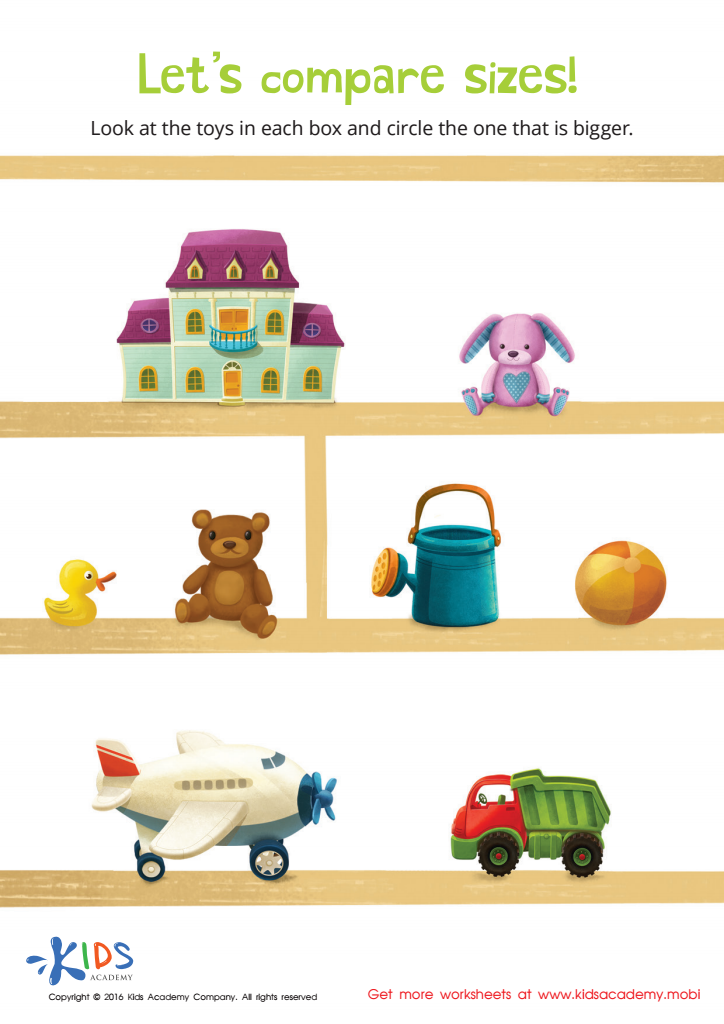
Classifying by Size Sorting Worksheet








Comparing objects is a foundational skill in early math education that lays the groundwork for children’s cognitive development. For parents and teachers, focusing on this concept with children aged 3-9 is crucial for several reasons. Firstly, it promotes critical thinking and analytical skills; children learn to evaluate differences and similarities, which builds their ability to observe and assess various characteristics of objects.
Moreover, engaging in comparative activities enhances language development as children learn the vocabulary associated with measurements, sizes, weights, and quantities. This makes it easier for them to articulate their observations and reasoning processes.
Additionally, comparing objects cultivates basic mathematical concepts such as greater than, less than, and equal to, which are essential in understanding more complex math later on. Playing with comparative concepts in hands-on, interactive ways also makes math enjoyable, fostering a positive attitude towards learning.
By prioritizing Comparing Objects Extra Challenge Math, parents and teachers provide children with the skills needed to navigate math challenges confidently while nurturing their innate curiosity about the world around them. This strong mathematical foundation supports not only their academic success but also encourages lifelong learning and problem-solving abilities.








