Story sequencing Extra Challenge Reading Fiction Worksheets for Ages 3-9
3 filtered results
-
From - To
Enhance your child's reading comprehension and narrative skills with our "Story Sequencing Extra Challenge Reading Fiction Worksheets" designed for ages 3-9! These engaging worksheets provide a fun and interactive way for young learners to practice organizing story elements, understanding character development, and summarizing plots. Each worksheet presents age-appropriate stories that challenge kids to sequence events and analyze story structure, fostering critical thinking and creativity. Perfect for home or classroom use, these resources make learning to read even more exciting and rewarding. Download now and watch your child flourish as they unlock the magic of storytelling through essential sequencing skills!
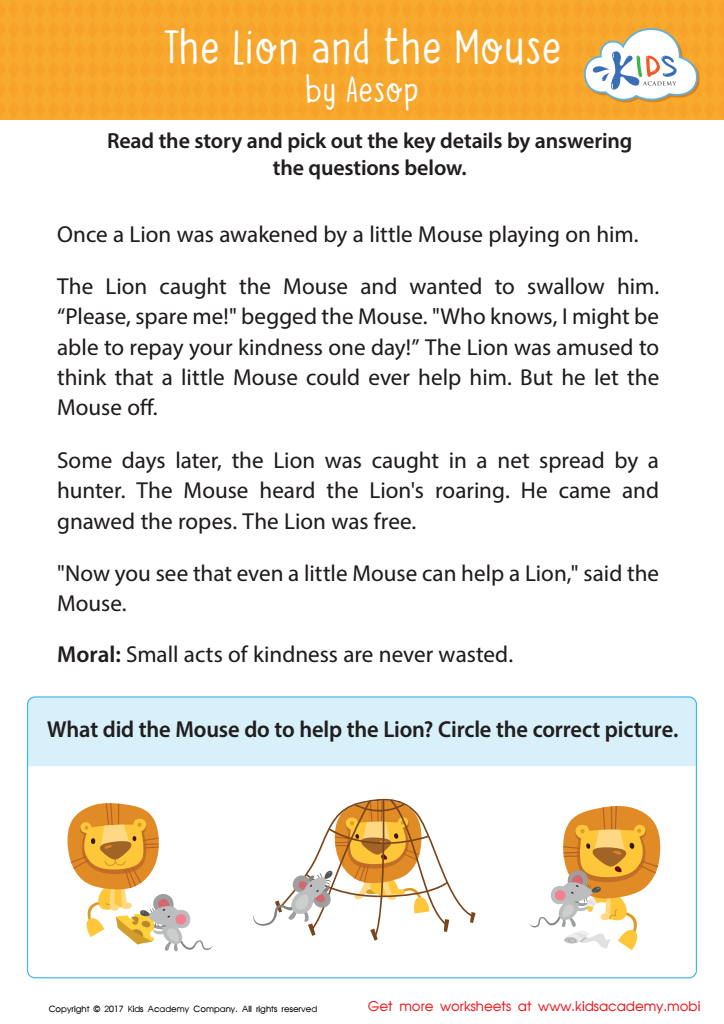
The Lion and The Mouse Sequencing Worksheet
 Assign to My Students
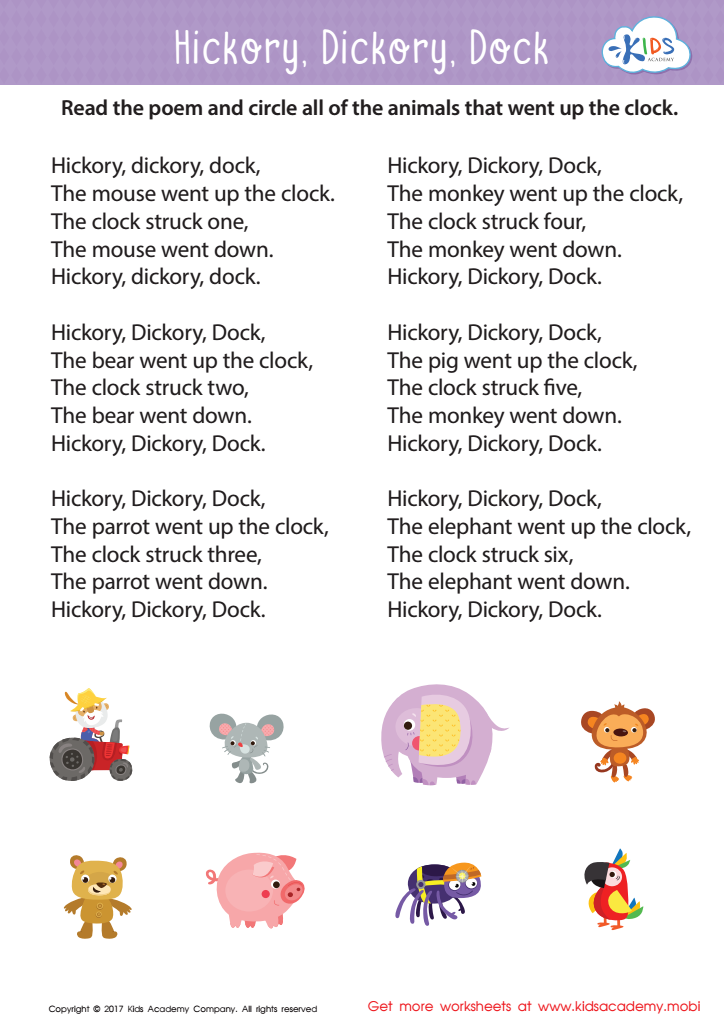
Hickory Dickory Dock Sequencing Worksheet
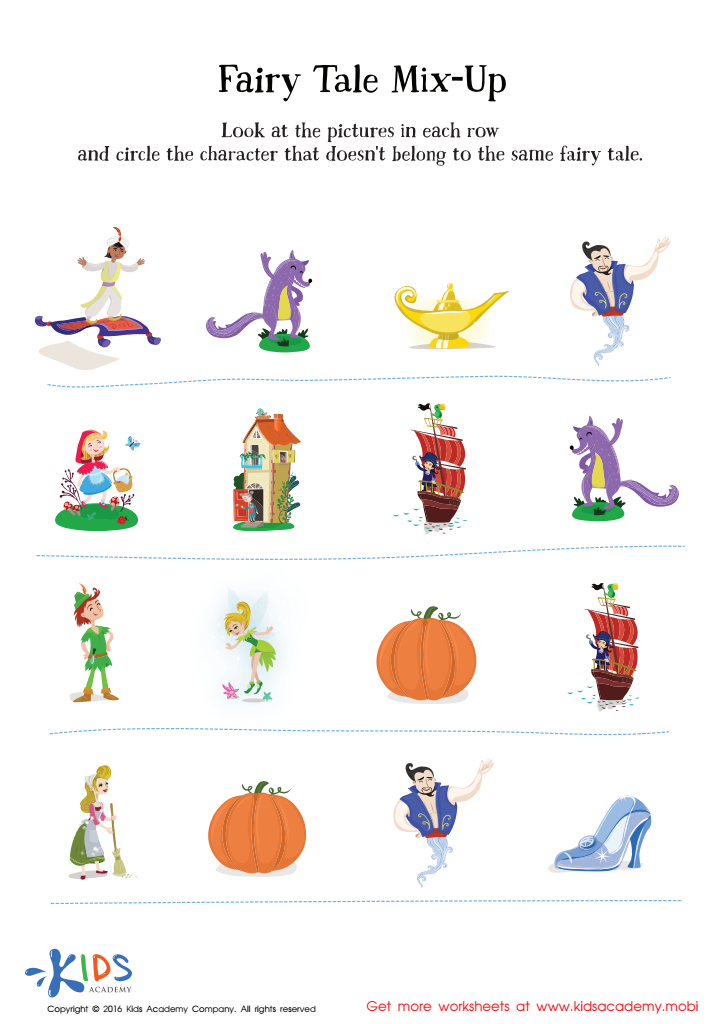
Fairy Tale Worksheet: Story Mix Up







Story sequencing is a crucial skill for young readers aged 3-9, as it helps them understand the structure and flow of narratives. Parents and teachers should prioritize this skill because it fosters comprehension and critical thinking. When children can recognize the order of events in a story, they become better equipped to predict outcomes and identify key details, which enhances their overall reading experience.
Engaging in story sequencing activities encourages children to retell stories in a coherent manner, reinforcing their memory and language skills. It also promotes creativity, as they can create their own stories by laying out events in a logical sequence. As children mature, these foundational skills will serve them well in more complex texts and storytelling formats.
Additionally, story sequencing can strengthen listening and speaking skills. As children practice recounting stories in their own words, they gain confidence in their ability to communicate effectively. This skill contributes significantly to their academic success, as comprehension is central to all areas of learning.
In essence, story sequencing cultivates a love for reading while equipping young learners with essential tools for understanding narrative structures, fostering both educational and personal growth. Therefore, parents and teachers should actively encourage this practice within early education environments.







