Fine Motor Skills Extra Challenge ABC Letters Worksheets for 3-Year-Olds
7 filtered results
Difficulty Level
Grade
Age
-
From - To
Subject
Activity
Standards
Explore our "Fine Motor Skills Extra Challenge ABC Letters Worksheets" designed specifically for 3-year-olds! These engaging worksheets help little learners master essential fine motor skills while discovering the alphabet. With a variety of activities, children will practice tracing, coloring, and connecting letters, enhancing their grip, coordination, and creativity. Each worksheet is crafted to make learning fun and interactive, inviting children to participate actively and build their confidence. Perfect for parents and educators looking to reinforce development at home or in the classroom. Kickstart your child’s educational journey today with these delightful and stimulating fine motor skills challenges!
Favorites
With answer key
Interactive
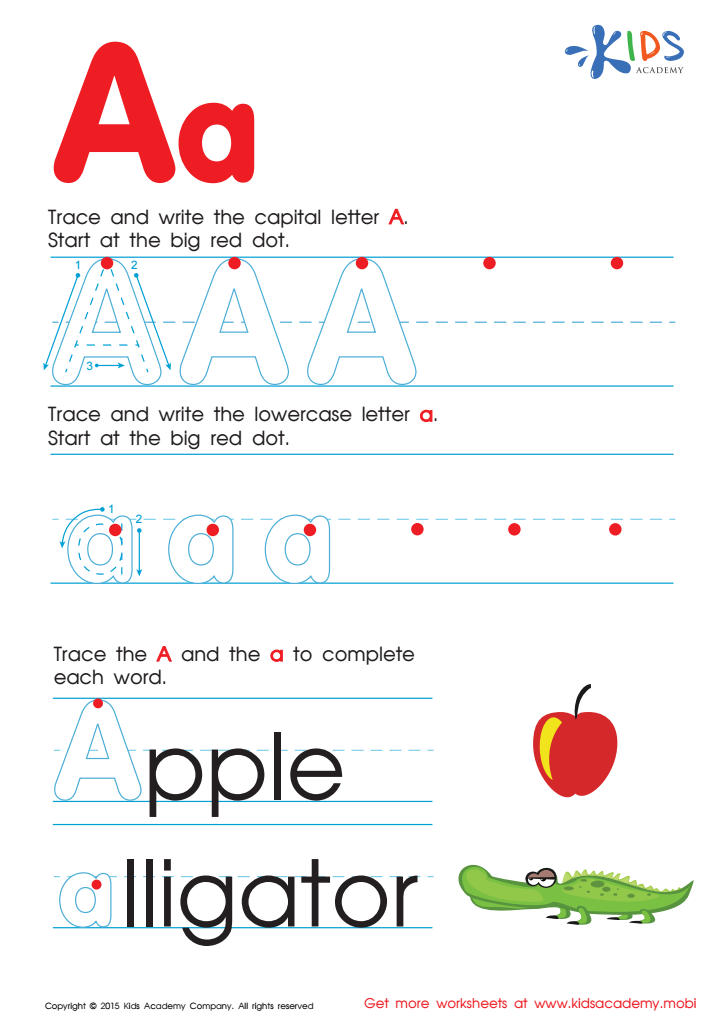
Letter A Tracing Page
Trace and write the letter "A"! Start with the big red dot, then do the capital and lowercase versions. Then write it again with two words - apple and alligator. Download more tracing worksheets at Kids Academy.
 Assign to My Students
Letter A Tracing Page
Worksheet


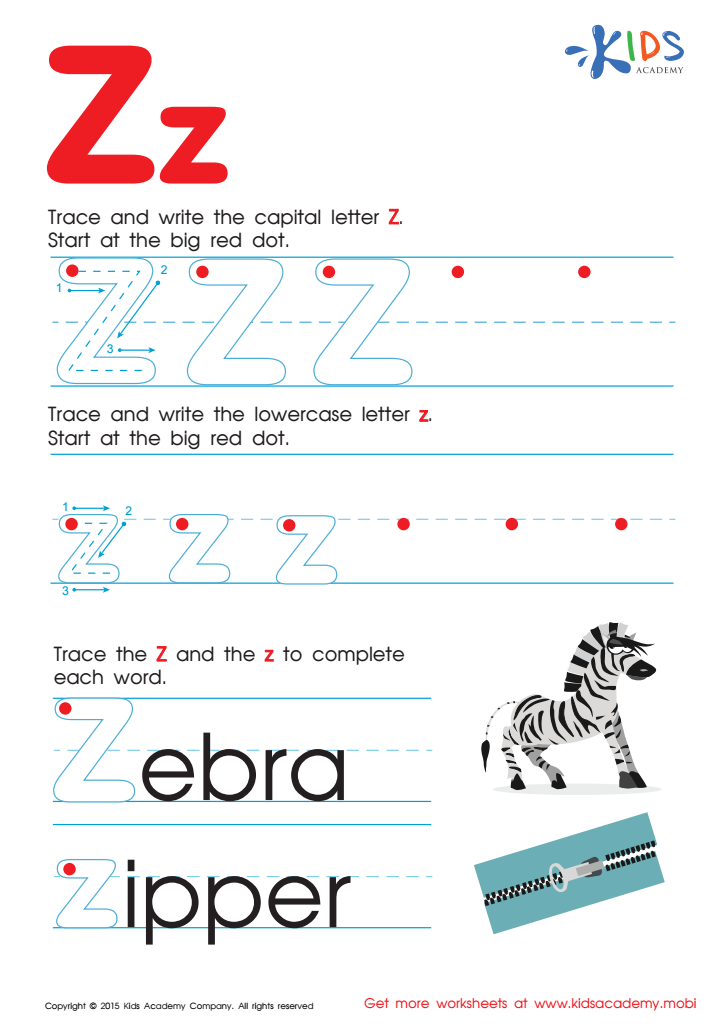
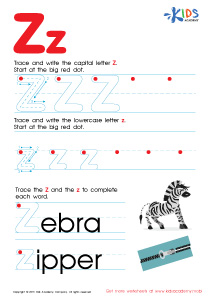
Letter Z Tracing Page
Trace and write capital "Z" and lowercase "z". Complete words "zebra" and "zipper". Be attentive and have fun! (80 words)
Letter Z Tracing Page
Worksheet
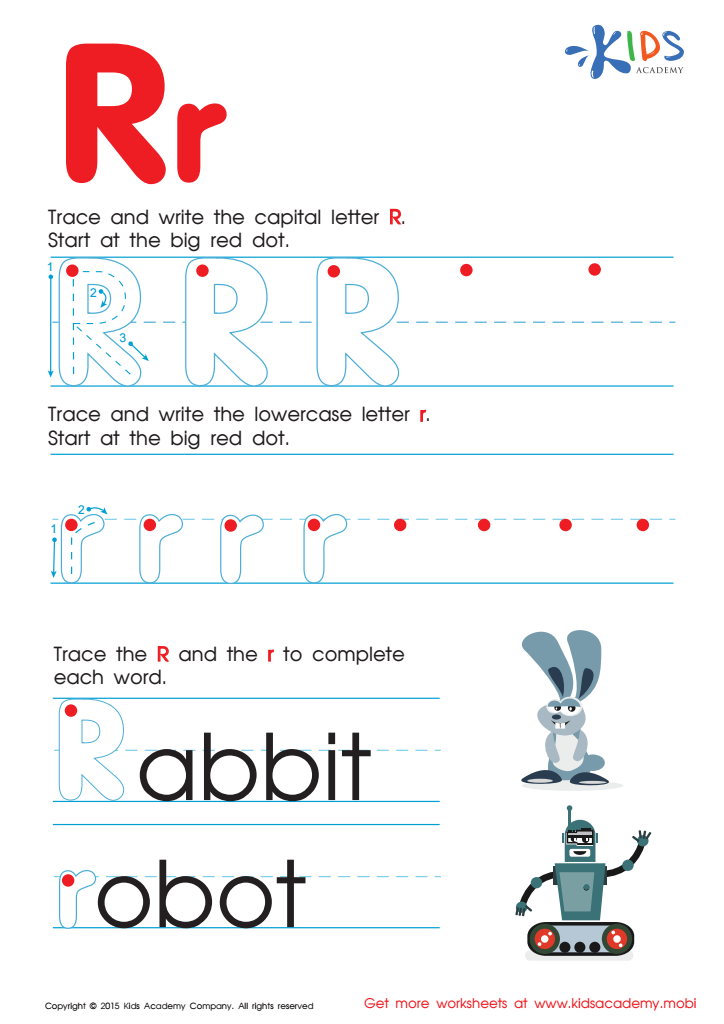
Letter R Tracing Page
Trace and write the letter "R" with this worksheet for kindergarten. Start with the uppercase, then move on to the lowercase. Write the letters several times for practice. Then help complete the words for the rabbit and robot, spelling carefully. More ABC worksheets can be found at Kids Academy.
Letter R Tracing Page
Worksheet
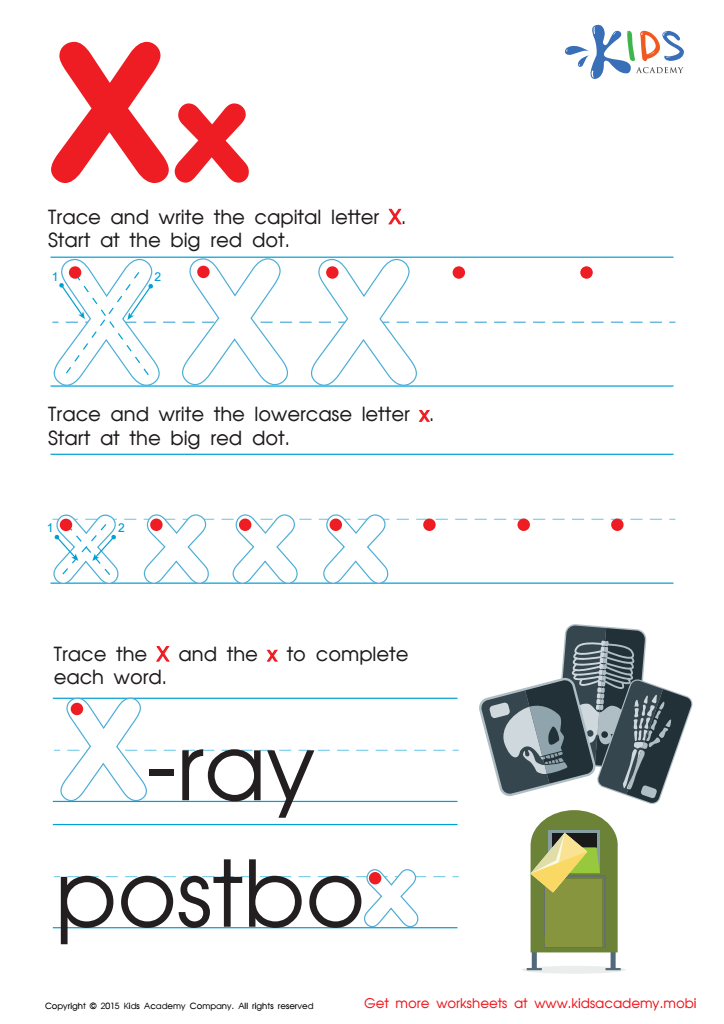
Letter X Tracing Page
Trace the uppercase letter "X" to learn, then write it yourself and practice. Then do the same with the lowercase "x" before completing the words "X-ray" and "postbox". Enjoy our alphabet printables!
Letter X Tracing Page
Worksheet
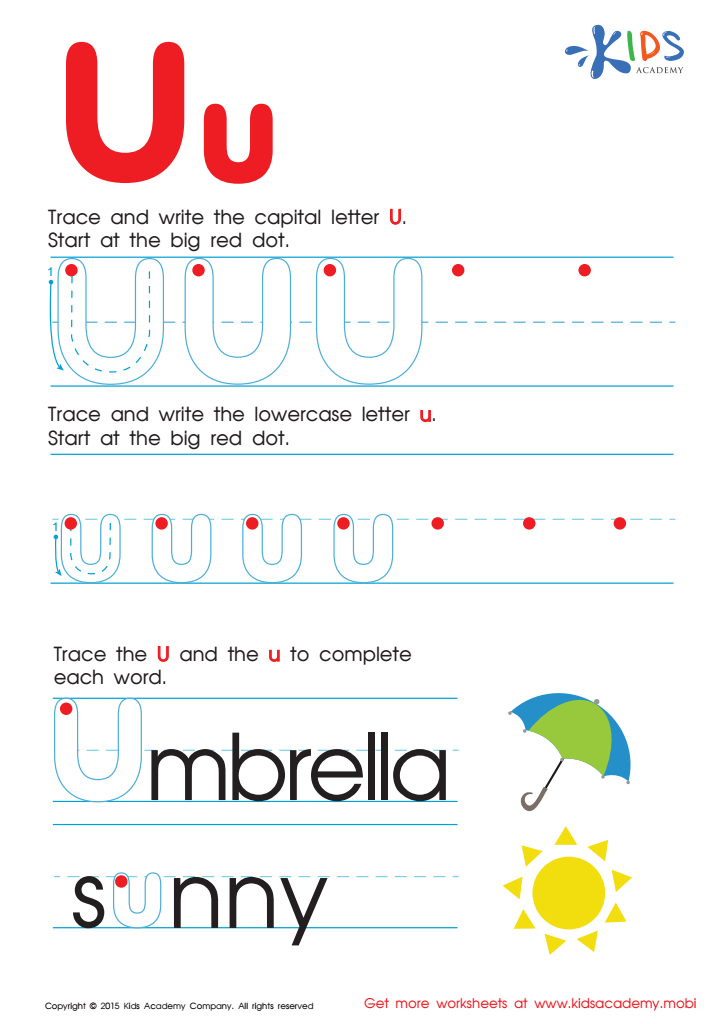
Letter U Tracing Page
Ready to trace and write the letter "U"? Use our worksheet and practice tracing both uppercase and lowercase letters. Complete the words "umbrella" and "sunny" with a capital "U". Check our full collection of alphabet printables for more activities.
Letter U Tracing Page
Worksheet
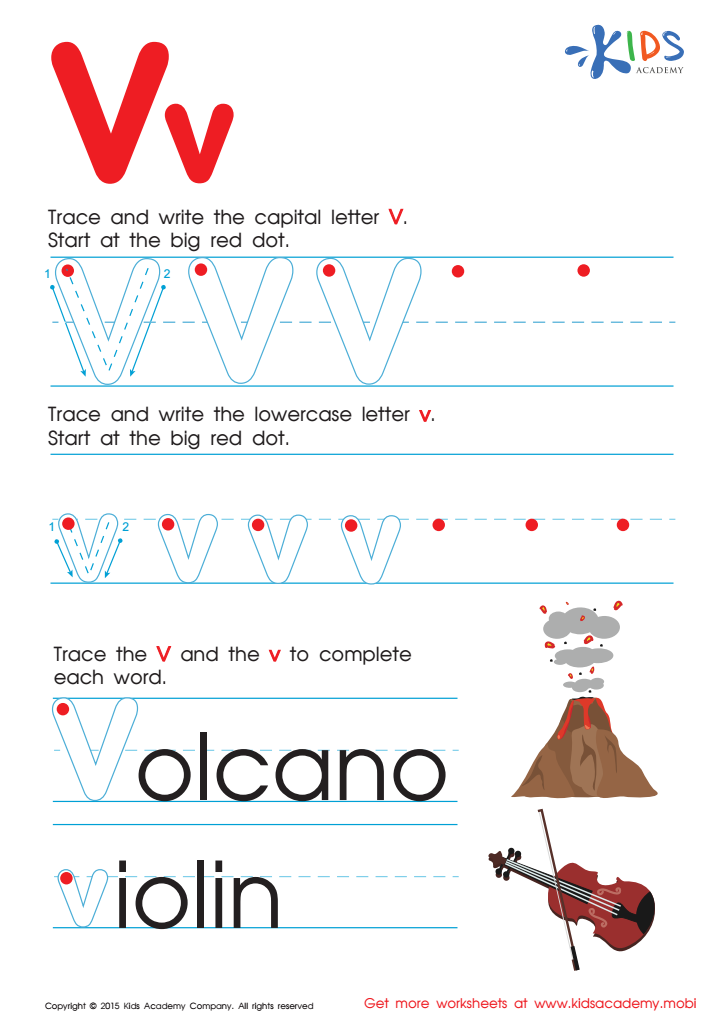
Letter V Tracing Page
Trace the uppercase and lowercase letter "V" with our kindergarten tracing worksheet. Begin at the red dot and follow the lines. Write it several times. Complete the words "Volcano" and "violin". Get more alphabet activities at Kids Academy.
Letter V Tracing Page
Worksheet
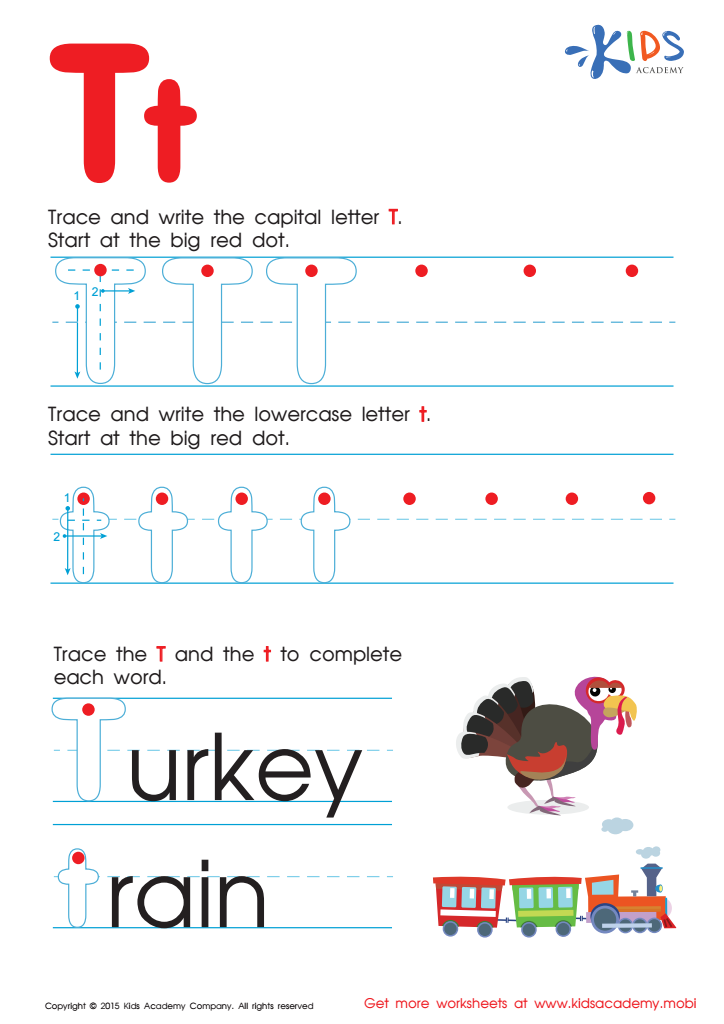
Letter T Tracing Page
Trace letters, complete words, draw pictures and see your kids having fun!
Kids Academy offers alphabet tracing worksheets to learn to write letters. Start with the big red dot, trace the letter, then write it. Practice uppercase and lowercase. Have fun completing words with a Turkey or a rain-train and draw pictures. Get more printable worksheets to make learning enjoyable.
Letter T Tracing Page
Worksheet
Join Kids Academy for Free
Who is primarily going to use this learning content?






Fine motor skills are crucial for early childhood development, and activities like Fine Motor Skills Extra Challenge ABC Letters offer significant benefits for 3-year-olds. As children engage in these activities, they refine their hand-eye coordination, dexterity, and control over small movements. These skills are foundational for various tasks such as writing, buttoning clothing, and using utensils, laying the groundwork for later academic and personal success.
Parents and teachers should care about these challenges because they stimulate cognitive development and improve language skills. As children manipulate letters and shapes, they're not only learning about the alphabet but also enhancing their cognitive processing through tactile experiences. This engagement fosters an enthusiasm for learning and helps them grasp concepts more readily.
Moreover, it builds confidence in their abilities. Mastering these challenges cultivates perseverance and problem-solving skills, important traits that will aid their overall growth. Parents and teachers can also utilize these activities to create bonding moments, making learning a fun and interactive experience. By focusing on fine motor skills through playful challenges, caregivers equip children with essential tools for future learning and daily life tasks, ensuring they have a solid foundation as they transition into more complex educational environments.