Handwriting practice Extra Challenge Letter Recognition Worksheets for 3-Year-Olds
5 filtered results
-
From - To
Unlock your child's potential with our Handwriting Practice Extra Challenge Letter Recognition Worksheets designed specifically for 3-year-olds! This engaging resource combines fun and learning, helping young learners develop essential letter recognition and handwriting skills. Each worksheet features exciting activities that encourage children to confidently identify letters whilst honing their fine motor skills. Perfect for at-home or classroom use, these worksheets spark curiosity and foster a love for learning in your little one. Supporting early literacy, the exercises are tailored to make learning enjoyable, ensuring kids are well-prepared as they embark on their educational journey. Explore the adventures of writing with us today!
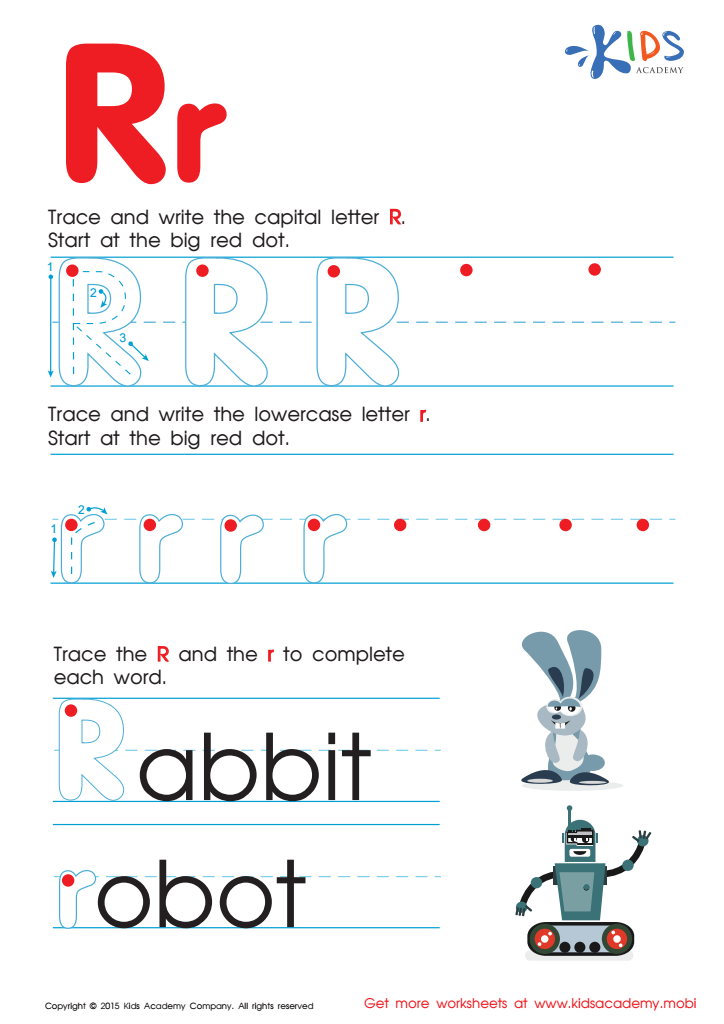
Letter R Tracing Page
 Assign to My Students
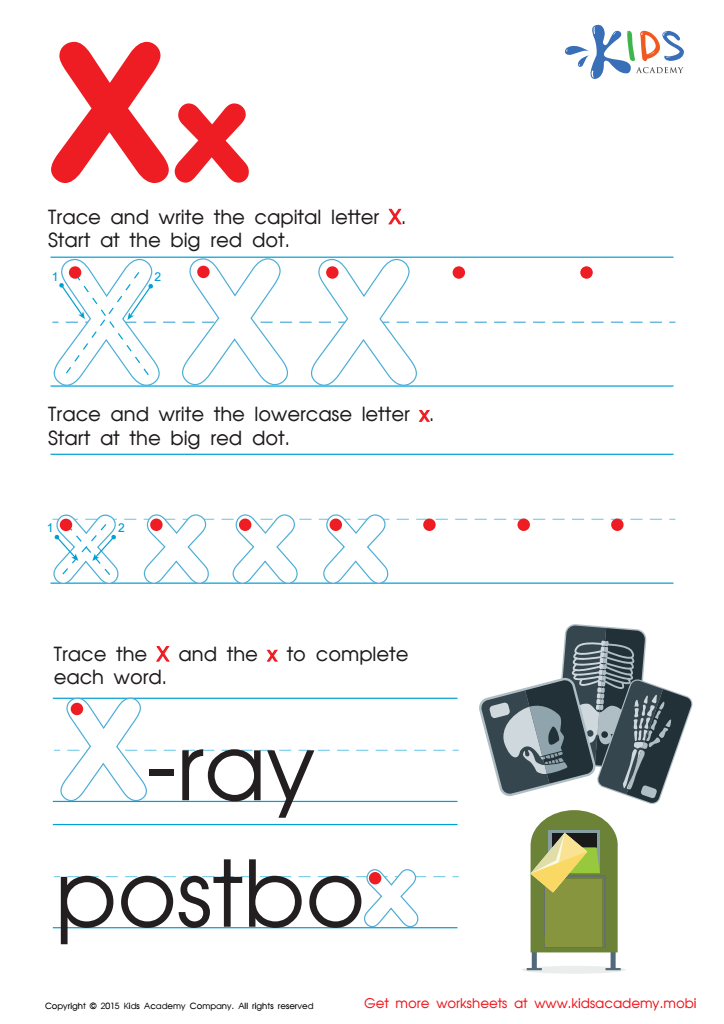
Letter X Tracing Page
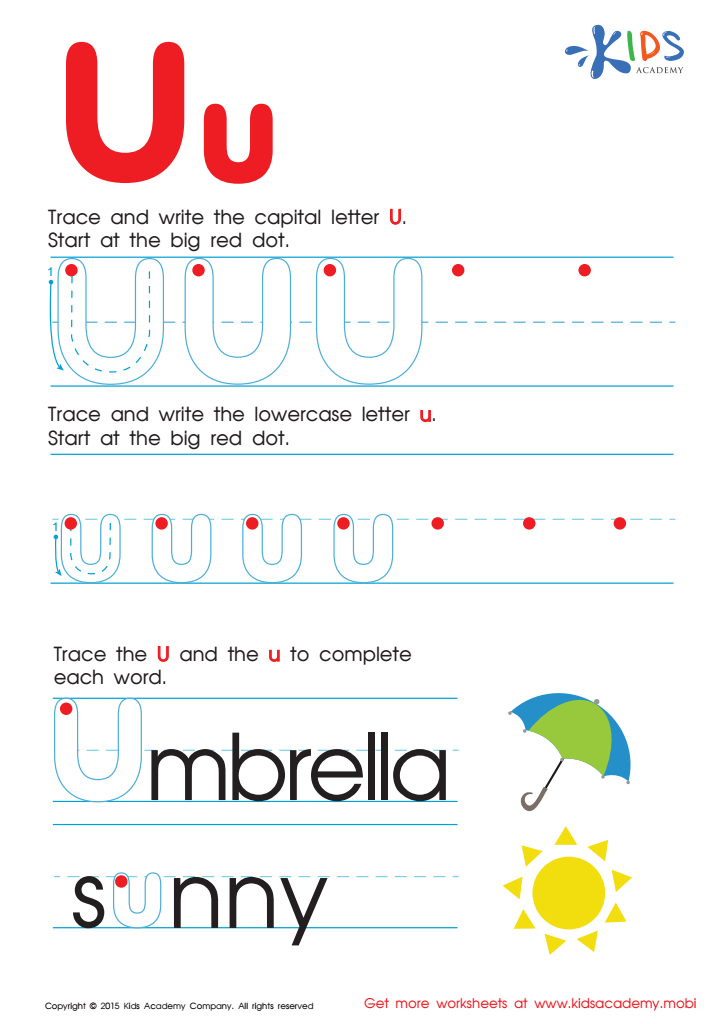
Letter U Tracing Page
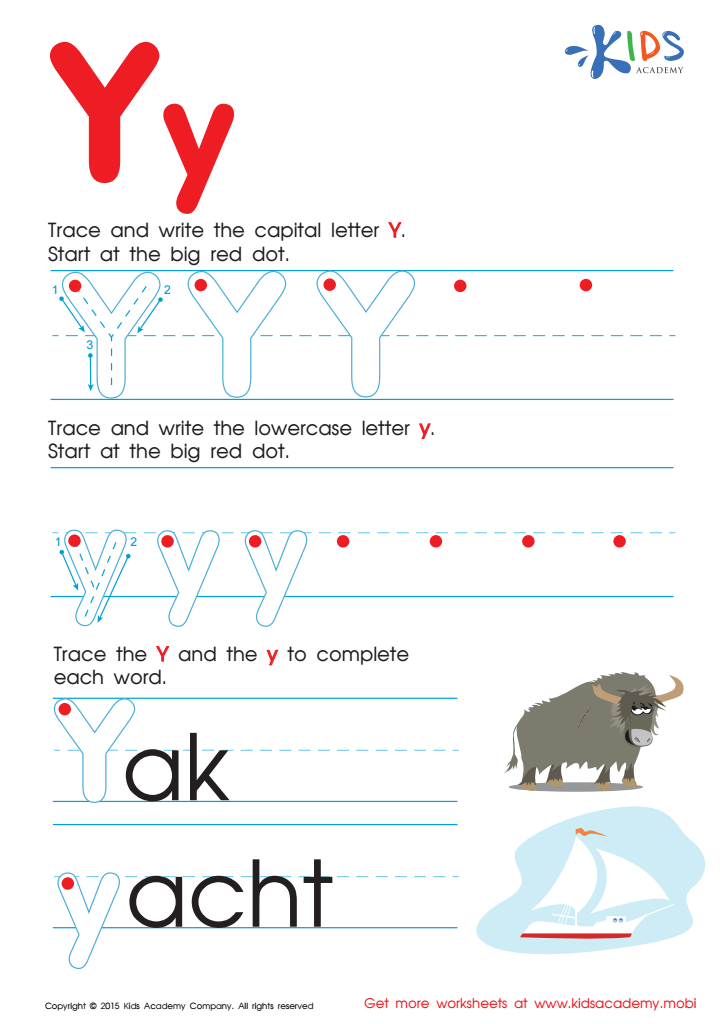
Letter Y Tracing Page
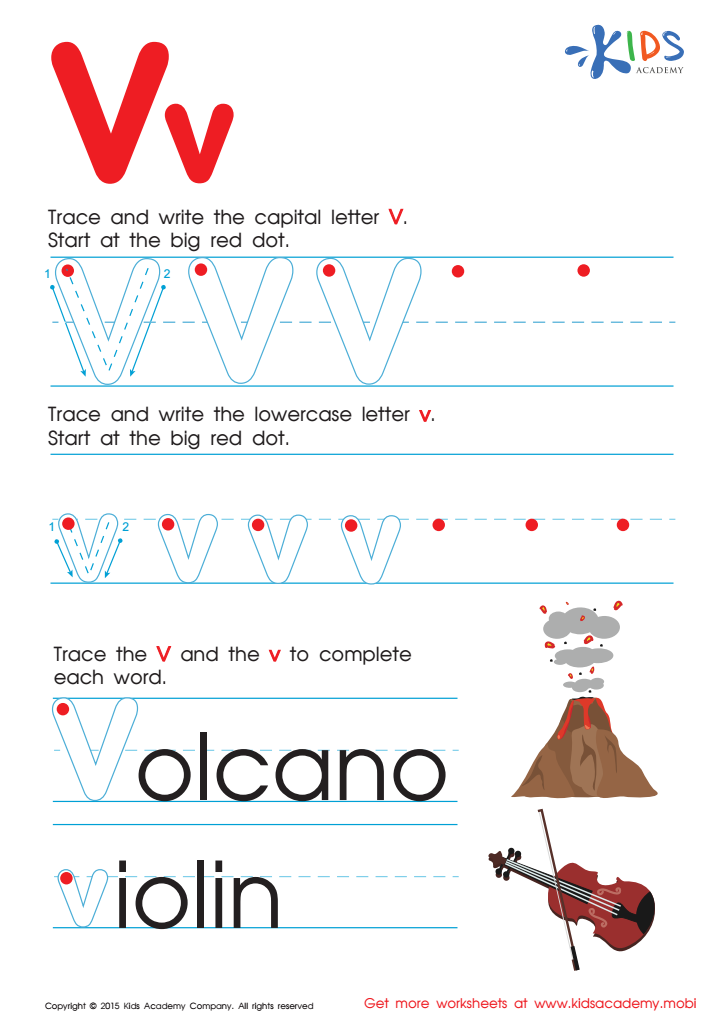
Letter V Tracing Page








Handwriting practice, especially through extra challenges in letter recognition for three-year-olds, is essential for their cognitive and motor skill development. At this age, children are rapidly developing their fine motor skills, which are crucial for future writing tasks. Practicing handwriting helps strengthen hand-eye coordination and dexterity, laying the foundation for effective writing later on.
Moreover, letter recognition is a critical first step in literacy development. By engaging in letter recognition activities alongside handwriting practice, children begin to differentiate between letters and understand their significance in written communication. This cognitive process fosters an early love for reading and writing, which sets the tone for lifelong learning.
Additionally, this practice can enhance a child's confidence and self-esteem. As they successfully recognize and write letters, they gain a sense of accomplishment that encourages them to tackle further challenges. For parents and teachers, investing time in this form of play and education can cultivate a child's enthusiasm for learning.
Ultimately, combining handwriting practice with letter recognition not only supports essential academic skills but also promotes a holistic approach to early childhood education. By caring about these pivotal activities, parents and teachers contribute significantly to a child's developmental journey.