Listening skills Extra Challenge Phonics Worksheets for 3-Year-Olds
3 filtered results
Difficulty Level
Grade
Age
-
From - To
Subject
Activity
Standards
Boost your child's listening skills with our Extra Challenge Phonics Worksheets designed specifically for 3-year-olds! These engaging worksheets provide fun activities that cultivate auditory discrimination and enhance early literacy. Each worksheet incorporates phonics elements, helping your little learner connect sounds with letters through playful exercises. With vibrant illustrations and interactive tasks, these resources keep young minds captivated while building essential listening abilities. Ideal for home or classroom use, our worksheets support early childhood development and foster a love for learning. Encourage your child to listen closely and explore the world of phonics, setting a strong foundation for future reading success!
Favorites
With answer key
Interactive
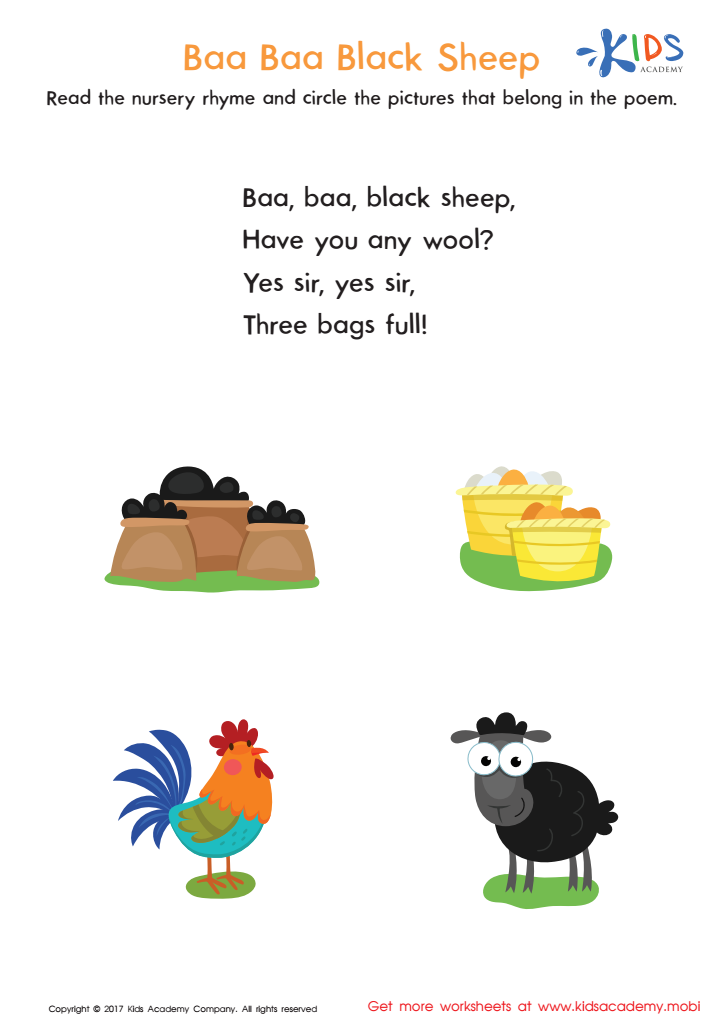
Baa Baa Black Sheep Printable
Jumpstart your child's reading skills with this printable Baa Baa Black Sheep worksheet! Recite the lines with them, then have them select the pictures associated with the poem to test comprehension. Fun and educational!
 Assign to My Students
Baa Baa Black Sheep Printable
Worksheet
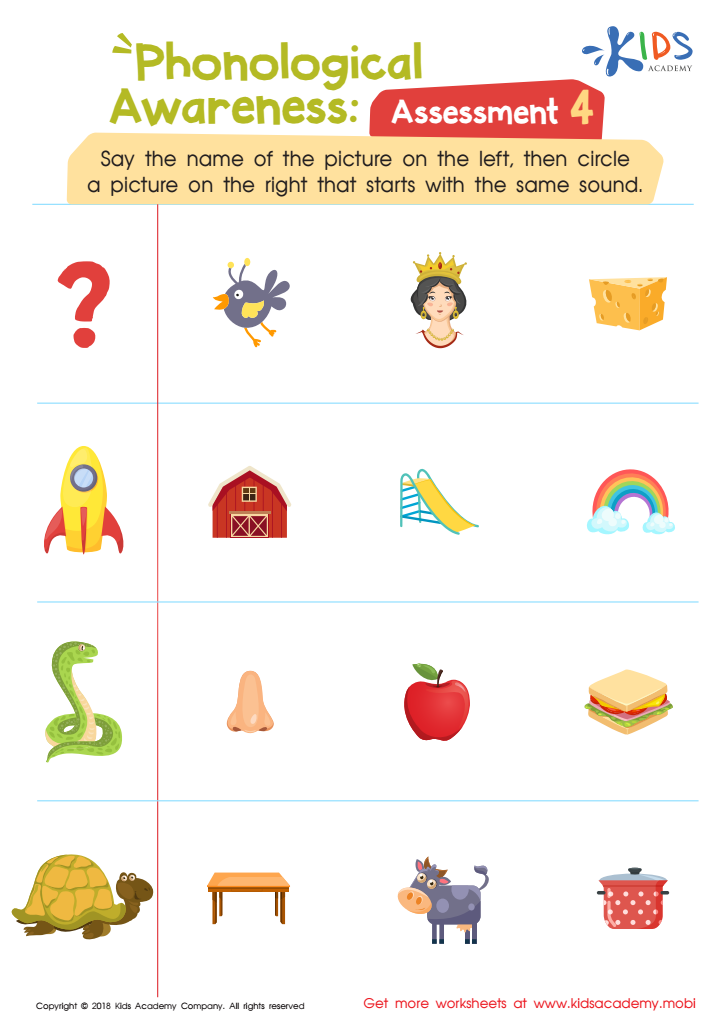
Phonological Awareness: Assessment 4 Worksheet
It can be tricky for young readers to differentiate between sounds in words. Make it fun with this downloadable worksheet! Ask your child to name each picture on the left and match the starting sound with an image on the right. This helps assess their phonics skills and make learning enjoyable.
Phonological Awareness: Assessment 4 Worksheet
Worksheet
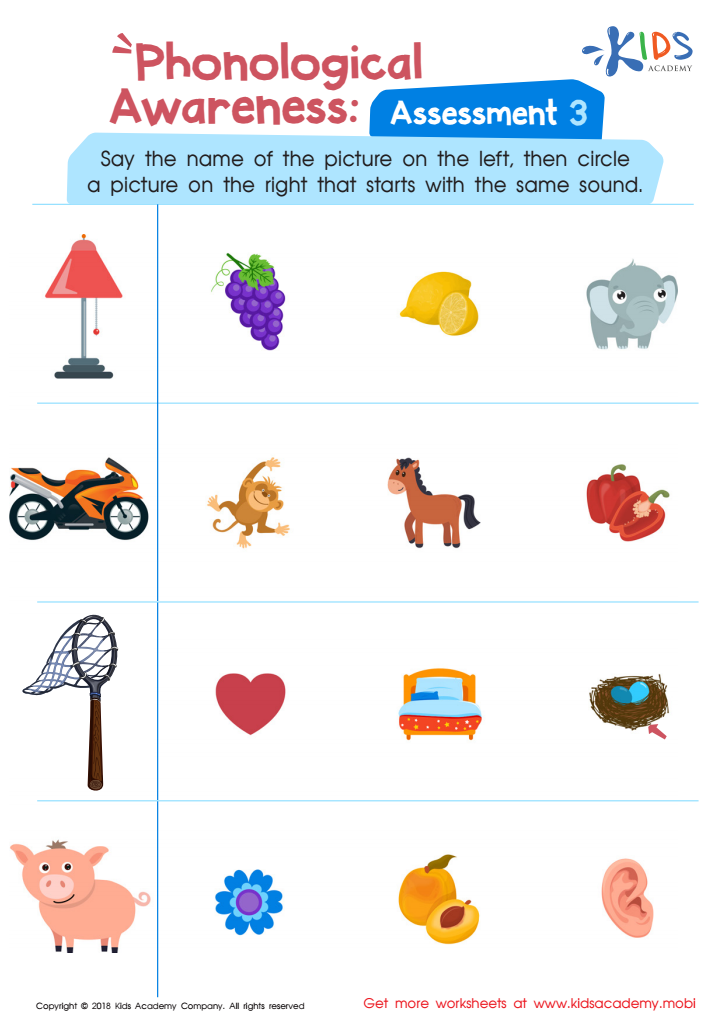
Phonological Awareness: Assessment 3 Worksheet
Test kids' reading readiness with a phonological awareness worksheet! With this PDF exercise, encourage children to name each picture aloud and match left to right. Help them learn to recognize word sounds at the start, middle and end of words. They'll be sure to remember that lamp doesn't sound like elephant!
Phonological Awareness: Assessment 3 Worksheet
Worksheet
Join Kids Academy for Free
Who is primarily going to use this learning content?








Listening skills are fundamental to early childhood development and are particularly important when it comes to phonics for 3-year-olds. Parents and teachers should care about enhancing these skills for several reasons.
Firstly, strong listening skills lay the groundwork for language acquisition. At this age, children are absorbing sounds, rhythms, and patterns in speech, which are crucial for understanding phonics and mastering phonemic awareness. This sets the stage for effective reading and writing in the future.
Secondly, enhancing listening abilities promotes better communication skills. Children learn to follow instructions, participate in conversations, and express themselves, fostering social interactions and emotional intelligence. By focusing on phonics-related listening activities, such as rhymes and sound games, caregivers significantly contribute to a child’s overall linguistic competence.
Additionally, strong listening skills help improve attention span and focus. Engaging activities that emphasize listening can captivate young minds, nurturing their ability to concentrate on tasks.
Incorporating Listening Skills Extra Challenge Phonics not only assists in phonics comprehension but also integrates play into learning. Ultimately, parents and teachers who prioritize developing listening skills will equip children with essential tools for future academic and social success.