Basic arithmetic skills Extra Challenge Worksheets for 3-Year-Olds
3 filtered results
-
From - To
Welcome to our "Basic Arithmetic Skills Extra Challenge Worksheets for 3-Year-Olds!" Our engaging collection of worksheets is designed to boost early math skills through fun and interactive activities. Tailored specifically for young learners, these worksheets introduce foundational concepts such as number recognition, counting, and simple addition and subtraction, some of which involve vibrant illustrations and playful themes to keep children entertained while they learn. Help your little ones develop confidence and a love for math with these extra challenges that prepare them for future academic success. Start their arithmetic adventure today and watch their skills grow!
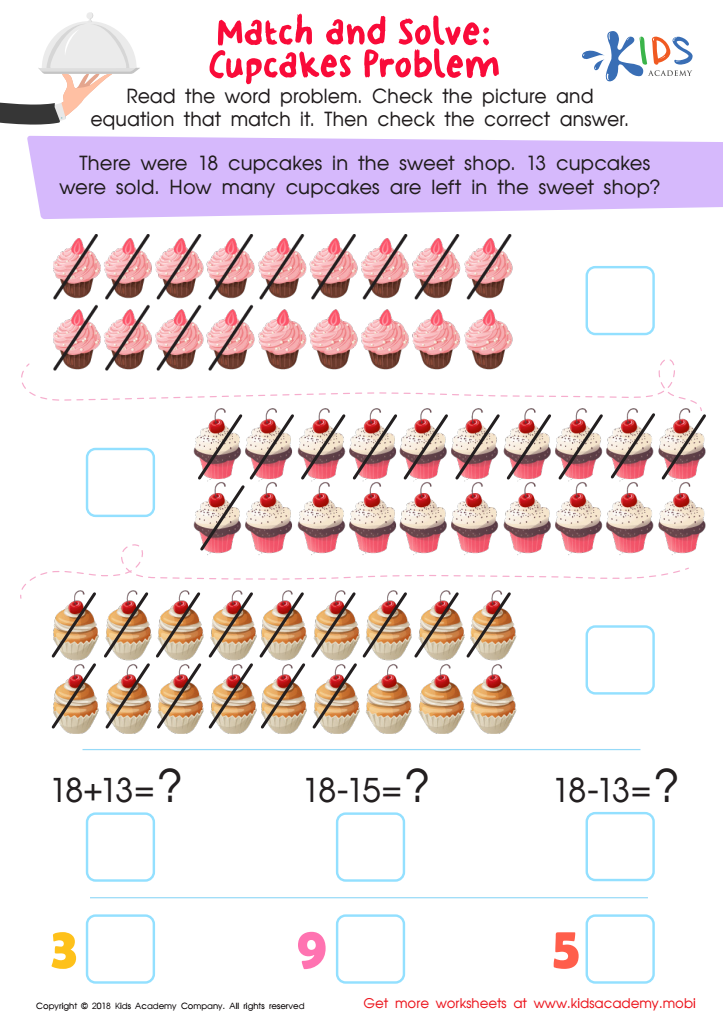
Match and Solve: Cupcakes Problem Worksheet
 Assign to My Students
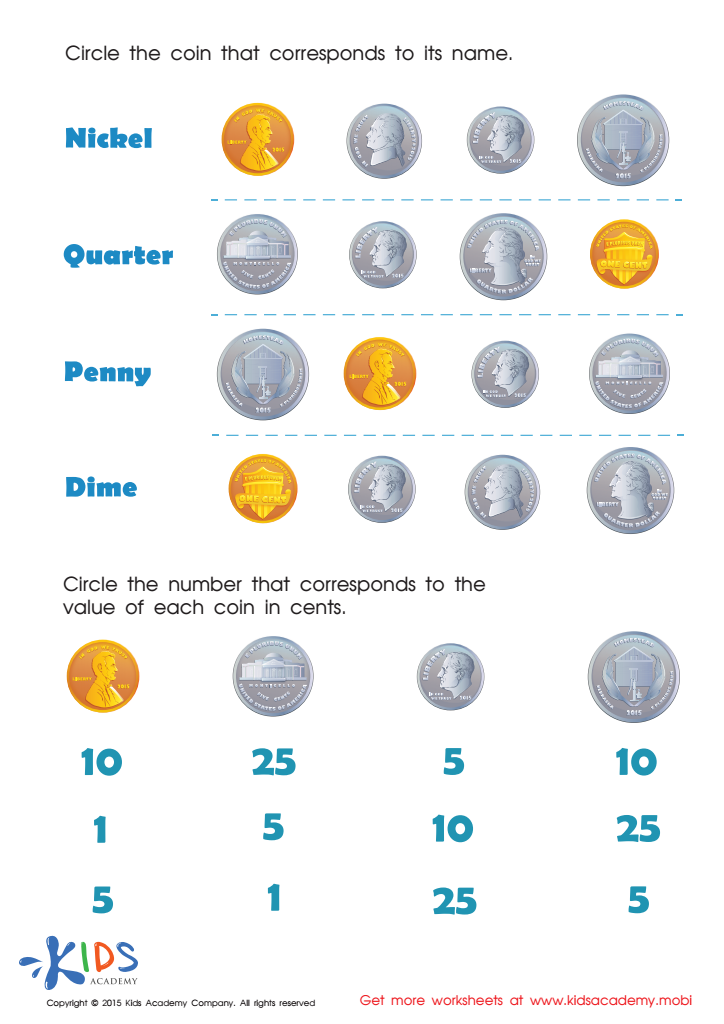
Coin Names and Values Money Worksheet
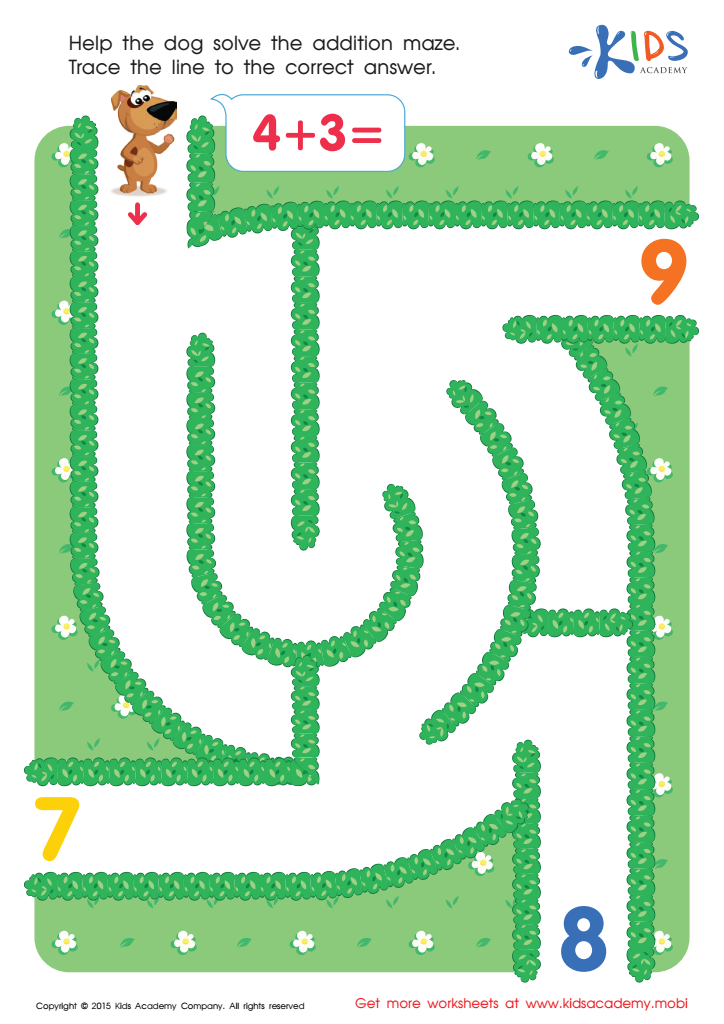
Addition Four And Three Worksheet






Parents and teachers should prioritize basic arithmetic skills, especially for 3-year-olds, because these foundational concepts are crucial for early cognitive development. At this age, children's brains are rapidly developing, and engaging them in simple mathematical activities cultivates critical thinking, problem-solving abilities, and logical reasoning.
By introducing basic arithmetic through playful activities—like counting objects, sorting toys, or singing counting songs—young children can build a strong mathematical understanding that will serve them well in their academic journeys. Early arithmetic fluency promotes confidence in handling numbers, which can alleviate math anxiety later in their educational careers.
Moreover, acquiring quantitative skills fosters a positive learning environment and enhances language development as children learn to express numerical ideas. Engaging in basic arithmetic also supports social skills through collaborative games where children can count and share, promoting cooperation and communication.
In a society that increasingly values STEM (Science, Technology, Engineering, Mathematics) education, aligning early learning experiences with basic arithmetic skills prepares children for future academic success, empowering them to thrive in more complex mathematical concepts as they grow. Ultimately, fostering a love for numbers can significantly influence their long-term educational trajectory and opens up a world of possibilities.








