Cognitive Development Extra Challenge Geometry Worksheets for 3-Year-Olds
3 filtered results
-
From - To
Introducing our Cognitive Development Extra Challenge Geometry Worksheets, designed especially for 3-year-olds! These engaging, expertly-crafted worksheets are perfect for expanding little minds and enhancing geometric understanding at an early age. From identifying shapes to spatial reasoning, our activities offer an extra challenge for advanced preschoolers. Each worksheet is loaded with fun, interactive, and educational exercises that promote critical thinking and problem-solving skills. Set your child on the path to success with our specially designed geometry worksheets that add an exciting twist to cognitive development. Perfect for parents and educators looking to give young learners a stimulating head start.
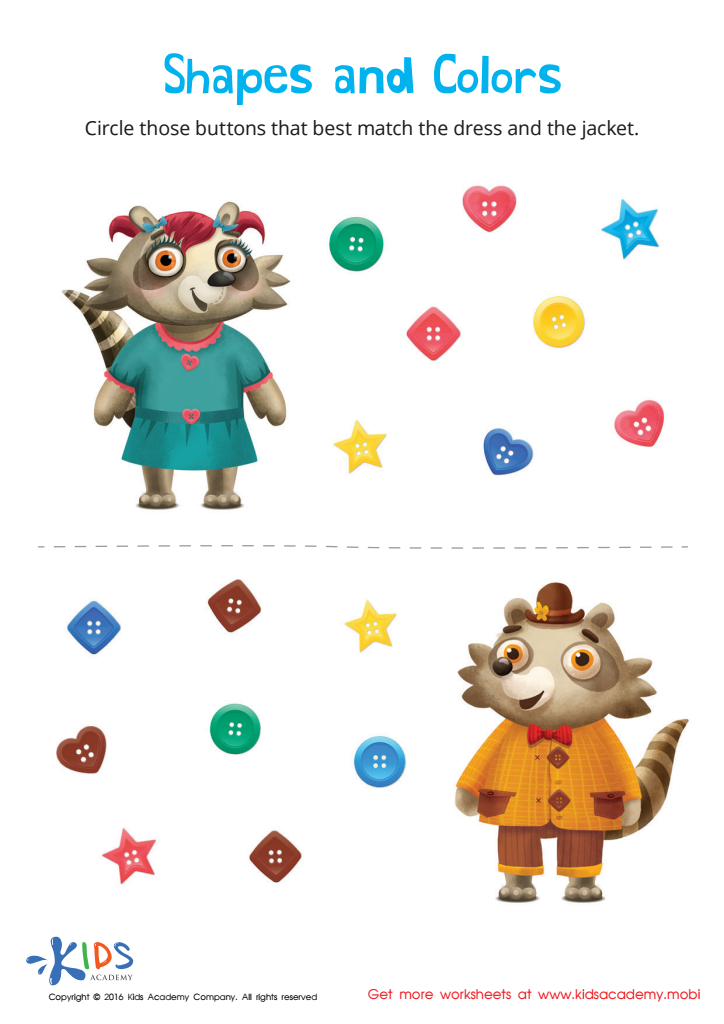
Matching: Shapes and Colors Worksheet
 Assign to My Students











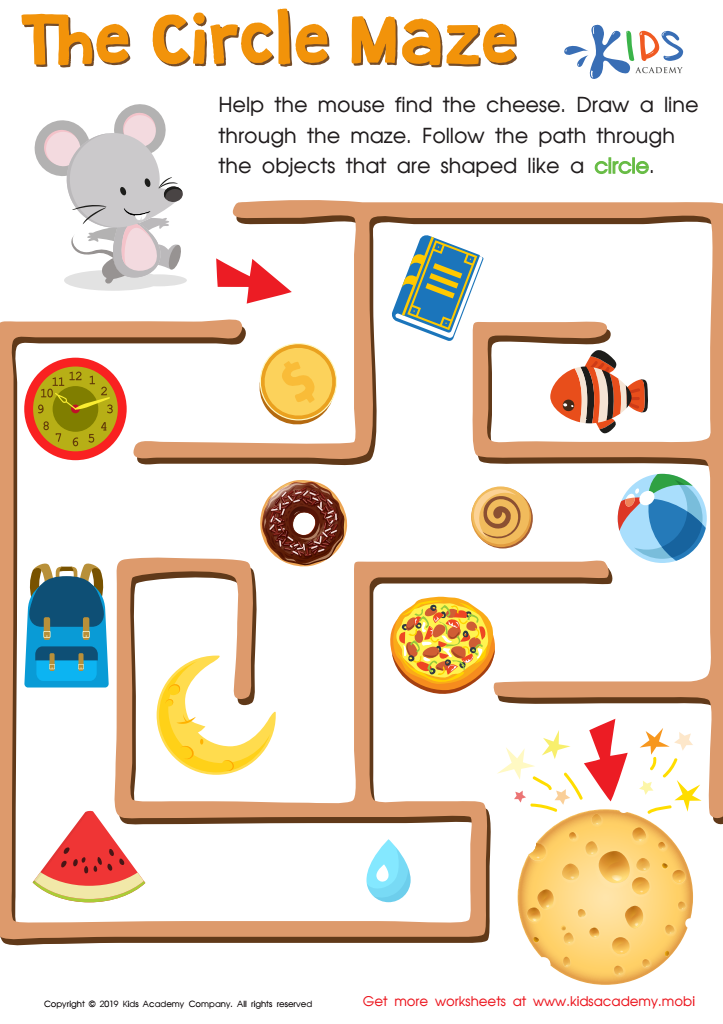
The Circle Maze Worksheet
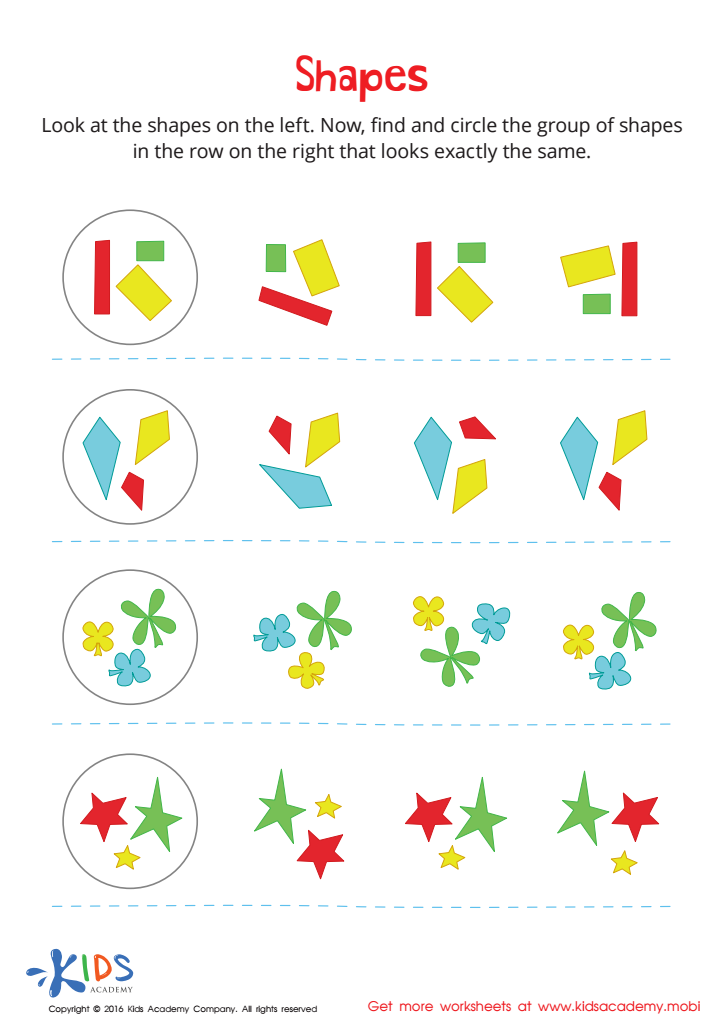
Shapes Worksheet








Caring about Cognitive Development Extra Challenge Geometry for 3-year-olds is critical for both parents and teachers because these early educational experiences lay the foundation for essential cognitive skills. At three, children are at a prime stage of developmental growth, and engaging them in geometry activities boosts their spatial reasoning abilities, critical for understanding the physical world around them.
Firstly, introducing young children to geometric shapes and concepts fosters early math skills. Recognizing and naming shapes teaches them to categorize and differentiate objects, an essential skill in both math and everyday life. This early familiarity with geometric forms can translate into improved problem-solving and reasoning skills, as they learn to navigate and interpret their environment.
Secondly, geometry challenges enhance fine motor skills through activities like shape sorting, puzzling, and drawing shapes, which are crucial for hand-eye coordination, writing, and more complex tasks as they grow older. Furthermore, engaging in group or one-on-one activities around geometry promotes social skills and communication, as children describe shapes, follow instructions, and articulate their thought processes.
Lastly, early exposure to geometry nurtures a growth mindset. When young children overcome challenges, even with something as simple as differentiating shapes, they develop confidence and a love for learning that supports their educational journey well into the future. Hence, parents and teachers should prioritize cognitive development in geometry to foster well-rounded, capable, and enthusiastic learners.