Addition skills Extra Challenge Math Worksheets for 3-Year-Olds
4 filtered results
Difficulty Level
Grade
Age
-
From - To
Subject
Activity
Standards
Explore our engaging "Addition Skills Extra Challenge Math Worksheets" designed specifically for 3-year-olds! These worksheets provide a fun and interactive way for young learners to strengthen their basic addition skills, fostering a love for math early on. Each worksheet features colorful illustrations and age-appropriate challenges that keep children entertained while they learn. Perfect for both classroom settings and at-home practice, these resources help build a strong foundation in mathematics. Encourage your child's cognitive development and problem-solving abilities with our thoughtfully crafted worksheets. Get started today to boost their confidence in addition skills and watch them thrive in math!
Favorites
With answer key
Interactive
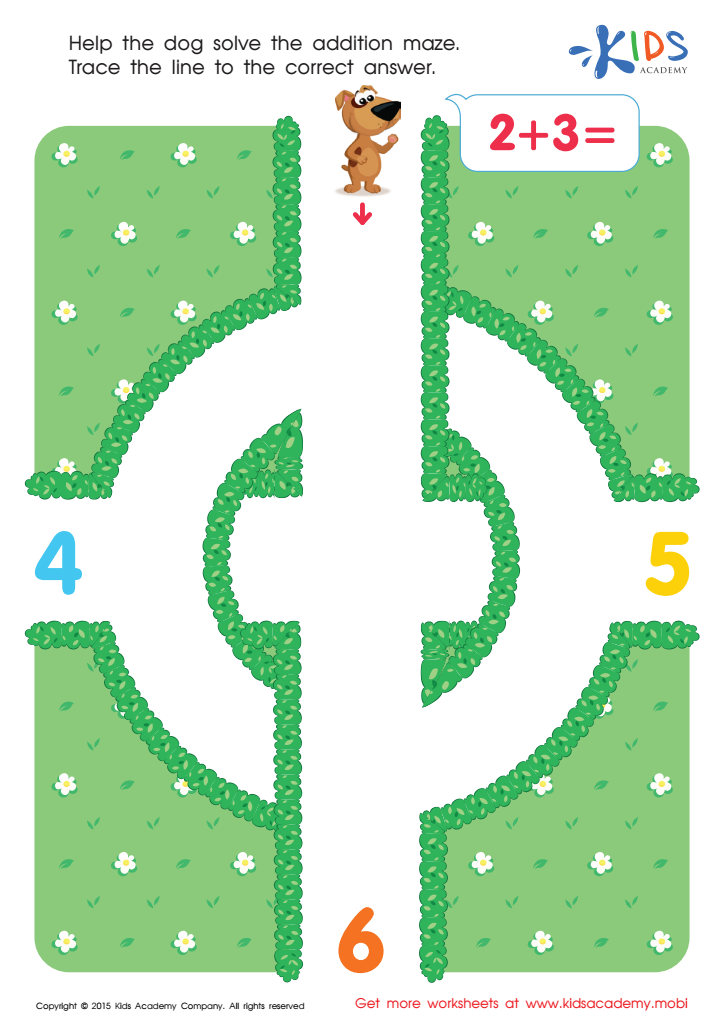
Two And Three Addition Worksheet
Give your children the task and let them find the path to the right answer while they make their way through the maze, and don't forget to let them trace the path.
 Assign to My Students
Two And Three Addition Worksheet
Worksheet
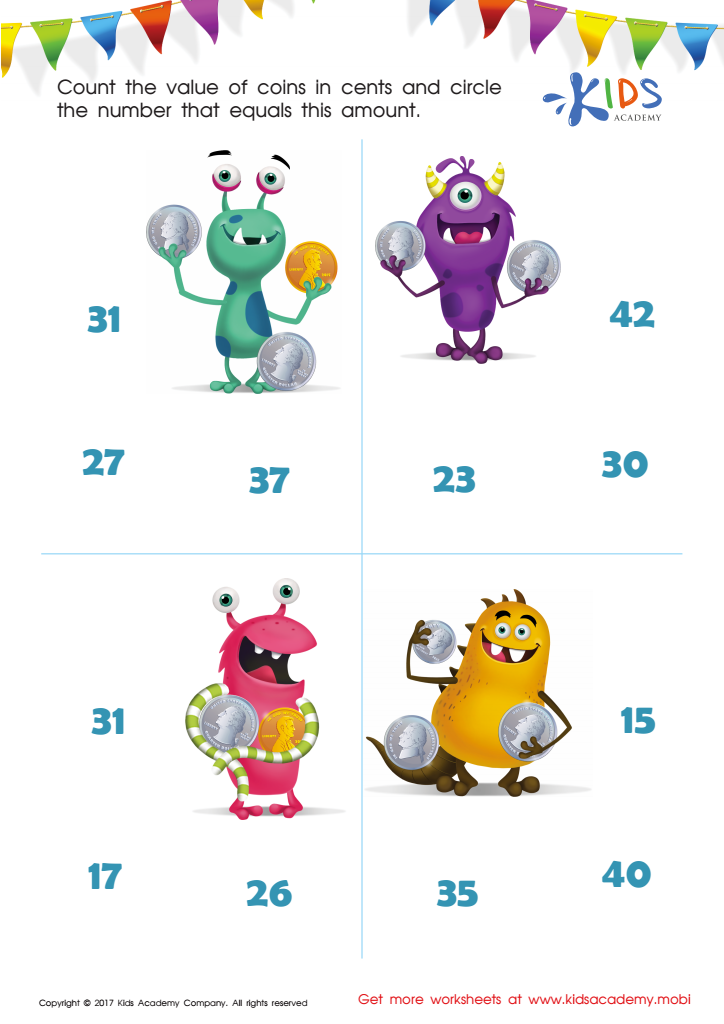
How Many Coins Money Worksheet
Have fun while counting coins: look at the monsters and count the coins in their hands. Challenge your little learners to count and write down the number of coins each one has. Enjoy the time together!
How Many Coins Money Worksheet
Worksheet
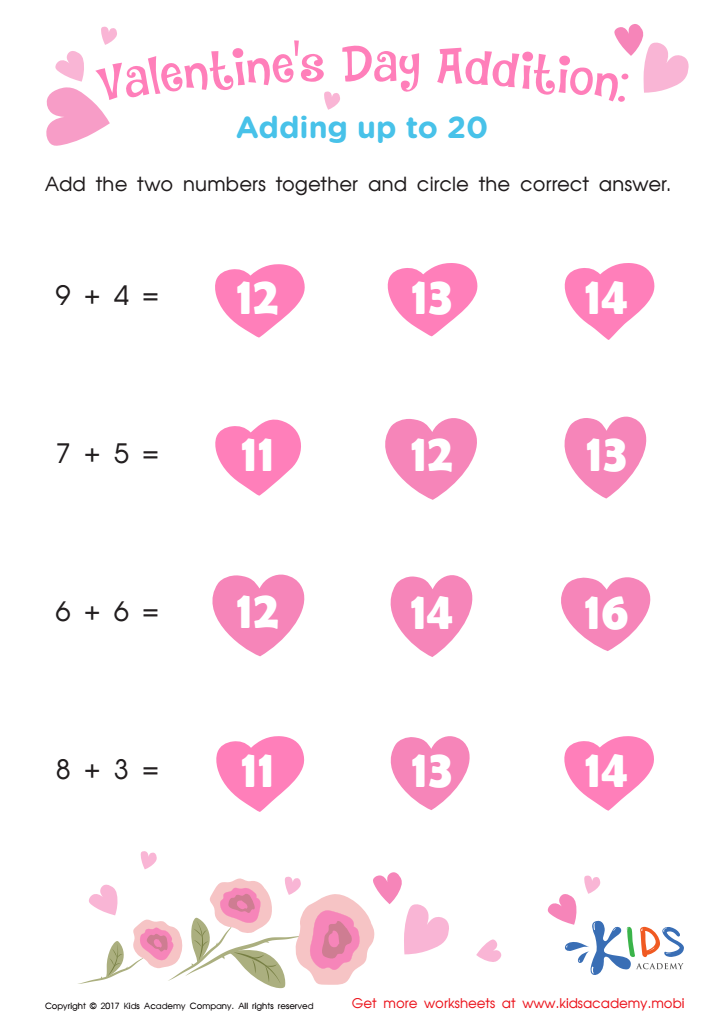
Valentine's Day Addition Worksheet
This Valentine's Day themed worksheet is a fun way for your child to practice adding single digits up to 20! Hearts feature to help your child increase their math skills and have fun at the same time.
Valentine's Day Addition Worksheet
Worksheet
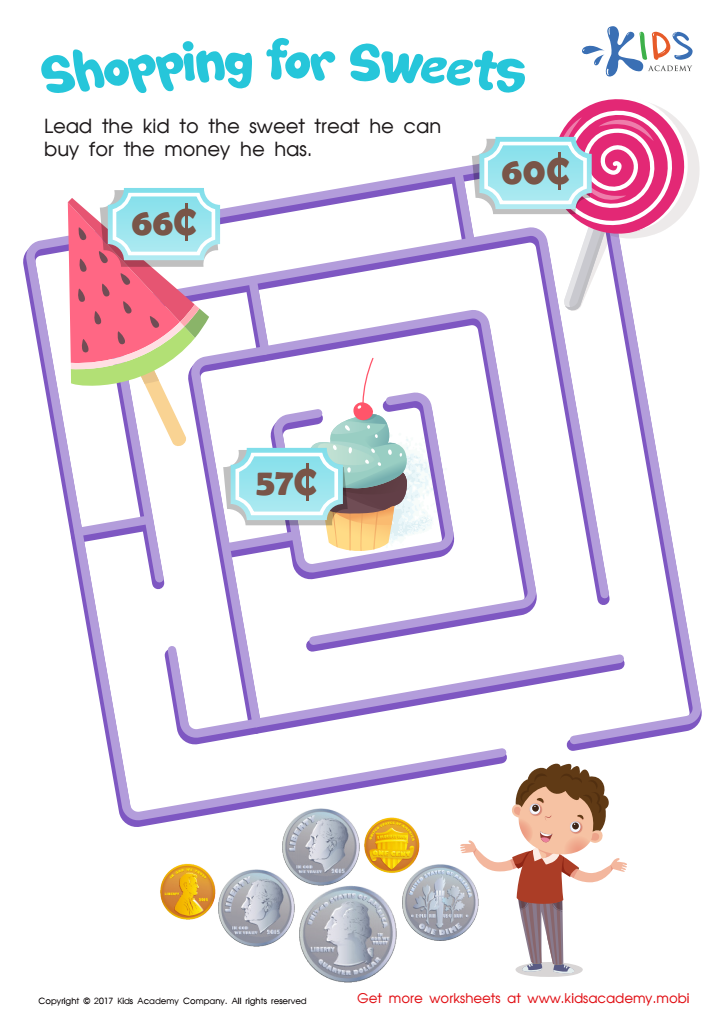
Shopping for Sweets Worksheet
Help your child hone their math and money skills with Shopping for Sweets! They'll count coins, work their way through a maze, and find the amount of money. Fun and educational - perfect for kids!
Shopping for Sweets Worksheet
Worksheet
Join Kids Academy for Free
Who is primarily going to use this learning content?







Developing addition skills in 3-year-olds through engaging activities like Extra Challenge Math plays a crucial role in early childhood education. Firstly, mastering basic math concepts at a young age enhances cognitive development. When children practice addition, they learn to recognize patterns, develop logical thinking, and enhance their problem-solving abilities, laying a strong foundation for future math skills.
Additionally, introducing addition through fun, interactive challenges keeps young learners engaged and motivated. These activities foster a love for learning and math, helping to diminish any anxiety around numbers as they grow older. Additionally, basic arithmetic skills encourage the use of quantifiable reasoning in everyday life, teaching children to make sense of the world around them by comparing quantities or simple groupings.
Beyond academic benefits, this early exposure promotes social skills through collaborative activities, as children often work in pairs or groups. It also offers parents and teachers the opportunity to bond with children over shared educational activities, reinforcing developmental milestones and communication.
Investing time in developing addition skills early on sets children up for success in subsequent learning, making it essential for parents and teachers to prioritize these formative experiences.