Mathematical reasoning Extra Challenge Math Worksheets for 3-Year-Olds
4 filtered results
-
From - To
Give your early learners a head start with our "Mathematical Reasoning Extra Challenge Math Worksheets for 3-Year-Olds." These engaging exercises are specifically designed to boost critical thinking and problem-solving skills in young minds. Through fun and interactive activities, children will explore shapes, patterns, and basic math concepts. Perfectly balanced to provide a challenging yet age-appropriate experience, these worksheets promote logical reasoning and cognitive development. Make learning math a joyful and rewarding adventure with materials tailored to inspire curiosity and build foundational skills. Support your child's mathematical journey with our expertly crafted resources, ensuring readiness for future academic success.
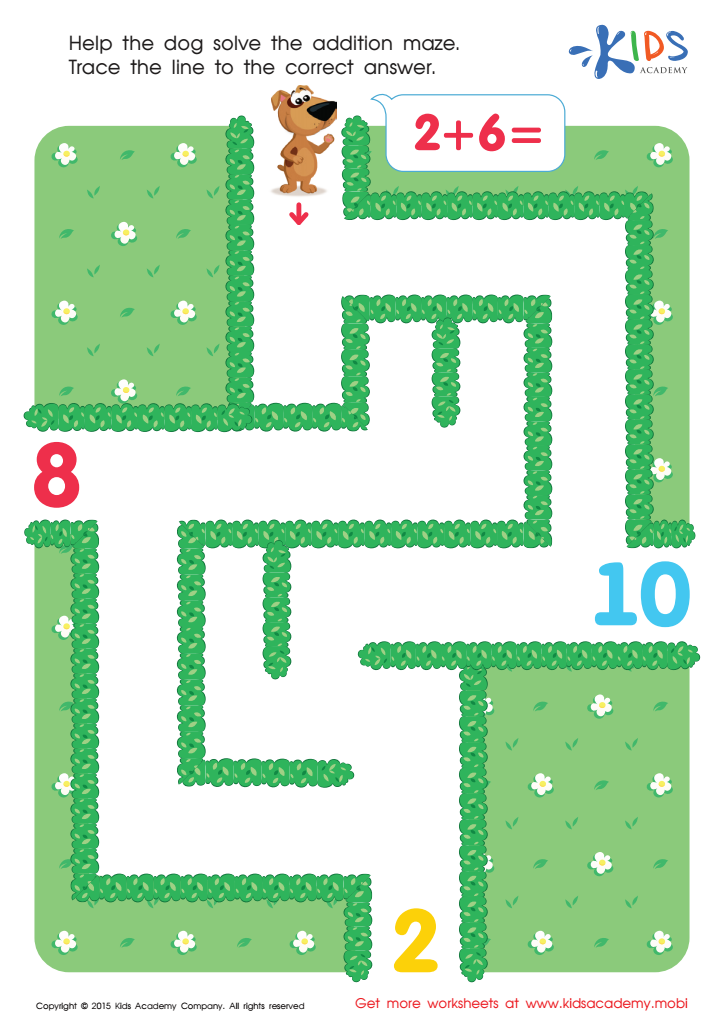
Two Plus Six Addition Worksheet
 Assign to My Students
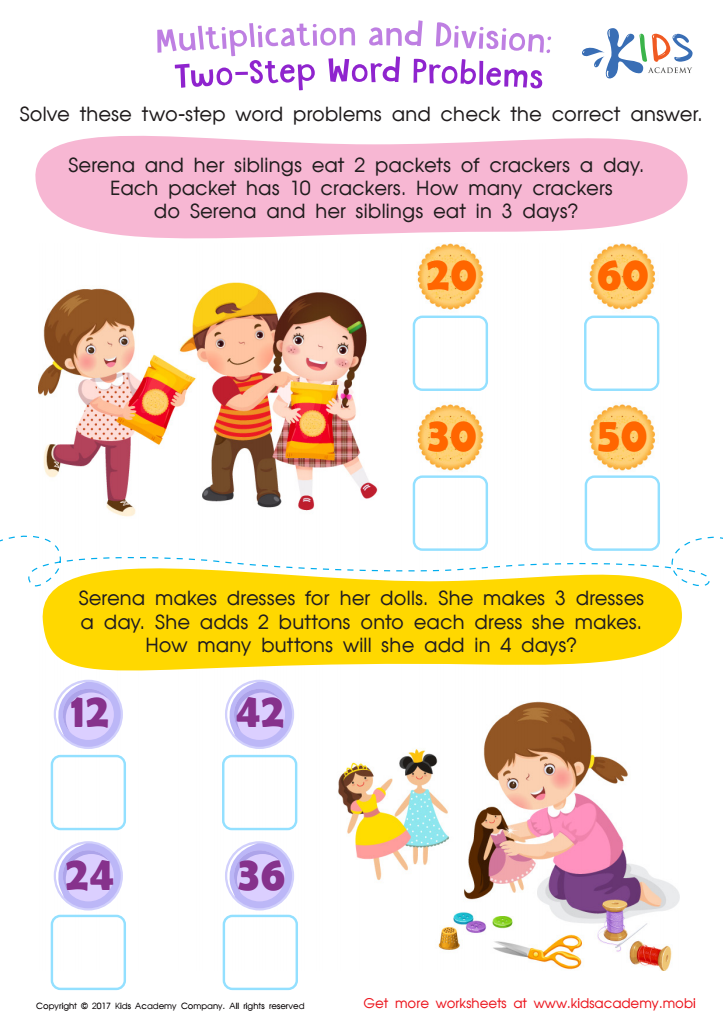
Two Step Word Problems Worksheet
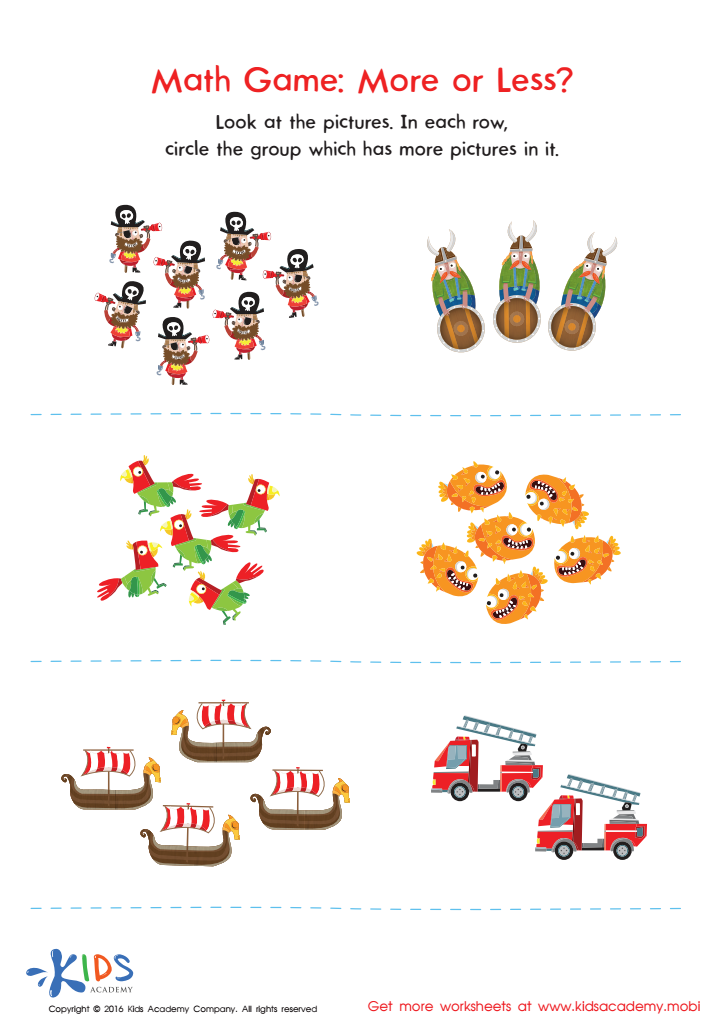
More or Less Worksheet
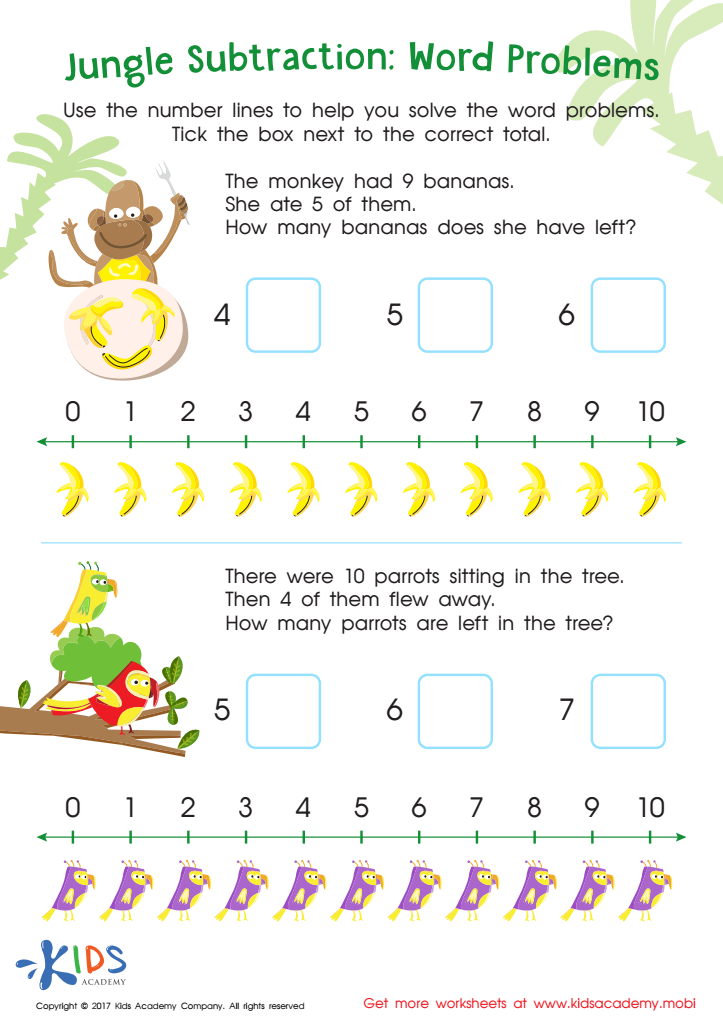
Jungle Subtraction Word Problems Substraction Worksheet








Introducing Mathematical reasoning Extra Challenge Math to 3-year-olds can significantly impact their cognitive development and academic readiness. At this age, children's brains are exceptionally adaptable and responsive to new information. Engaging them in math-related activities can enhance their problem-solving ability, logical thinking, and spatial awareness, which are foundational skills extending beyond mathematics itself.
When parents and teachers foster an early interest in math, they help build children's confidence in handling math-related tasks, removing any potential anxiety associated with the subject later in life. Early exposure to mathematical concepts through engaging, playful activities makes learning enjoyable and underscores the idea that math is fun and manageable.
Mathematical reasoning tasks designed for young children typically involve pattern recognition, basic counting, sorting, and simple puzzles. These activities not only support mathematical understanding but also promote essential life skills such as perseverance, attention to detail, and effective communication as children explain their thought processes.
Investing time and effort into Mathematical reasoning Extra Challenge Math for 3-year-olds sets the stage for long-term academic success. It encourages a love for learning, provides a sense of achievement, and establishes a strong foundation for future scientific and technological pursuits. For parents and teachers, this early intervention is a proactive way to nurture intellectual curiosity and foster a lifelong passion for knowledge.