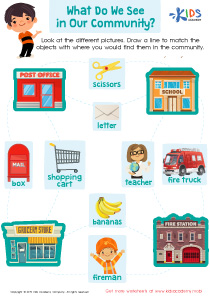
Pattern recognition Extra Challenge Math Worksheets for 3-Year-Olds
3 filtered results
-
From - To
Unlock your child's cognitive potential with our engaging "Pattern Recognition Extra Challenge Math Worksheets for 3-Year-Olds." These carefully crafted worksheets provide delightful and interactive activities designed to introduce young learners to the thrilling world of patterns. Each worksheet combines colorful visuals and fun exercises that help develop essential skills such as sorting, comparing, and predicting patterns. Our extra challenge option encourages critical thinking and reinforces problem-solving abilities, ensuring that children master these fundamental concepts while having fun. These worksheets are perfect for parents and educators aiming to enhance early math skills and promote a hands-on learning experience that sparks joy and curiosity in little learners.
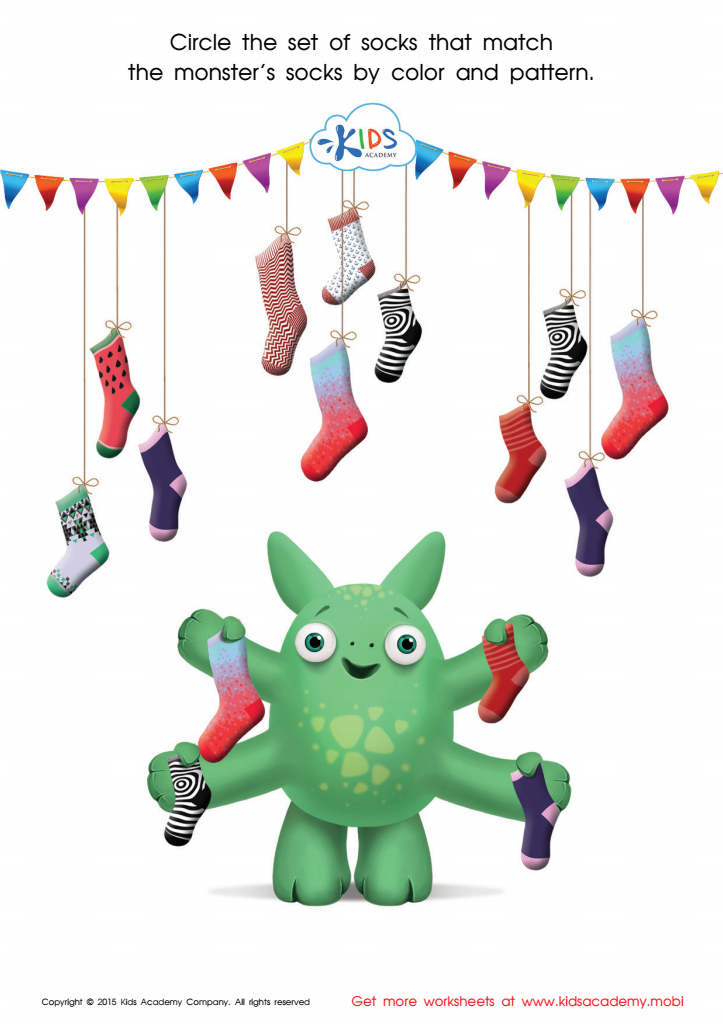
Sort the Monster's Socks Worksheet
 Assign to My Students
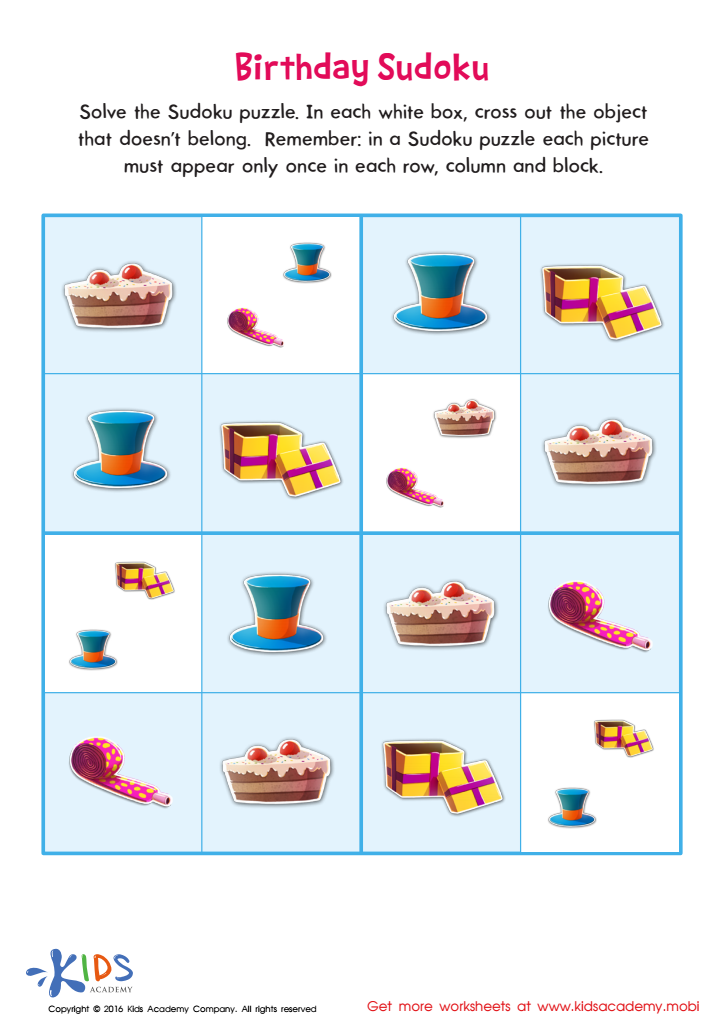
Birthday Sudoku Sorting Worksheet
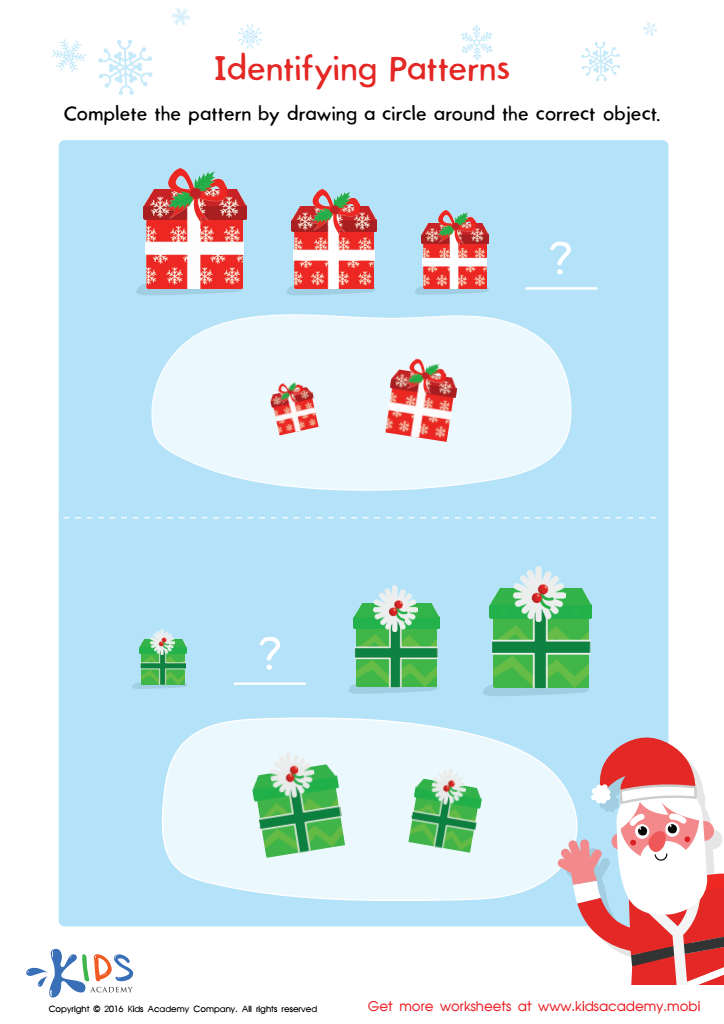
Identifying Patterns Worksheet








Pattern recognition is a foundational skill that lays the groundwork for advanced mathematical understanding in children. For 3-year-olds, engaging in pattern recognition through activities like Extra Challenge Math not only enhances cognitive development but also encourages critical thinking and problem-solving abilities.
When parents or teachers introduce pattern recognition at an early age, they help children identify repetitions, sequences, and relationships among numbers and shapes. This early exposure fosters numerical fluency and prepares children for future math concepts. Beyond academics, pattern recognition enhances observational skills and boosts creativity, as children learn to see connections and predict outcomes in their surroundings.
Additionally, incorporating fun and challenging math activities captivates young learners' attention, making learning enjoyable and stimulating. These experiences cultivate a love for learning and promote positive attitudes toward math, which can mitigate math anxiety later in life.
Parents and teachers should care about pattern recognition programs because they support holistic cognitive growth essential for children's readiness for school and everyday life. Investing in skills development at this crucial stage unlocks potential and sets children on a path to academic success, thereby benefiting their overall lifelong learning journey.