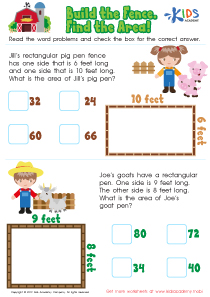
Basic Math Skills Extra Challenge Matching Worksheets for 3-Year-Olds
3 filtered results
-
From - To
Discover our engaging "Basic Math Skills Extra Challenge Matching Worksheets" tailored for 3-year-olds! Designed to enhance early math understanding, these worksheets provide fun activities that promote recognition of numbers, shapes, and counting. Each matching exercise captivates young learners while fostering critical thinking and problem-solving skills. Kids will enjoy pairing visuals and concepts, making math an enjoyable experience. Ideal for at-home learning or preschool settings, these worksheets are perfect for building a strong foundation in essential math skills. Printable and easy to use, parents and educators can encourage little ones to explore and excel in the world of numbers. Get started today!
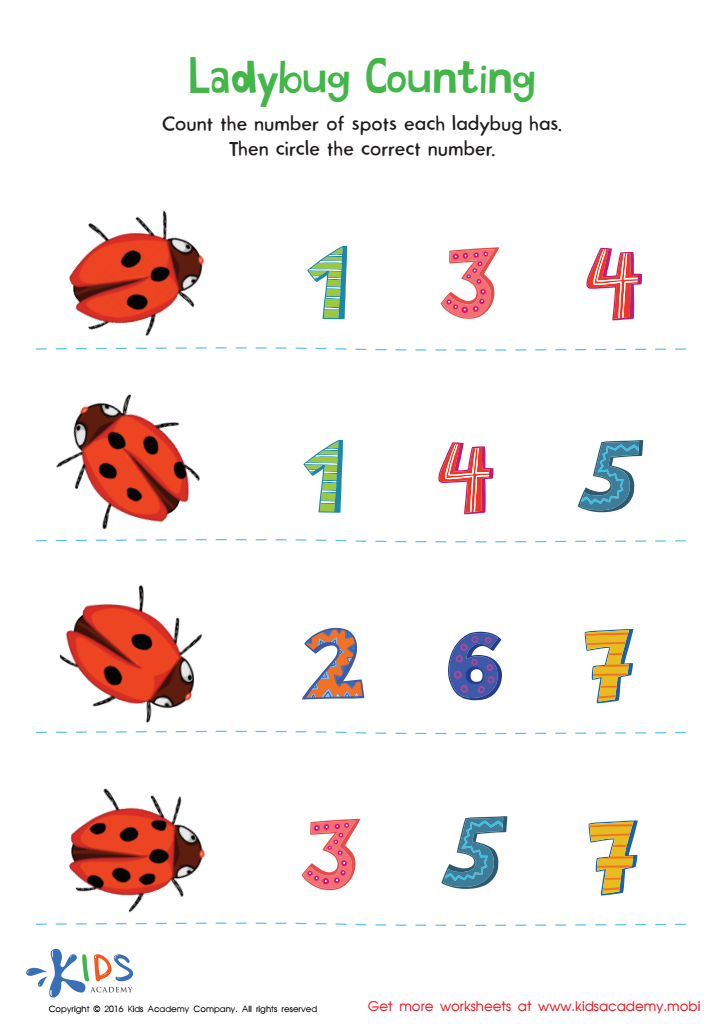
 Assign to My Students
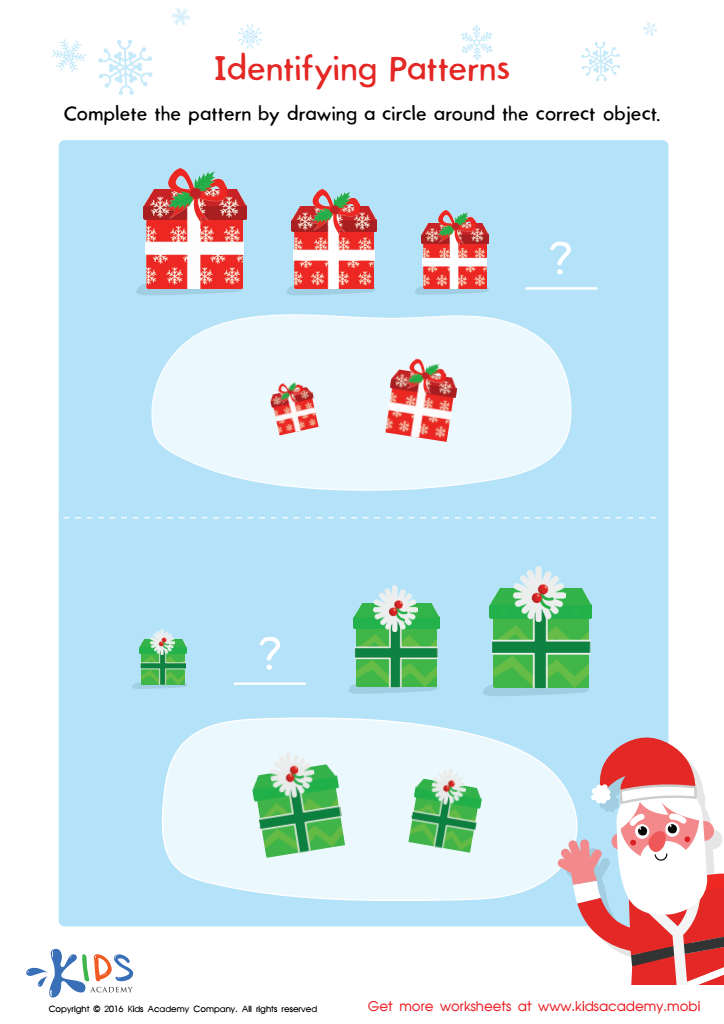
Identifying Patterns Worksheet
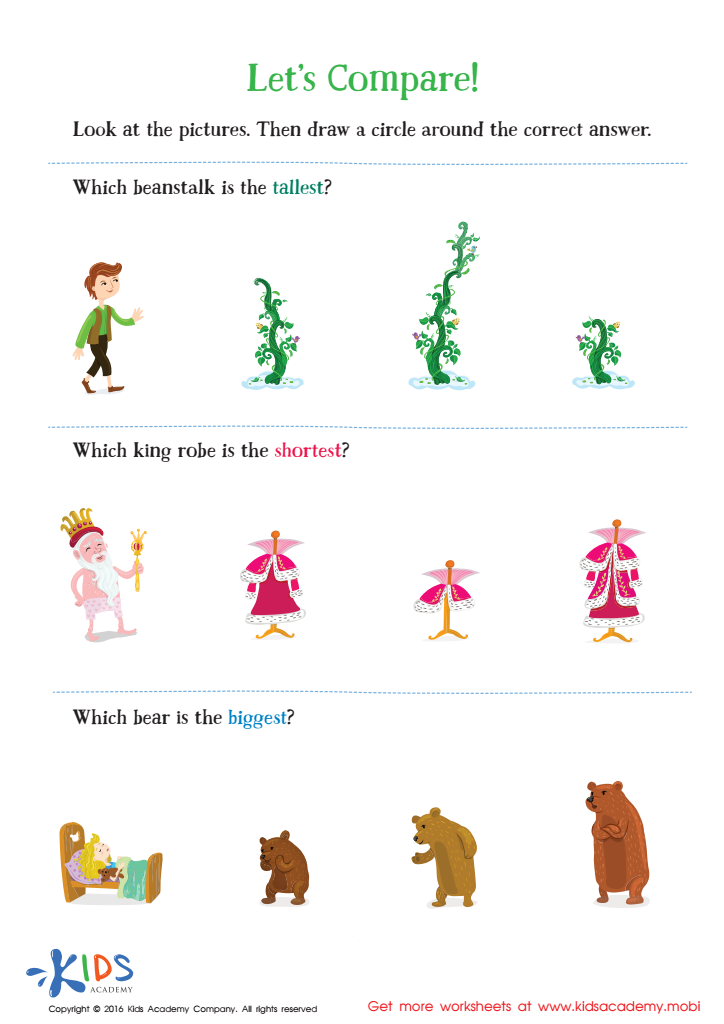
Fairy Tale Worksheet: Let's Compare








Parents and teachers should prioritize Basic Math Skills Extra Challenge Matching for 3-year-olds because early math skills lay the foundation for future academic success. During these formative years, children develop crucial cognitive abilities, including problem-solving and critical thinking. Engaging in matching activities that involve basic math concepts, such as number recognition and counting, helps children make connections and understand quantities, fostering their mathematical intuition.
Additionally, these activities promote fine motor skills as children manipulate objects and practice hand-eye coordination. They also encourage language development as adults can incorporate mathematical vocabulary, guiding children in articulating their thoughts and reinforcing comprehension.
Introducing math through playful, interactive methods aligns with a child's natural learning style. The challenge aspect provides a sense of achievement, boosting confidence and encouraging a positive attitude toward math.
Furthermore, early exposure to math can reduce anxiety and resistance towards the subject in later years, helping to cultivate lifelong learners. Thus, incorporating Basic Math Skills Extra Challenge Matching not only enhances a child's mathematical capabilities but also contributes to their overall growth, ensuring they are well-equipped for future learning challenges. Prioritizing such activities ensures the embodiment of holistic development essential for young learners.