
Basic subtraction skills Extra Challenge Worksheets for Ages 4-5
3 filtered results
Difficulty Level
Grade
Age
-
From - To
Subject
Activity
Standards
Discover a world of fun with our Basic Subtraction Skills Extra Challenge Worksheets, designed specifically for children aged 4 to 5! These engaging activities offer young learners the opportunity to enhance their understanding of subtraction through colorful visuals and interactive exercises. Perfect for preschool and kindergarten classrooms, our worksheets facilitate early math skill development, fostering confidence as children master essential concepts. Each worksheet presents a unique challenge to stimulate thinking and promote problem-solving abilities. Transform learning into a playful adventure and watch your little ones thrive in their mathematical journey! Download the worksheets and spark a love for math today!
Favorites
With answer key
Interactive
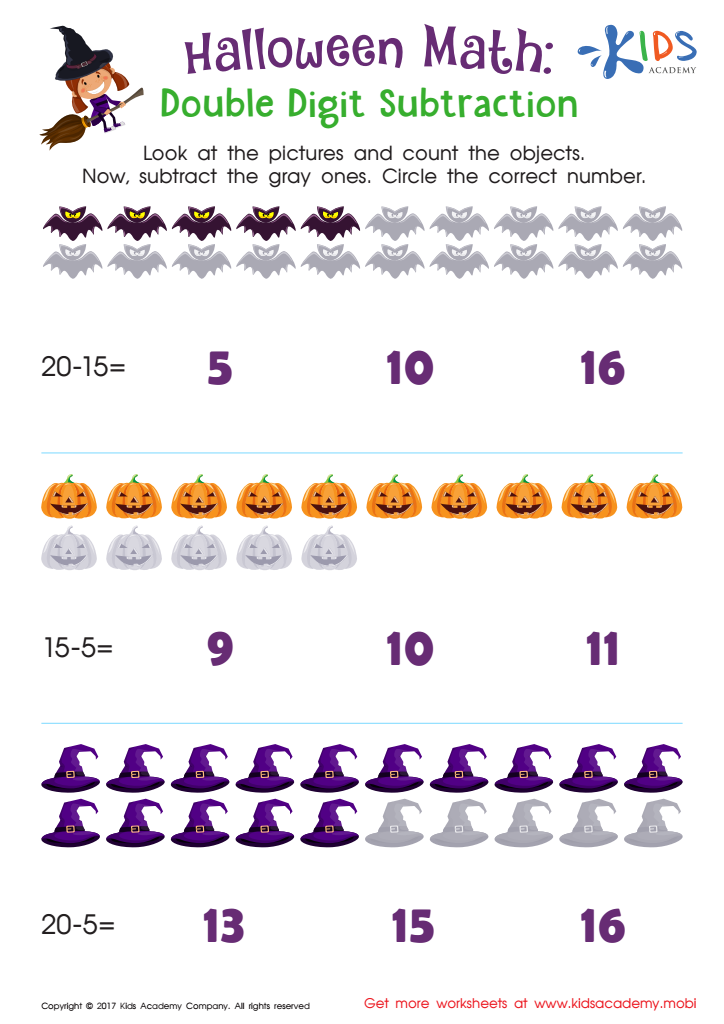
Halloween Math Subtraction Worksheet
Kids can easily understand subtraction by using the visuals provided in this worksheet. Get ready for some fun math!
This Halloween math worksheet uses spooky images to help kids understand subtraction. With it, they can count and solve double digit problems more easily. Get ready for some fun and engaging math practice!
 Assign to My Students
Halloween Math Subtraction Worksheet
Worksheet
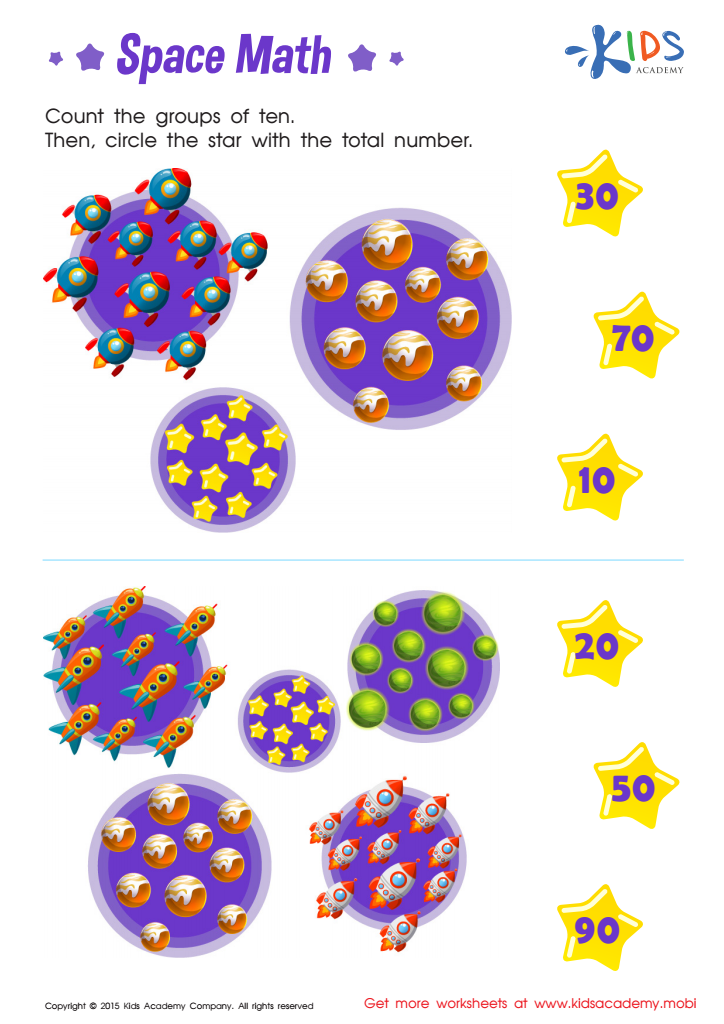
Learn dozens: Space math Worksheet
This worksheet uses Singapore Math's approach to help your child visually understand basic counting and math problems.
Learn dozens: Space math Worksheet
Worksheet
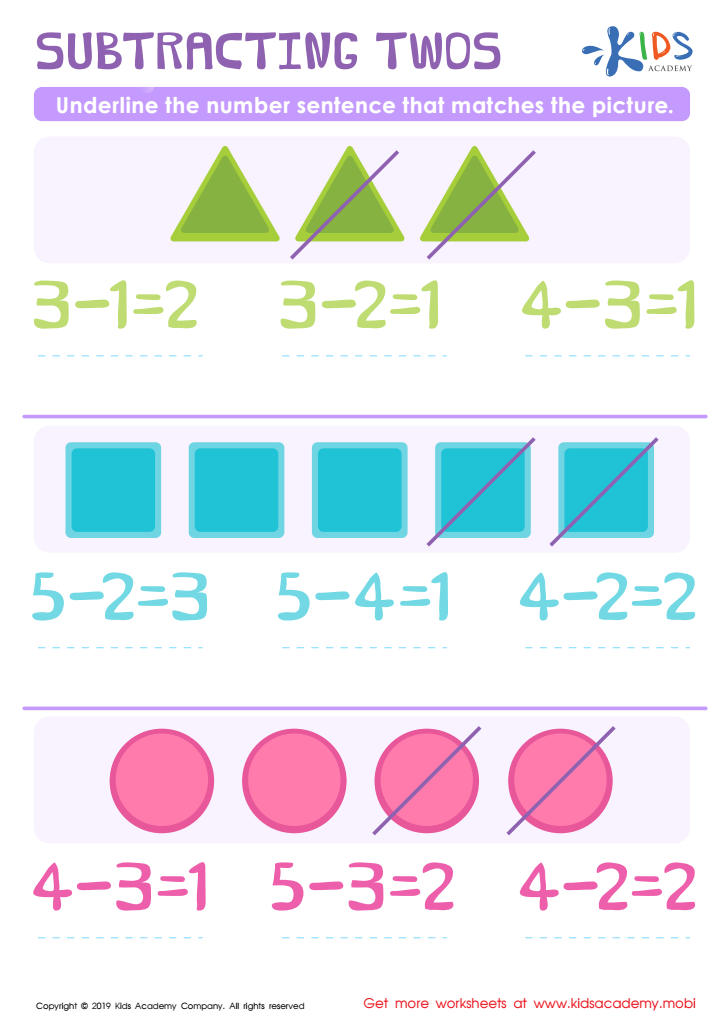
Subtracting Twos Worksheet
Help your children learn the basics of math with this worksheet. It has three number sentences they can match up with the pictures. Start by making math an enjoyable subject and help your kids underline the equation that matches up. This will give them a strong foundation to build on for the rest of their math journey.
Subtracting Twos Worksheet
Worksheet
Join Kids Academy for Free
Who is primarily going to use this learning content?








Basic subtraction skills are essential for children aged 4-5 as they lay the foundation for more advanced mathematical concepts later in life. Understanding subtraction helps young learners develop critical thinking and problem-solving abilities. When children practice subtracting, they begin to grasp the concept of "taking away," which not only enhances their numerical comprehension but also promotes logical reasoning in day-to-day scenarios.
Moreover, early exposure to subtraction builds confidence in math, fostering a positive attitude toward learning that can endure for years. Parents and teachers play a crucial role in making math engaging and accessible, incorporating interactive games and activities that make subtraction fun.
These foundational skills also enhance cognitive development, spatial awareness, and even language skills as children learn to articulate their reasoning. Additionally, mastering subtraction can aid in personal development, such as learning delayed gratification—recognizing that something can be taken away for balance in personal choice.
In summary, encouraging basic subtraction skills in preschoolers equips them with essential tools for future academic success, fosters a love for learning, and supports various aspects of cognitive and social-emotional growth. Therefore, imparting these skills should be a priority for both parents and teachers.








