Matching skills Extra Challenge Worksheets for Ages 4-5
6 filtered results
-
From - To
Introducing our "Matching Skills Extra Challenge Worksheets" for ages 4-5, designed to boost cognitive skills while keeping young learners engaged! These printable worksheets feature a variety of fun activities that promote critical thinking, visual discrimination, and attention to detail. Perfect for at-home learning or classroom use, each worksheet encourages children to match objects, animals, and shapes, enhancing their ability to recognize similarities and differences. Crafted with vibrant illustrations and age-appropriate challenges, these worksheets stimulate creativity and encourage problem-solving. Download now to provide your child with extra practice that makes learning enjoyable and effective! Transform screen time into brain-boosting fun today!
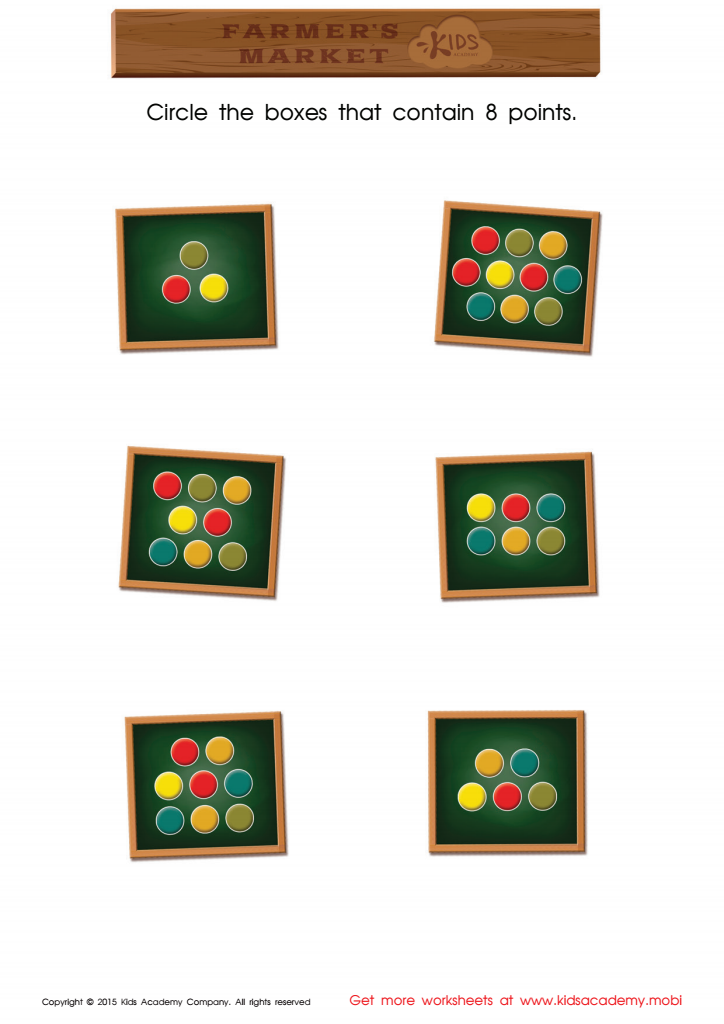
Count and Match Points 8 Math Worksheet
 Assign to My Students
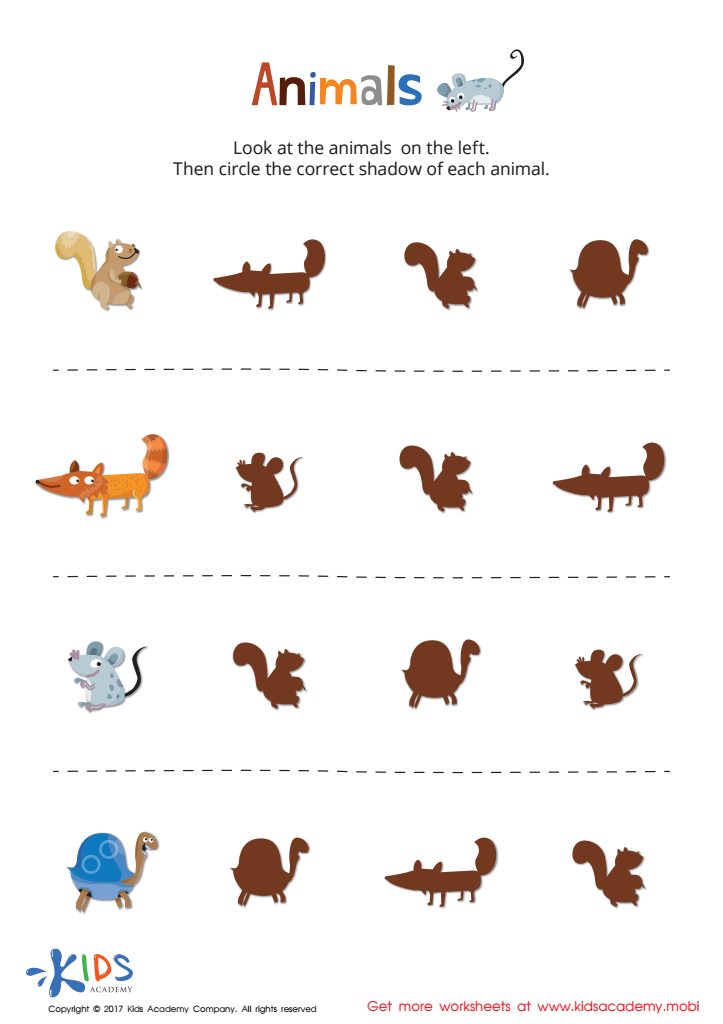
Animal Shadows Sorting Worksheet
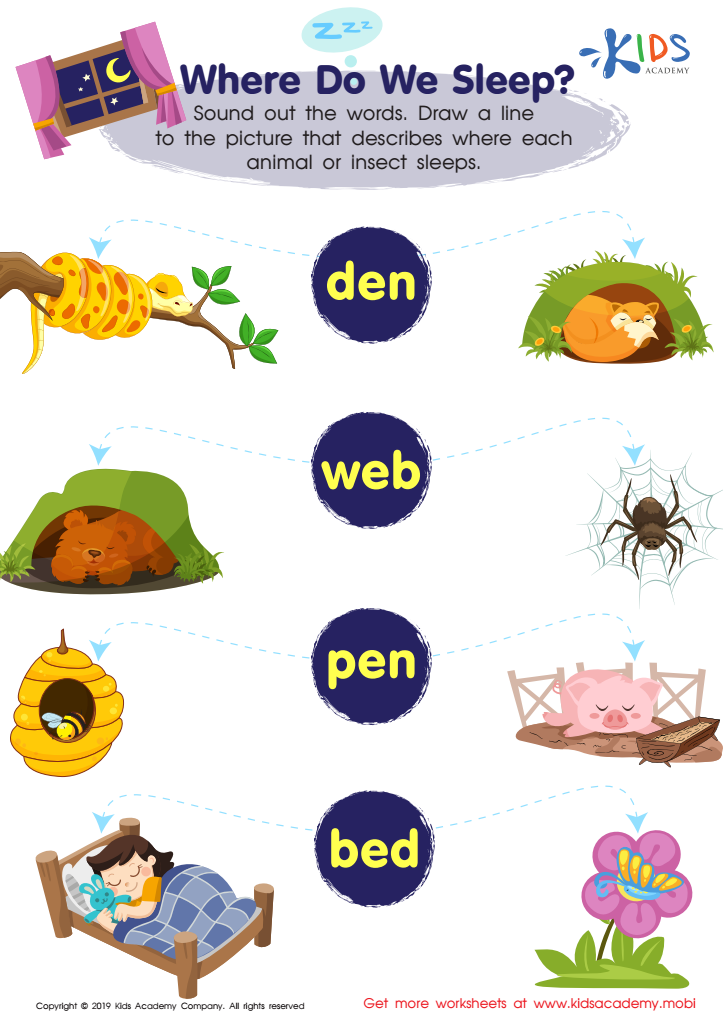
Where Do We Sleep Worksheet
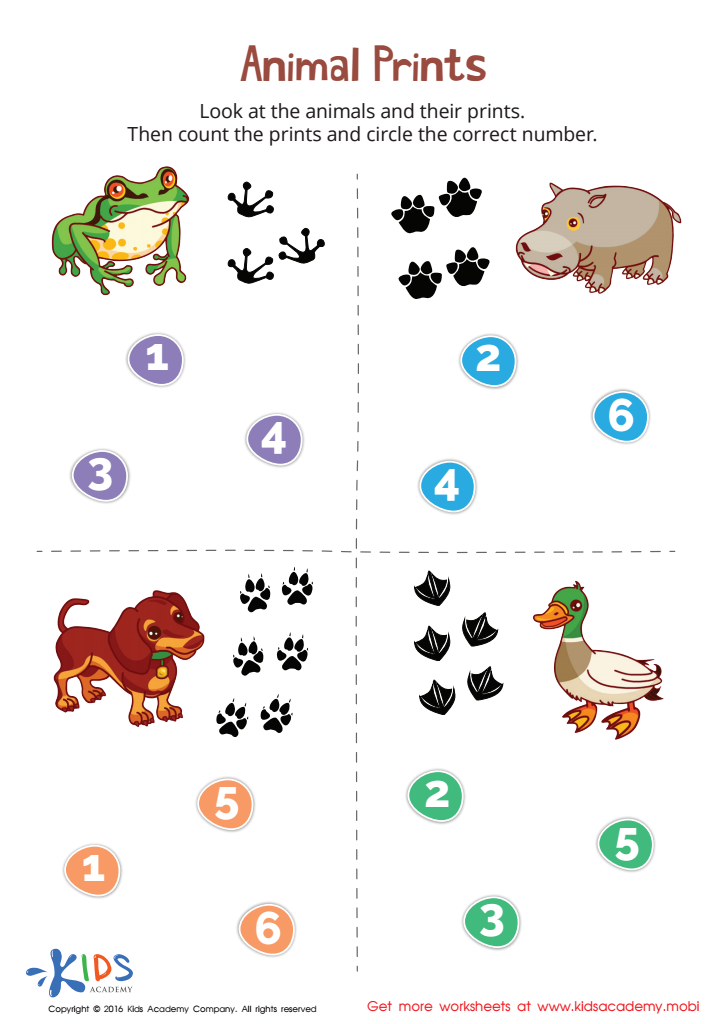
Animal Prints Match-Up Worksheet
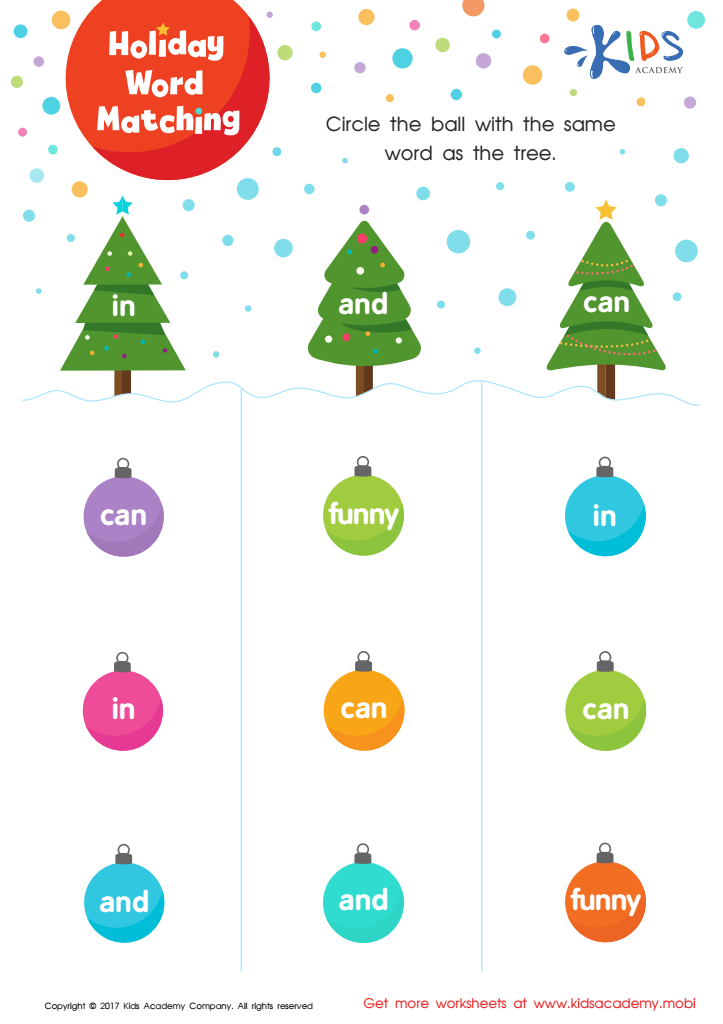
Holiday Word Matching Worksheet
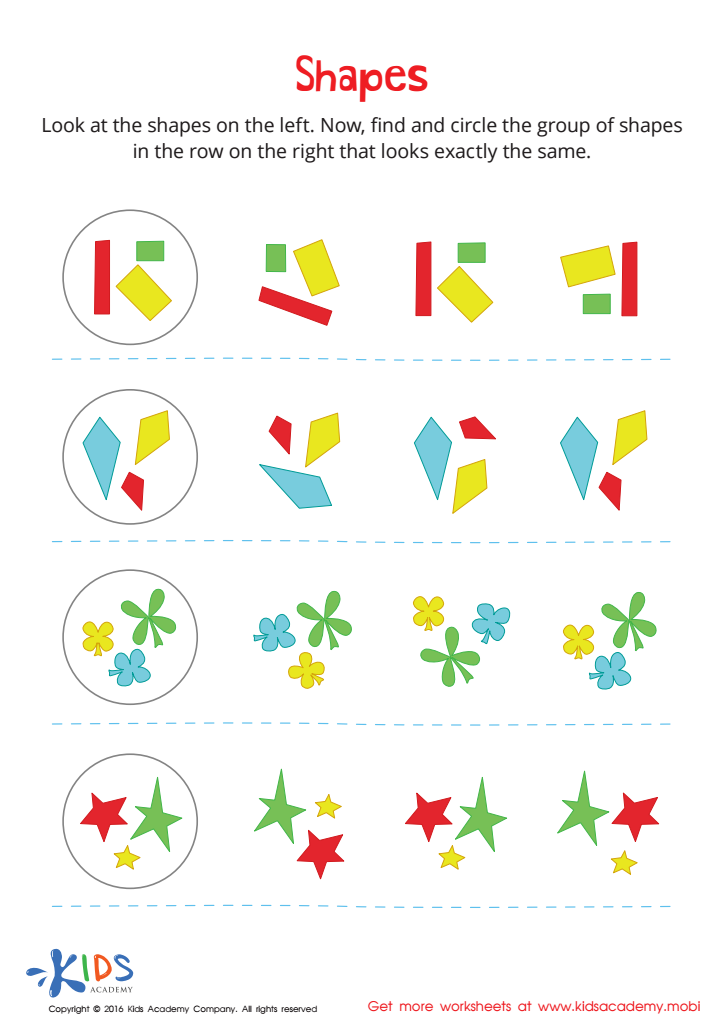
Shapes Worksheet








Matching skills are foundational cognitive abilities that play a crucial role in a child’s early development. For children aged 4-5, engaging in activities that enhance matching skills promotes critical thinking and problem-solving abilities. When parents and teachers provide Extra Challenges focusing on matching, they not only make learning fun but also stimulate various cognitive processes.
These challenges can include matching games using cards, objects, or even visual patterns, which require children to organize information, recognize similarities and differences, and improve their memory. As children engage in these activities, they develop important social skills through cooperative play, learn to follow instructions, and take turns, fostering emotional intelligence and patience.
Furthermore, matching activities lay the groundwork for more advanced topics in mathematics, literacy, and categorization skills. By ensuring that children master these basic skills, parents and teachers help them build confidence and a love for learning that will carry into future educational endeavors.
In essence, prioritizing matching skills Extra Challenge activities empowers children to explore their curiosity, enhances their learning experience, and builds a strong foundation for their future educational journey. Recognizing their importance will encourage consistent practice and development among young learners.








