Math problem-solving Extra Challenge Worksheets for Ages 4-5
3 filtered results
-
From - To
Unlock your child's math potential with our Math Problem-Solving Extra Challenge Worksheets tailored for ages 4-5! These engaging worksheets feature fun and educational activities designed to enhance critical thinking, stimulate problem-solving skills, and strengthen foundational math concepts. Children will tackle challenges involving patterns, shapes, numbers, and simple addition and subtraction, all while having fun. Each worksheet is crafted by educational experts, ensuring they're age-appropriate and aligned with early learning standards. Watch your child's confidence soar as they master new math skills in a playful, supportive way. Boost early math proficiency today with Kids Academy!
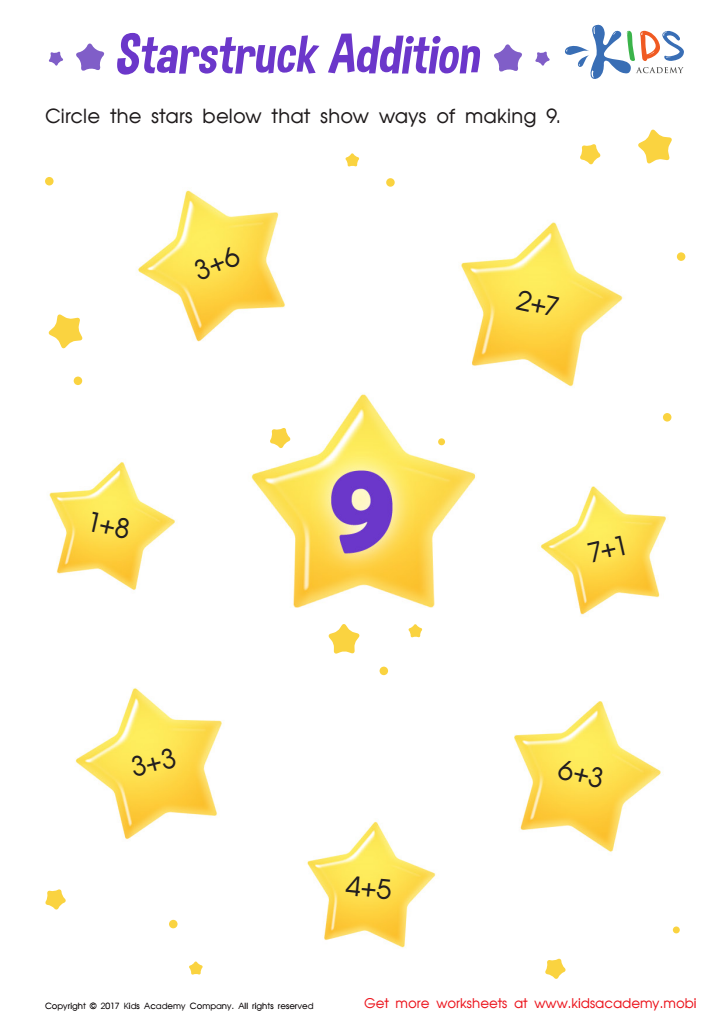
Starstruck Addition Printable
 Assign to My Students
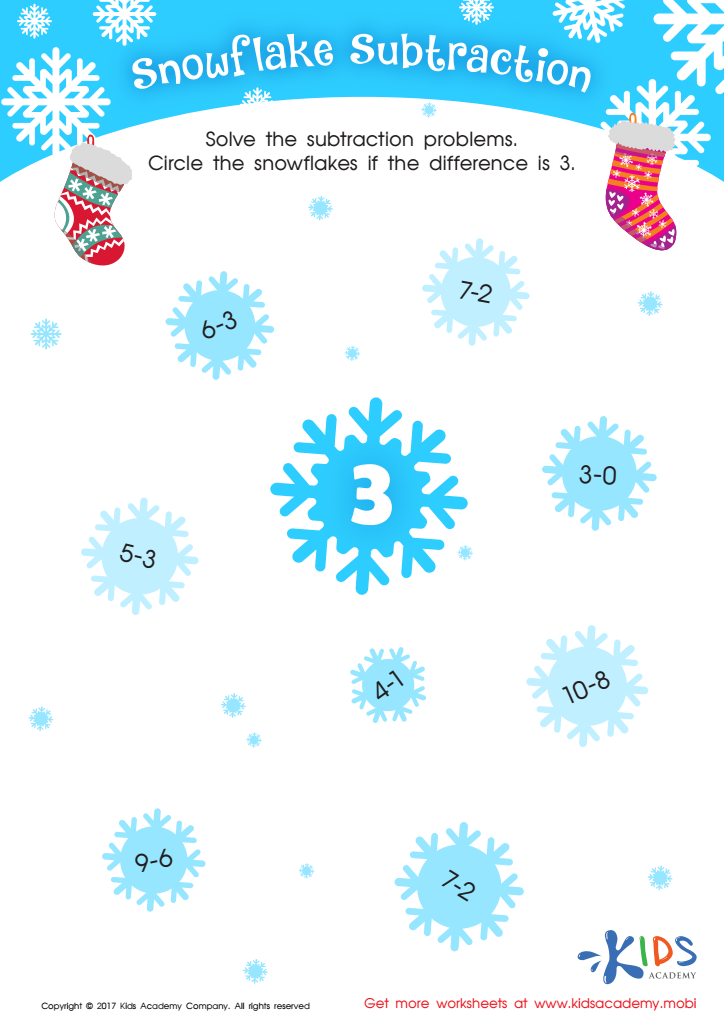
Snowflake Subtraction Worksheet
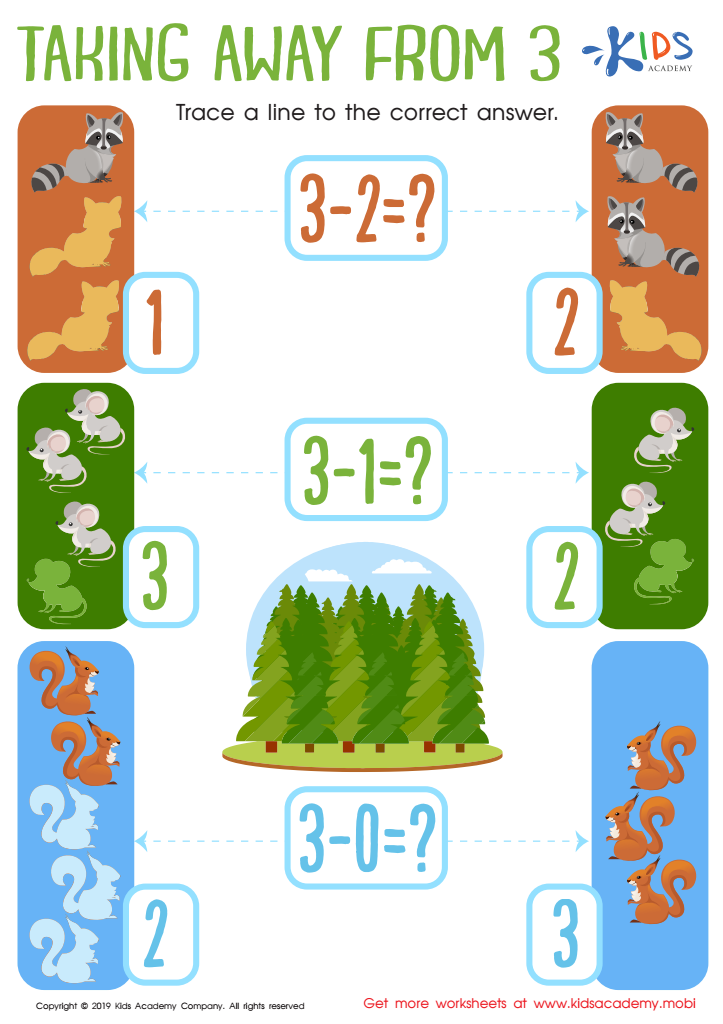
Taking Away From 3 Worksheet







Math problem-solving extra challenges for ages 4-5 are crucial for several reasons, and it's important for parents and teachers to prioritize them. At this formative age, children's brains are incredibly flexible and absorb information rapidly. Introducing math challenges early on can stimulate cognitive development, improve critical thinking skills, and foster a love for learning.
Children who engage in problem-solving activities develop perseverance and resilience. They learn that finding solutions often requires patience and multiple attempts, which builds their confidence and willingness to tackle new and more difficult tasks. These skills are fundamentally important not just in math but in all areas of life.
Math challenges also help children with number recognition, spatial awareness, and logical reasoning. These foundational skills are critical as they form the basis for more advanced concepts in later years. Encouraging math skills in a fun, engaging way can erase any negative attitudes and fears they might develop towards the subject.
Moreover, these activities encourage parental or teacher engagement, creating an invaluable support system. This involvement helps solidify concepts and provides a sense of security as children navigate their early educational experiences.
In summary, math problem-solving extra challenges for young learners equip them with essential skills, foster a positive attitude towards learning, and strengthen support systems, creating a firm foundation for their educational future.








