Mathematical thinking Extra Challenge Worksheets for Ages 4-5
3 filtered results
-
From - To
Unlock your child's potential with our "Mathematical Thinking Extra Challenge Worksheets" designed specifically for ages 4-5. These carefully crafted printable worksheets help young learners build strong foundational math skills through engaging and thought-provoking activities. Our worksheets cover essential concepts such as counting, pattern recognition, problem-solving, and basic arithmetic. Each activity is curated to enhance critical thinking and nurture a love for mathematics in a fun, interactive way. Perfect for both classroom and home practice, these worksheets support early learning and set the stage for future academic success. Empower your child’s mathematical journey today!
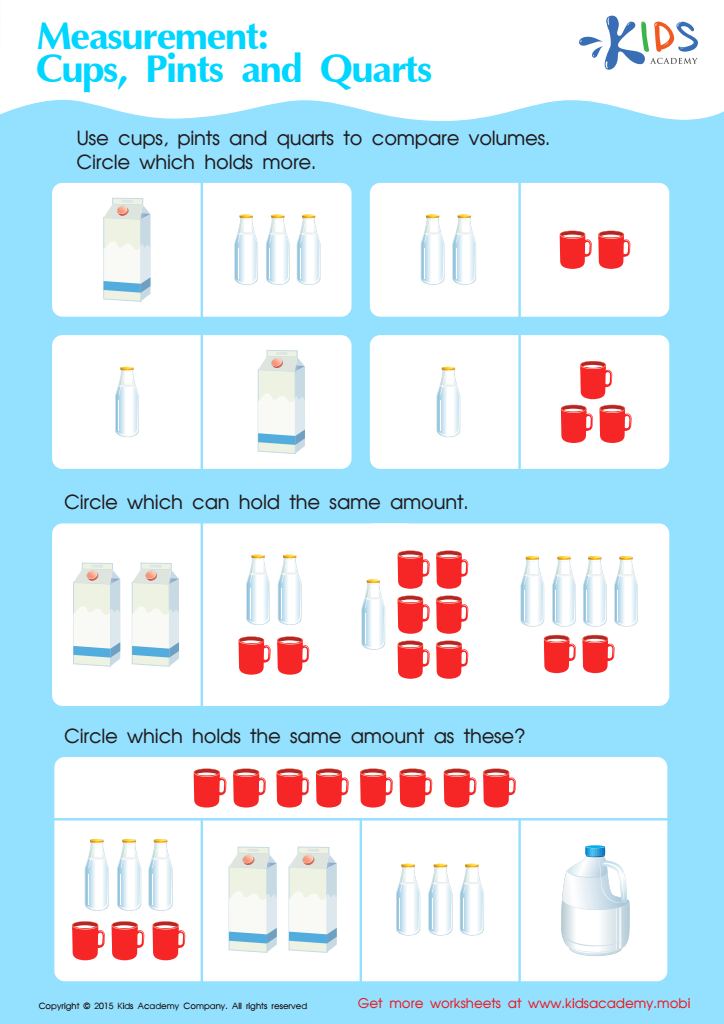
Measurement: Compare Volumes Worksheet
 Assign to My Students
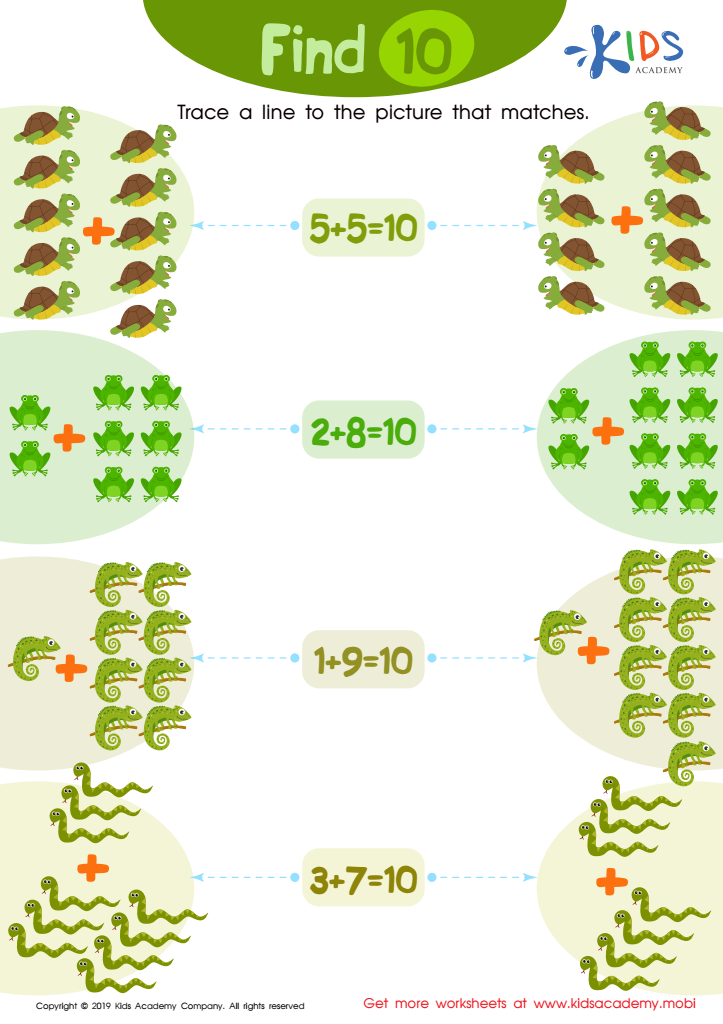
Find 10 Worksheet
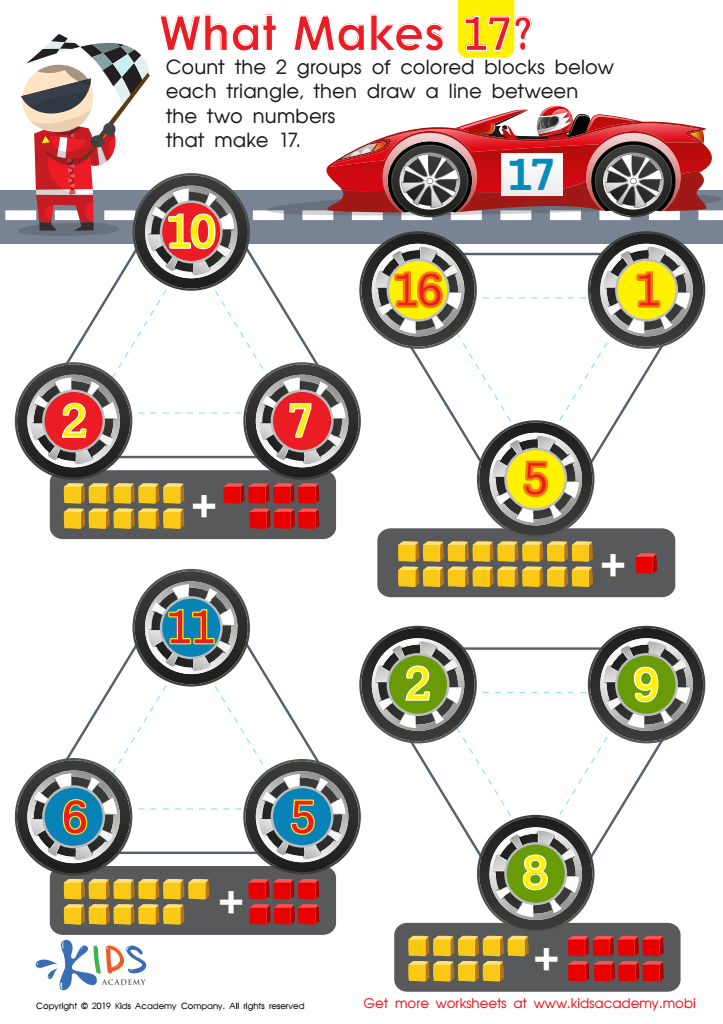
What Makes 17 Worksheet






Mathematical thinking is a foundational skill that transcends arithmetic and is vital for cognitive development. Extra challenges for children aged 4-5 in this domain are crucial for several reasons. First, young minds are incredibly receptive and capable of grasping complex ideas in simple forms. Early exposure to mathematical puzzles and problems can enhance critical thinking, problem-solving skills, and logical reasoning.
Additionally, engaging in mathematical challenges helps students build confidence in their abilities. When a child successfully completes a puzzle or figures out the logic behind a sequence, they experience a sense of accomplishment that motivates further learning. These activities also nurture creativity by presenting multiple ways to solve a problem, encouraging flexible thinking and the ability to view challenges from different perspectives.
For parents and teachers, such early interventions can make identifying and addressing learning gaps more accessible. Understanding how a child approaches a problem can provide insights into their cognitive processes, allowing for customized teaching strategies that cater to individual strengths and weaknesses.
Ultimately, fostering mathematical thinking from an early age cultivates lifelong skills. These children are better prepared for future academic success and everyday life challenges, making early mathematical enrichment a wise investment in their overall development.








