Writing practice Extra Challenge Worksheets for Ages 4-5
4 filtered results
-
From - To
Discover the power of early writing with our "Writing Practice Extra Challenge Worksheets for Ages 4-5." Designed to enhance fine motor skills and foster creativity, these engaging worksheets provide fun and interactive ways for young learners to improve their writing abilities. Children will explore letters, shape formation, and basic sentence construction through colorful and appealing designs that captivate their attention. Perfect for at-home or classroom use, these worksheets not only boost confidence but also make writing enjoyable. Download our extra challenge worksheets today and watch your little ones’ writing skills flourish as they embark on their educational journey!
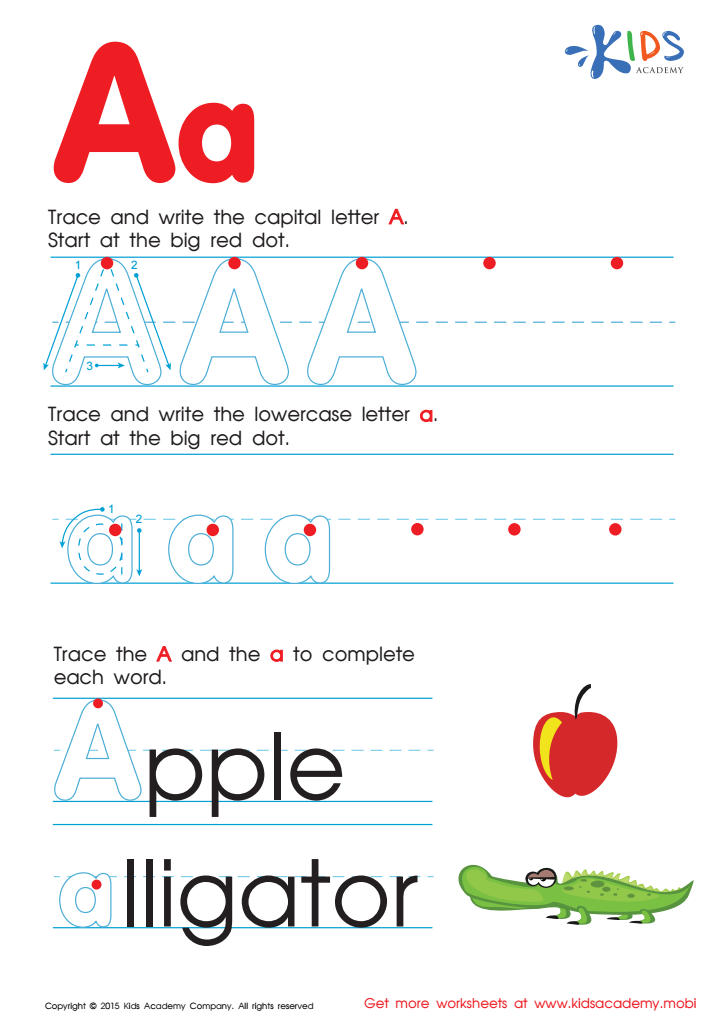
Letter A Tracing Page
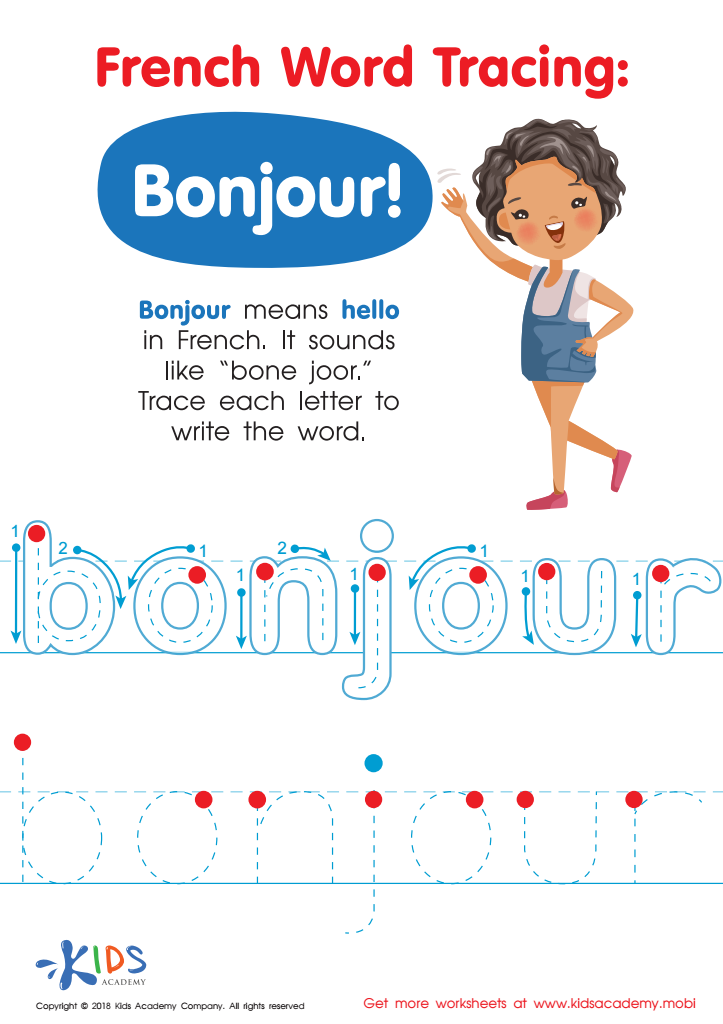
French Word Tracing: Bonjour Worksheet
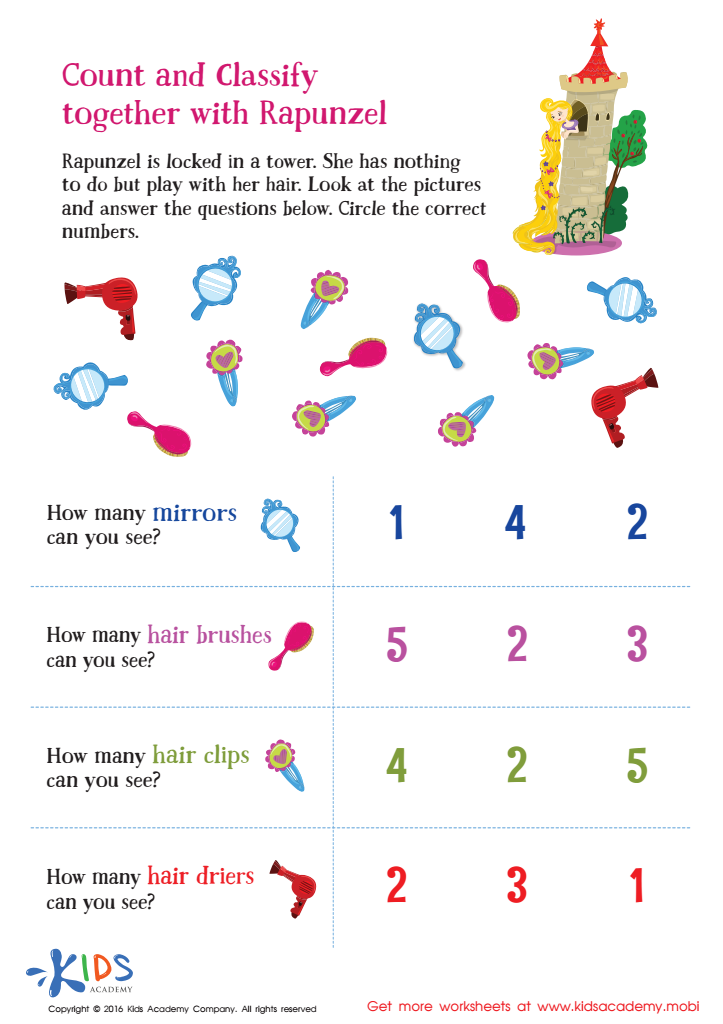
Fairy Tale Worksheet: Count and Classify with Rapunzel
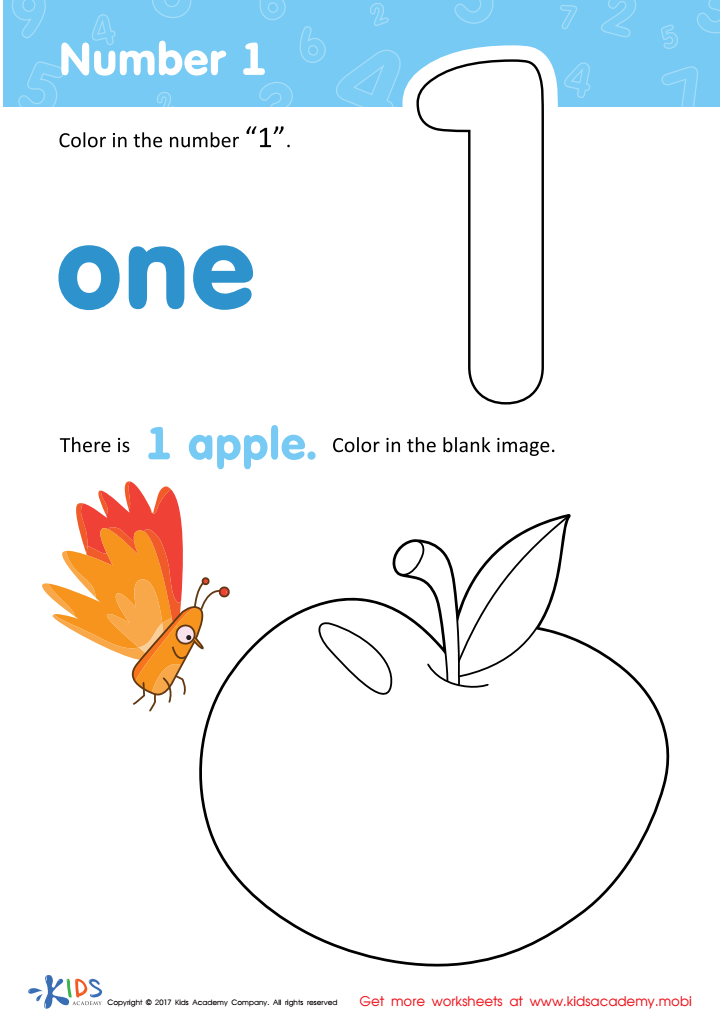
Number 1 Printable
 Assign to My Students



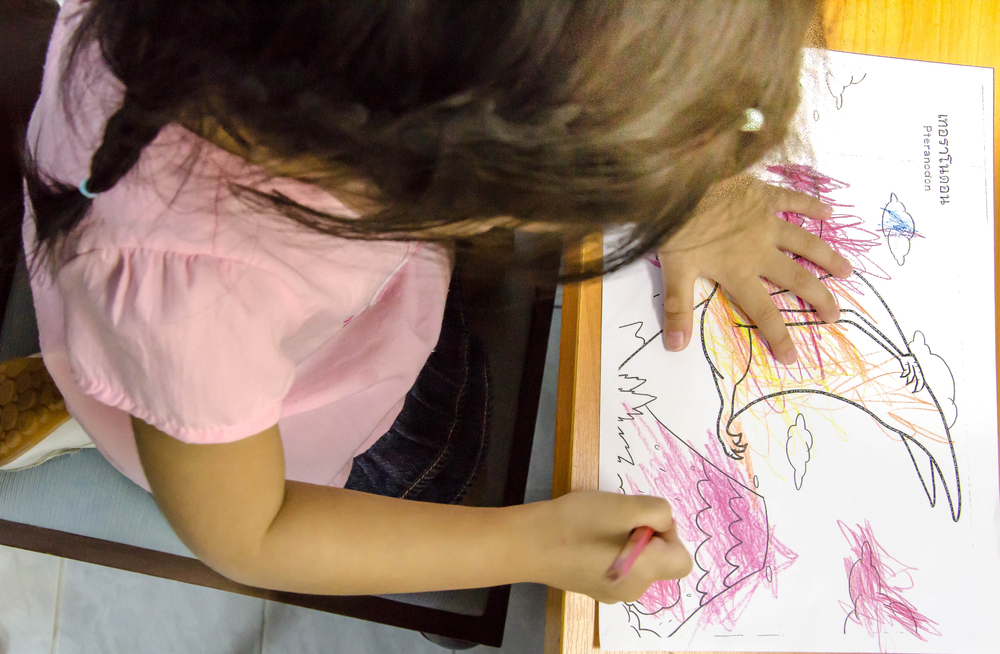


Writing practice is crucial for children aged 4-5 as it lays the groundwork for their literacy skills, critical thinking, and self-expression. At this developmental stage, children are highly receptive to learning, and introducing writing practice can harness that curiosity and eagerness.
Engaging in writing activities helps improve fine motor skills, as children learn to hold pencils, form letters, and control their handwriting. This physical development is essential, as it equips them with the dexterity needed for more complex tasks in future grades. Moreover, writing encourages cognitive processes; children learn to organize their thoughts, articulate their ideas, and understand sequencing through storytelling.
By participating in writing challenges, children also gain confidence in their abilities and a sense of accomplishment, which fosters a love for learning. For parents and teachers, monitoring this progress is vital as it highlights individual strengths and areas for improvement, allowing tailored support and encouragement.
Therefore, incorporating writing practice not only benefits immediate educational goals but also sets children on a path for lifelong literacy and effective communication. Investing time in these writing challenges at a young age cultivates essential skills that will serve them throughout their academic journey and beyond.








