Counting practice Extra Challenge Coins Worksheets for Ages 4-5
3 filtered results
-
From - To
Boost your child's counting skills with our Counting Practice Extra Challenge Coins Worksheets for Ages 4-5! Designed to engage and educate, these worksheets introduce young learners to coin counting, sharpening their math abilities through fun and interactive activities. Perfect for preschool and kindergarten students, the exercises not only teach counting but also help with number recognition, addition, and the value of money. Engaging visuals and varied tasks keep learning exciting and effective. Give your child an educational edge and turn counting practice into a fun adventure with our expertly crafted challenge coins worksheets!
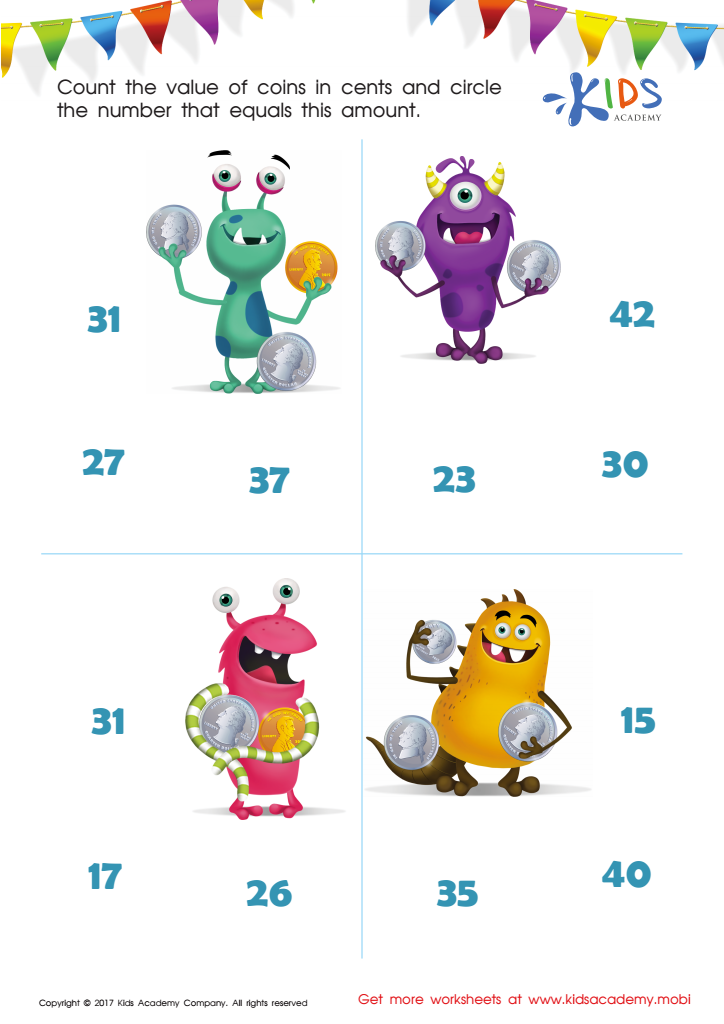
How Many Coins Money Worksheet
 Assign to My Students
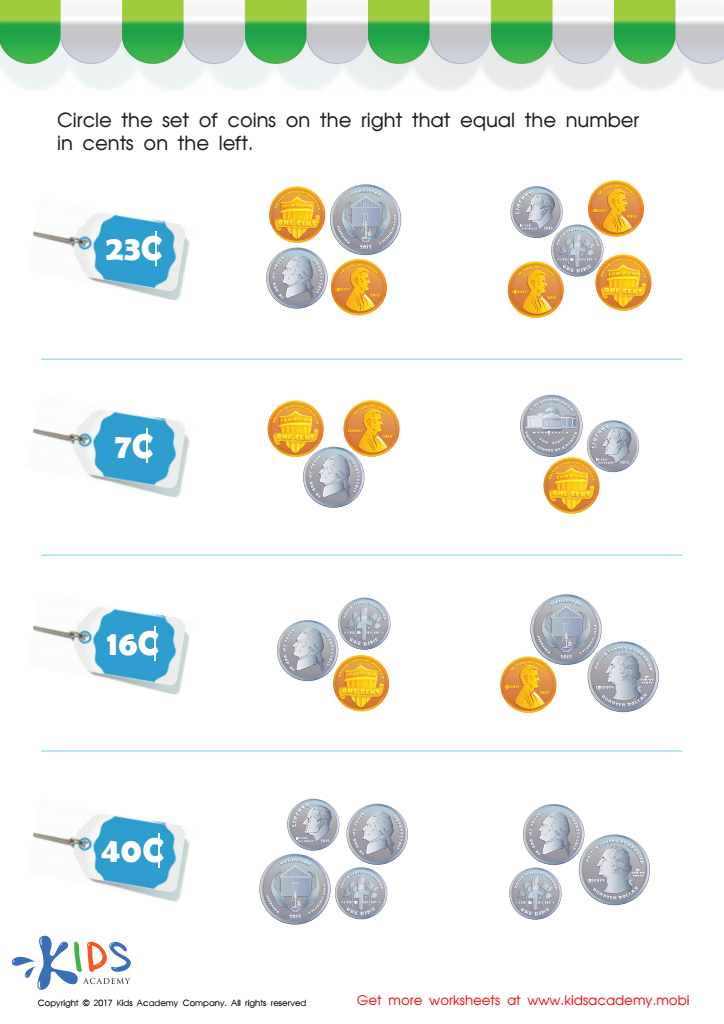
Picking the Coins You Need Money Worksheet
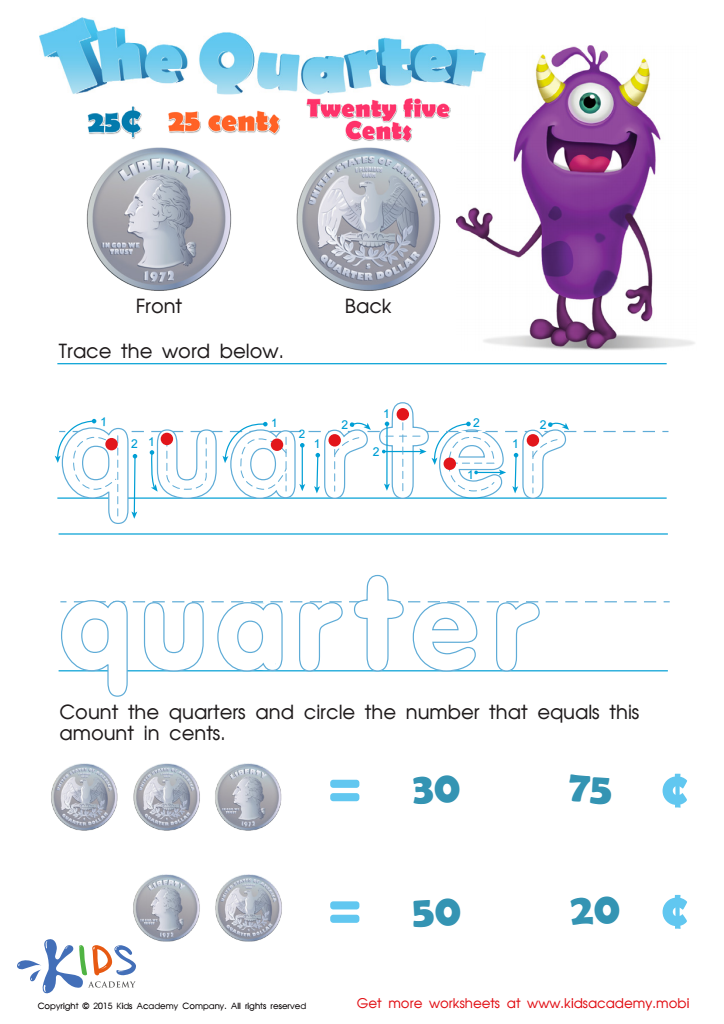
Twenty Five Cents or the Quarter Money Worksheet








Counting practice Extra Challenge Coins for ages 4-5 play a crucial role in early childhood education, fostering essential mathematical skills and cognitive development. At this formative stage, children's brains are highly receptive to acquiring new information and building foundational understanding. Extra Challenge Coins serve as engaging and hands-on tools to reinforce numeracy skills, helping children grasp fundamental concepts such as counting, number recognition, and one-to-one correspondence.
Engaging with these coins also supports fine motor skill development as children handle and manipulate the coins, enhancing their hand-eye coordination. Furthermore, the use of colorful, tactile objects makes abstract math concepts more concrete, aiding visual and tactile learners. When children successfully complete counting tasks using these coins, they experience a sense of accomplishment, building their confidence and fostering a positive attitude towards learning.
For parents and teachers, incorporating Extra Challenge Coins into daily routines or instructional activities offers structured yet playful learning opportunities. This approach encourages interactive learning, where adults can observe children's progress and provide immediate feedback, promoting active engagement and deeper understanding. By prioritizing counting practice with these coins, parents and teachers can lay a strong foundation for future mathematical success, critical thinking, and problem-solving abilities in young learners.








