Cognitive Development Extra Challenge Geometry Worksheets for Ages 4-5
5 filtered results
-
From - To
Introduce your child to the fascinating world of geometry with our Cognitive Development Extra Challenge Geometry Worksheets, specially designed for ages 4-5. These engaging activities promote critical thinking and problem-solving skills while your little one explores shapes, patterns, and spatial relationships. Each worksheet fosters cognitive development through lively, interactive exercises that captivate young minds and challenge their understanding of geometry concepts. Ideal for both classroom and home use, these worksheets encourage independent learning and build a strong foundation for future math success. Equip your child with essential skills in a fun, stimulating environment today! Perfect for budding mathematicians!
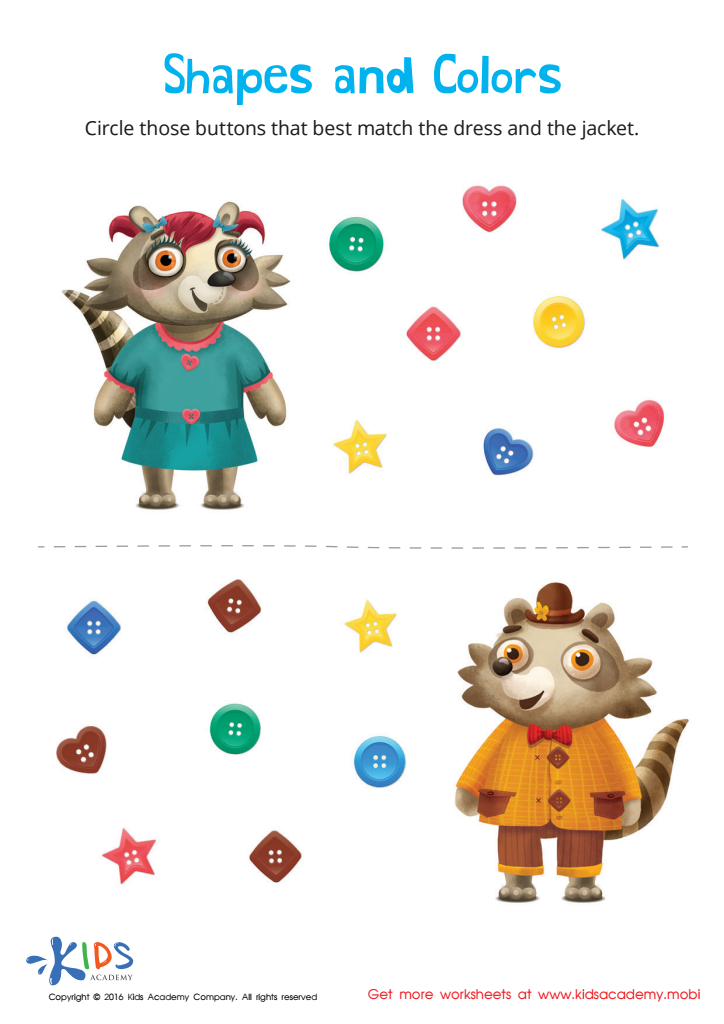
Matching: Shapes and Colors Worksheet
 Assign to My Students











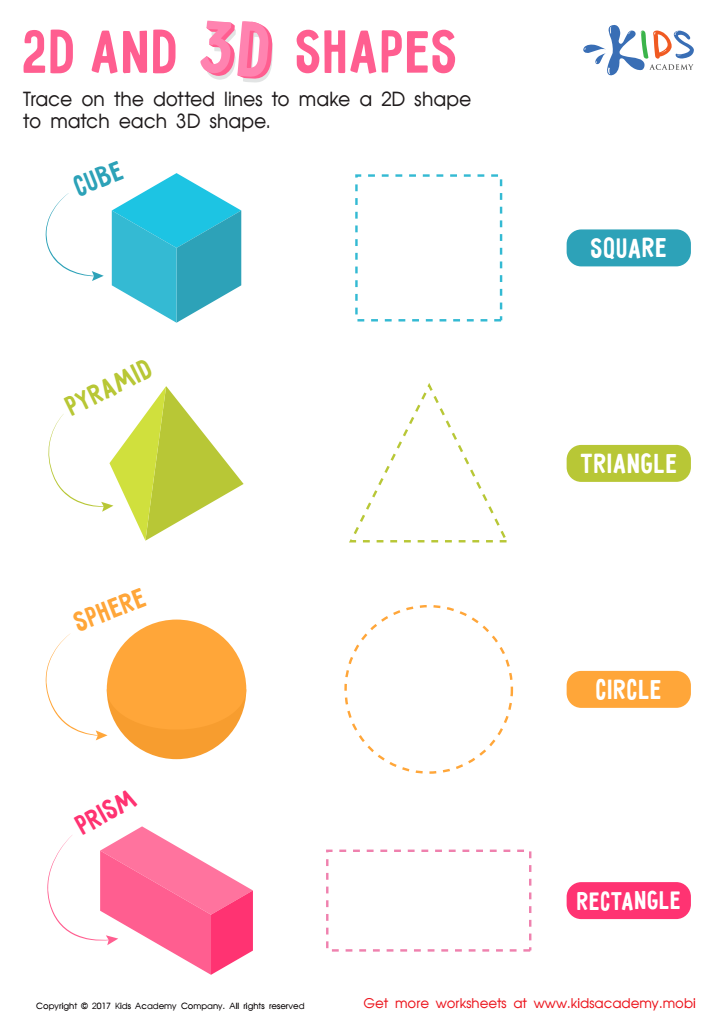
2D and 3D Shapes Worksheet
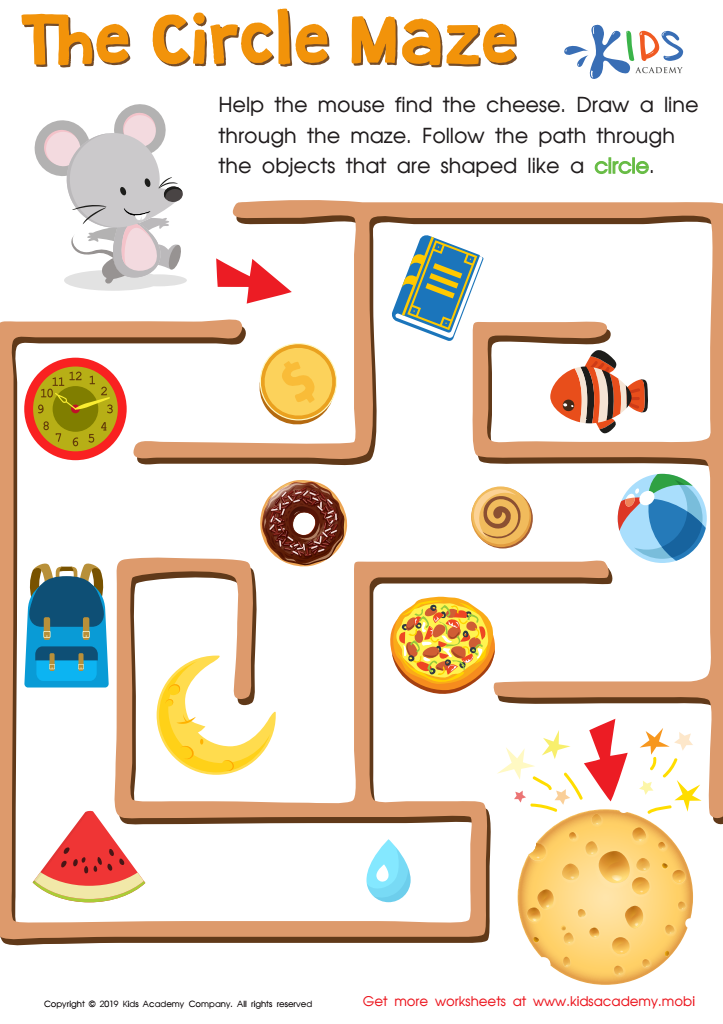
The Circle Maze Worksheet
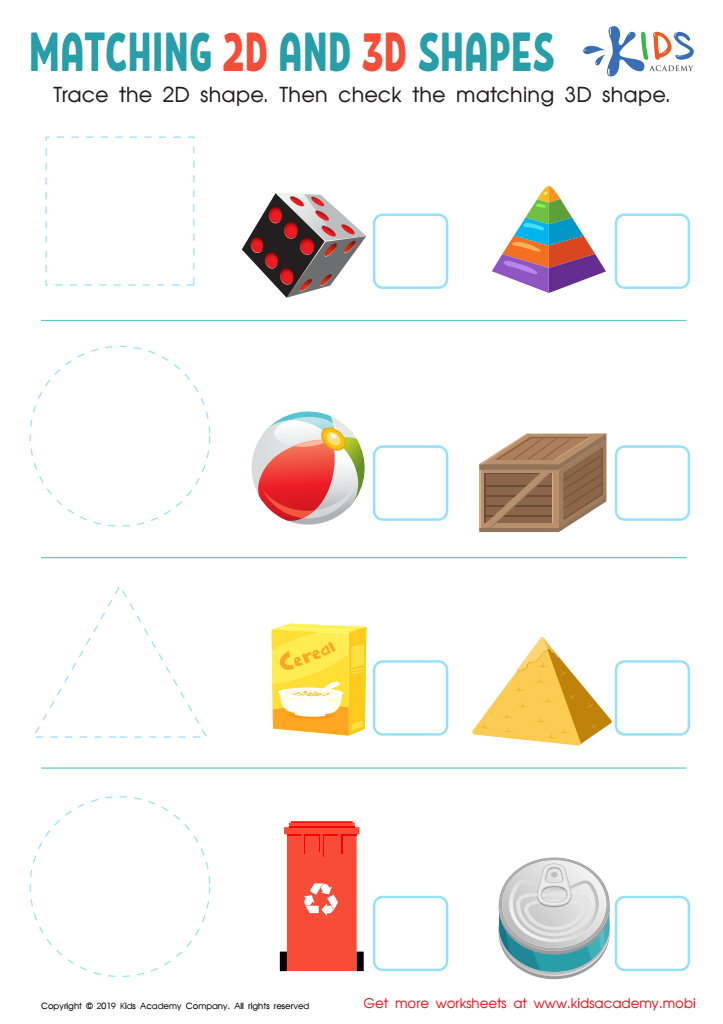
Matching 2D and 3D Shapes Worksheet
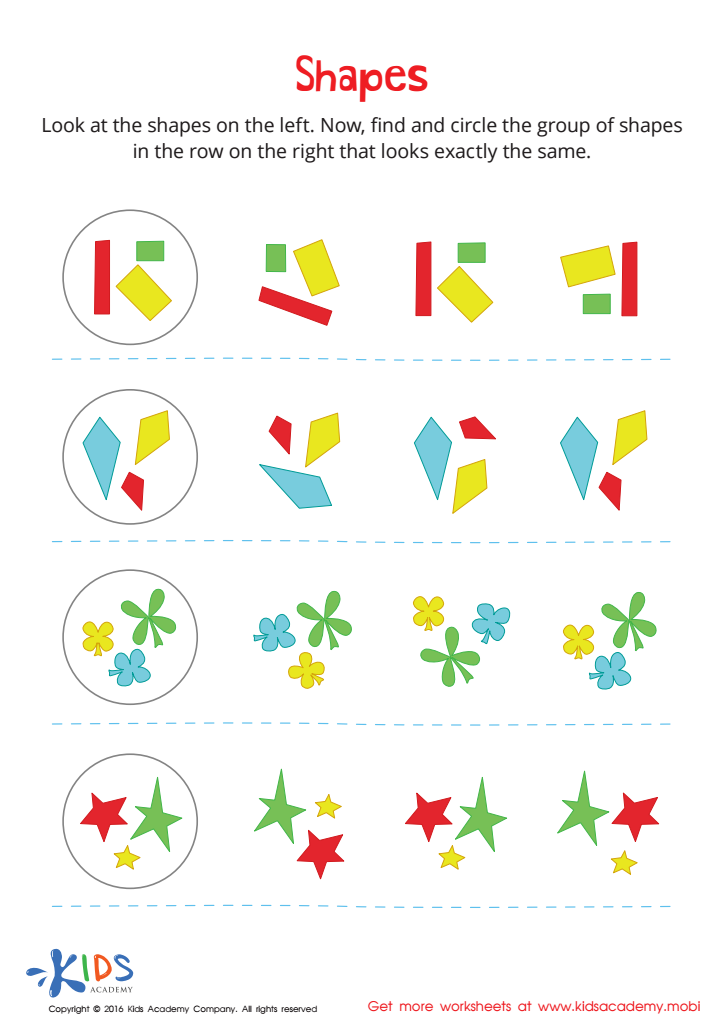
Shapes Worksheet








Cognitive development in early childhood, particularly in areas like geometry, is crucial for laying a strong foundation for future academic success. Cognitive Development Extra Challenge Geometry for ages 4-5 encourages children to think critically, problem-solve, and enhance their spatial awareness during a key developmental period. Engaging with geometric concepts helps young learners understand shapes, sizes, and spatial relationships, which are fundamental to mathematics and daily life.
Parents and teachers should care about incorporating geometry challenges because they foster creativity and logical thinking. When children explore patterns, symmetry, and transformations, they develop essential skills that extend beyond math, enhancing their ability to analyze and interpret information in various contexts. Additionally, these activities promote fine motor skills through hands-on learning experiences, such as constructing shapes or sorting based on geometric properties.
Investing time in cognitive development activities prepares children for more complex mathematical concepts in the future, boosts their confidence, and instills a lifelong love for learning. By participating in and facilitating geometric challenges, parents and teachers can support a child's holistic development, ensuring they build a robust foundation for academic achievements and real-world problem-solving skills.