Comparing objects Extra Challenge Math Worksheets for Ages 4-5
3 filtered results
-
From - To
Unlock your child’s mathematical potential with our "Comparing Objects Extra Challenge Math Worksheets" designed specifically for ages 4-5. These engaging worksheets encourage young learners to explore concepts of greater than, less than, and equal to as they compare colorful pictures and everyday objects. Our extra challenge activities are tailored to enhance critical thinking and improve observation skills, making math fun and interactive. With a variety of levels and themes, children will develop a strong foundation in comparison skills essential for future learning. Spark joy in learning math and watch your child excel with our captivating worksheets!
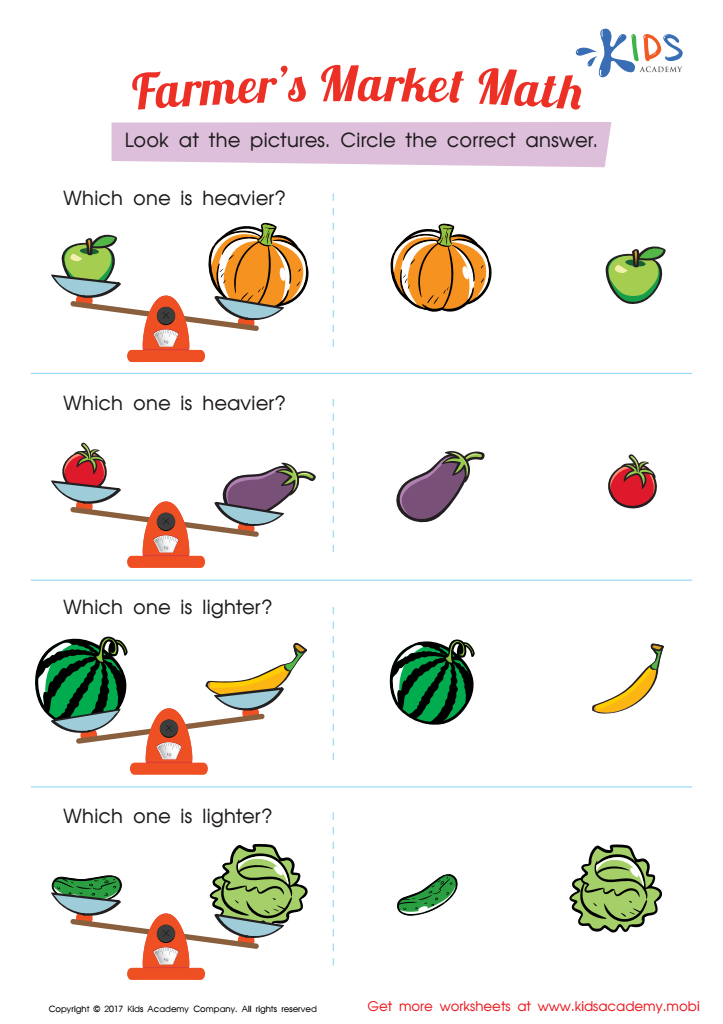
Which One Is Heavier Worksheet
 Assign to My Students
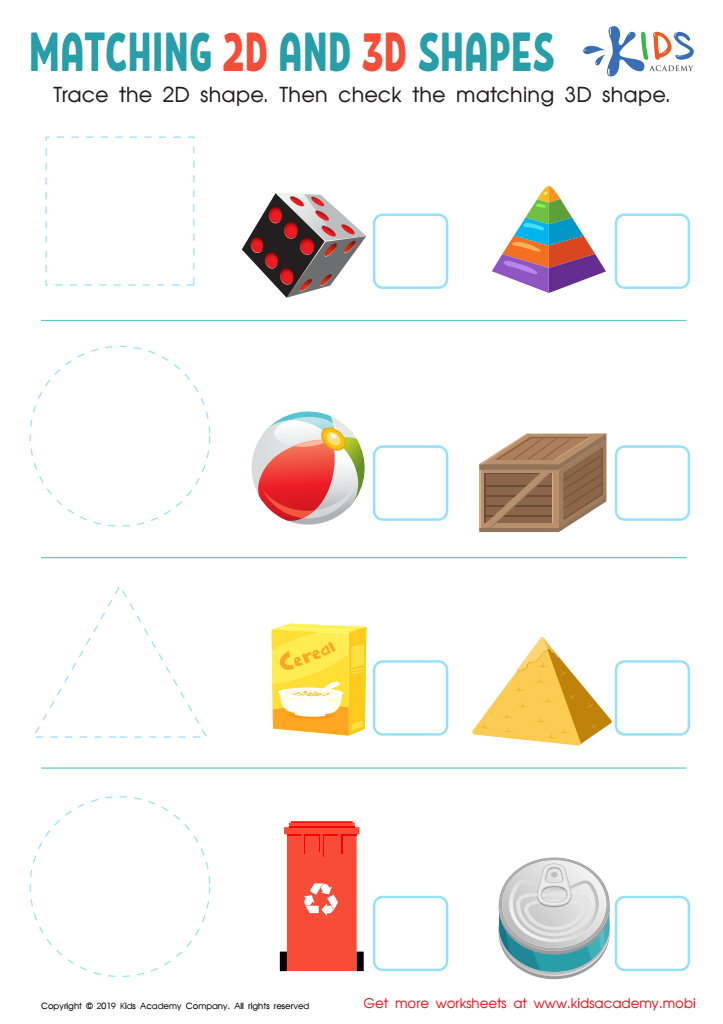
Matching 2D and 3D Shapes Worksheet
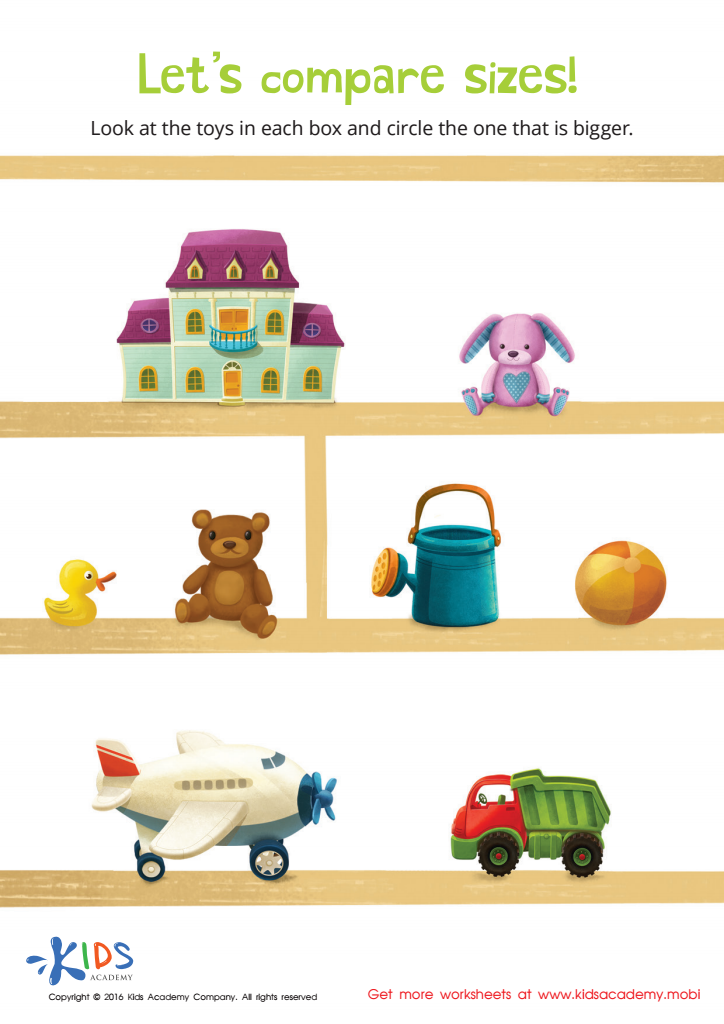
Classifying by Size Sorting Worksheet




.jpg)


Comparing objects is a crucial early math skill for children aged 4-5, and it's essential for parents and teachers to prioritize this activity. At this age, children are developing foundational cognitive skills, and engaging in comparison fosters critical thinking. Learning to identify similarities and differences helps kids make sense of the world around them, enhancing their observational skills.
Moreover, comparing objects provides opportunities to develop language skills as children describe attributes such as size, shape, and quantity. This vocabulary foundation is vital for future mathematical understanding. For example, when children articulate why one object is bigger or more colorful than another, they practice constructing sentences and utilizing comparative language.
Additionally, incorporating Extra Challenge Math activities can motivate children and cater to different learning styles. By making comparisons engaging and interactive, educators and parents can spark curiosity and encourage a love for learning. This not only benefits math development but also supports social-emotional growth, as children share their findings and hypotheses.
In summary, focusing on comparing objects establishes critical early math skills, enhances language comprehension, and promotes a holistic learning environment, making it an essential practice for parents and teachers in nurturing young minds.








