Money recognition Extra Challenge Math Worksheets for Ages 4-5
4 filtered results
-
From - To
Introducing our "Money Recognition Extra Challenge Math Worksheets for Ages 4-5," designed to sharpen your child's mathematical skills and money awareness! These engaging and educational worksheets are perfect for young learners eager to explore the world of currency. Featuring colorful, age-appropriate activities, children will practice identifying coins, counting money, and developing essential math skills through fun and interactive exercises. Ideal for use at home or in the classroom, these worksheets provide a great foundation for financial literacy. Boost your child's confidence and prepare them for future math success with our expertly crafted money recognition worksheets.
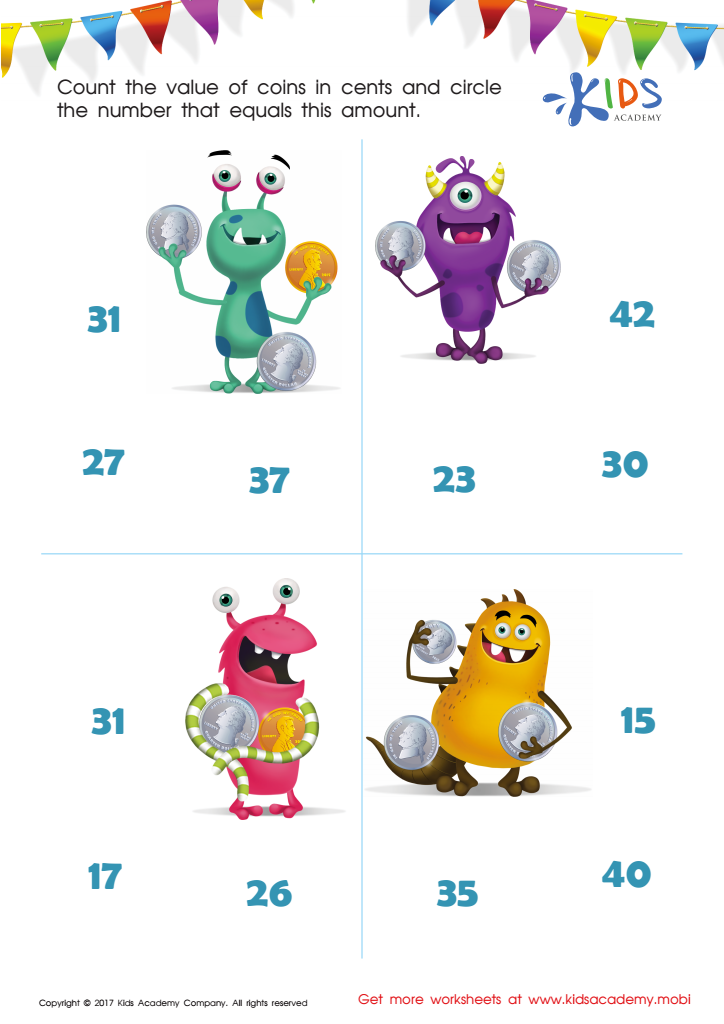
How Many Coins Money Worksheet
 Assign to My Students
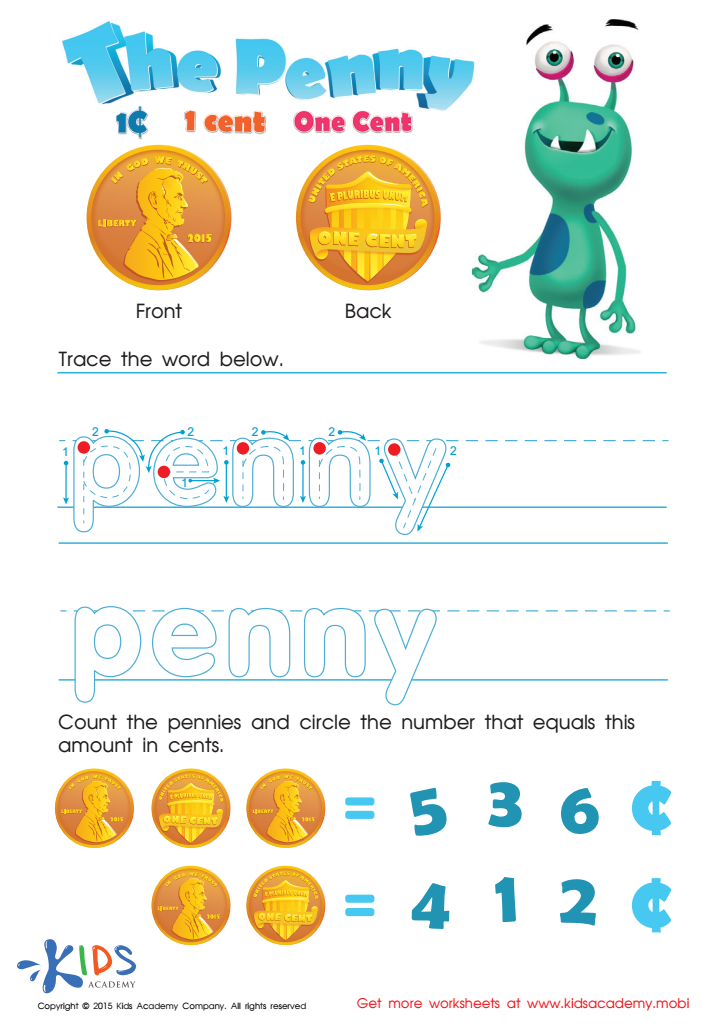
One Cent or the Penny Money Worksheet
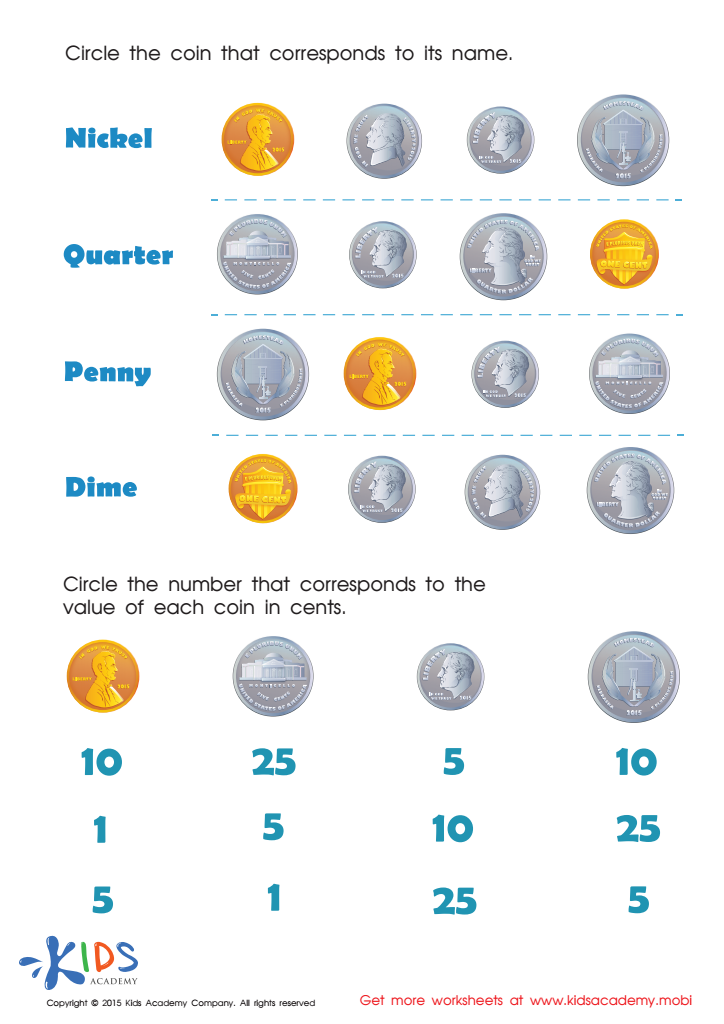
Coin Names and Values Money Worksheet
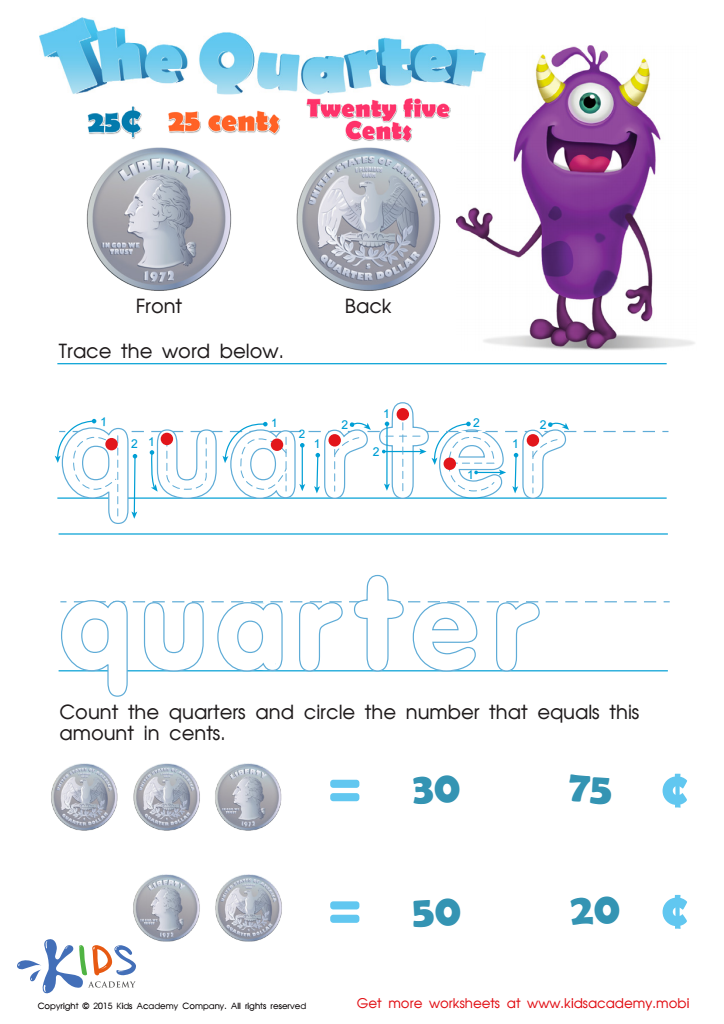
Twenty Five Cents or the Quarter Money Worksheet







Parents and teachers should care about Money Recognition Extra Challenge Math for ages 4-5 because early financial literacy sets the foundation for essential life skills. Introducing young children to money concepts helps them understand value, responsibility, and decision-making from a tender age, preparing them for real-world scenarios.
Children at this age learn rapidly, and incorporating money recognition exercises hones their cognitive abilities, such as counting, addition, and subtraction. This exposure enhances their mathematical thinking and problem-solving skills in a practical context. Recognizing and distinguishing between different coins and notes also sharpens their observational skills and attention to detail.
Moreover, these exercises can instill a sense of accomplishment and confidence as children master new concepts. It encourages parental involvement and bonding; discussions about money can evolve into more complex topics as they grow. For teachers, integrating money recognition into the curriculum can make math lessons more engaging and relatable, promoting active learning and sustained interest.
Fostering early financial literacy through playful yet educational activities ensures that children cultivate a healthy and informed attitude towards money, empowering them with the knowledge to make wise financial choices in the future. It's an investment in their long-term academic and personal success.