
Shape identification Extra Challenge Math Worksheets for Ages 4-5
3 filtered results
Difficulty Level
Grade
Age
-
From - To
Subject
Activity
Standards
Introduce young learners to an engaging and stimulating world of geometry with our "Shape Identification Extra Challenge Math Worksheets for Ages 4-5." These thoughtfully crafted worksheets go beyond basic shape recognition, offering children an exciting opportunity to master shapes through fun and challenging activities. Designed for curious and eager minds, each worksheet enhances critical thinking, fine motor skills, and early math proficiency. Perfect for parents and educators, these printables are excellent tools for reinforcing learning both at home and in the classroom. Spark your child's love for math and shapes with our comprehensive and engaging extra challenge worksheets.
Favorites
With answer key
Interactive
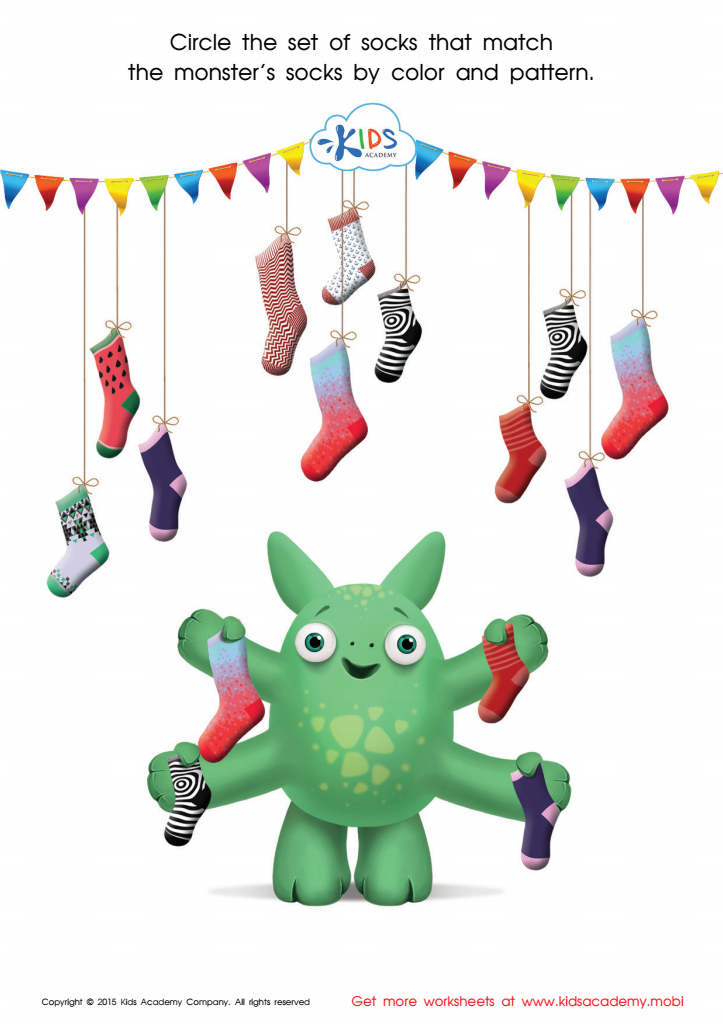
Sort the Monster's Socks Worksheet
Let your little one challenge herself and practice with matching Monster socks. She must be very attentive to match the same socks and draw a line connecting them!
 Assign to My Students
Sort the Monster's Socks Worksheet
Worksheet
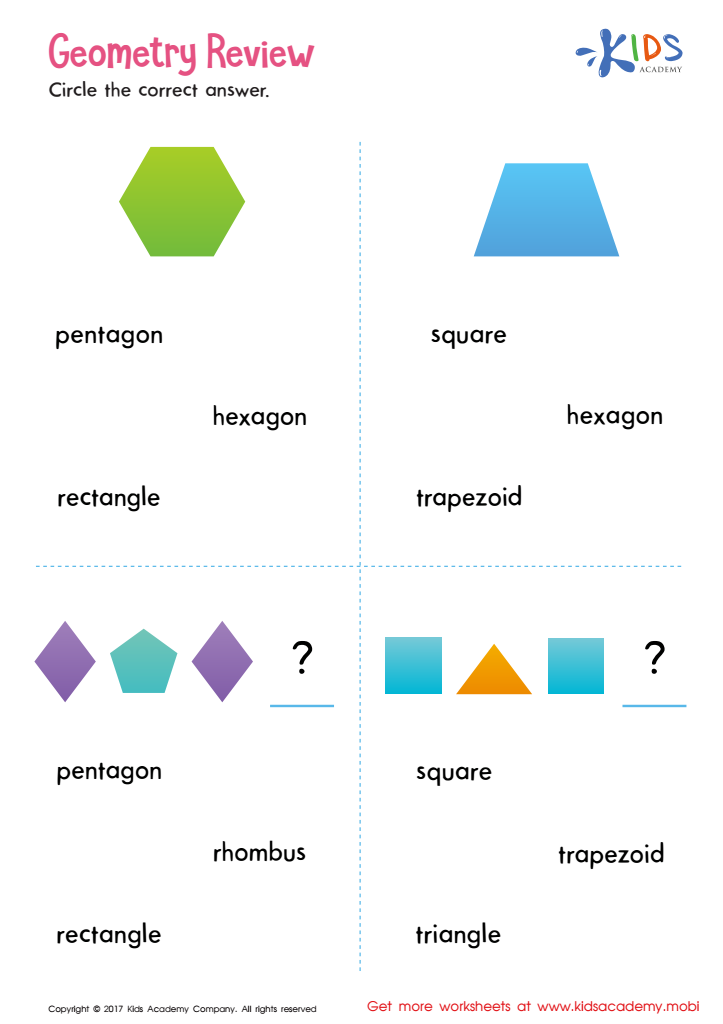
Geometry Review Printable
Repetition is key to success; give your child the practice they need with this geometry worksheet.
Geometry Review Printable
Worksheet

Shapes Worksheet
This fun worksheet will challenge your child to recognize tricky patterns, sort through similar ones, and create strategies to get the right answer. It'll also help them to strengthen problem-solving skills and build confidence. With more challenging tasks, your child will be ready to tackle higher level math and sequencing skills.
Shapes Worksheet
Worksheet
Join Kids Academy for Free
Who is primarily going to use this learning content?







.jpg)
Parents and teachers should value shape identification for ages 4-5 as it lays a strong foundation for early math skills and cognitive development. At this stage, children are naturally curious and highly receptive to new information. Introducing shape identification helps them recognize and differentiate attributes such as size, color, and spatial relationships, crucial for more advanced math concepts later on.
Identifying shapes also enhances their visual and spatial reasoning—skills used every day in interpreting the world around them, from reading and writing to navigation and problem-solving. Moreover, shape identification challenges hand-eye coordination, memory, and attention to detail. These activities often encourage language development, as children learn to describe shapes and their properties.
Engaging children in these types of activities also boosts their confidence and enthusiasm for learning. When parents and teachers provide an extra challenge, it stretches young learners' thinking abilities, cultivating a growth mindset where they learn to approach problems with creativity and perseverance.
Ultimately, by focusing on shape identification early, adults help children build a scaffold for academic success, enhance their cognitive skills, and foster a lifelong love of learning. Solid early math experiences are predictors of future achievements, making this an essential element of early childhood education.








