Understanding plurals Extra Challenge Writing Worksheets for Ages 4-5
3 filtered results
-
From - To
"Understanding Plurals Extra Challenge Writing Worksheets for Ages 4-5" is a fantastic resource designed to enhance your child’s grasp of plural forms in a fun and engaging way. These worksheets offer extra challenges that help young learners distinguish between singular and plural forms while honing their writing skills. Perfect for preschool and kindergarten students, these exercises combine colorful illustrations with simple activities to reinforce learning. Whether at home or in the classroom, these worksheets are a valuable tool for parents and teachers to support early literacy and language development in young children. Boost confidence and mastery with these effective educational resources!
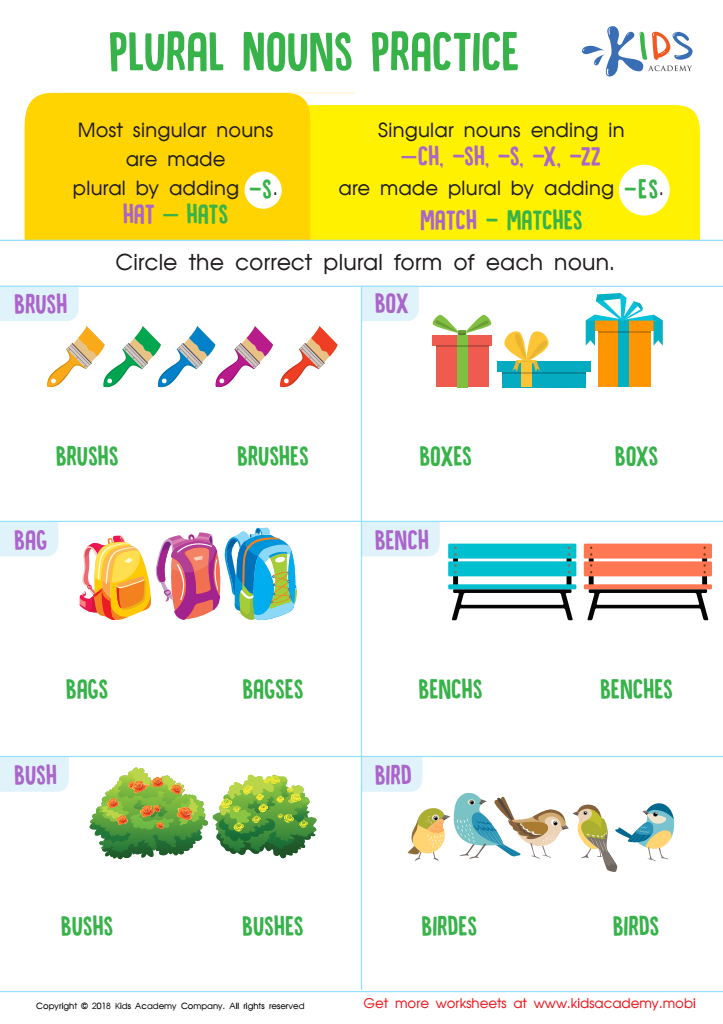
Plural Nouns Practice Worksheet
 Assign to My Students
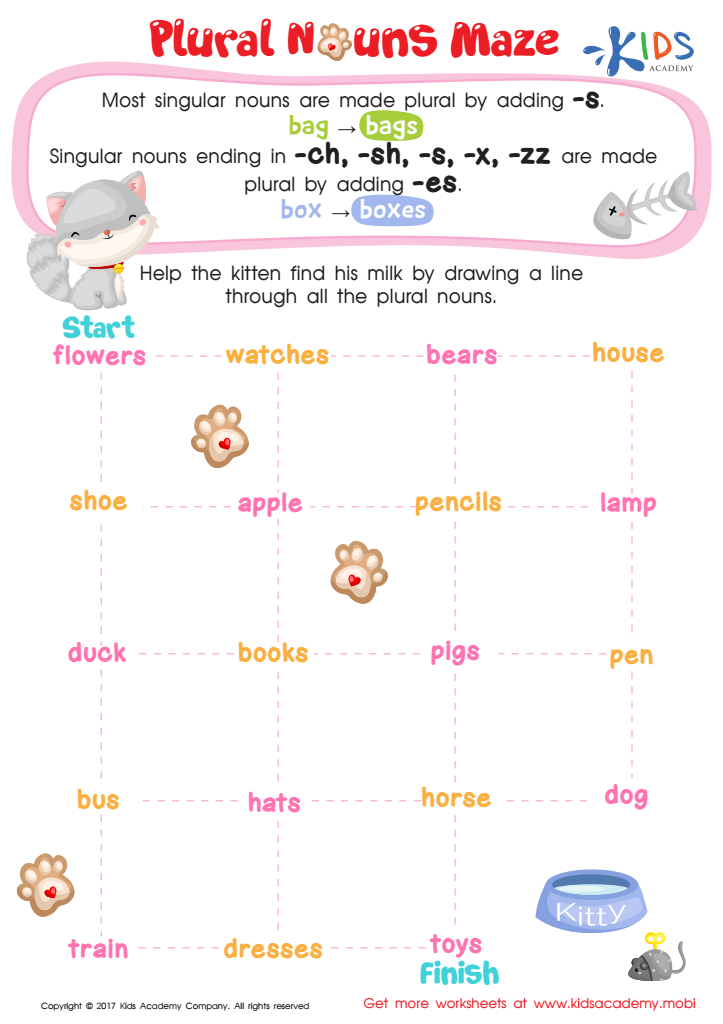
Plural Nouns Maze Worksheet
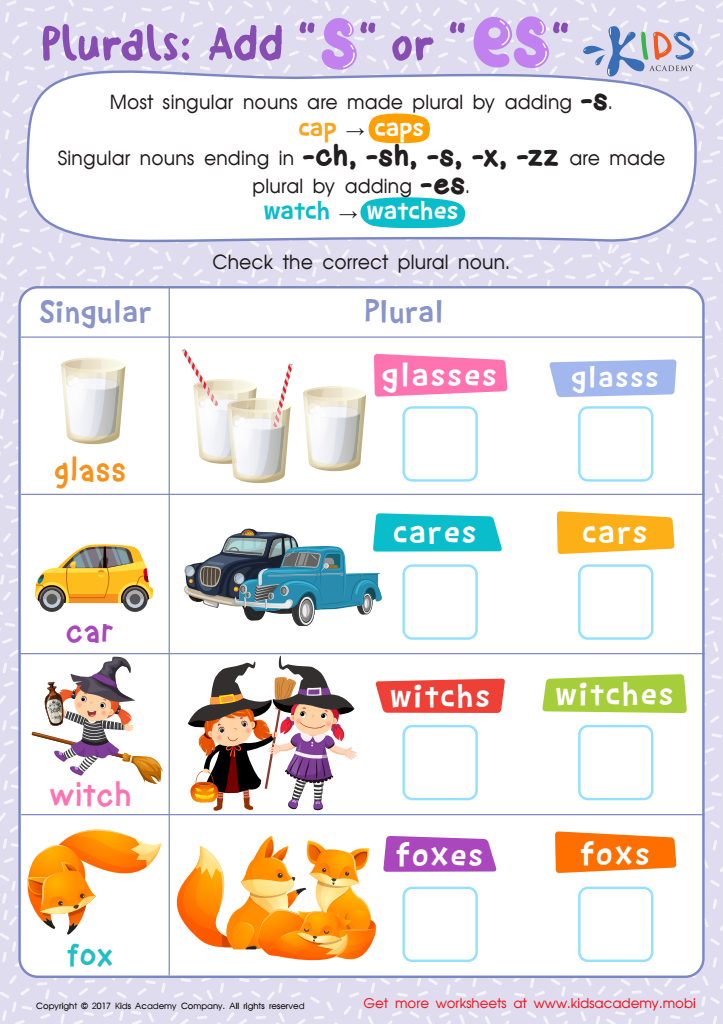
Plurals: "–es" or "–es"? Worksheet







For parents and early grade teachers, fostering an understanding of plurals in children aged 4-5 is crucial for several developmental reasons. Firstly, acquiring knowledge about plurals enhances linguistic abilities by building a foundational aspect of grammar. This gives children the tools to express number and quantity in their speech, improving clarity and richness in communication. Early grasp of plurals also aids in expanding vocabulary, as children learn more about word forms and sentence structures.
At this tender age, children are highly receptive and a deep understanding of plurals can set the stage for future success in reading and writing. It helps them decode words more efficiently, improving their overall literacy skills. Moreover, as plural forms often involve pattern recognition and cognitive engagement, mastering this concept can sharpen problem-solving skills and attention to detail.
Beyond academic gains, an early understanding of plurals encourages confidence in language use. When children correctly use words in their plural form, they feel more competent in conversations, which positively influences social interactions and self-esteem.
In summary, dedicating time and effort to teach plurals is an investment in a child's foundational grammar skills, spelling proficiency, and effective communication, all of which play an essential role in their holistic development.