Handwriting practice Extra Challenge English for Beginners Worksheets for Ages 4-6
5 filtered results
-
From - To
Welcome to our "Handwriting Practice Extra Challenge" worksheets, specifically designed for young learners aged 4-6! These engaging resources provide English beginners an opportunity to refine their handwriting skills while enhancing vocabulary and fine motor abilities. Each worksheet features fun activities that incorporate letters, simple words, and delightful illustrations to maintain interest. Perfect for home or classroom use, our extra challenges encourage children to practice writing with confidence and creativity. Whether they are just starting their handwriting journey or looking to improve, these worksheets pave the way for successful writing skills in an enjoyable and interactive manner. Dive in and watch them flourish!
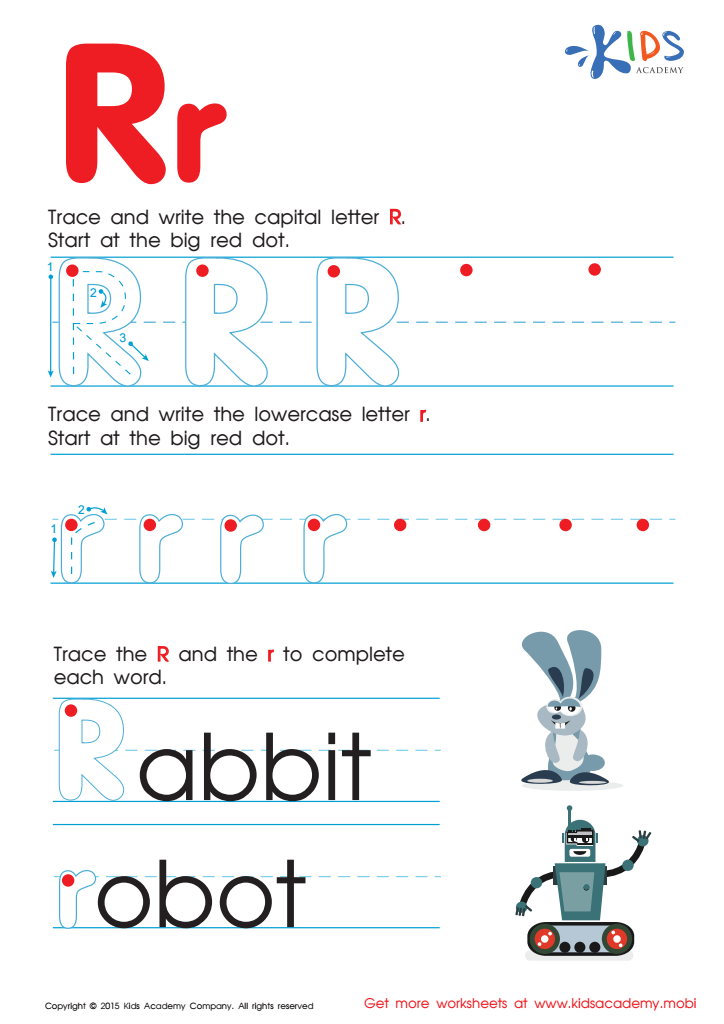
Letter R Tracing Page
 Assign to My Students
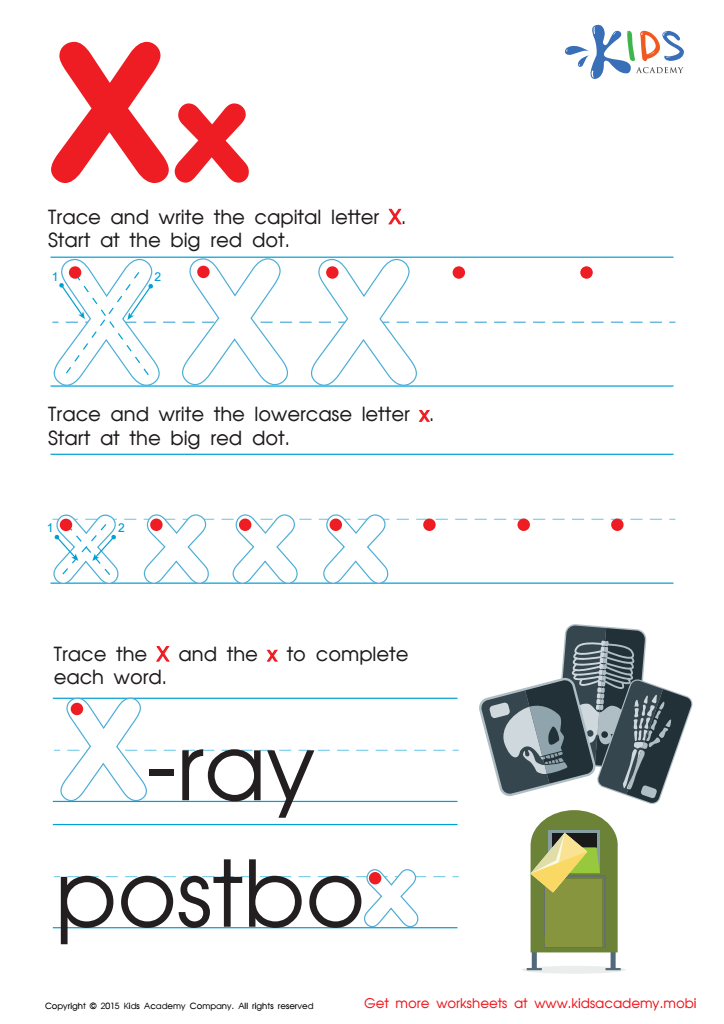
Letter X Tracing Page
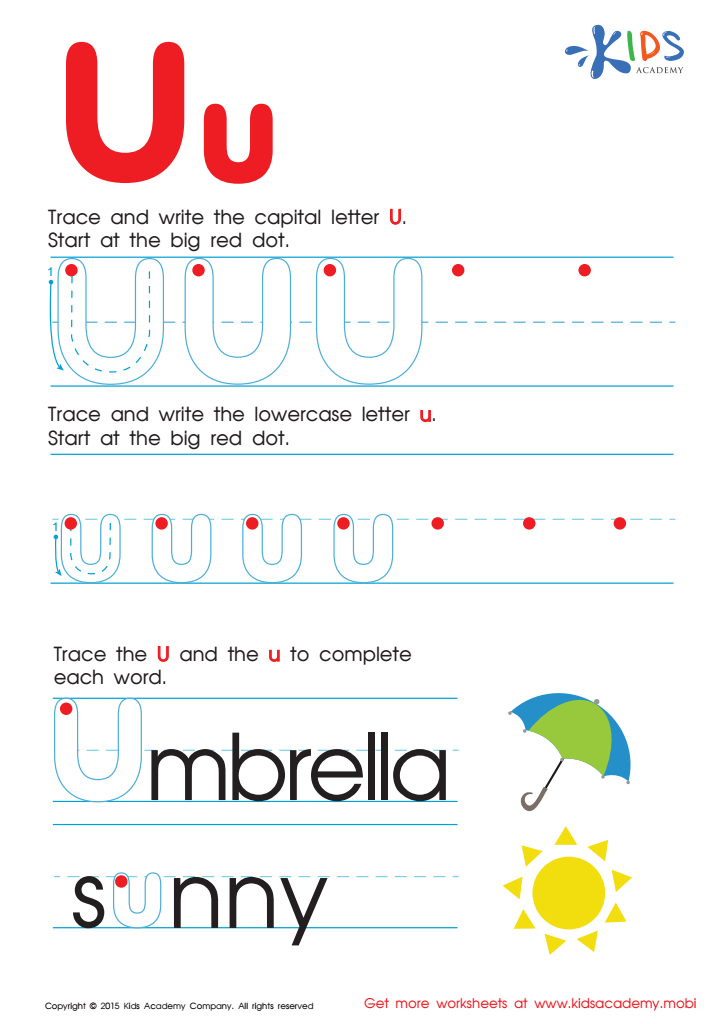
Letter U Tracing Page
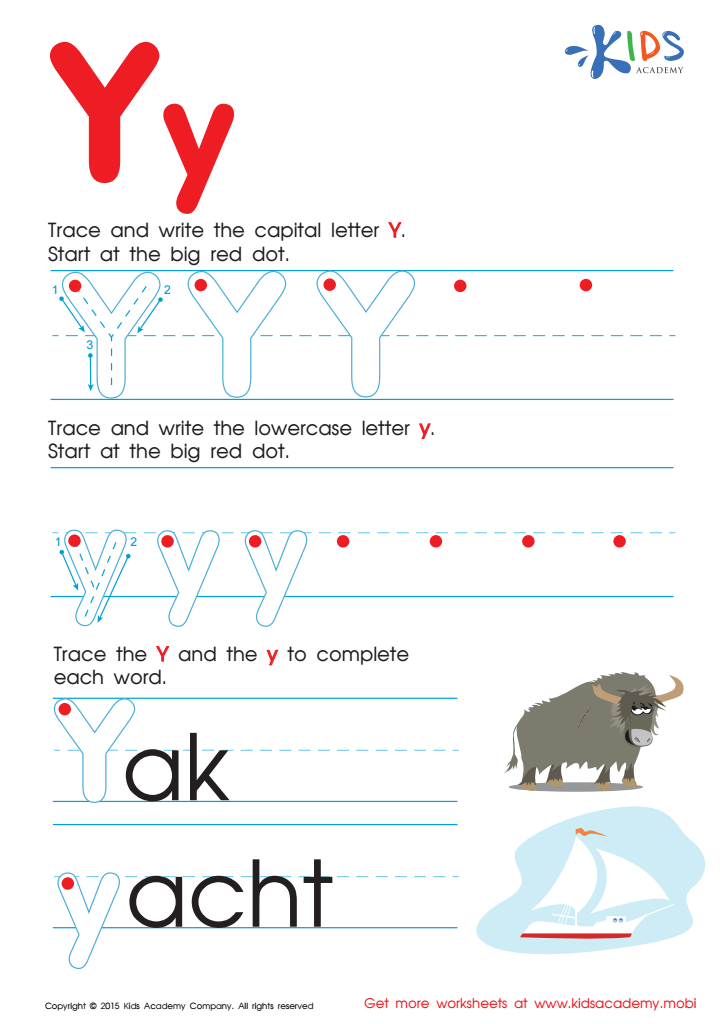
Letter Y Tracing Page
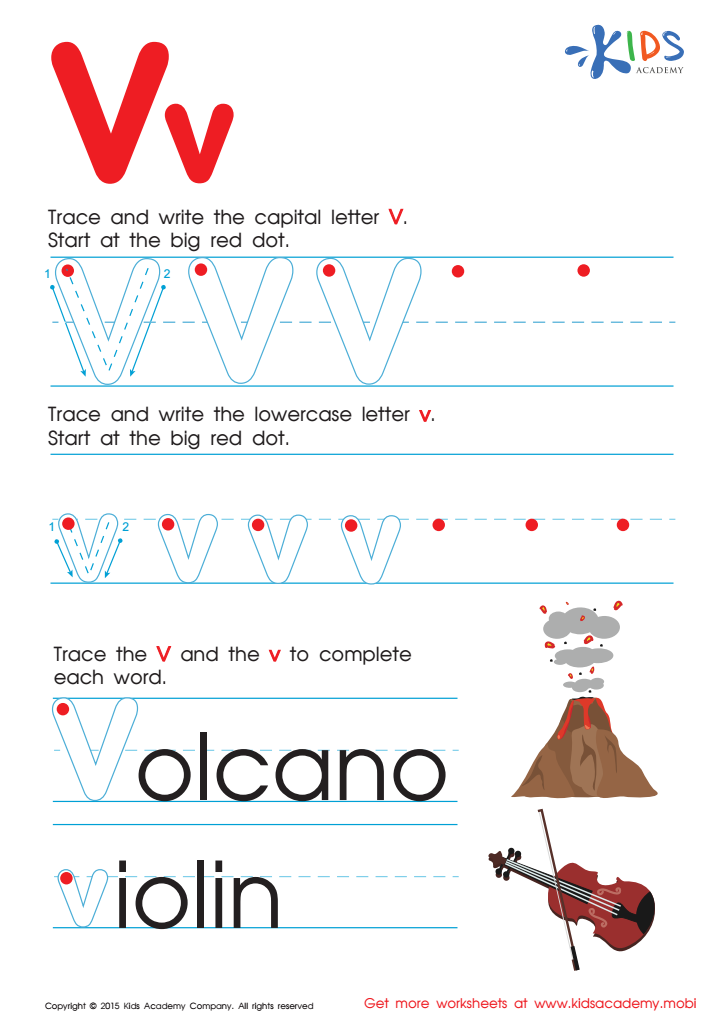
Letter V Tracing Page




Handwriting practice is crucial for young learners, particularly for children aged 4-6 who are just starting their educational journey. This early stage of development lays the foundation for crucial motor skills, cognitive abilities, and academic success. Handwriting helps improve fine motor skills as children learn to control their hand movements, which is essential for various activities later in life. Practicing handwriting also reinforces letter recognition and phonemic awareness, both of which are foundational for reading and writing in English.
For parents and teachers, incorporating handwriting practice into learning activities makes the process enjoyable and engaging. Resources like Extra Challenge English for Beginners provide structured exercises that cater to the specific needs of young learners, fostering a positive learning environment. By focusing on handwriting, parents and teachers can help children develop confidence in their writing abilities, paving the way for better communication skills. Moreover, as children progress, they develop discipline and patience, critical qualities for lifelong learning.
In today’s digital age, where typing often takes precedence, emphasizing handwriting practice ensures that children retain essential skills that enhance their overall learning experience, ensuring they are well-equipped for future academic challenges. Making handwriting a priority helps children become well-rounded, more capable learners.








